A tin look, step by step
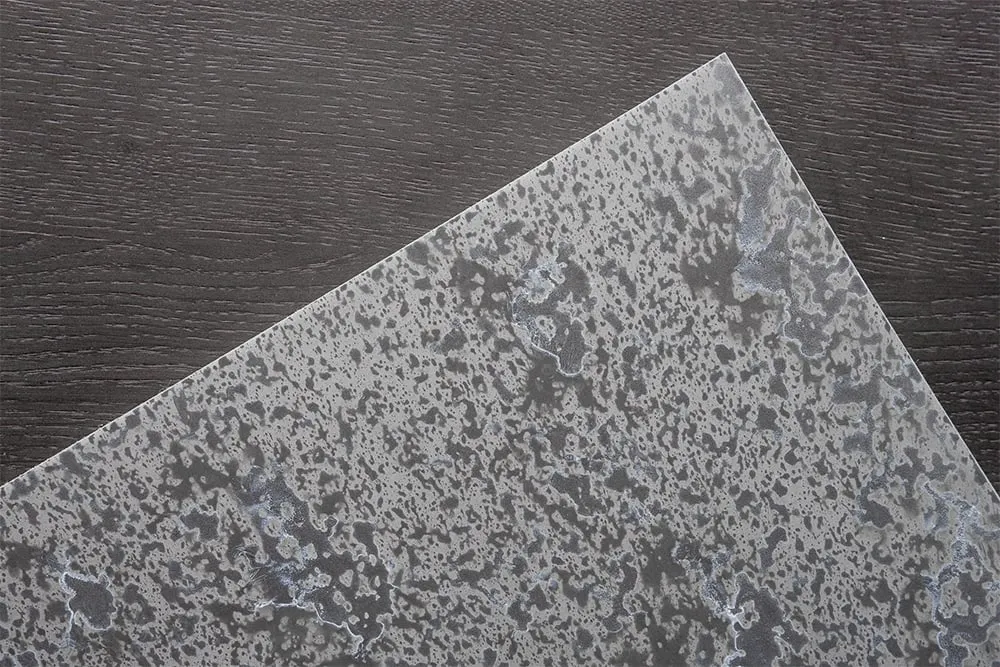
ADLER, the Austrian paint and coatings manufacturer, uses real-metal coatings to give surfaces a unique, authentic metallic appearance, such as copper, bronze or brass. Leon Cremers, Managing Director of ADLER Benelux in Heeze, explains below, step by step, how applicators can give wooden surfaces a tin finish.
Tin’s silvery-white lustre has fascinated people for centuries. Metal surfaces also have an almost magical appeal in and around the home. ADLER’s real-metal coatings make it easy to give a wooden surface a tin look, using nothing more than a spray gun. Leon Cremers shows us how.
What you’ll need
“You’ll need a number of ADLER products to create a tin finish,” Cremers begins. “Bluefin Pure-Metal and the hardener Aqua Hardener 8450 form the basis. Aquafix Zinn, added in powder form, creates the tin look. PUR-Ecofill Weiß is the best choice for the substrate. Spezial-Verdünner 8502 is also useful. Finish with Tiropur NG G70 to complete the look. If the applicator chooses to add an extra patina effect using Aquafix Blue-Patina, the finish coat should be PUR-Antiscratch HQ G10.”
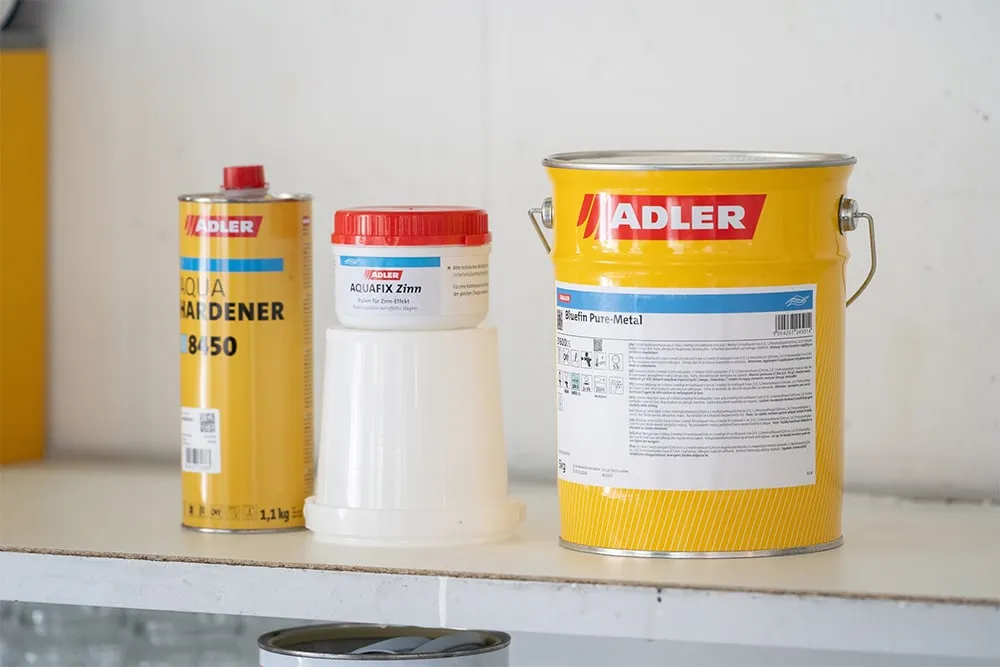
Step 1: Preparation
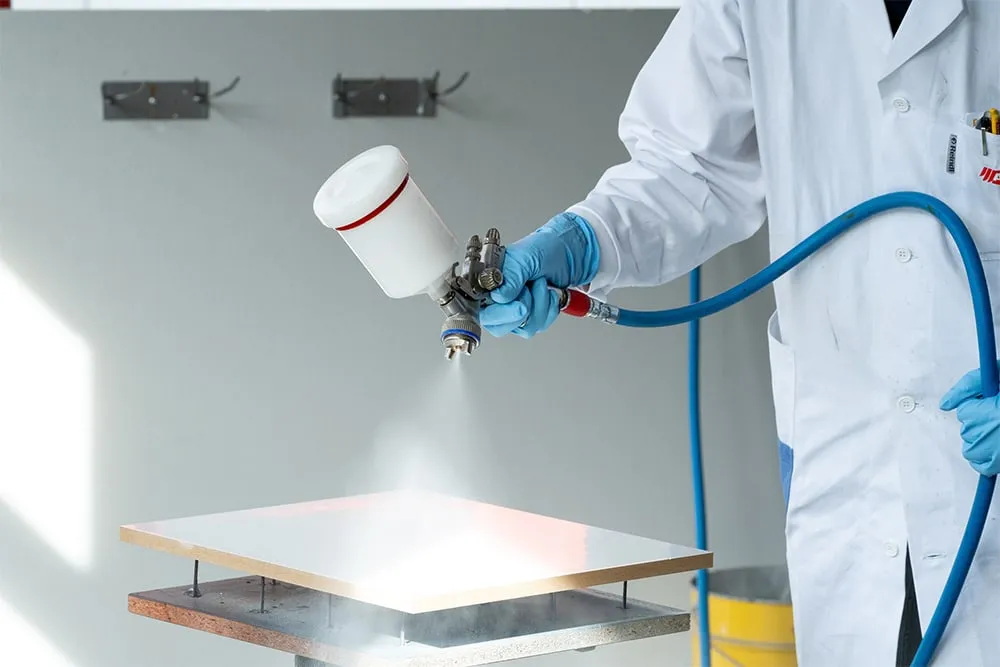
A good start is half the job, and that applies here too. “Prime the wooden surface or MDF board with PUR-Ecofill Weiß. Apply the insulating primer with a gravity-feed spray gun,” says Cremers.
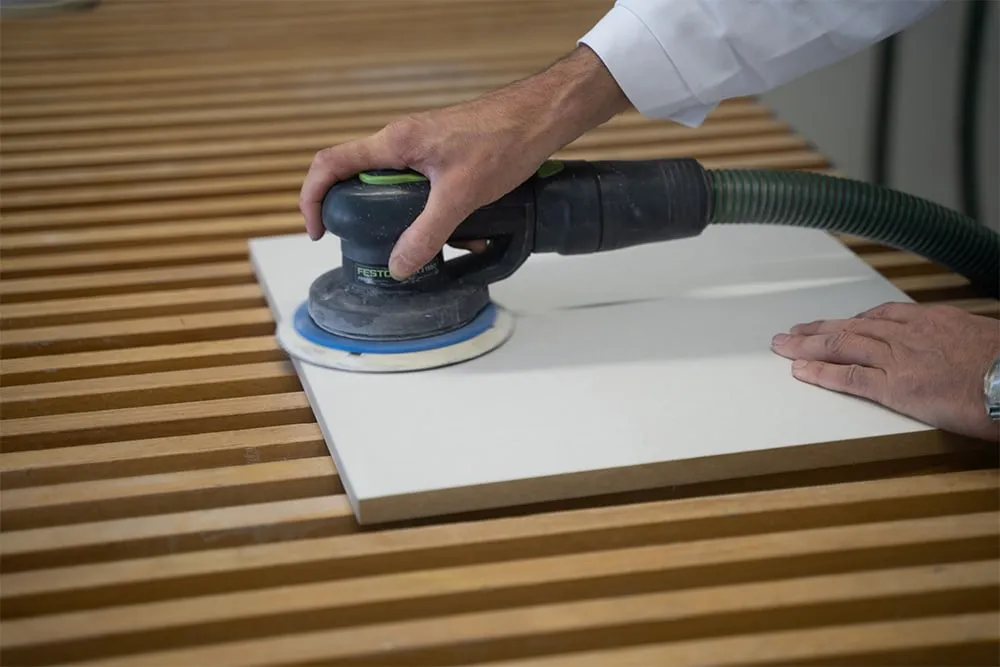
Step 2: Sanding
After priming, allow the surface to dry, then sand it with 240-grit abrasive.
Step 3: Mixing
Next, mix several products together. “First, add 5% Aqua-Hardener 8450 to 400 g of Bluefin Pure-Metal. Then add 1,000 g of Aquafix Zinn,” says Cremers. It is important to mix the metal powder thoroughly with the other products, without leaving any lumps. “It’s best to do this mechanically with a mixing paddle.”
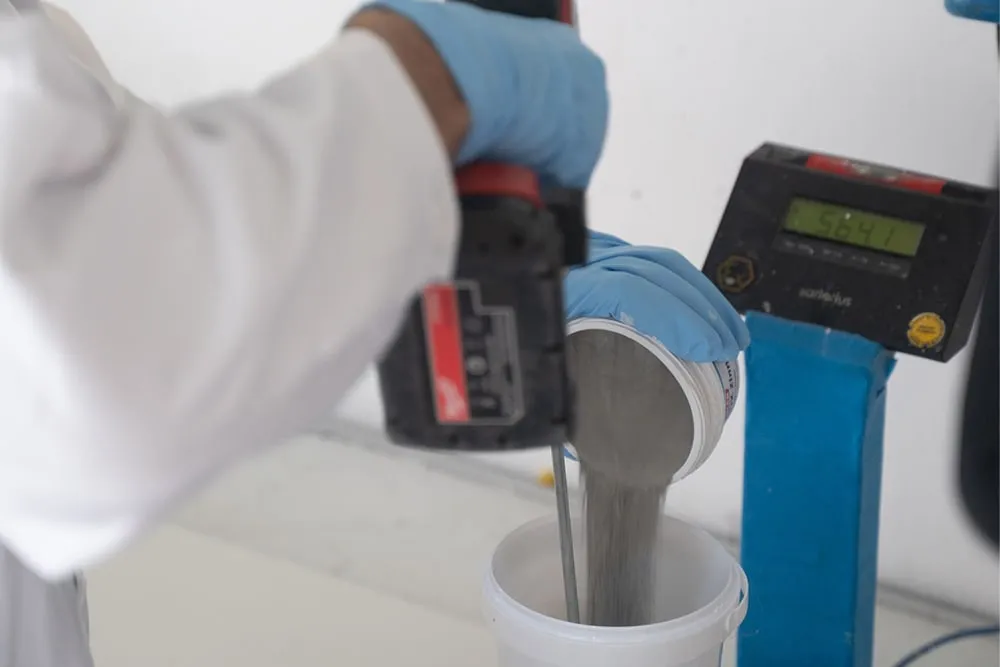
Step 4: Applying the coating
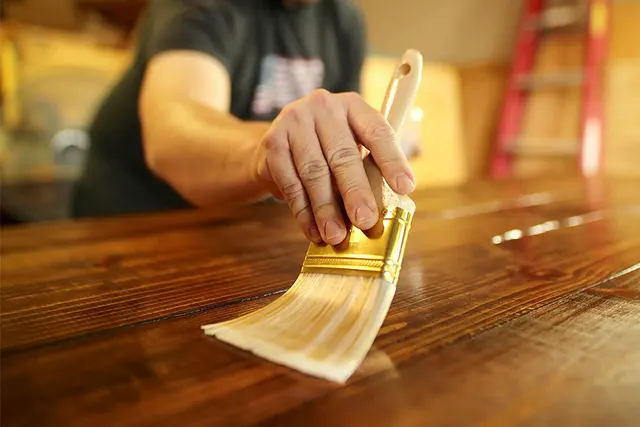
The coating can now be applied. Cremers says: “A pressure-pot spray gun gives the best results. Then leave the surface to dry for at least five hours.”
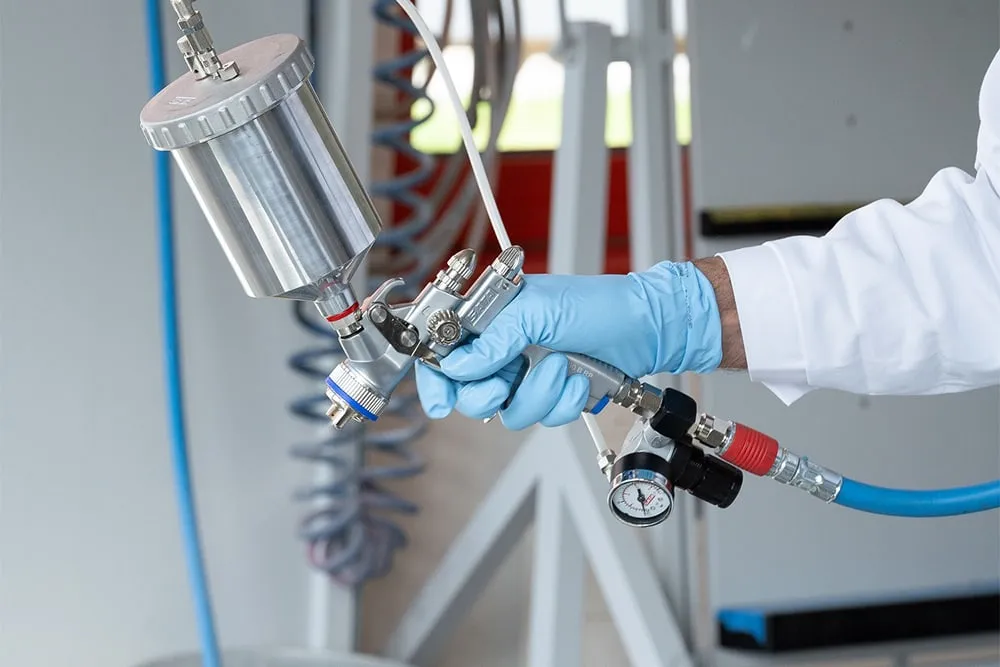
Step 5: Sanding, sanding and more sanding
Every painter knows that achieving the best results takes plenty of sanding. “It’s best to start with 180 grit, then work through 240, 360, 600, 1,000 and 1,500 grit, finishing with 3,000 grit,” explains Cremers. “It takes a little time, but gives the best metallic effect.”
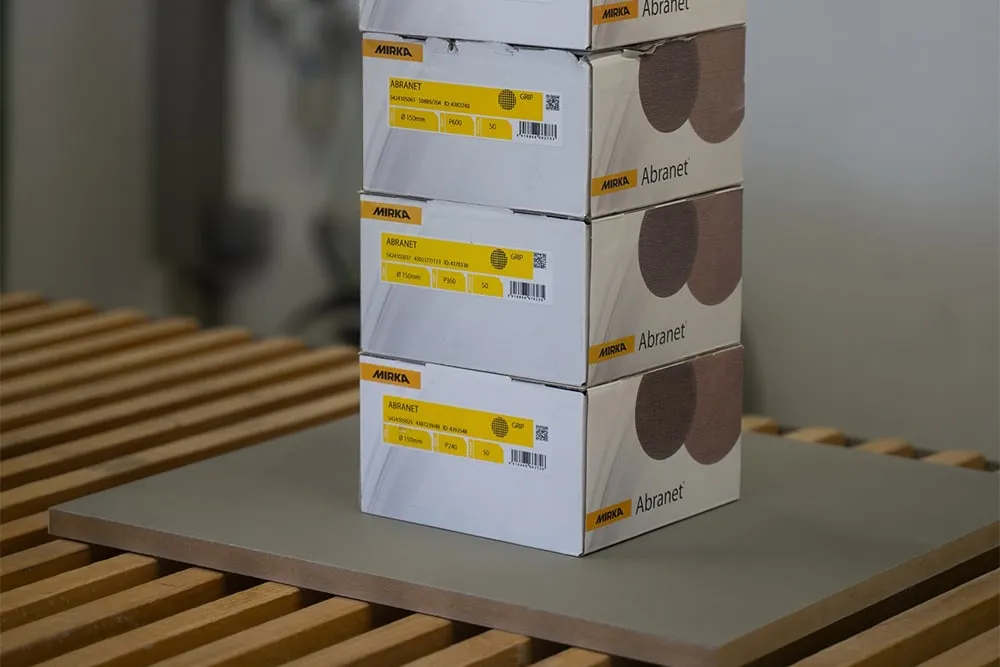
Step 6: Applying the topcoat
For the final step, applying the clear topcoat, it is important to make sure the surface is dust-free. “You can use Spezial-Verdünner for this,” Cremers suggests. Then apply Tiropur NG in gloss level G70. Pigmotop G70 is a good alternative. “The result is a surface with a beautiful tin finish,” says Cremers.
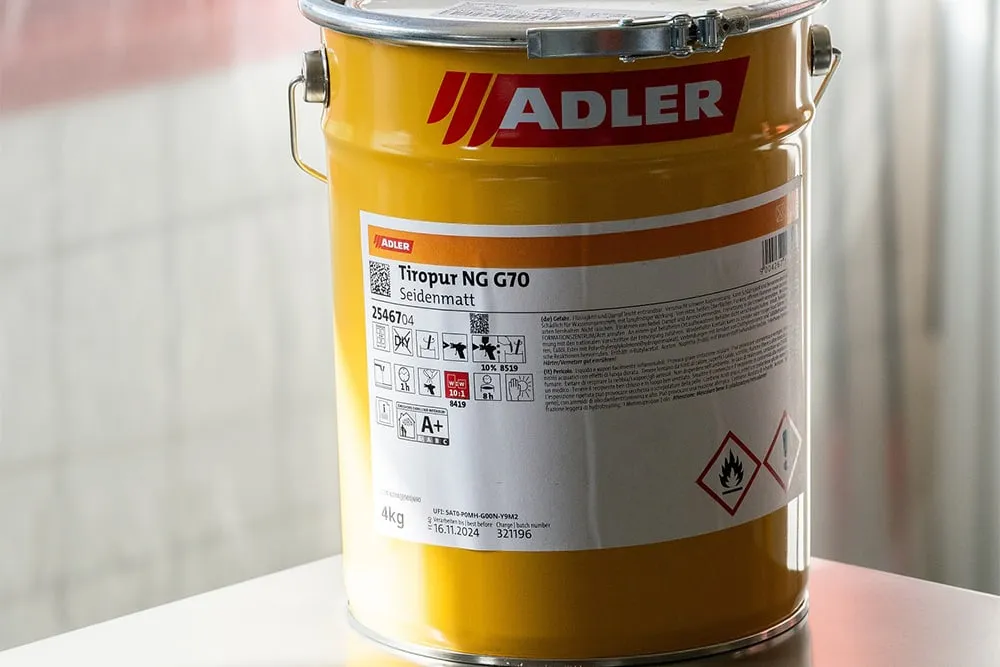
Step 6a: For a vintage look
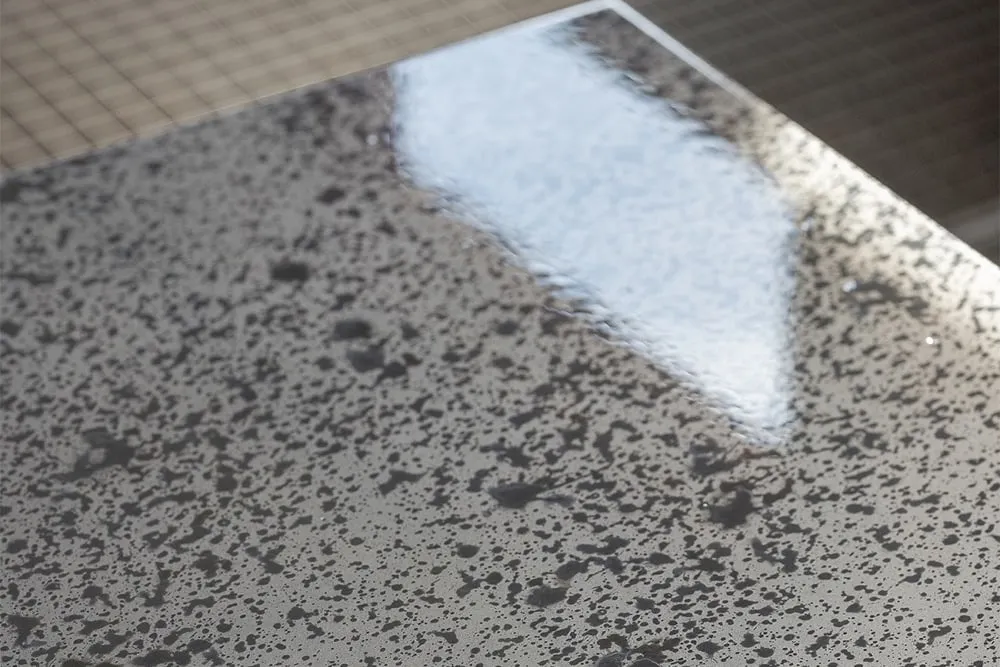
Would the object suit a less uniform finish? The surface can also be artificially aged, changing its colour to create an attractive vintage look. “Apply Aquafix Blue-Patina to the dry, sanded surface before applying the topcoat,” explains Cremers. “You can mist it on lightly or apply larger drops, evenly or only in certain areas: you have complete freedom. After drying overnight, the oxidising solution gives the surface a unique look.”
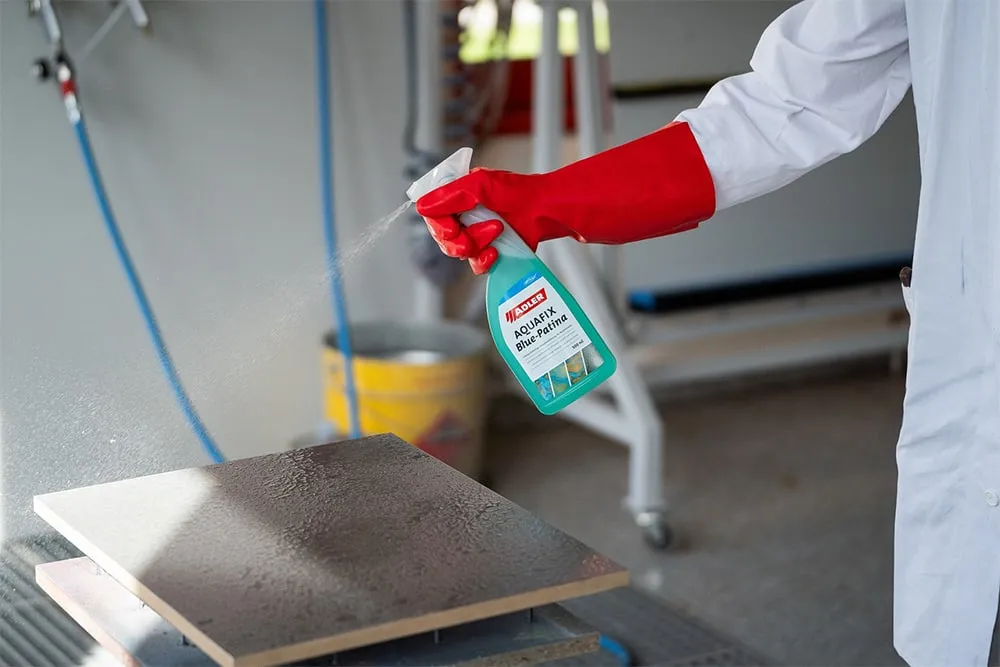
Step 6b: Topcoating the patina
Here too, it is important to apply a protective clear coating afterwards. “PUR-Antiscratch HQ G10 is best suited to this, as it creates a surface that can withstand knocks,” Cremers recommends.
Question about this story? Ask your question
Companies in this story
Keep following this
Get an email when a new story is published. No account needed.
- ThemeDecorative and protective surfaces
- SubjectCoatings & paint
- CompanyADLER Benelux BV