Daily planning meetings mean constantly firefighting
Text Tamara BrouwersImage Ardis
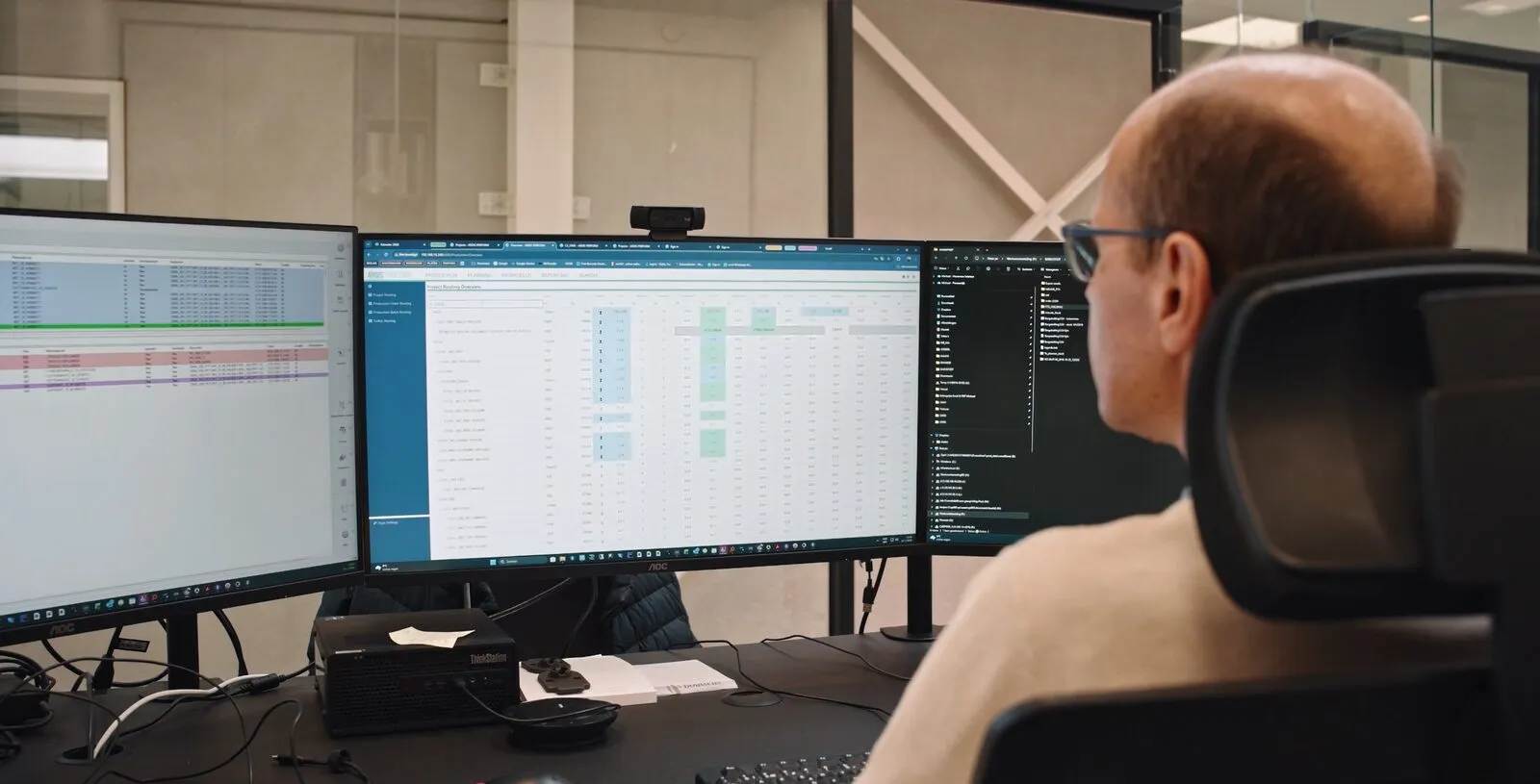
Many Dutch interior fit-out companies still plan production using a static Excel spreadsheet, while the day-to-day schedule exists mainly in the production manager’s head. That can work well until an urgent order, late delivery or change on site shifts everything. According to Jaco van Vliet, industry expert at ARDIS®, bespoke production therefore calls for a schedule that can constantly adapt.
Jaco, where does the current approach to planning fall short?
“ERP systems often provide insufficient support for the specific realities of interior fit-out. As soon as materials arrive late, a machine breaks down or a site is not ready, the schedule has to be adjusted immediately. Almost no one can work out in their head what impact that will have on all the other orders. Chaos can set in very quickly.”
Why is bespoke work so difficult to plan?
“Every component goes through its own production steps, and these depend on one another. Take a wall of cabinets with lacquered doors. The cabinets can go into production relatively late, but the doors have to be lacquered and then left to dry before they can be fitted. So the doors have to be started days before the rest of the order. Keeping track of all this is complex. As a result, the cabinets are often produced well in advance too, leaving the workshop overcrowded. To support this properly, every component needs its own completion date for each production step.”
How does ARDIS® Planner & Scheduler handle this?
“ARDIS® schedules the entire production process backwards from the required delivery date. The system takes into account the production steps required, their sequence and the available capacity.
When an order is rescheduled, the knock-on effects are immediately visible. The planner can see where bottlenecks will arise and decide what to do: move another order back, start earlier, schedule overtime or outsource work?”

What are the tangible benefits?
“Above all, greater control. Companies can justify delivery dates more effectively, identify bottlenecks earlier and deploy machines and staff more purposefully. At the same time, the schedule in the office stays aligned with actual progress on the shop floor.
If you spend more than an hour every day discussing what needs to happen when and how far along an order is, you are mainly firefighting. You are no longer really planning. With one up-to-date schedule, there is less need for constant calls, checks and coordination.”
Is this approach to planning only useful for large companies?
“No. Every manufacturing business needs interactive planning; only the level of detail differs. For a smaller company, a high-level schedule may be enough. A capacity-driven business needs to be able to plan down to department or machine level.
That is why a generic scheduling programme is not always enough. ARDIS® was developed for the industry and takes account of specific production steps, dependencies and the different routes each order can take. That intelligence is what makes the difference.”
Een zakelijke vraag aan ARDIS? Get in touch
Companies in this story
Keep following this
Get an email when a new story is published. No account needed.
- SubjectSoftware & digitalisation
- CompanyARDIS