Circularity in interior fit-out: Maiburg on sustainable materials and reuse
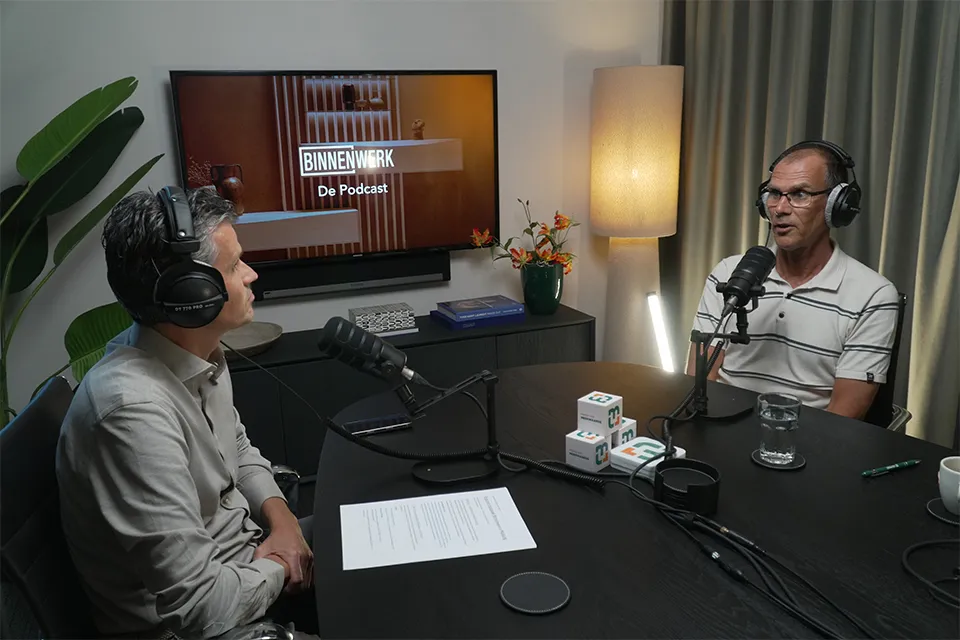
How can interior fitters and furniture makers make the right sustainable choices today? Leon van Dun and Johan van Dinther of Maiburg discuss circularity, material choices, reuse, certification and the impact of new regulations on the interior fit-out and furniture industries.
Host: Roel van Gils
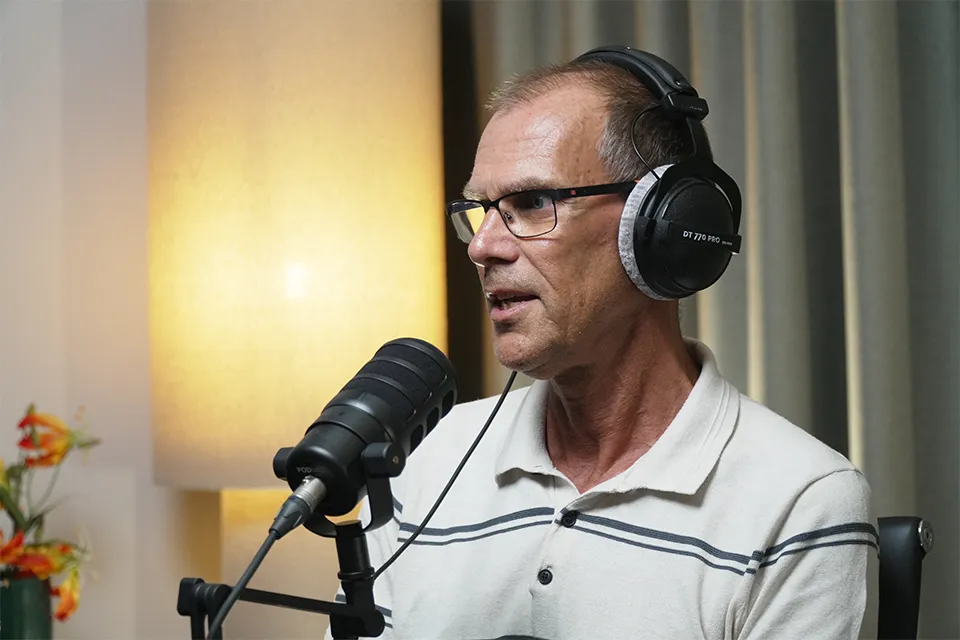
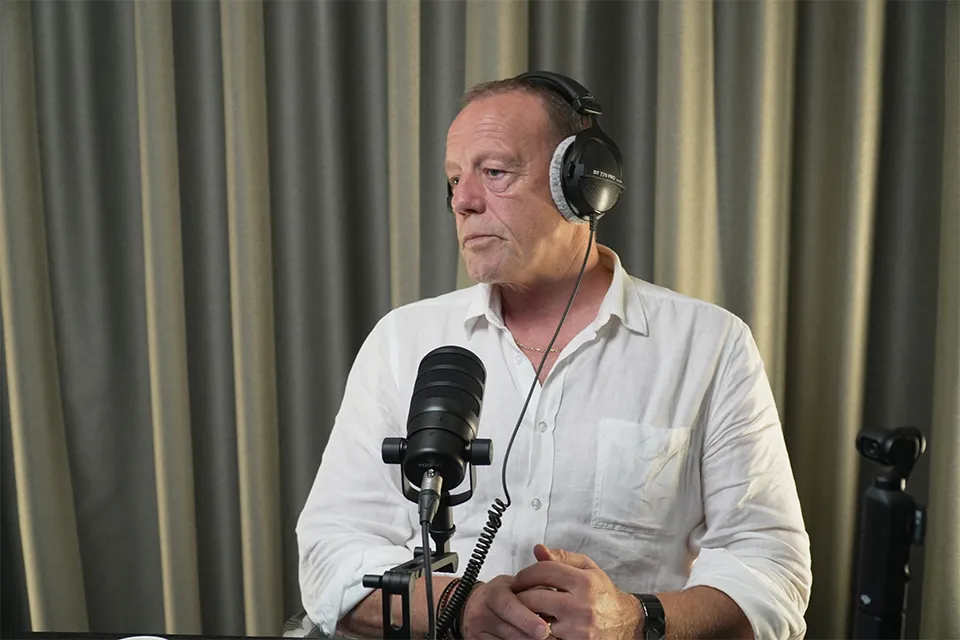
Een zakelijke vraag aan Maiburg? Get in touch
Full transcript
Alle hoofdstukken (30)
- Circularity in the interior fit-out and furniture industries
- Introducing Leon van Dun
- Introducing Johan van Dinther
- Personal motivation for sustainability
- Sustainability from a commercial perspective
- Maiburg as a wholesaler and knowledge partner
- Certificates and the Maigreen label
- The honest story and how products are used
- Is the market ready for sustainability and circularity?
- From sustainability to circularity
- BREEAM, material provenance and reuse
- Knowledge and project support
- Knowledge and consistent rules
- The R-ladder and more sustainable materials
- EPDs and life cycle assessments
- Innovation and demonstrable environmental impact
- DenimX and recycled textiles
- Maiburg’s product groups
- Legislation and the digital product passport
- Transport movements as part of sustainability
- What an LCA and EPD cover
- Maiburg’s role as a family business and knowledge partner
- Maiburg’s future role
- Taking back HPL and reusing materials
- Design for disassembly and adhesive technology
- Service life and choosing the right material
- Making more sustainable choices, starting with the practical
- Healthier working in the workshop
- Sustainability as a commercial opportunity
- Personal motivation and closing remarks
Circularity in the interior fit-out and furniture industries
Roel van Gils Welcome to Binnenwerk the Podcast. In this episode, we’re talking about circularity in the interior fit-out and furniture industries. Everyone wants to work more sustainably, but what’s the right choice today? How do you determine what is truly circular when the rules of the game are still evolving? I’m discussing that today with two guests from Maiburg. Gentlemen, please introduce yourselves.
Introducing Leon van Dun
Leon van Dun My name is Leon van Dun. And thanks for that lovely introduction, by the way. I’ve always been involved in product information, communications and promotion. But about 15 years ago, I started focusing on sustainability. What are sustainable materials? What do customers need? That’s how I got started with sustainability. Today, it’s become a very broad subject. But we’ll come back to that in a moment, I think. It’s too broad for an introduction. My role in it has grown steadily.
Roel van Gils Okay, thanks, Leon. And Johan?
Introducing Johan van Dinther
Johan van Dinther My name is Johan van Dinther. I’ve now been with the company for 38 years. I started in the internal sales team and have always worked in sales-related roles. Eventually, I moved into a field-based role, and I’ve also held a management position. In recent years, I’ve been responsible for a number of key accounts, as well as product management in particular. So in that capacity, I’m also involved in circularity, sustainability and things like that.
Roel van Gils There’s a lot of experience around the table here, more than 60 years, almost 70.
Leon van Dun Yes, a lot.
Personal motivation for sustainability
Roel van Gils Okay, Leon, you said you’ve been working on sustainability for 15 years. What motivates you personally to focus on it?
Leon van Dun It’s developed over time. I’ve always had a general interest in it, in climate research and so on. We’re sitting comfortably indoors at the table today, by the way, but it’s 33 degrees outside. You start thinking more about the future of businesses. What products do we sell? Sustainable products, and sometimes less sustainable ones too. You start asking questions about them, and that’s really how it developed. I said earlier, it’s been about 15 years. There’s legislation around us, questions from customers, discussions on talk shows and so on. It’s something people are talking about more and more. That interest, and my role at Maiburg as a wholesaler, have helped it grow. As a company, you want to do your bit. And I’ve gradually become something of a specialist in it.
Roel van Gils Okay, interesting.
Leon van Dun I have to say, all the questions and activities, and conversations with customers, for example, make you more and more interested. But they also strengthen my personal motivation to help customers or make a contribution. That role keeps changing, which also makes it really interesting. We don’t do things now the way we did five years ago.
Roel van Gils And in five years’ time, perhaps things will be different again.
Leon van Dun Or what we thought was good back then is now the bare minimum, no longer enough. That makes it interesting, really. I still start every day with the same ambition and plenty of energy.
Roel van Gils Right.
Leon van Dun To do better than yesterday.
Read the full transcriptCollapse transcriptnog 26 hoofdstukken
Sustainability from a commercial perspective
Roel van Gils Yes, that sounds good. And Johan, what about you?
Johan van Dinther It’s also a bit to do with your personal motivation, so that applies to him in particular too. Look, I usually think in commercial terms. So when we asked ourselves in 2009 or 2010, ‘Okay, are we going to do something with this? Do we want to do something with it?’, we said yes. We started by asking: what do we have, and how can we use it? And how can we apply it for our customers too, so that we can stand out by offering circular or sustainable products? I’m commercially minded, so fairly opportunistic. There’s something out there, so how can we apply it? How can we differentiate ourselves? And when you start telling customers that something is circular or sustainable, that it has certificates and so on, Leon comes around the corner and asks, ‘Is it really?’ And then I’m usually done, because, as I said, I work in sales.
Roel van Gils So in that sense, you complement each other.
Johan van Dinther Definitely. Leon’s more the one who says, ‘Let’s find out if it’s all correct.’ That’s how we both got into it, in a way. I came at it more from the commercial side, and he more from the knowledge side.
Maiburg as a wholesaler and knowledge partner
Roel van Gils And if you had to sum it up in a few lines, what are you? What do you do?
Leon van Dun Who are we? What do we do? First of all, we’re a wholesaler. I always add to that, when talking to customers or in a conversation: ‘But we’re not just box-shifters.’ What I mean is, as a wholesaler, our primary role is to put together a range from multiple suppliers, keep it in stock and deliver it to customers quickly. But we’ve always shared knowledge too, and sustainability has now become part of that. Sometimes we educate or train customers, explain things, guide them or help them make choices. Sustainability is another topic. And just to add to what Johan said, I’ll take a step back to what he was saying. That’s where my story began. If you look at our range now, compared with ten years ago, a lot has changed. But the question I asked back then, as a marketer, was this: we also want to share knowledge and provide product information about our products. We want to tell the honest story, and that also means saying when we don’t know something or when there’s doubt. But back then, it started with the topic of sustainability. What does that actually mean? When is a product sustainable, or less sustainable? That’s where the questions began. Then I started teaching myself about certifications. All kinds of labels get put on products, but when a customer asks about them, hardly anyone understands them, or they can’t see the wood for the trees. What’s the difference between certificate A and certificate B? I wanted to help with that, and also be able to assess our own range critically. Another tangent was BREEAM and sustainable construction. Office buildings are being built, and the client wants to put a label on them saying, ‘My office building is sustainable.’ What does that mean? What does a standard like that require of the materials we sell? In this way, I try to build up knowledge and make connections. That’s where it all started, bringing those things together.
Certificates and the Maigreen label
Roel van Gils What worked back then, and what didn’t?
Leon van Dun What worked and what didn’t? I’d say it’s pretty complex to work out properly. I want to make it really simple and precise, and sometimes that’s my own pitfall, because it’s almost impossible to do. Or to compare certificates. Sometimes you can, sometimes you can’t. What we did after that put us in a bit of a bind, or at least put me in one personally. We introduced our Maigreen label. At the time, there were all kinds of labels saying something about emissions or the composition of materials. Certain certificates. As I always say, you can’t see the wood for the trees.
Roel van Gils Yes, everyone has their own little things, certificates and so on.
Leon van Dun The first distinction I make is that I always use the supermarket as an example. If you’re walking around a supermarket now and see all kinds of labels on packaging, you might wonder: is this just commercial? Has a supplier simply put something on it, or is there substance behind it, or has it been tested? And if one product has a label and another doesn’t, does that mean the first one is better? You see the same thing here and there in our sector. Of course, in our industry there are also certificates that tell you something about the emissions of, for example, an adhesive, and are backed up by testing methods. That doesn’t mean one product is worse than another. But if a customer sees two labels, or a product with a label and one without, does that mean one is worse? We try to make this clear, and to give customers concrete answers to those questions.
Roel van Gils So do you summarise all those labels, or how does it work?
Leon van Dun What we did about ten years ago was put our Maigreen label on it, to make things easier, basically. If we’ve added a green or blue label, it’s to make things visual, so people can see at a glance without having to read everything.
Johan van Dinther Okay, I can look in that section, right.
Leon van Dun It’s been a bit controversial, as I always explain. The argument for it is that you can’t see the wood for the trees when it comes to all the different labels. Are they reliable, are they commercially driven, or what are the differences? Even so, we decided at the time to make things easier for customers and for ourselves, I have to say. Sustainability can be quite difficult for the sales team to deal with in many respects. So we decided to add a label if we thought a product’s composition, for example, included recycled wood. That’s our sustainable choice label. We use the market average as our benchmark, so anything that performs above that gets the label. We also have a blue label, for a healthy choice. That’s more about things like hazardous substances or emissions. If a product scores better in those areas, we say you’re in safe hands. We do use recognised labels as evidence for those claims. Otherwise, we’d be marking our own homework. The point is to make things easier.
Roel van Gils Yes, okay.
Leon van Dun Otherwise, you’d have to explain the whole thing at length every time. So it’s a simple label, to make it easier to choose.
The honest story and how products are used
Johan van Dinther But the aim is still to tell the honest story. You shouldn’t forget that. There’s rubbish on the market.
Roel van Gils Yes.
Johan van Dinther Yes, things that simply aren’t right. We do try to tell the honest story, and link it to how the product is used. Because something can be sustainable, circular, and so on.
Roel van Gils But it can work out differently in practice.
Johan van Dinther That’s what I mean. If it can’t be processed, for example, then customers are done with it. That’s also what I mean by telling the honest story: giving customers proper advice too. I’d say, ‘I’d do this’, or ‘I definitely wouldn’t do that.’ But, yes, the honest story. And sometimes you run into a wall yourself, too.
Is the market ready for sustainability and circularity?
Roel van Gils Yes, no, I understand. But when you started, ten or fifteen years ago, as you said, Leon, was the market ready for it then? Was there already demand? Or were you really too early, so to speak?
Johan van Dinther It was just starting to bubble away then. But the question is whether the market is ready for it now.
Roel van Gils Oh, really? That’s quite a serious claim, actually. Why?
Johan van Dinther Larger organisations and so on are ready. They make it a requirement. But if you look purely at the lower tiers, they aren’t thinking about it yet. That’s simply because people think: okay, something sustainable and circular will probably cost more. That was true in the past. And I think that gap is getting smaller all the time.
Leon van Dun Yes, perhaps the initial purchase price is higher, but over the longer term, of course, it’s a different story altogether.
From sustainability to circularity
Leon van Dun One more thing. Fifteen years ago, around the time I’m talking about, it was People, Planet, Profit.
Roel van Gils Oh yes.
Leon van Dun It was about the planet, tomorrow and the next generation. But a company has to make money, otherwise it can’t develop. It has to make money and do the right things. That was the message then, under the catch-all term sustainability. What does that mean? Well, you can interpret it in several ways. In recent years, we’ve been talking about circularity. So over all those years, you see a new catch-all term coming along each time. The challenge is this, though. We ask whether the market is ready. And what do we see? Circularity, yes, but what does that mean? Everyone interprets it differently. Regulations are coming. How should we interpret it? There are all sorts of conflicts and dilemmas. Is a panel made from recycled material, which can then be recycled again, a positive thing? Or should it be reused? So there are all sorts of developments around material content, new business models, repairability and new legislation. A whole flood of initiatives and ideas is coming our way. As a specialist, given our role, I’m often trying to work out, and having interesting conversations with customers, designers and manufacturers about, what’s the right direction? For Maiburg and our customers too. So it’s important to anticipate what’s coming. Where should we focus all our efforts?
Roel van Gils Yes.
Leon van Dun For example, should we, just throwing this out there, reuse materials rather than buy new ones? I’d say: we have a very large warehouse now. Every day we supply great products of ever-improving or different quality: recycled wood, lower emissions, bonded with bio-based adhesives, adhesives containing different binders. More water-based products, fewer solvents, all positive developments. But you also hear people in the market saying: circular means no waste. Reuse materials, stop bonding products together. Yes, reuse panels rather than recycle them. And then you think: there goes our business model. To link that back to your question, Roel, about what we’re seeing and how far the market has come: I’d say about 10 per cent are the pioneers. They’re often, though not all, larger companies. They’re active and professional. We need to offer customers something different, better concepts, or work for large organisations or government bodies. They set the bar for circularity. That includes reusing materials, for example, reusing materials from a renovated building, using different materials or obtaining a BREEAM certificate, which sets certain requirements. We are seeing that happen. But 80 or 90 per cent are lagging behind and waiting to see what happens.
BREEAM, material provenance and reuse
Johan van Dinther Yes. But take BREEAM, for example. Ten years ago, it was hardly a consideration. Now we regularly work on projects where it’s simply…
Roel van Gils That certification is required.
Johan van Dinther Look, ten or fifteen years ago, everyone had at least heard of PEFC, FSC and things like that. Those were really the guidelines back then, along with formaldehyde emissions. They’re becoming less and less of a focus. The questions are now more along the lines of: okay, where do the materials come from? How do you use them? And how can you reuse them later? And what happens to the waste? Those four things are crucial.
Knowledge and project support
Leon van Dun With a BREEAM project, the support we provide is perhaps worth mentioning. Johan and I often happen to find ourselves at the same table with a major account or a [unclear].
Roel van Gils So this will be familiar to many listeners, the two of you sitting at the same table.
Leon van Dun Yes, but then you’ll see Johan, the product specialist, sitting next to me. He’s the technical expert, and knows almost everything that’s available and what materials can do. I bring more of a focus on certifications, BREEAM, or what circularity means. I also discuss that with the customer or client. What are their ambitions? What do they mean by that? Because otherwise you end up talking at cross purposes. We regularly sit around the table with customers, designers or suppliers. They’re all smart people, and yet they’re often coming from different contexts, telling different stories or working with different levels of knowledge. So that’s always the starting point for us: what are we talking about together? What’s the objective? What exactly are we trying to achieve? Sometimes we see certain materials being used, and if they aren’t approved for the project, well, then there’s a problem. And sometimes there are discussions between us at Maiburg and the person responsible for approving the certification of a BREEAM project. We say: we do have a bit more knowledge, or we find out more, and that can lead to a discussion, after which the material is eventually approved.
Knowledge and consistent rules
Roel van Gils Or whether something is circular. Are the rules unclear or inconsistent?
Johan van Dinther It comes down to knowledge.
Roel van Gils It really is about knowledge, yes.
Johan van Dinther A lot of it comes down to knowledge. And I’ll say this, looking across at my neighbour here: we sometimes have discussions with our suppliers too. They might make a claim, for example, and Leon will say: that’s not possible at all, or it doesn’t work like that. That can lead to a discussion, and in the end we complement each other. There’s an objective. They also want to stand out through… Well, they have to make money too, otherwise they can’t invest. And we’re now on a path we simply can’t turn back from. I think the Netherlands, along with Scandinavia, is leading the way in this area.
Roel van Gils In this area too.
Johan van Dinther Yes, you can see that. But again, the most important thing is that every initiative people come up with has to be practical. That’s very important. If you can make that happen, you can set yourself apart. That’s what matters.
The R-ladder and more sustainable materials
Leon van Dun Yes, when it comes to… Look, circularity is such a broad concept. I sometimes bring up the R-ladder here. It’s a particular framework. People talk about different models, different ways of working, what a circular supply chain or circular loop looks like, and so on. We’re more on the materials supply side. So our main focus, and what I’ve been working on for years, is making product compositions more sustainable. That might mean using recycled material, recycled materials or alternatives. Changing the chemical components, using more renewable raw materials instead of petrochemical ones. Educating suppliers, showing them and putting pressure on them to make certain product developments. We want to bring a better product to market, so we tell them to work on it. But sometimes you run up against the fact that the Netherlands is ahead of the curve on certain ambitions and so on. And, well, we’re a small country.
Roel van Gils But yes, Scandinavia may be doing its bit too.
Leon van Dun So, yes.
EPDs and life cycle assessments
Johan van Dinther Well, for example, not every supplier has an EPD for its products. We think it’s important to at least be able to present one to our customers.
Roel van Gils So do you then decide not to stock that product?
Johan van Dinther Well, that would be going too far for now. But perhaps the time will come when we do make that choice.
Leon van Dun Just to explain for listeners, an EPD is based on a life cycle assessment. It’s a more or less recognised method in the market, in Europe, which allows you to show the environmental impact of something like a tabletop or a particular adhesive, per kilo, using standard environmental categories and impact indicators.
Roel van Gils But that applies purely to the product, not how it’s used.
Leon van Dun Ultimately, it’s about the product. We’re increasingly trying to require this, or the trade association is, so it’s more a case of saying: we want that product. Is the manufacturer committed to reducing its environmental impact by improving the products? If you don’t commission an LCA, you can’t really demonstrate that.
Roel van Gils But manufacturers should have an incentive to do that, shouldn’t they?
Leon van Dun You’d think so, yes. Some see it differently. No, some are working very hard on it. Yes, it is getting better, though. That brings us back to the past. But then we have to come clean. Exactly, I say. Have we made that choice too? We do want all those materials to have an EPD, an environmental impact assessment from our manufacturers. It’s not something Maiburg can do itself, because then we could put something in there ourselves. We’re not a manufacturer. We need that data: energy consumption, materials. Where do they come from? How are they transported to a factory? And of course, the mix also includes a secret formula of raw materials.
Innovation and demonstrable environmental impact
Leon van Dun But I can also link this to another development in the market. Johan was just talking about keeping the lights on, or making money. You also have the major players. They have a large factory there, processing thousands of cubic metres a month. Real innovation sometimes comes from smaller companies.
Roel van Gils Oh, because they don’t have that burden, of course.
Leon van Dun We understand that. They have greater ambitions. They start out with a particular ambition, a different approach to sustainability and a different motivation. They have a different starting point, but they also don’t have the handicap of having an investment sitting there that has to keep running. But then you run up against another issue. To link this back to life cycle assessments, an environmental impact report costs money. Those companies have to invest upfront. We help them by stocking their products and teaching customers how to use them, because sometimes the materials are different and work differently. We support them with that. But then we find ourselves facing another dilemma, another bind: a very sustainable product, genuine upcycling of a particular recycled raw material, but we can’t demonstrate its environmental impact clearly. And that’s one of the many challenges in the market. One customer or architect might say: that sounds great, and I believe it. I’ll use it, and I want to show off the material. You should be able to see that it’s made from recycled raw material. Then there are companies, or certain systems, that require proof. And that can mean the product never really gets the chance to take off.
Roel van Gils Yes, that’s the bind you find yourself in, of course.
DenimX and recycled textiles
Leon van Dun And you see that more in legislation, of course, and in technical requirements. But it also means shifting our focus a little, or looking for the areas where we really need to go all in. For example, with a new material we’ve added to our range, DenimX, we’ve launched a product range.
Roel van Gils What exactly is it?
Leon van Dun It’s three different materials made from recycled textiles, denim and other recycled textiles, old clothes. One is a biolaminate. It’s a flexible material. Essentially, it’s the raw material, which you can then mould in all kinds of ways or use as a surface material. But then there’s the need for collaboration again, and for us to take a critical look at the market, at customers and at what’s suitable for different applications. And then I look at you too and say, yes, but this product has its limitations.
Roel van Gils That’s part of its appeal. What can it be used for?
Johan van Dinther It’s essentially for decorative applications too.
Leon van Dun Yes, but to add to that: it’s a biolaminate, but we also have an HPL made from it. HPL is a surface material you can use to cover tabletops and things like that.
Johan van Dinther For horizontal applications.
Leon van Dun And in terms of scratch resistance and durability… But by durability, we don’t mean environmental performance, we mean a long service life. It stays looking good for a long time and isn’t vulnerable.
Johan van Dinther It has all the properties and benefits of standard HPL. Full stop.
Leon van Dun And then there’s the loose felt, which could simply be used as wall covering, for example. All three use the same base: recycled raw material. We look at what application a customer or architect might have in mind. Each of the three materials has a function, but also a drawback. And then we can offer an alternative.
Johan van Dinther So they can still have creative freedom. That’s important too.
Leon van Dun But these are the kinds of things that help get products off the ground. It’s an issue we come up against too. A wonderful material, made from recycled raw material, with different properties. The market, and interior fit-out companies in particular, which are a very large customer group for us, often say: yes, but it works differently from… Or we have to cut it a little differently.
Roel van Gils Yes, that’s true.
Leon van Dun One company is very ambitious and wants to fit out its products or projects as sustainably as possible. They say: we’ll accept that, then, and put in the hours to learn how to work with it. Another company, though, just rejects it.
Johan van Dinther Yes.
Leon van Dun Second, there’s the question: it’s a lovely material, but is it sustainable? What about its environmental impact? Those reports. And then you go back to the honest story.
Johan van Dinther Does it actually stack up?
Roel van Gils Yes, yes, yes.
Leon van Dun A fourth question is: how long will it last? Or my customer asks all sorts of questions. But that’s mainly Johan’s area. He’s often the one advising on that. And what we’re now discussing with customers is: what does it cost?
Roel van Gils Oh, really?
Leon van Dun Yes, cost still plays a major role.
Maiburg’s product groups
Roel van Gils Yes, I understand. You’ve already mentioned a few products. What are your main product groups or categories for interior fit-out?
Johan van Dinther Interior fit-out, yes, right. That takes us back a little to Maiburg as a family business. We originally started out as a supplier to the footwear industry. We still do that, incidentally. But we started with shoe machinery. Abrasives were added at some point, and then adhesives. Next came surface films and then sheet materials. And we also have another company, Lecol, which offers everything for flooring. But whatever market you’re in, you have your… how should I put it? Your sustainability arguments and principles.
Roel van Gils And you apply that across all the products you supply?
Johan van Dinther At first… Recently, I haven’t found it too bad. In the beginning, there was always a debate about price because there was a huge gap between the price of a standard product and a sustainable one. But that gap is getting smaller, and it also depends a little on which country you’re in. But again, I feel that the Netherlands is really leading the way. And there’ll come a point when standard products simply aren’t made any more, and then…
Roel van Gils The new product will simply become the standard.
Johan van Dinther The standard, yes. And again, it all starts with government legislation, from Europe and that sort of thing. Under pressure, everything becomes fluid. It’s bound to happen. Take melamine-faced chipboard: at some point, there’ll be a standard without glue, using a replacement material instead. That’s already happening. Look at Pfleiderer and its OrganicBoard, for example. I’m making a prediction, and I think I’m still the only one doing so: eventually, this will simply become the standard. You see the same with bio-based MDF and formaldehyde-free plywood, and so on. HPL is another interesting challenge. There are already initiatives under way. It’s going to happen. And products such as DenimX can then be used as a follow-on material. Then there are boards. Then there are adhesives. There are plenty of initiatives there too. About 20 years ago, we launched a water-based contact adhesive. A great product. I think it was called Contact 2005, if I remember correctly.
Roel van Gils A few years ago.
Johan van Dinther Yes, 20 years ago. A great initiative. Unfortunately, though, it wasn’t suitable for the applications we had in mind. If you look now, not so much in interior fit-out but in the polyester industry, there are good water-based alternatives that have become standard. But developing systems takes time too.
Roel van Gils Yes, of course.
Johan van Dinther And it starts with a supplier being open to it. It starts with a distribution partner being open to it too. But ultimately, the customer has to want it as well.
Legislation and the digital product passport
Roel van Gils You mentioned legislation just now. Do you think it will bring greater clarity?
Johan van Dinther Not straight away.
Roel van Gils Because what is… a digital product passport, for example?
Leon van Dun Yes, that’s something we’re working on. It’s a significant challenge that’s coming up, though. I don’t think many interior fit-out companies and furniture makers are fully aware of it yet. The Ecodesign Directive, for short.
Roel van Gils When will it come into force?
Leon van Dun That’s where the uncertainty starts. The expectation is that furniture will be high on the list of product groups, with introduction between 2028 and 2030. One element is what you mentioned, Roel: a digital product passport. I’m trying to get to grips with this legislation too. What does it mean now? What might it mean for our customers, and for the products or applications we work with? It comes down to providing information. I have a piece of furniture here, with a passport and a QR code. You can see what the product is made of, its environmental impact, what type of material it is and how best to maintain it. So it’s also about extending its service life: making it repairable, and potentially designing it for disassembly so it can be repaired or things can last longer. How can it be taken apart? That’s the question: what’s going to happen? The aim is to provide better insight into environmental impact and encourage products to be used for as long as possible or recycled. Requirements will be introduced. So we’re wondering which way things are likely to go. What will people do? Use fully recycled material, OK. Should I focus entirely on making the furniture reusable? Will there be pressure for you to be able to return furniture to the shop where you bought it? Do you sometimes see that? Or, if waste collection keeps getting more expensive, will consumers put pressure on suppliers? In any case, Brussels’ aim is transparency, a bit like the energy label we know: A-plus means lower energy consumption than… So, something like a Nutri-Score.
Roel van Gils Yes.
Leon van Dun There may also be a disposal fee. But we’ve seen with various systems, and I don’t know whether you’re familiar with the Nutri-Score now used on food packaging, that it has come in for a lot of criticism. Sometimes one pizza gets a B and another gets a D. How can that happen within one system? So again, there’s the legislation behind it. How does it work in detail? And what do I have to do? The ambition is there, so it’s a positive step. But then we think: yes, what will it mean for our customers? We’re also curious about what Johan calls design for disassembly, or take-back guarantees, where furniture is taken back, or reusing materials instead of using new ones, or using less adhesive so things can be reused. Yes, where is it all heading?
Transport movements as part of sustainability
Roel van Gils And what role do you play in that?
Johan van Dinther I’d like to add one more thing: the number of transport movements. We talk about products, applications and so on, but transport matters too. It’s part of sustainability and circularity.
Roel van Gils But that’s included in the LCAs, isn’t it?
Johan van Dinther No, not entirely. Not for the application, of course. You could buy something for ten euros from somewhere on the other side of the world.
Roel van Gils Oh, I see.
Johan van Dinther The question is whether that’s better, and whether it’s actually cheaper delivered to your door. Transport movements are just as important, in my view. And transport is only getting more expensive. So you’re talking about reuse and taking things back. That generates extra transport movements, though. Transport is… something you have to think about too.
What an LCA and EPD cover
Leon van Dun Let’s pick up on that point, because it’s a good one. On transport movements, Roel, you asked whether they’re included. Well, an EPD usually covers the raw materials, where they come from and how they were transported, how the factory operates, what energy it uses and how much, water use, and so on. Usually, it covers everything up to the factory gate.
Roel van Gils OK.
Leon van Dun Some LCAs and EPDs look at environmental impact more broadly. Take HPL, for example: it’s always bonded to something. So an EPD for a piece of furniture could include how it was bonded in the factory. That would be a broader assessment, but the furniture maker would have to do it.
Roel van Gils Yes, you can’t do that, of course.
Leon van Dun No. Some EPDs look at what happens to the furniture at the end of its service life. A life cycle assessment, as the name suggests, can cover the whole cycle. The report tells you which stages in the chain have been included in the calculation.
Roel van Gils Yes, it’s always an average.
Leon van Dun Ideally, you’d look at the whole picture. At the moment, it’s usually just the material, and not all companies have those assessments. Then it’s up to our customers to consider what they do with the material. What adhesive do they use, is it an environmentally unfriendly one, do they apply a lacquer, veneer or another material? All of that affects the total impact.
Maiburg’s role as a family business and knowledge partner
Roel van Gils Yes, yes, OK, interesting. Looking at your role in the supply chain, you mentioned it at the start, of course. You’re not just box shifters, you’re also a genuine knowledge partner. That’s how you position yourselves, isn’t it?
Johan van Dinther Yes, and we’re very much a family business. Of course, we do certain things to avoid becoming poorer, let’s be honest. We have up to 100 people, and there are also several families behind the business, that sort of thing. So, of course, we do ultimately want to benefit from what we do. But that’s not really the starting point… And yes, well. Again, we very rarely talk about it internally. But again, our starting point is that we’re a family business, and we’re not just box shifters. There’s a lot of emotion tied up in those two things. Usually positive emotions, let’s put it that way. That’s part of the charm of a family business, but we do take action. And going back to 2009 and 2010 for a moment, when I look at what we’ve achieved over the past 15 years, I think we’ve been fairly successful. And my colleague sitting here beside me certainly has. You see that lots of customers call us when they’re facing a dilemma and ask: what’s the situation? Or what’s your view? That sort of thing. That really is our role. That brings us back to knowledge.
Maiburg’s future role
Leon van Dun Yes, I’ll take this one. We’ve touched on it already. We’re a materials supplier. So, first, I’d say, we do our best to provide transparent information about the environmental impact of materials, and to tell the honest story. A second role we have is helping innovative new materials and the companies behind them reach the market, and supporting their introduction to customers. Then there’s the circular economy, with material reuse and new concepts. We can be a partner to customers in reusing materials. Or they first need to explain their new concept to us. In that case, we may have a role to play in the future, but that’s a big question mark. What would that role actually be? Perhaps it would involve less of this: here’s the material, or I’ll explain how it works, or how to work with a more sustainable adhesive. Or reusing old furniture from a refurbished office building. Sometimes they need less: fewer new materials, less knowledge, but they’ll be using different business models. Or they might say… I’ve had discussions with customers who say: well, we’ll salvage all those panels or all those desk tops from an office, saw them up and use them for other applications. I think: but at some point you’ll have 1,000 desk tops back. You can use some of them in a new project, but then you’ll have 500 sitting in your warehouse. What will you do with them? So I wouldn’t rule out…
Roel van Gils But that could mean your position changes, or your role changes too.
Leon van Dun Yes, in the future. But we’ll have to adapt to the market a little too. That’s why we always say in our story: as well as materials, we have a lot of knowledge and can help you. If you have a new concept, a new development or specific questions. But I wouldn’t rule out a different role as a partner or distributor. Or, if you want to reuse materials, you can come to us, because that’s where it starts. The ambition, or… How should I put it? It’s really about explaining it together. Yes. And that calls for new collaboration and a new role.
Taking back HPL and reusing materials
Johan van Dinther But Leon, for example, I wouldn’t rule out us taking back plywood, MDF or particleboard faced with HPL in the future, sanding off the HPL and bonding it again. Or applying a new layer of HPL. We already bond HPL, of course. But that could be a new dimension in the future. So yes, that would mean taking on a different role.
Design for disassembly and adhesive technology
Leon van Dun Yes, that’s an interesting dilemma too. Or something that has come up in practice. We say: we’re adhesive specialists too. Surface materials in this industry are bonded in place, and we’ve been working on that for almost a hundred years: they have to be really firmly bonded. Even if the sun is shining on your desk in the office today, when it’s 33 degrees, it gets hot and the surface mustn’t come loose. So the adhesive has to hold firmly. Well, that’s a curious thing. Our adhesive specialists are now looking at how it can be removed. Then we can reuse the MDF or base material and bond a new surface to it. They say it’s an odd question, because no one has ever asked it before. But that could be the future. So we’ll look into it. We also have hot-melt adhesives in our range, though they aren’t used for panels. If you heat them, they become flexible and you can remove them. Then we’d have to… We have looked at this as a test case and asked ourselves: should we do it? It would require very different equipment for an interior fit-out company, for example, from what they use now. And that’s quite an investment. Or how does the adhesive work? It works extremely quickly. With a hot melt, there’s almost no time to apply it. Look, it’s already set. So there’s little time to make adjustments… We’ve thought about it, but we also raise it with certain customers involved in major projects. One of them had a real lightbulb moment. One of our customers said: well, Leon, if that’s where things are heading, we’d be happy to explore it. But I think: that’s very inefficient. And is it better than simply recycling it or doing something else with it? Then, I think, we’re weighing up the environmental impact again. It’s very difficult. They said: I think we’ll use more melamine-faced particleboard. Just standard particleboard with a thin melamine coating. We use a lot of HPL now, but it lasts such a long time, in fact longer than the period it’s used for. So we’re actually using a quality that’s too high. If things start to shift, I think: OK, that’s another idea. Yes, there are so many possible routes in the end. We’re also exploring this through all our conversations with interior fit-out companies: where is the industry heading? Or: this is a clever idea too. Or what can we contribute? It’s something we’re working on every day.
Service life and choosing the right material
Johan van Dinther Yes, a bit of advice, just to come back to melamine compared with HPL. If we’re talking about service life, melamine has developed so quickly that you can now get the most beautiful decors with the most beautiful textures. But HPL will always last much longer than melamine. That’s purely down to how the product is made. So another question is: how long do you want something to last? It depends a little on the sector you’re in. Is it for a hospital? A school? Retail? Retail formats and concepts change from time to time. Do you need HPL there? No, not at all. So those factors all come into play too.
Making more sustainable choices, starting with the practical
Roel van Gils I get the feeling you could talk all afternoon. There’s so much knowledge around this table. It clearly has a major impact on a business model, of course. But what’s your advice?
Leon van Dun I’d say start by looking at your workshop, your furniture range, what you make or your projects. You can simply look at the materials you use now. What’s their environmental impact? In many cases, there are already smarter choices to be made. Health is often part of that too. Because I only see… We also sell a lot of adhesives, and they’ve been improved in all sorts of ways. We often have alternatives too. It depends a little on the application. But there are gains to be made. Or look at the cleaning products you use in the workshop. Even if that doesn’t immediately affect the environmental impact. Dust-free sanding, for example. There are lots of things like that… And if you simply look at the materials and make a smarter choice, you can ask us to carry out an assessment. Keep it simple. Or ask: where are the largest volumes? So start simply and make more considered choices.
Healthier working in the workshop
Johan van Dinther It’s easy to get started. That brings us to health.
Roel van Gils But you mean the processing stage, I assume.
Johan van Dinther Processing. There are certainly gains to be made there too. There are now various good products that work very well as alternatives to the basic products, both in terms of application and processing. An owner might sometimes say: yes, but they’re much more expensive. That difference is getting smaller all the time. To give a simple example, materials used to be cleaned with acetone or white spirit. Those contain solvents. If you work with them all day, you’re feeling pretty merry by the end of the day. These days there are lots of good alternatives. And again, they are a little more expensive, but what do you consider more important? The difference is no longer 50 per cent. In some cases it’s at most 10 per cent or so, and in others it’s even less.
Sustainability as a commercial opportunity
Leon van Dun That’s a good addition. A tip for some of our customers. Especially if you’re selling to consumers, or indeed to business clients…
Johan van Dinther Absolutely.
Leon van Dun Taking that step means you can include it in your quotations. Environmental impact. Or: we work with these sustainable materials. The fact is, a large part of the market isn’t asking for it.
Roel van Gils No.
Leon van Dun But there’s low-hanging fruit in making slightly different choices. Or you can offer it as an alternative. If it does make the materials slightly more expensive, you’re putting forward a better solution. The market or your customer can choose, but you can also use it to position yourself. And the expectation is that everything will keep progressing and improving, and that the playing field will become more level. You can still set yourself apart and get ahead of the competition now. So… You can certainly start with simple things, but it’s an opportunity.
Roel van Gils Yes, and you could be too late later on, once everyone else is doing it too, or too late altogether.
Leon van Dun There will also be obligations. On the one hand, just as with the digital passport, we say: these kinds of things will soon be mandatory, so you’ll be better prepared for the future. But for now, you can still make a commercial difference or position yourself more strongly. Tell the honest story, but it’s an opportunity. So you can get ahead on two fronts: legislation and regulation, and opportunities.
Personal motivation and closing remarks
Johan van Dinther Well, there are the rules, of course. There are requirements set by the government or larger organisations, architects and so on. But I think it’s just as important for you, as a furniture maker or interior fit-out company, or someone making the most beautiful kitchens, to have a personal motivation too. You have to want to work with sustainable products, but also with products that are healthy and safe to work with. And again…
Roel van Gils So it really comes down to personal motivation.
Johan van Dinther And that’s something we try to set ourselves apart with. Do we also stop selling certain things because we think they simply won’t have a future? Yes. And, well, that’s something we’re working on too.
Roel van Gils Yes, well, great, thank you. Thanks for sharing all your knowledge and insights, and for telling us about what Maiburg is working on. And thanks for listening, everyone.
Companies in this story
Keep following this
Get an email when a new story is published. No account needed.
- ThemeMore sustainable materials and longer use
- SubjectTimber & sheet materials
- CompanyMaiburg