











From cassette tapes to AI: 50 years of digitalisation in interior construction
Text Tamara BrouwersImage Borm
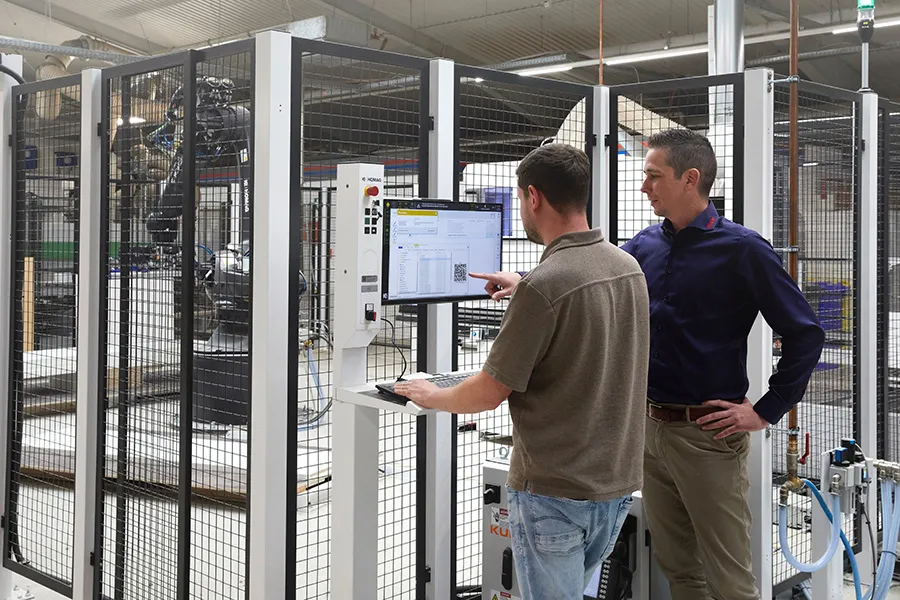
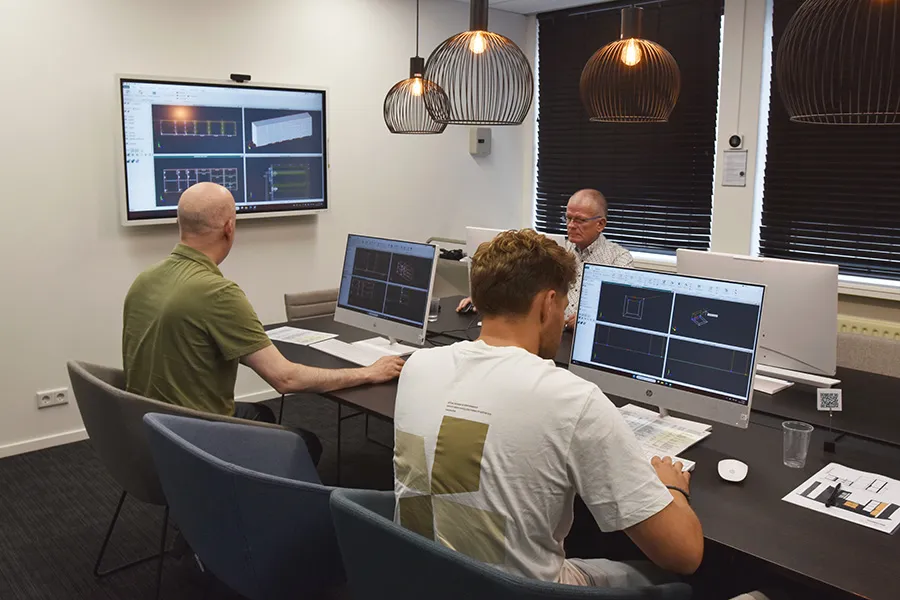
From the first ERP business software to CAD/CAM and artificial intelligence, Borm has seen interior construction change dramatically over the past fifty years. Binnenwerk visits the company in Helmond and talks to Willem and Michel Koelewijn about digitalisation, personal contact and where automation should stop. Visitors to Borm find offices, a training room for customers and, as Michel Koelewijn puts it with a laugh, “lots of screens”. Together with Willem Koelewijn, he is the public face of the Dutch branch. Software development takes place in Switzerland; in Helmond, staff work on customer-specific adaptations, implementations, training and support, among other things.
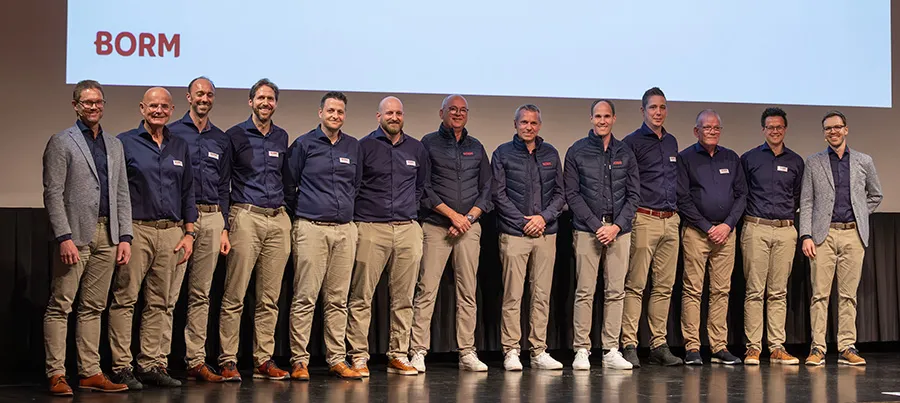
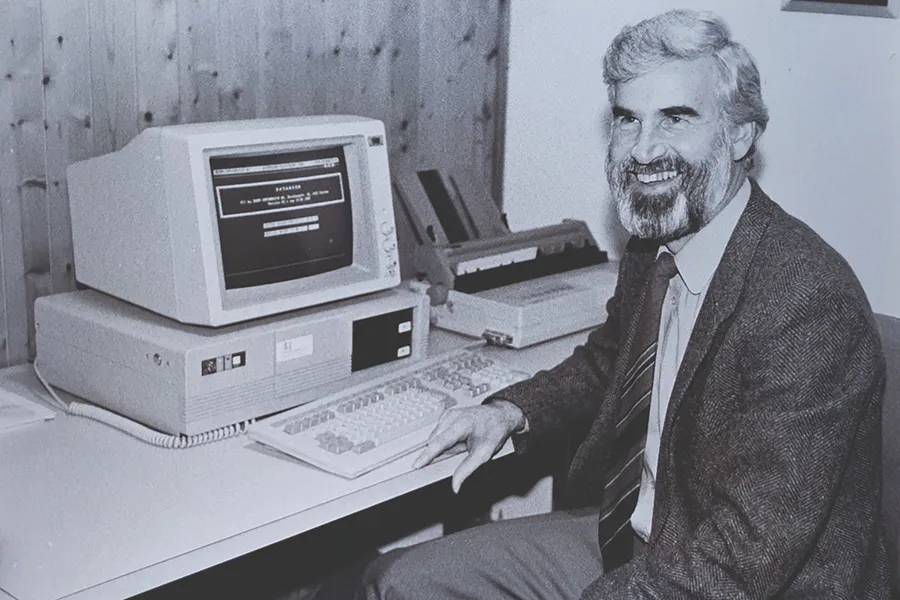
Things looked very different in 1976. “From one to 120 people,” says Willem, summing up the growth of the Borm organisation. Founder Ruedi Meier advised interior construction companies on areas including organisation and cost estimating. Software came into the picture when two customers were dissatisfied with the existing software for the sector. Meier proposed developing an ERP programme for interior construction themselves, which the customers would then buy.
That approach has remained unchanged. “Our software is really developed together with customers,” says Michel. A request from the field can lead to a customer-specific solution or a new feature for all users.
Surprisingly much is still done by hand
Willem and Michel regularly visit customers for presentations, implementations and training. New Borm employees can also shadow a member of an interior construction company or take an intensive training course in Switzerland. This helps them learn not only about the software, but also about the practical work it is designed for.
That practical work is still far from fully digital in many places. “Some companies still programme machines manually,” says Michel. Others produce digital drawings but do not pass the information on to production. Cost estimating, too, is still often done in the traditional way, he says. “There are business owners who can tell how they’re doing only by looking at their bank balance.” ERP software makes turnover, costs and project progress visible much earlier, allowing business owners to make timely adjustments.
Willem and Michel see machine control directly from the drawing as one of the biggest changes of recent decades. Borm incorporated CAD/CAM into its software about twelve years ago. But even with this automation, professional expertise remains essential. The same applies to support staff: they need to understand what happens on the workshop floor.
Borm deliberately keeps that support personal. No ticketing system that leaves customers waiting for a response, but direct contact. “Customers need to feel comfortable picking up the phone and calling us,” says Willem. In his view, that personal contact is an important part of the vision with which Ruedi Meier built the company.
Not everything needs to be automated
AI is the next development. Michel says customers are asking a lot about it. “People say: we want AI. But the question is: what exactly do you want to use it for? We don’t see the point in having AI create an entire design, because where does that leave your craftsmanship?”
Borm is therefore focusing on repetitive tasks and tasks that provide support. For example, AI should be able to render an existing drawing while keeping the interior construction company’s design in the lead. For ERP, the company is working on an assistant that can answer questions about figures such as turnover and customer data. Another application automatically compares an order with a supplier’s order confirmation and flags any discrepancies.
In the coming years, Borm plans to expand its CAD/CAM offering, connect more machines and develop web-based ERP solutions. AI will also play a bigger role, both in the software and in its development. This will require new staff. The company is looking for CAD/CAM specialists, ERP consultants and application developers, among others.
Growth, then, but not at the expense of the way Borm works with its customers. Willem and Michel say with a degree of self-deprecation that they are not always the best salespeople. If they think their software would bring little benefit to a company or would mainly cause problems, they would rather not sell it. That, too, has remained unchanged after fifty years: first find out what a customer actually needs.
Een zakelijke vraag aan BORM Nederland? Get in touch
Companies in this story
Keep following this
Get an email when a new story is published. No account needed.
- ThemeFrom site measurement to production
- SubjectGeneral
- CompanyBORM Nederland







