











From pencil to robot: how VLECAD automates interior construction
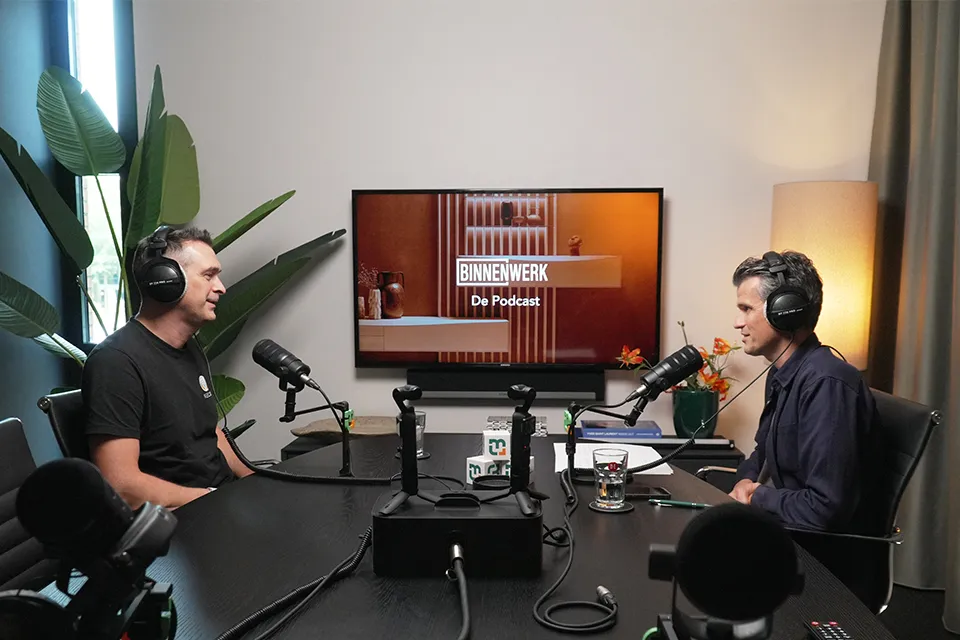
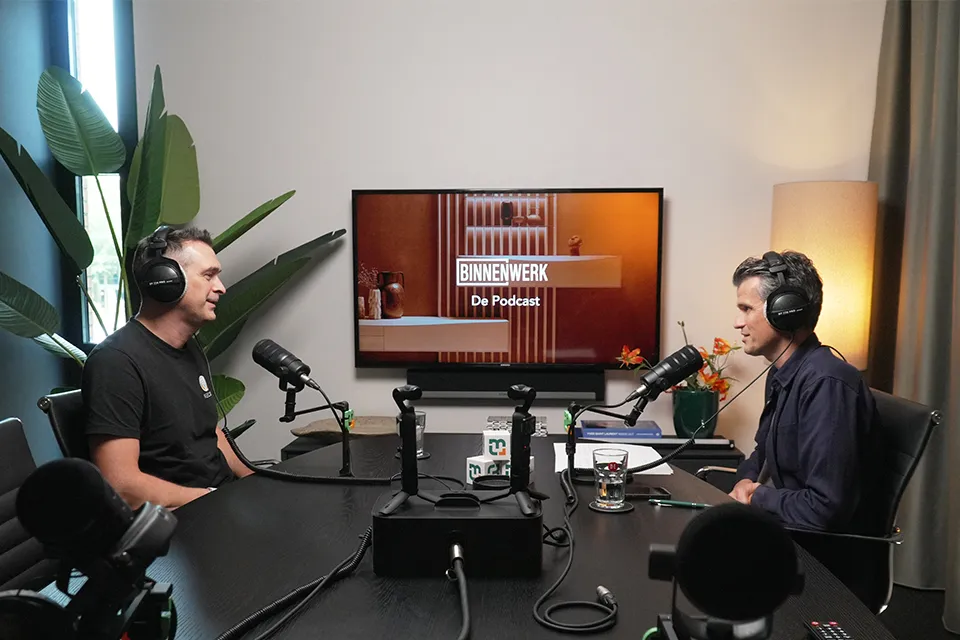
For almost 40 years, Belgian company VLECAD has been developing software to automate production processes in interior construction. With KORPUS and AutoFIT, the company supports interior contractors with technical drawing, cutting optimisation and CNC machine control, among other things. In this episode of Binnenwerk de Podcast, co-managing director Lars Vliegen talks about VLECAD’s growth, the rise of Asian machines, its partnership with PaletteCAD and the role he believes robotics and AI will play in the sector’s future.
Interview with Lars Vliegen, Tech Strategist Cabinet Shops
Host: Roel van Gils
Een zakelijke vraag aan Vlecad? Get in touch
Full transcript
Alle hoofdstukken (14)
- VLECAD and automation in interior construction
- The origins of VLECAD
- Adapting to the customer’s way of working
- Plenty of functionality without unnecessary complexity
- From sole traders to larger companies
- Removing manual steps from the production process
- Growing alongside the machine fleet
- Asian machines and G-code
- The Netherlands and working with PaletteCAD
- Growth beyond Belgium and the Netherlands
- Robotics and further automation
- KORPUS 14, AI and production tracking
- New technology in the workshop
- Advice for interior contractors
VLECAD and automation in interior construction
Roel van Gils Welcome to another episode of Binnenwerk de Podcast. Today we’re introducing a company that has long been a familiar name in interior construction in Belgium, but is less well known in the Netherlands: VLECAD. A software developer that has been operating in Belgium for almost 40 years, specialising in the automation of production in interior construction. Today’s interior contractors face an ever-growing list of challenges. It is getting harder to find staff, products are becoming increasingly complex, and CNC machines are becoming more accessible, but also harder to control in some ways. They come from Asia, I understand. So the question is: how do you make sure those machines are actually used to their full potential? And perhaps more importantly, how do you automate a process like that with software without making it far too complex for the user? We’ll be discussing that today with Lars Vliegen from VLECAD. Welcome, Lars. Perhaps you could briefly introduce yourself.
Lars Vliegen Yes, I’ll do that briefly. I’m Lars Vliegen from VLECAD, and I’m a co-managing director of the company. As you said, our software is designed to help interior contractors and bespoke cabinet makers, and make their work more efficient.
Roel van Gils Taking a broader view, who is VLECAD, and what should Dutch interior contractors know about you?
Lars Vliegen VLECAD is our company name. We have two main products, KORPUS and AutoFIT. KORPUS is our CAD/CAM system, which we use to draw and dimension bespoke cabinets, assign edge banding and, in fact, produce a complete technical drawing of the cabinet, so that we can then control the machines from there: the CNC machine and the nesting machine. AutoFIT, our other programme, is for cutting optimisation. We also have our own cutting optimisation software, which can supply the most common brands with the cutting plans they need. The advantage is that the customer has a single point of contact for the entire production project. That is naturally a benefit for the customer. There’s no finger-pointing, with one person saying, ‘This part works, that part doesn’t.’ No, they all come to us.
Roel van Gils Lots of fingers, no.
Lars Vliegen Yes, plenty of finger-pointing, indeed. It can happen. But the advantage is that they have a single point of contact to manage production.
Read the full transcriptCollapse transcriptnog 13 hoofdstukken
The origins of VLECAD
Roel van Gils Yes, I see. And VLECAD has been around for 40 years. Of course, it has developed enormously over the years. I imagine things looked different 40 years ago.
Lars Vliegen Yes, my father started it all those years ago with a business partner. Back then, computers were still a rarity, let alone computer-controlled machines. The very first machine he controlled and programmed used actual punch cards, with real holes punched in them. The machine then had to do whatever had been punched onto the cards. That’s how it all grew. The company where he was working at the time went bankrupt. But the machine supplier could see the great value of what they were already able to do with the computer-controlled CNC machine. And that’s how VLECAD came about, with his business partner. At the time, solid-wood furniture was still more common, for example large, thick solid oak furniture. The business started out with a general CAD programme, CADKey at the time, alongside an in-house development called EasyCam. It continued to grow. Solid wood gradually became less common, and we then switched to a fully in-house development, which is now KORPUS and AutoFIT.
Roel van Gils And how long has that been around now?
Lars Vliegen I have to think about that. I’d say around 27 years. Let’s say 25 to 27 years. AutoFIT is a little newer, about three or four years younger. It also came about simply because a customer asked for it. They said, ‘Look, I don’t need the very best optimisation software right now. I just need to know roughly how many boards to order for this project.’ But as that has developed, the optimisation has improved, and more machines have come along that need to be controlled. Board storage systems have been added that need to be connected. And, well, we work very closely with our customers. We don’t want to configure everything remotely. We go to the customer. We ask, ‘How do you work now?’ We do as much as we can to make our software fit their production process, the process they are already used to.
Adapting to the customer’s way of working
Roel van Gils So your software isn’t set in stone. It’s not a case of, ‘This is how we work, so now you have to work this way too’?
Lars Vliegen Exactly, that’s certainly not the intention, because everyone makes the best cabinet. It’s not up to us to say, ‘No, that’s not right.’ On the contrary, we learn something new every time. We’re open to incorporating those new ideas into our software.
Roel van Gils And you joined the company 17 years ago?
Lars Vliegen Yes, that’s right. I joined 17 years ago. I’d been working with my father for about a year at that point. We had a team of, let me think, six or seven people. My father had a stroke and was suddenly unable to work. After about a year, when it became clear that he wouldn’t be able to return, the question was who would take over. And, well, I took on that part of his work and carried it forward. We now have a team of 11.
Roel van Gils What has changed?
Lars Vliegen We did notice that customers felt, at the time, that my father was approaching 60, around 60 years old, and there was no real succession plan in place. So potential new customers were a little hesitant. How long would he keep doing this? And, of course, when a young buck comes along, that concern disappears straight away. So what has changed? We’re seeing more and more automation. Board storage systems that automatically load the saw or nesting machine. These are major projects, but they’ve also become much more affordable compared with back then. Automatic edgebanders with a return conveyor, where workpieces are automatically unloaded or sent back to a sorting cell. So we connect to everything involved in production.
Plenty of functionality without unnecessary complexity
Roel van Gils Offering functionality without making the software unnecessarily complicated. Could you say a little about that? What does it mean in practice?
Lars Vliegen We hear that from our colleagues, competitors, call them what you like. The others doing the same thing, to put it briefly. Either the software is easy to use in practice, but doesn’t offer enough functionality to control board storage systems, generate nesting optimisations and handle everything that goes with that. Or, on the other hand, we see software that can do an enormous amount, but is simply very difficult to use, with a lower level of user-friendliness. It takes more time to control it and enter all the required parameters.
Roel van Gils It’s an interesting trade-off, because the more you add, the greater the risk that users will think, ‘Ooh, that’s really complex.’
Lars Vliegen That’s right. I trained as a carpenter. You use the word carpenter too, don’t you? Cabinetmaker, yes? So I have a technical background. And although we do all the programming in-house, I think it’s important that someone with technical training should be able to use our software without any trouble. If it’s difficult, that feedback goes straight back to the programmers: ‘Look, this doesn’t work. We need to organise it differently to make it usable, simple and intuitive for our customer.’
From sole traders to larger companies
Roel van Gils Is your software intended for sole traders or for very large companies? Where do you draw the line? Or perhaps you don’t?
Lars Vliegen We don’t really draw a line. We have sole traders who say, for example, ‘We have a number of customers who don’t handle sales. They work with interior architects, who take care of the sales side. I do the technical design. I have my own machinery. It all runs smoothly. I make the flat-pack kits, and that’s it.’
Roel van Gils Okay.
Lars Vliegen Then a third party collects the flat-pack kits, assembles them and installs them.
Roel van Gils Ah, I see.
Lars Vliegen So we have customers like that, as well as larger companies that need to manage production, and everyone in between.
Roel van Gils Taking the process from drawing to production and making it concrete, what does it look like?
Lars Vliegen In our software, KORPUS, the process starts with the drawing. That could be a single cabinet, or a complete kitchen or dressing room, you name it. What matters, of course, is that all the technical details are there. The joints need to be included, but they don’t have to be entered from scratch every time. Of course not. In our software, we draw using walls. Some software uses a questionnaire that you have to fill in, and then the cabinet does something. That means we’re not limited to particular furniture shapes. So what happens? The design is done. Then we post-process it, as we call it. Press a button, and the files are generated for the CNC machine, dowel insertion machine, edgebander and nesting machine, depending on the machinery in use. We also have our cutting optimisation software. From there, we can send the information to the panel saw or board storage system, or communicate it further along the line.
Removing manual steps from the production process
Roel van Gils Which time-consuming traditional steps in the production process can you eliminate, in principle, with VLECAD, or at least with your software?
Lars Vliegen So the traditional way of working is, of course: a drawing is made, perhaps in SketchUp or AutoCAD, and then developed and worked out technically. A cutting list is drawn up, and someone writes everything down manually or adds it to an Excel spreadsheet. That list then goes to the panel saw. The operators either need to be able to import it so it can be optimised there, or they have to retype it. The panels are cut, then they go to the CNC operator. He looks at the plan and asks: right, what do we need to do here? He has to interpret the plan and then work it out correctly from a technical point of view. Then they either have some variable programmes, or, when there are exceptions, they have to programme and process each individual part on a CNC machine. And you can already hear how many opportunities there are for mistakes in all those steps: a typo, a writing error. In the meantime, someone gets a phone call or is called away to help someone else. All of that creates a risk of errors. Of course, we can’t point the finger at anyone. And that means that when people switch to our software, customers tell us they have typically recouped the cost of the software within three to six months.
Roel van Gils Oh, that quickly?
Lars Vliegen Very quickly. Some do it even faster, of course, while for others it takes longer. But on average, three to six months.
Roel van Gils Yes, but those are impressive figures to be able to cite. Another interesting point is that you don’t just focus on the technology, you can also grow alongside the company as it develops. So if businesses grow, you can grow with them too.
Growing alongside the machine fleet
Lars Vliegen Yes. Just because we have broad expertise doesn’t mean that when someone buys our software, we say: right, that’s as far as we go. We grow with the company. A panel saw and a CNC machine, for example, but then they want to look at a sheet-material storage system with a nesting machine to increase production capacity. We can support that too. We have connections with Grundner, Bargstedt, Duivestein and Biesse Winstore.
Roel van Gils Yes, all the big names.
Lars Vliegen Or at least some very well-known names here. That naturally gives the customer options. If they say, right, I get more benefits from that particular brand, or that brand offers more machine capabilities, we simply connect to it and make sure everything works as efficiently as possible on our end.
Roel van Gils And can customers also start relatively small and then scale up?
Lars Vliegen Yes. Since our software is primarily for production, we generally assume that there will be a CNC machine or something else to control. But it could be a smaller vertical machine. Or take the Chinese and other Asian brands, for example, which are increasingly appearing in Europe. These are entry-level machines, at least in terms of price. But they come fully equipped. What I mean is a nesting machine with a loading table, automatic labelling and an outfeed conveyor. A complete line, a nesting line, for literally less than €50,000. Those are obviously attractive prices when you compare them with European brands.
Asian machines and G-code
Lars Vliegen What’s a bit of a drawback? Generally, we find that most of them don’t have a programming interface on the machine itself. They still use PLC control, as we’re used to from G-code and from older machines. But these machines work perfectly well. We can connect to them very easily because we have almost 40 years of expertise in-house. And G-code is a language we know well, let’s put it that way.
Roel van Gils But not many people know it any more, do they? If I understand correctly, they’re not making more of them.
Lars Vliegen It’s not really taught in schools and so on any more, because it’s easier for pupils and students to programme using an interface. bSolid, F4Integrate, to name a couple. There are equivalent systems for all the different brands. And then you have Maestro and NC-Hops, for example. Yes, they all have them. And although these interfaces are useful, certainly for operating and using a machine, having that software is naturally an added benefit. It isn’t available on these Asian machines, in the cheaper range. And because it isn’t available, schools generally don’t buy them either. Quite understandably, since they also want flexibility and ease of use for their pupils. But the G-code behind it, which is what every machine actually runs on, is no longer taught, or is taught to a lesser extent.
Roel van Gils So that knowledge is dwindling?
Lars Vliegen That knowledge is indeed dwindling. And that makes us all the more important.
Roel van Gils What does that mean for the interior contractor, in practical terms?
Lars Vliegen It’s about taking the burden off them. Of course, the interior contractor needs to know how their machine works and how to set a cutter, for example. Those things are important. But from our side, all they have to do is load a file into the machine, put a sheet on it and press start. That’s really all there is to it now.
Roel van Gils Right, that’s easy. It really is easy. Are you also seeing these machines from Asia becoming more popular?
Lars Vliegen Yes, more and more. And it makes sense: cars from Asia have already arrived here, so have CNC machines and everything that goes with them. The European brands are very, very good, of course, but they’re going to feel the impact. We’re already seeing a shift towards Asian brands across the machine distribution sector. In Belgium in particular, we’re seeing machine distributors who used to sell [unclear] or Format, for example, switching to Asian brands.
The Netherlands and working with PaletteCAD
Roel van Gils Another point: you grew big in Belgium, as we discussed at the beginning, and now you’re actively looking to conquer the Dutch market, so to speak. Why the Netherlands in particular? What makes that market so attractive?
Lars Vliegen First and foremost, we speak the same language, or at least very nearly the same language. Why? Because we’re seeing that bespoke work is becoming more important here too. In the past, we noticed that in the Dutch market, when houses were built, they were usually built in entire housing developments. Especially in the Netherlands. That meant there was less bespoke work, because they could simply say: right, we can build this kitchen and all these houses here. But in Belgium, and across Europe too, space is increasingly becoming an issue. We can’t build as big as we used to. We’re not allowed to do this or that. And we still want to make the best possible use of the usable space in our homes. So we need to look at bespoke solutions. That’s why we’re seeing strong market growth in the Netherlands.
Roel van Gils And what makes the Dutch market different from Belgium?
Lars Vliegen Not much, really. No, not much at all. PaletteCAD is very well known in the Netherlands, of course, and has built up a very strong track record with its customers. We also work with them regularly. Although everyone sees us as competing software packages, we see them as genuinely complementary.
Roel van Gils Right, can you tell us a bit about that?
Lars Vliegen Yes. The first discussions about working together began about two years ago, between Sander and me. It came about because a joint customer said: I’d like to do the design work and the elements in PaletteCAD. We’d like to use your software for production, because at that point it could do more than PaletteCAD. Would you be interested? That’s how the discussions with Sander got started. We have a particular file format that they can export to us, which we can then convert for any machine. We’ve now completed around ten projects together, approaching fifteen.
Roel van Gils Taken on, right.
Lars Vliegen And now, together with them, that’s starting to expand into Luxembourg and France. We’re also getting enquiries through PaletteCAD about expanding into Bosnia. So I think it’s a case of working together and being stronger as a result.
Roel van Gils Does that partnership also involve G-code?
Lars Vliegen Yes, exactly. They said: look, we can’t do that. They’re very open in their communication too. Can you offer a solution? And that has enabled us to work on a lot of projects together. G-code machines are particularly cost-effective for smaller operators, for small businesses.
Growth beyond Belgium and the Netherlands
Roel van Gils Small businesses. So it’s not just about expanding from Belgium into the Netherlands, but potentially around the world, from what you’re saying. Or perhaps Europe first. But you also mentioned that you’ve even had enquiries from Australia.
Lars Vliegen We’re starting to make a name for ourselves, yes. It’s about planting a seed, of course, and being open to serving the customer together. So don’t be too arrogant and say: we can do everything, we’ll take care of this, we’ll take care of that. Do what the customer needs, perhaps covering 70 to 80 per cent of it, while that remaining 20 to 30 per cent, which they can’t optimise, can still be an important source of profit. That’s what we’ve done with PaletteCAD. They say: design isn’t our strong point, and they admit that. We’ve always approached things from the technical side. They’ve always started with the attractive design and the interior layout, and of course everything that goes with it. So we complement each other very well.
Roel van Gils A great synergy, then. You complement each other in that respect.
Lars Vliegen Yes, and as I said, it’s been proven at least ten times that the system works.
Roel van Gils But mainly outside Europe too? Or in Europe and beyond?
Lars Vliegen Yes. Outside Europe, there’s Australia. I happened to have a conversation this afternoon with a company that said: look, we’re automating and working with a company in Belgium to take over their operations, so to speak. They use your software. Would you be interested in doing the same for us in Australia? Of course. Yes, because then maybe I could also [unclear]. So in that respect, it’s about planting seeds everywhere. This opportunity came about through a good relationship with the people who make automated sheet-material storage systems. They said: look, get in touch with VLECAD, they may be able to offer you a solution too.
Roel van Gils Right, that sounds good. Taking on the world. VLECAD taking on the world.
Lars Vliegen Yes. We’re all preparing internally to take that step as efficiently as possible.
Robotics and further automation
Roel van Gils What’s the next step in automation for you? Do you see a future where fewer and fewer people are actually working at the production machines in an interior contractor’s workshop?
Lars Vliegen Yes, ultimately. I once said, and this was almost 15 years ago: look, with the technology available back then, you could [unclear] bespoke products.
Roel van Gils Like in China, do they have that in distribution centres, or in the bespoke furniture industry as well?
Lars Vliegen They really do, yes. They have entire halls where nobody is working. Well, nobody except the machines. The machines are working, and there are usually just one or two people keeping an eye on things. But that would have been perfectly possible with the technology of 15 years ago. And since then, the technology has evolved even further, and robotics is really taking off in our industry. I’d even go so far, because I’ve already looked into it myself, as to consider programming a humanoid robot to help an installer. Someone who installs things at customers’ premises. Instead of sending two people to do the installation, we’d send one person and a humanoid robot. The robot would fetch materials and assist them, essentially. Unfortunately, humanoid robots that can carry enough weight are extremely expensive at the moment. But I see that as the future: it’s going to happen. Do we need to programme anything for that? No, it will all be AI-related, of course.
Roel van Gils So that applies to installation as well.
Lars Vliegen Exactly, yes. In the end, it’s easy to automate and optimise a workshop. It’s when you step outside the workshop, where the world is different every day, that you need this, of course.
KORPUS 14, AI and production tracking
Roel van Gils Yes, I see. But you’re not standing still either. KORPUS 14 is coming, I believe, with free-form optimisation among other things.
Lars Vliegen Yes. So, in KORPUS 14 we’ll be introducing free-form optimisation. We’ve had rectangular optimisation for years, with AutoFIT. We’re seeing more and more curved furniture coming into our drawing package, so we need to be able to optimise true free-form shapes. These can already be drawn in full. It was only when curved components and the like had to be optimised that we ended up with a lot of wasted space between them. So we’ve developed a solution for that in KORPUS 14. We also want to bring it more in line with the design, and offer the possibility of rendering with AI, so it can generate an attractive image without spending time and effort dressing up the drawing. You can simply add a flower here, a lamp there.
Roel van Gils Yes, just enter it and it gets done.
Lars Vliegen Yes. What else are we working on? We have VLECAD ONE. VLECAD ONE is basically our tracking system. It tells you where each component needs to go in the workshop and what stage it needs to be at. So the customer can, from the other side of the world, so to speak, monitor whether the machinery is working properly. Or whether the staff are working properly. They can check while on holiday and see: okay, that project is under way, this many components are at the CNC machine, this many are over there. It also records movement between workstations. The advantage, of course, is that customers get more and more insight into where the bottlenecks are in their production process. We already have something like that with VLECAD Insights, which is up and running now, but that’s more about how many holes you drill, how many linear metres of edging tape you use, how many edges are finished. They can already get that sort of information from the software.
Roel van Gils Yes, so that’s continuing to develop as well.
Lars Vliegen And in time, we want to apply AI to that too, so it can provide a kind of weekly or monthly report, saying: look, this could be improved, and so could that, and that.
Roel van Gils A self-learning effect, in that sense.
Lars Vliegen Yes. We’ve found that our customer base is generally made up of technical people. They know their jobs inside out and are very passionate about them. So it’s, okay, let’s make time for this now. Because it’s a bit outside their comfort zone.
Roel van Gils Yes, they want to focus on their core business.
Lars Vliegen Yes, exactly. And we want to help them think about how to improve things: look, we can make this better, so less time is wasted here and there. That means more margin at the end of the month.
New technology in the workshop
Roel van Gils So there’s a lot happening in software. Do you also see other kinds of machines coming along, or is that likely to stay much as it is?
Lars Vliegen Much as it is, yes. As I say, I think robotics will be the next step for us, in our industry. Other kinds of machines: for example, I was at a trade fair in Atlanta two weeks ago. It may have been around for longer, but I’d never seen it at a trade fair before: they actually print decors onto wood. I thought it was really impressive, because the colours were very bright and rich. You couldn’t even see the grain or texture of the wood. And yet there was a lovely print on a cabinet or a dressing-room door, for instance. It made for a really attractive, personalised finish. I thought it was a great system. Who knows, maybe it will take off. As for the rest, as I say, robotics. Automation. If a robot can be used instead of a person in the workshop, a robot will be used. Because it doesn’t get ill.
Roel van Gils Yes, that’s right.
Lars Vliegen It might fail from time to time, of course.
Roel van Gils Perhaps during the start-up phase.
Lars Vliegen But generally, it can be put to work a little more efficiently. It can simply keep going during breaks and so on.
Advice for interior contractors
Roel van Gils Right, okay. Lars, it’s been great to get a glimpse of what you stand for and all the things you do. If a Dutch interior contractor is listening to this podcast, what advice would you give them?
Lars Vliegen The advice is actually very simple. If you’re still working with a pencil behind your ear and making sketches, and still drawing up all the lists manually, then I’d definitely explore the market. I’m not saying we’re the best solution for your situation, but do take a look at what’s available. Visit our colleagues too. I’m happy for them to get your business as well. Make sure you keep up, because it really can bring in a lot of money.
Roel van Gils There you have it, a great way to wrap up. Thanks, Lars.
Lars Vliegen My pleasure.
Roel van Gils That was VLECAD and Lars Vliegen. Binnenwerk the Podcast is produced by Louwers Mediagroep. Thanks for listening.
Companies in this story
Keep following this
Get an email when a new story is published. No account needed.
- ThemeMore bespoke work from the workshop
- SubjectGeneral
- CompanyVlecad







