











“Sustainability needs to become a business case, not a marketing case”
Text Tamara BrouwersImage Planq/Rezign
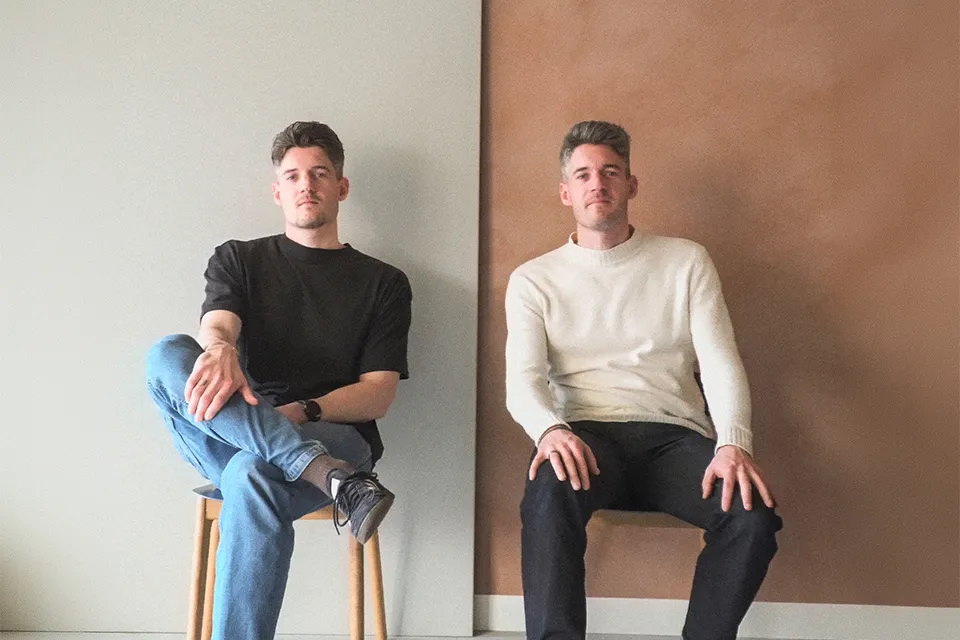
Almost everyone in the interiors and furniture sector says they consider sustainability important. At the same time, traditional materials remain the norm in many projects. According to Anton Teeuw, co-founder of circular materials and furniture company Planq, real change starts with a different way of looking at raw materials.
“Recycled materials are never exactly the same. That is precisely what makes them interesting. You just have to accept that they behave differently from traditional materials.” Teeuw and his twin brother Dennis founded Planq in 2015. Their original idea was not to design furniture, but to find new uses for waste streams. The motivation was partly personal. “When I became a father relatively young, I started thinking about what you leave behind for the next generation. We asked ourselves: couldn’t we make a difference ourselves?”
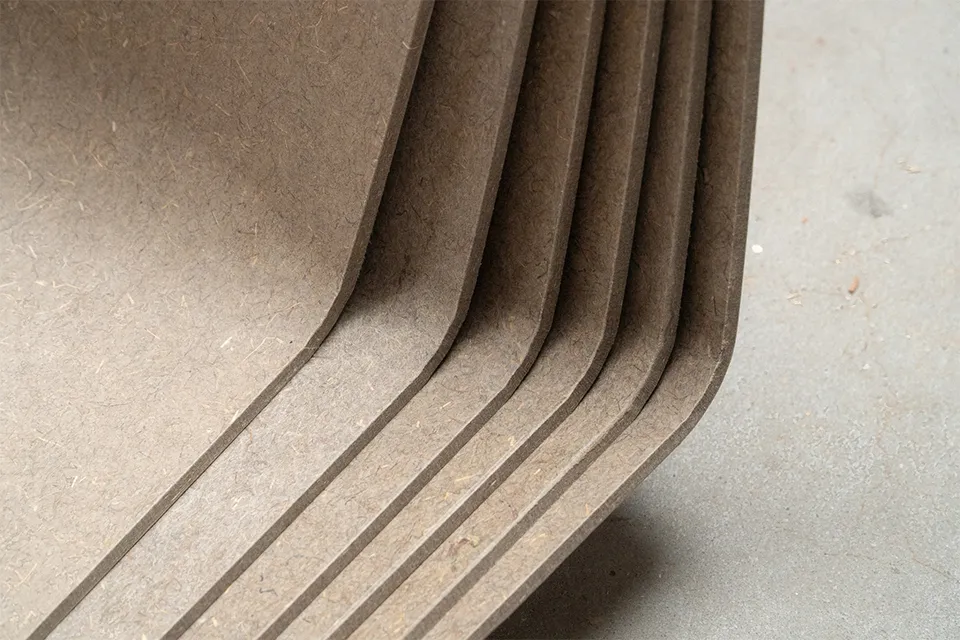
One of their first material experiments won a Circular Design Award. Interest grew as a result. “We actually became a furniture brand by accident. We wanted to show that you can make beautiful products from circular materials too.” The brothers soon discovered that developing sustainable materials alone was not enough. “A ‘sustainable board’ doesn’t yet tell you what you can do with it. By designing applications as well, we show the value of the material.”
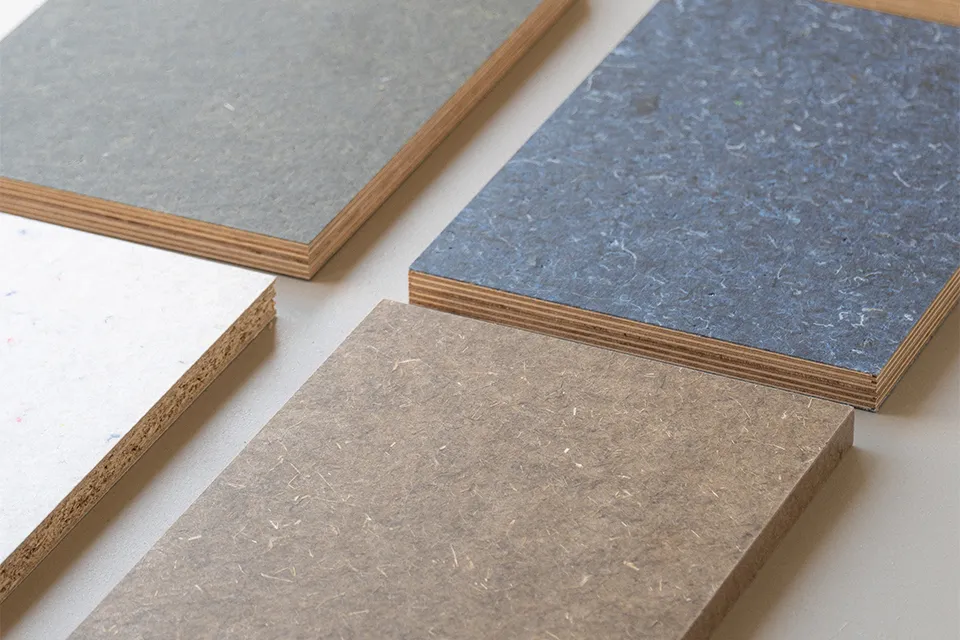
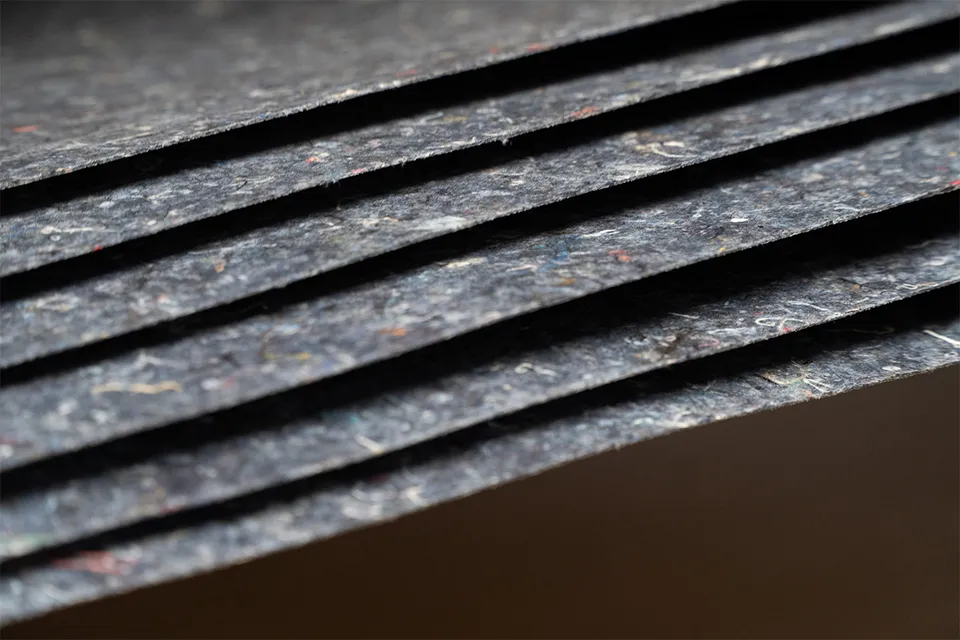
A few years later, the company was split up. Planq focuses on furniture, while Rezign is dedicated entirely to materials development. “If sustainability is your ambition, you can’t keep those innovations for your own collection alone. Rezign now also supplies veneered boards, acoustic panels and solid textile boards to interior fit-out companies.”
Oil tanker
Although sustainability is mentioned increasingly often in the sector, Teeuw says the reality is still difficult. “The issue is certainly being discussed more widely, but the sector as a whole is still far from sustainable. In practice, you see an interior fit-out company come in with a sustainability story, then end up selling chipboard again. It’s simply easy and familiar.”
He realises that this is a strong statement. “It may sound forthright, but unfortunately, when you look at the figures, it’s still the reality.” Change is difficult for established businesses. “If you’ve been working in a particular way for decades, it’s hard to turn that oil tanker around.”
The same applies to industry. “I recently spoke to a major player who said: ‘Our entire machinery setup is geared towards chipboard. We can’t even process solid wood, really.’”
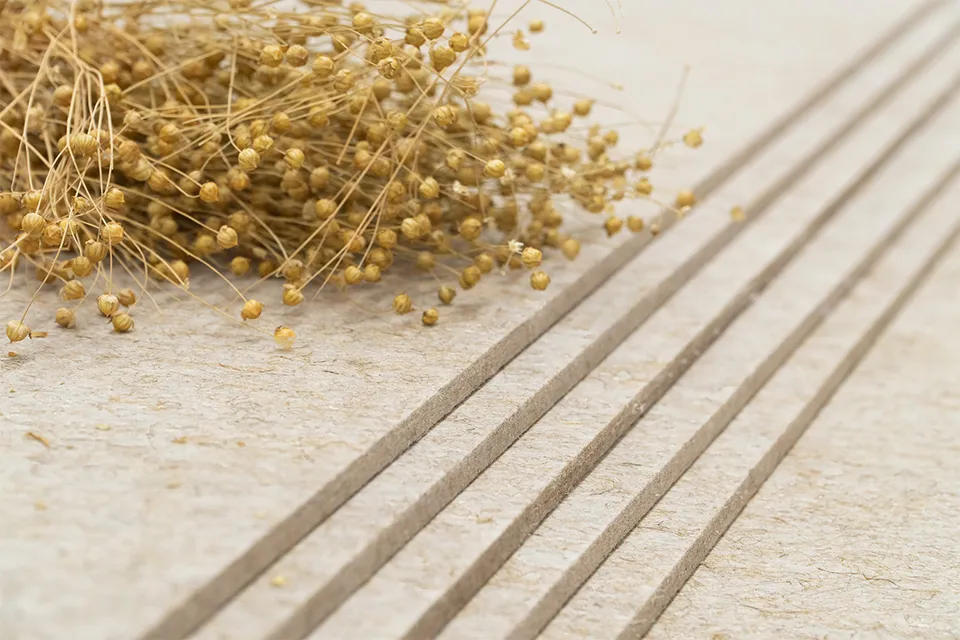
That is precisely why Rezign tries to develop materials that fit existing production systems. “We adapt our materials to the machinery used by today’s industry. We also use standard board sizes. Otherwise, they remain difficult to process in practice.”
Investing together
Teeuw believes part of the solution lies in collaboration across the supply chain. A recent conversation with a large interior fit-out company got him thinking again. “They said: ‘Why don’t we, as a sector, invest together in this kind of development? Many young companies disappear when subsidies end, even though interior fit-out companies are the ones who can ultimately benefit from new materials.’” According to Teeuw, this also calls for a different role for interior fit-out companies. “By doing more than just delivering projects and taking on a more advisory role, companies can better respond to what the market will be asking for.”
Business case
According to Teeuw, the biggest challenge is ultimately not technical, but economic. “Sustainability needs to become a business case, not a marketing case. Everyone says they consider sustainability important, but in the end everyone looks at their bottom line too.”
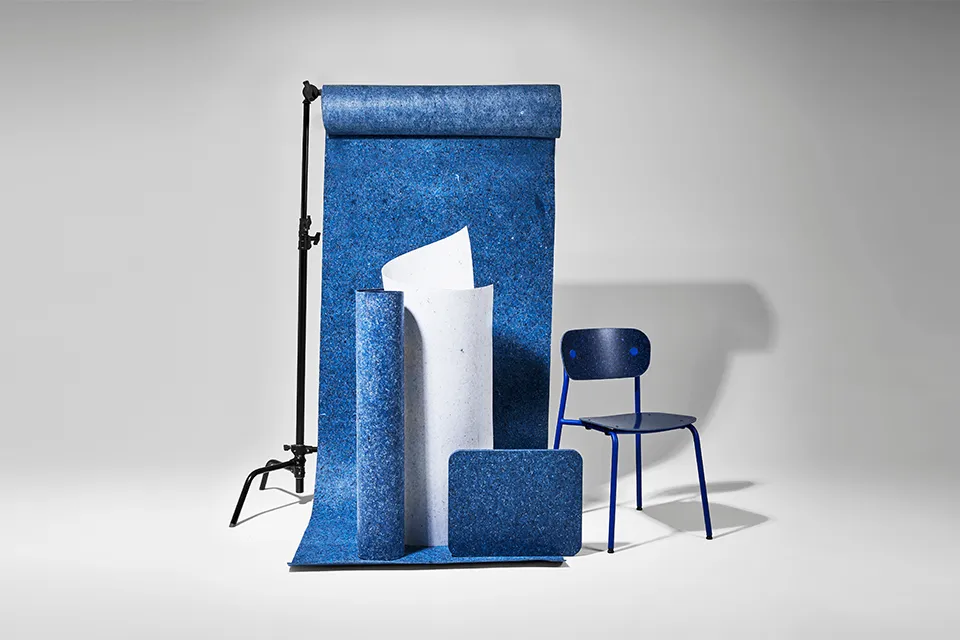
In practice, he still regularly sees a gap between ambitions and reality. “We were recently involved in a tender in which a civil servant wanted a solid board made from textile waste, with a B1 fire rating, as a replacement for plywood, but at the same price. That’s when you realise that people sometimes don’t understand what materials like that cost.”
Looking ahead, Teeuw sees opportunities primarily in collaboration and scaling up. “Sustainability has to go hand in hand with entrepreneurship. If something can’t be put to use or scaled up, it ultimately won’t last.”
Question about this story? Ask your question
Keep following this
Get an email when a new story is published. No account needed.
- ThemeMore sustainable materials and longer use
- SubjectGeneral







