Sustainable, lightweight levelling mortar for wet rooms
Text Lieke BousemaImage Bostik
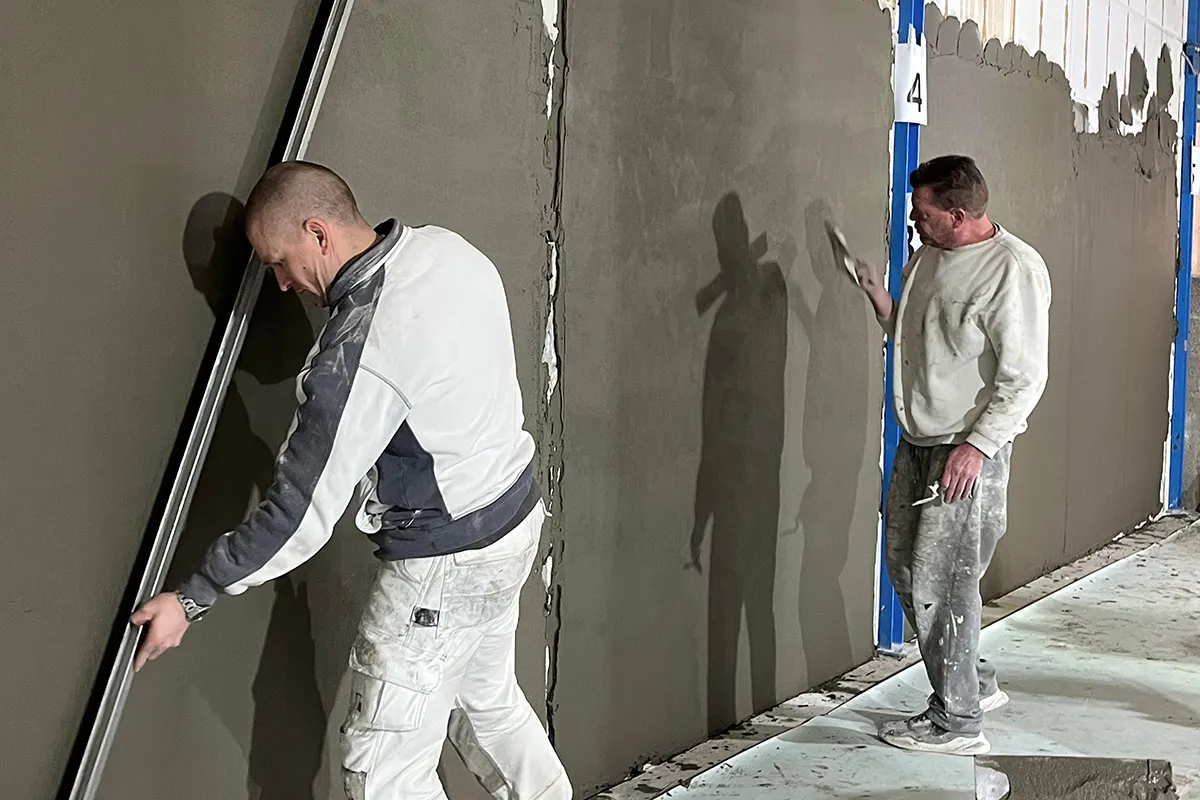
Good wall preparation is half the job
“Gypsum-based mortars are generally used for interior plastering,” says Hans-Willem van Kakerken, Product Manager Wall & Floor at Bostik. “However, these gypsum-based products are less suitable for wet rooms such as bathrooms, toilets and kitchens. The humidity is much higher here, causing the gypsum-based mortar to deteriorate over time. Instead, we recommend preparing the walls in wet rooms with our cement-based Bostik STUCCO W-140 levelling mortar, then finishing them with tiles or a finishing mortar.”
STUCCO W-140 is a cement-based levelling mortar with lightweight fillers, which can be used to level out small and large irregularities in a single application, explains Van Kakerken. “The mortar has been specially developed for use in wet rooms and is very lightweight and easy to apply. It is supplied in 20-kilogram bags. The W-140 is around 20 per cent lighter than standard mortars. It also has the unique benefit of curing quickly, allowing further finishing work to start after around three hours.”
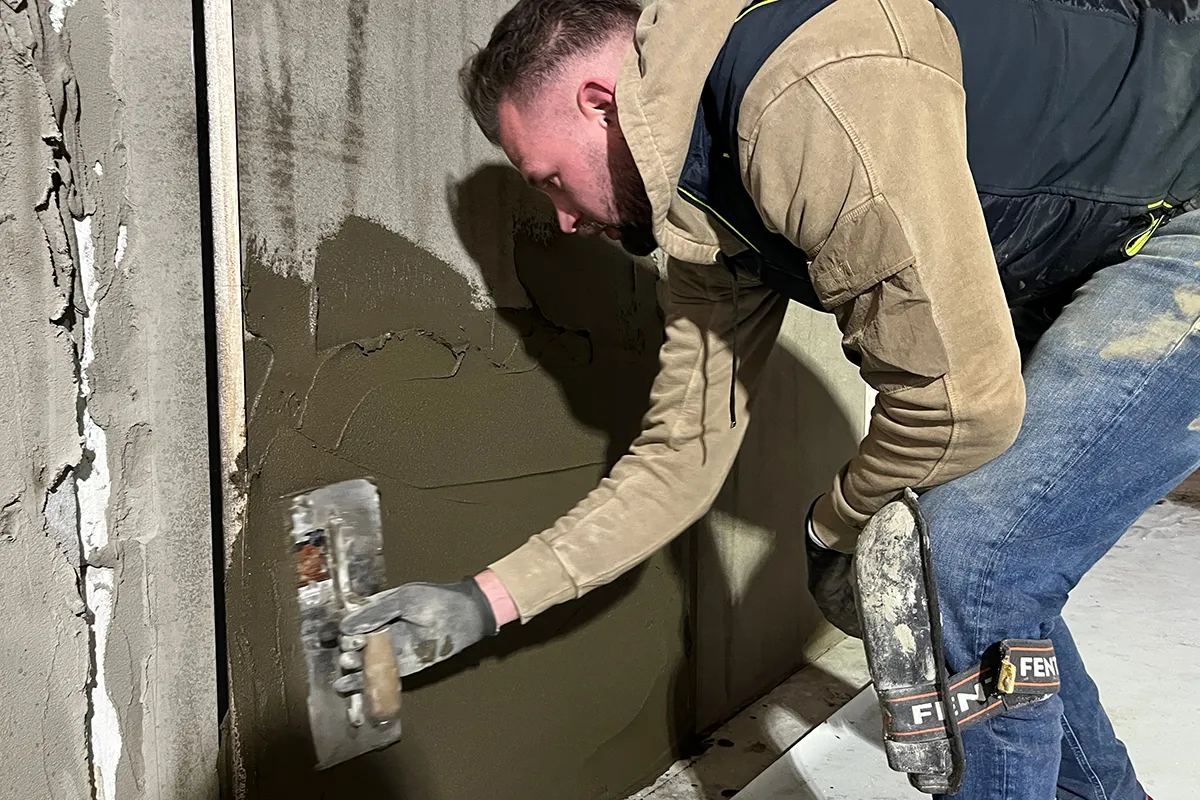
Very low emission levels
W-140 is suitable for levelling walls and ceilings on cement- and gypsum-based substrates, new and existing masonry, calcium silicate blocks, aerated concrete, concrete, existing plaster and tiling, etc. The product has very low emission levels and is certified to EMICODE EC1. “This makes the mortar highly suitable for use in BREEAM and LEED projects.”
W-140 test day
In January, Bostik held a test day for the W-140, giving tradespeople the chance to see whether the product still meets their needs and requirements. “Five leading plastering contractors took part in the test day,” says Van Kakerken. “It was held in a vacant industrial unit in Raamsdonksveer, where various walls had been prepared for levelling.” The day was, of course, supported by Bostik’s technical experts, but they gave no specific instructions on how to apply the product. “We wanted to see how different professionals use our product in practice. After all, every plasterer has their own way of working.”
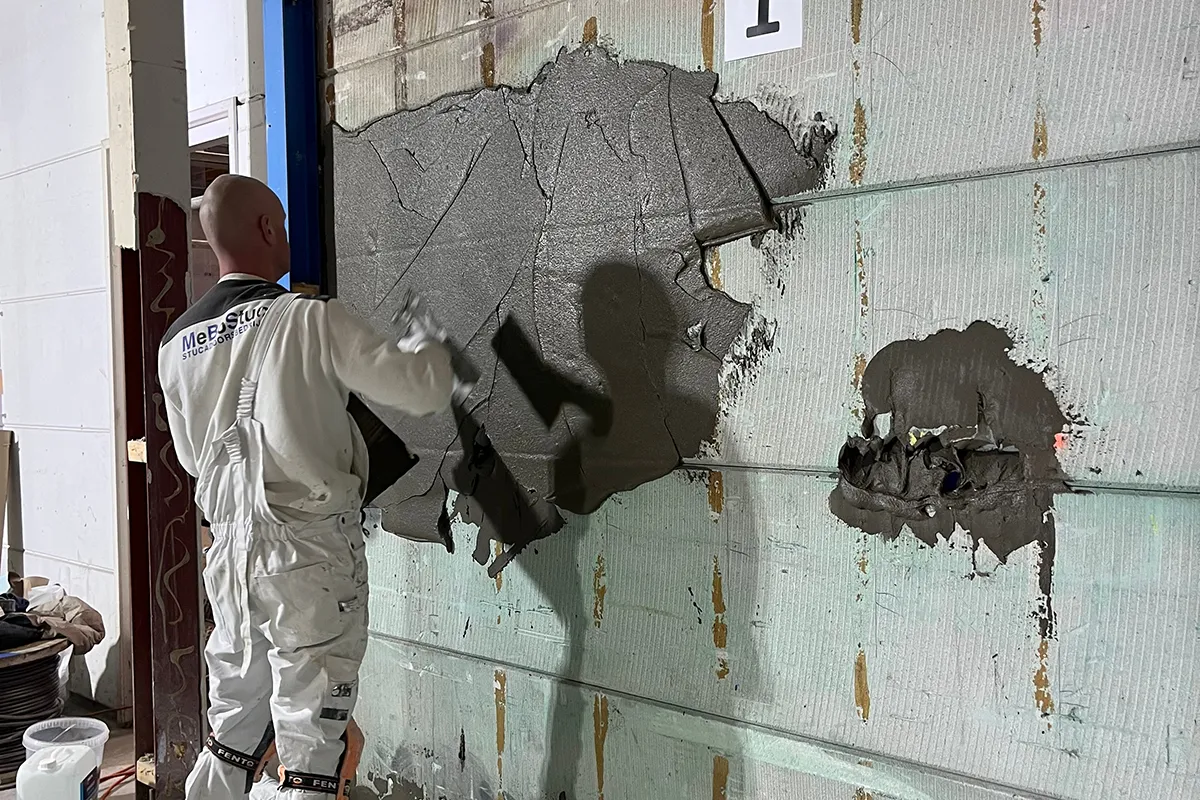
Revised application instructions
Each plastering contractor taking part received five bags of mortar and enough clean water to mix it. They then used their own tools to mix and apply the mortar. This yielded some interesting insights, says Van Kakerken. “We developed W-140 in-house. The product is also regularly tested in our test facilities, and the application instructions are based on these tests. In practice, however, plasterers do not always follow these instructions, yet the quality remains consistent.”
He gives mixing the mortar as an example. “According to our instructions, twenty kilograms of W-140 and around six litres of clean tap water had to be mixed thoroughly for about three minutes, until the mixture was lump-free and homogeneous. After maturing for at least one minute, the mortar had to be mixed quickly again for another minute. The mixture then remained workable for around forty-five minutes
.”
A logical step-by-step process, but in practice plasterers often mix larger quantities at a time. “In our test facility, we often mix half a bag or one bag by hand, but many plasterers can mix up to five bags at once. They have large mortar tubs with a capacity of around 150 litres and powerful tools that affect how the product behaves during application,” says Van Kakerken. “The power of the machines activates the polymers in the cement-based levelling mortar much faster. Our R&D department has, of course, tested this, and we have used the results to develop new application instructions that are even more closely aligned with working practices.”
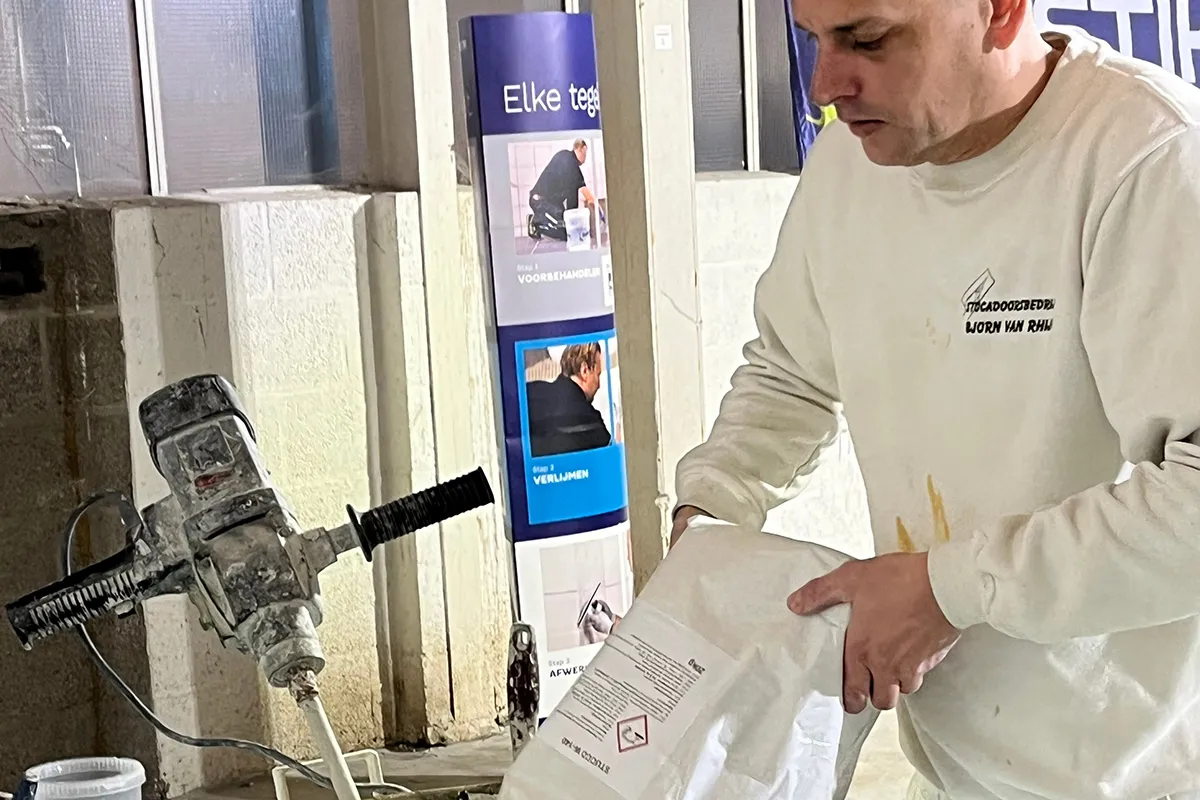
Improved packaging, longer shelf life
Alongside revising the application instructions, Bostik has also recently improved the W-140 packaging, extending the product’s shelf life from six to twelve months. “It is also important that Polish has been added to the packaging, enabling us to provide even better support for our Polish applicators,” says Van Kakerken. “Last but not least, the packaging design has been refreshed to match our European look & feel. This makes the product stand out even more on the shelves.”
A business enquiry for Bostik Benelux? Get in touch
Companies in this story
Keep following this
Get an email when a new story is published. No account needed.
- SubjectProducts
- CompanyBostik Benelux