Getting edge banding under control
Text Tamara BrouwersImage De Groot Bewerkingsmachines
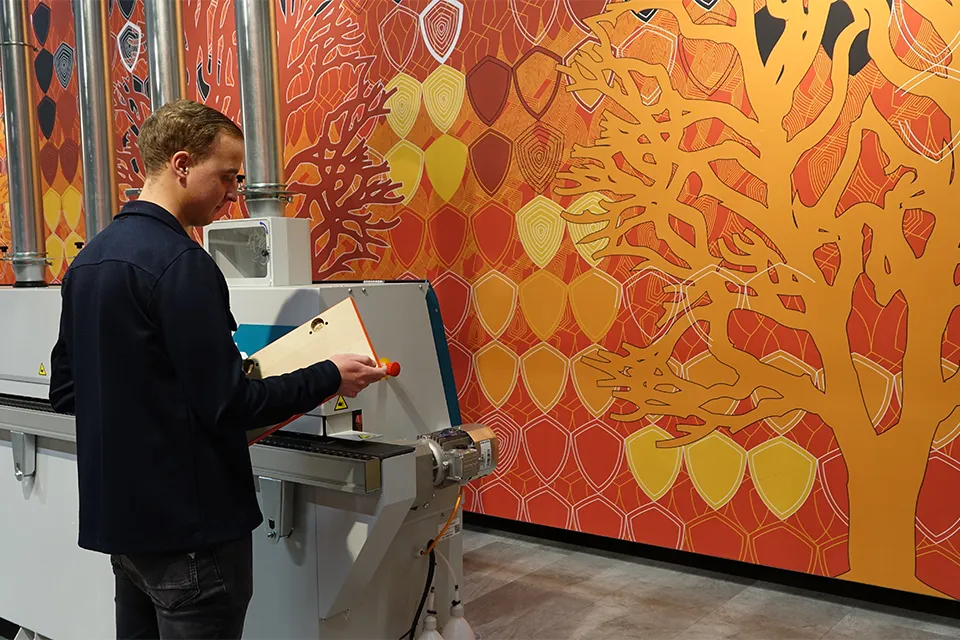
The process calls for technology and use to be aligned
The quality of edge banding has a major impact on both the appearance and the lifespan of a piece of furniture or an interior component. At the same time, it is a process involving many different factors. According to Daan van den Akker, product specialist at De Groot Bewerkingsmachines, the main challenge is making that complexity manageable.
“Edge banding involves a lot of different factors,” says Van den Akker. “Think of temperature and humidity, but also the adhesive, the edge banding, the machine and the operator. If any one of those factors is off, you see it straight away in the result. The sequence of operations inside the machine makes the process particularly sensitive. An edge bander performs many steps in succession. Something can go wrong at every stage.”
Balancing operator and technology
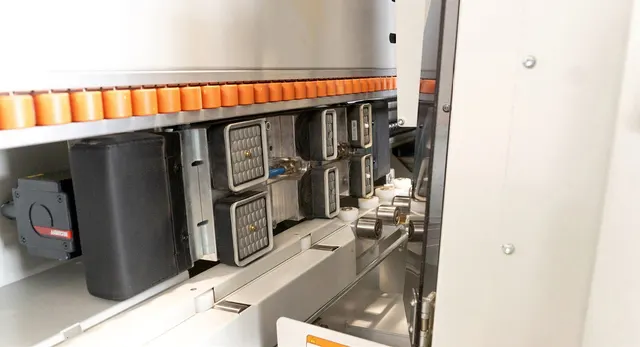
According to Van den Akker, the process only becomes manageable when technology and operation are aligned. Modern edge banders use NC-controlled units and servo technology, allowing settings to be configured precisely and consistently. “You set programmes via the control panel, after which the units automatically move into the right position. That helps make the process more consistent.”
The operator’s role, meanwhile, remains crucial. “There is still plenty of scope for improvement in practice. It is not just about operating the machine, but also understanding the process and recognising deviations.” Maintenance also plays a part. “If maintenance is not up to scratch, you see it straight away in the result.” Support, for example via De Groot’s Customer Portal or service team, helps users make adjustments more quickly.
Material development and adhesive selection
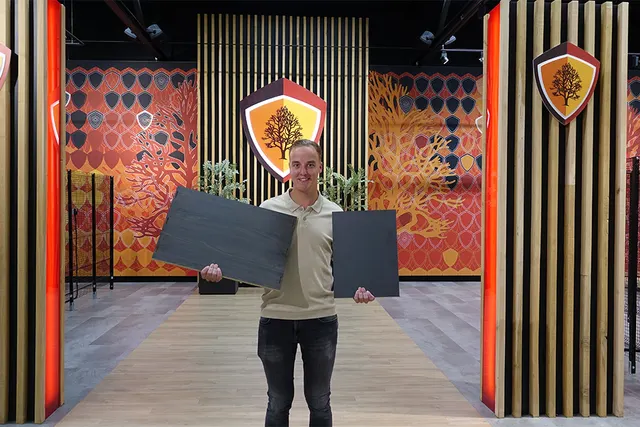
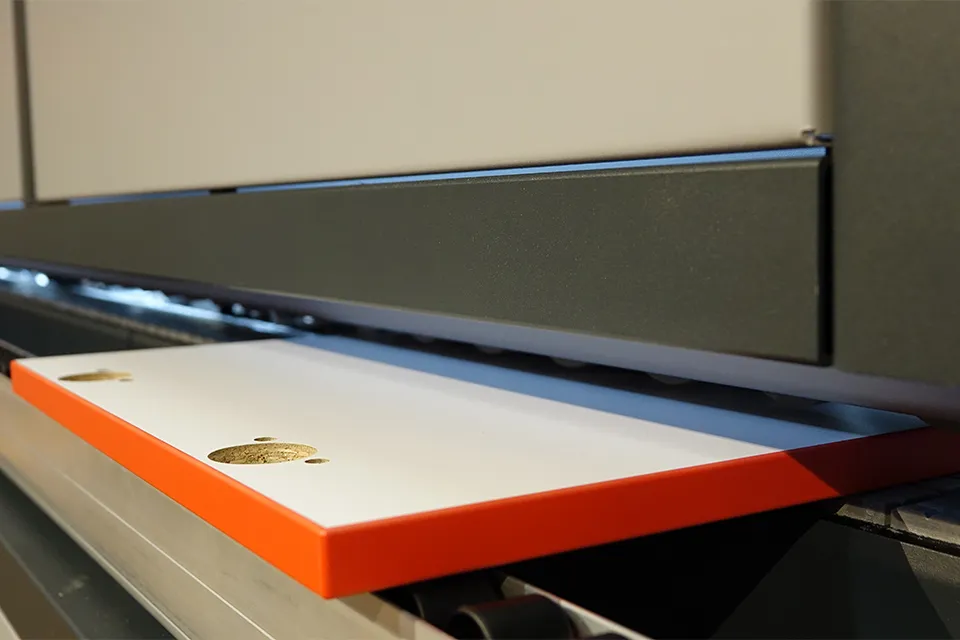
New materials, such as panels with relief and tactile textures, place greater demands on edge banding. “You then have to set the machine much more precisely to follow the profile correctly.”
Demand for PU adhesive is also growing. According to Van den Akker, this is due to the quality of the bond. “PU bonding gives you a smaller, neater glue line and greater resistance to moisture and stress.” At the same time, this approach requires a different way of organising the process. “You need to plan better and make sure your workshop and adhesive system are properly set up.”
Understanding usage and capacity
According to Van den Akker, effective alignment starts with understanding your own usage. “We ask customers how many metres of edge banding they process. It helps if they have a clear picture of this, as it is an important basis for determining which type of machine and level of automation is most suitable.” Factors such as operating hours and adhesive consumption also come into play.
At Engelen Interieurbouw in Montfoort, this analysis led to a different approach. The company switched from manually adjusting the machine with EVA adhesive to an automated process using PU bonding. “As a result, they have greater control over the finished product and can produce more consistently.”
According to Van den Akker, the greatest gains ultimately come from bringing everything together. “It is not about one factor, but the whole picture. When the machine, material, settings and expertise are properly aligned, a complex process becomes manageable.”
At De Groot’s showroom, interior contractors can explore the capabilities of various edge banders, including the Altendorf F2 and F4, and models from Biesse such as the Rover Edge Go S P A 13 30A and Stream Edge Up S S 55A. Suitable solutions are also available for other applications and machine requirements.
Een zakelijke vraag aan De Groot Bewerkingsmachines? Get in touch
Companies in this story

Keep following this
Get an email when a new story is published. No account needed.
- ThemeDecorative and protective surfaces
- SubjectMachinery
- CompanyDe Groot Bewerkingsmachines