A tin look, step by step
Text and images Adler
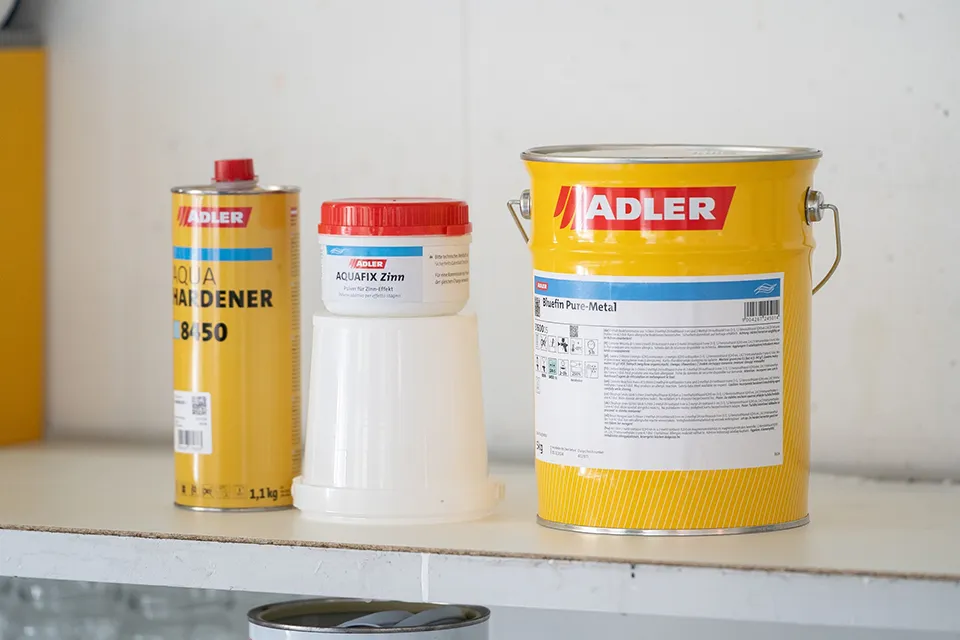
ADLER, the Austrian paint and coatings manufacturer, uses its real metal coatings to give surfaces a unique, authentic metallic finish, such as copper, bronze or brass. Leon Cremers, director of ADLER Benelux in Heeze, explains below how to give wooden surfaces a tin finish, step by step.
Tin’s silvery-white lustre has fascinated people for centuries. Metal surfaces also have an almost magical appeal in and around the home. ADLER’s real metal coatings make it easy to give a wooden surface a tin look, using nothing more than a spray gun. Leon Cremers shows you how.
What you need
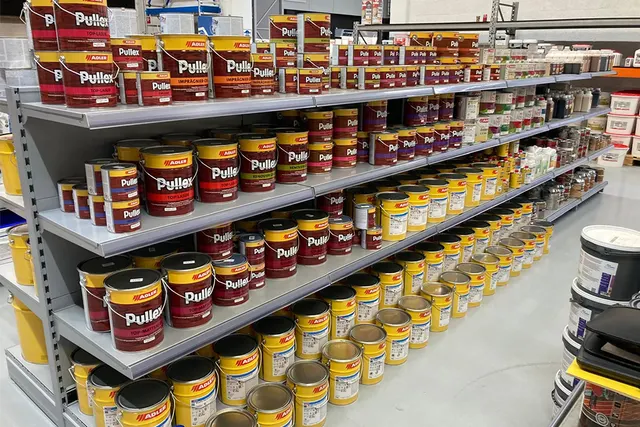
“You need a number of ADLER products to create a tin surface,” Cremers begins. “Bluefin Pure-Metal and the hardener Aqua Hardener 8450 form the basis. Aquafix Zinn, added in powder form, gives the surface its tin finish. PUR-Ecofill Weiß is the best choice for the substrate. Spezial-Verdünner 8502 is also useful. Finish with Tiropur NG G70 to complete the look. If the applicator chooses to add an extra patina effect using Aquafix Blue-Patina, the finish coat should be PUR-Antiscratch HQ G10.”
Preparation
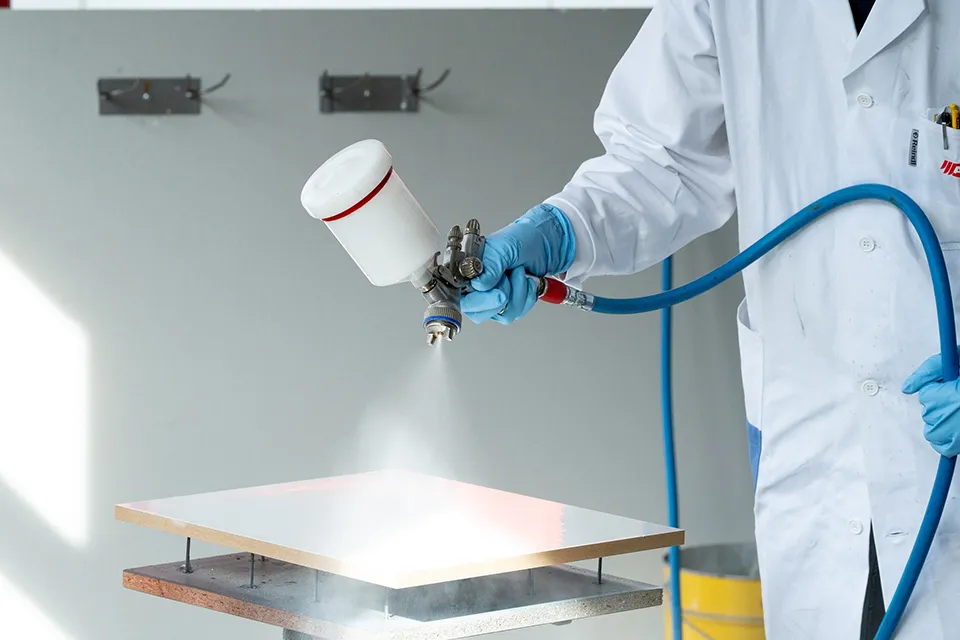
A good start is half the job, and that applies here too. “Prime the wooden surface or MDF board with PUR-Ecofill Weiß. Apply the insulating filler using a gravity-feed spray gun,” says Cremers.
Sanding
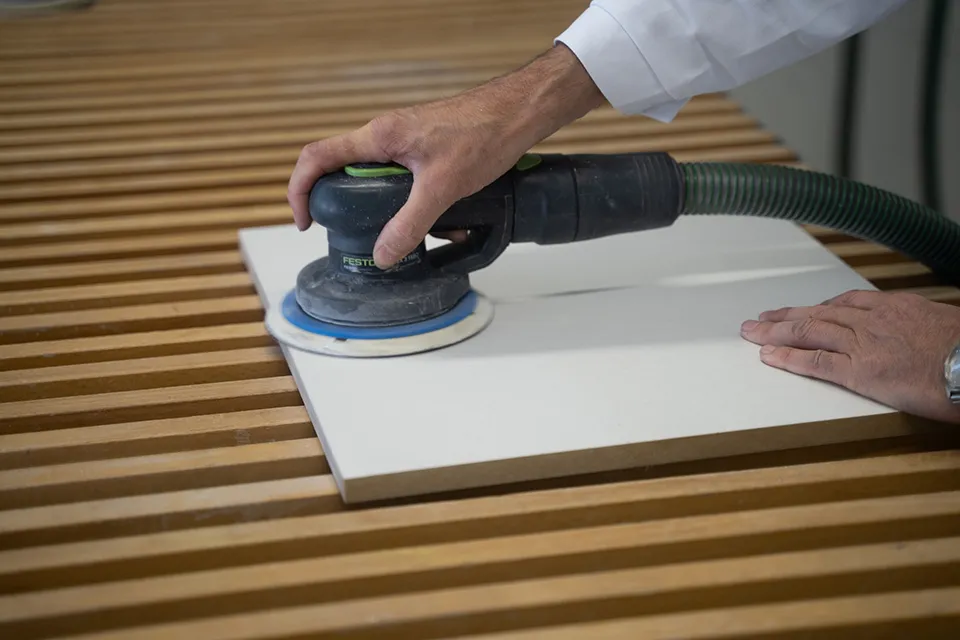
After priming, allow the surface to dry, then sand it with 240-grit paper.
Mixing
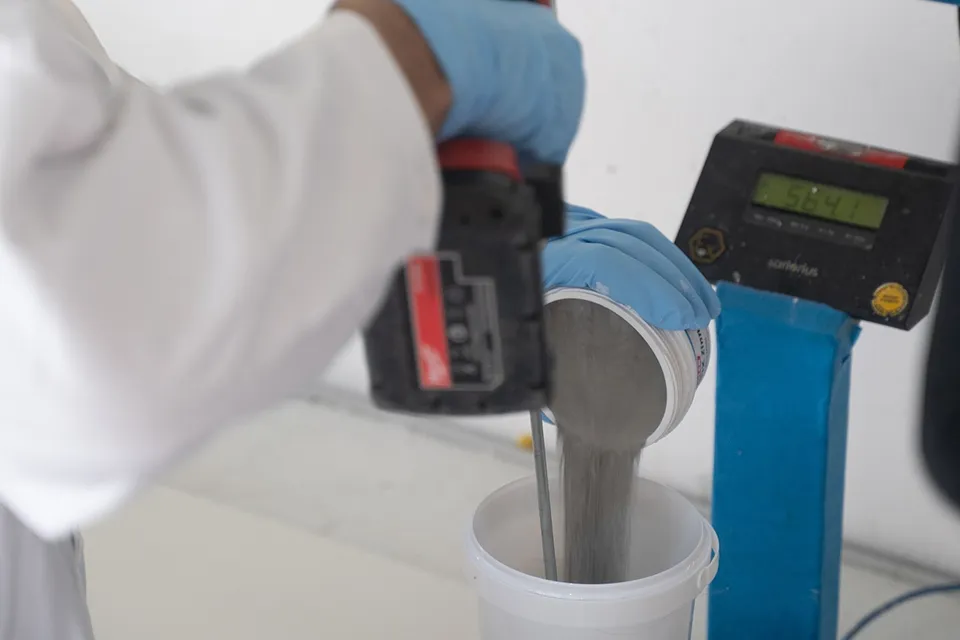
Next, several products need to be mixed together. “First, add 5% Aqua-Hardener 8450 to 400g of Bluefin Pure-Metal. Then add 1000g of Aquafix Zinn,” says Cremers. It is important to mix the metal powder with the other products until there are no lumps. “The best way to do this is mechanically, using a mixing paddle.”
Applying the coating
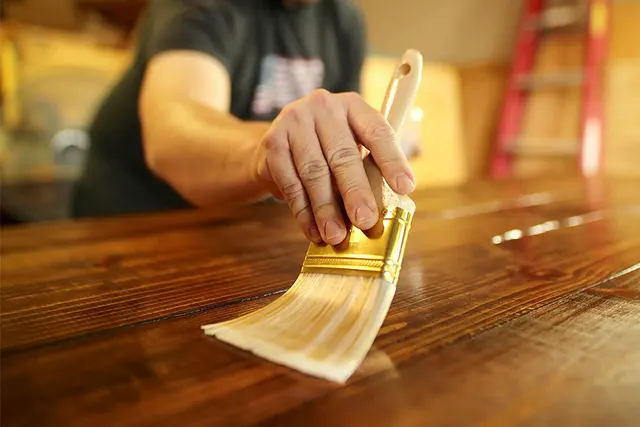
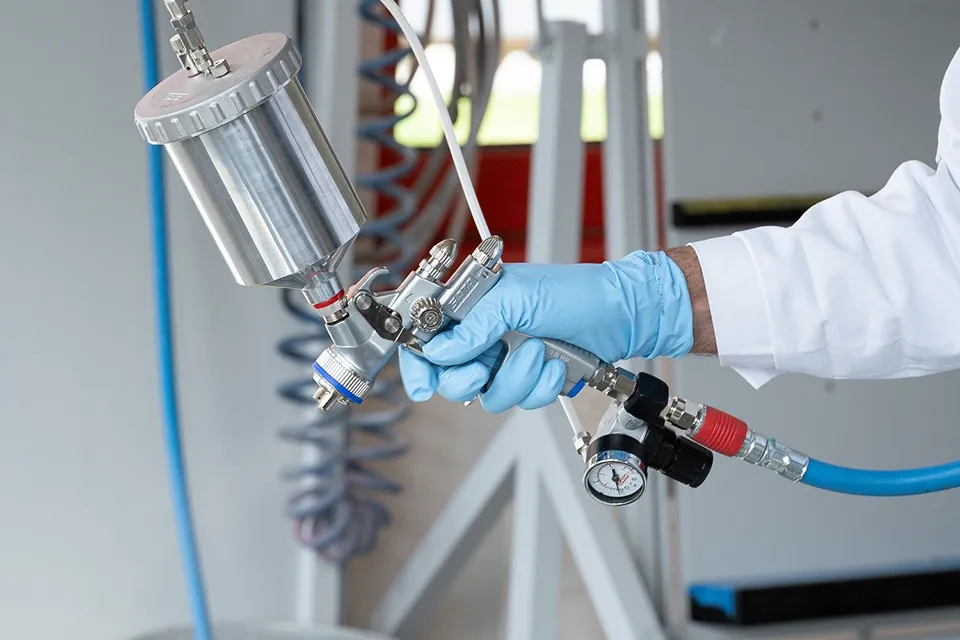
The coating can now be applied. Cremers says: “For the best results, use a pressure pot spray gun.
The surface should then be left to dry for at least five hours.”
Sand, sand and sand again
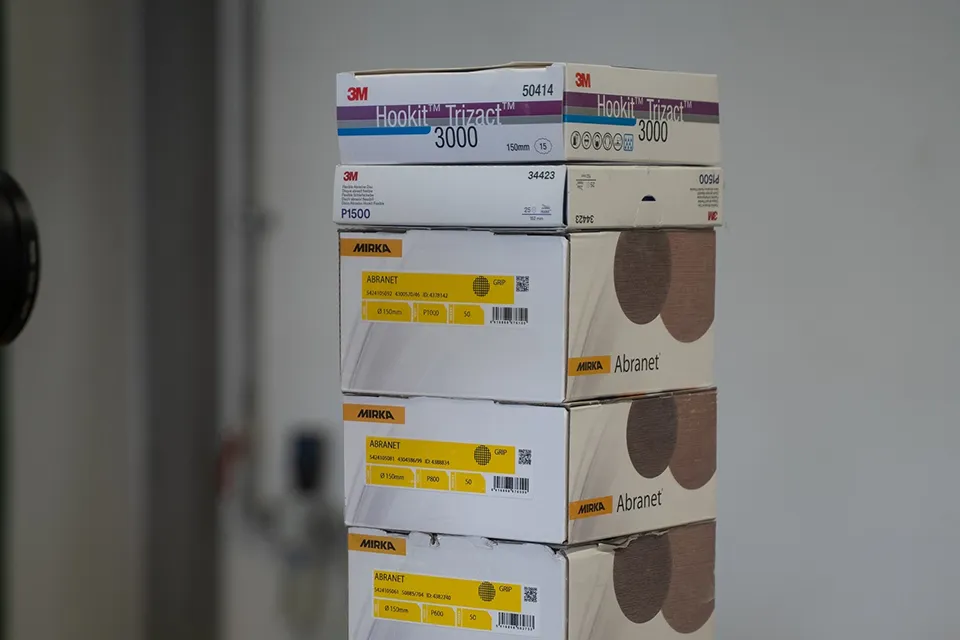
Every painter knows only too well that achieving the best results involves a lot of sanding. “It’s best to start with 180-grit paper, then work through 240, 360, 600, 1000 and 1500 grit, finishing with 3000 grit,” Cremers explains. “It takes time, but gives the finest metallic
effect.”
Topcoat
For the final step, applying the clear topcoat, it is important to ensure the surface is dust-free. “You can use Spezial-Verdünner for this,” Cremers advises. Then apply Tiropur NG in gloss level G70. Pigmotop G70 is a good alternative. “The result is a surface with a beautiful tin finish,” says Cremers.
For a vintage look
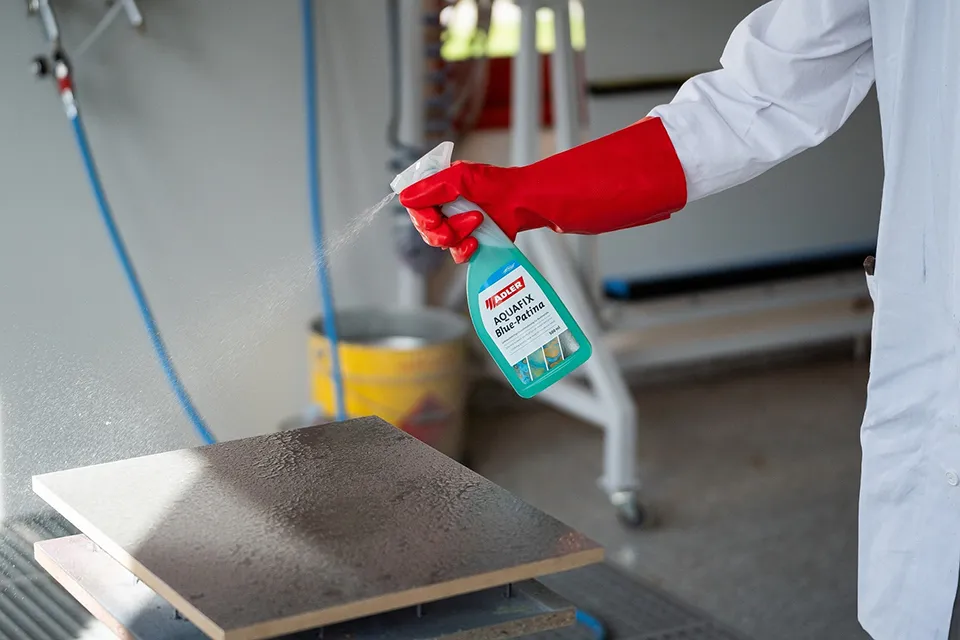
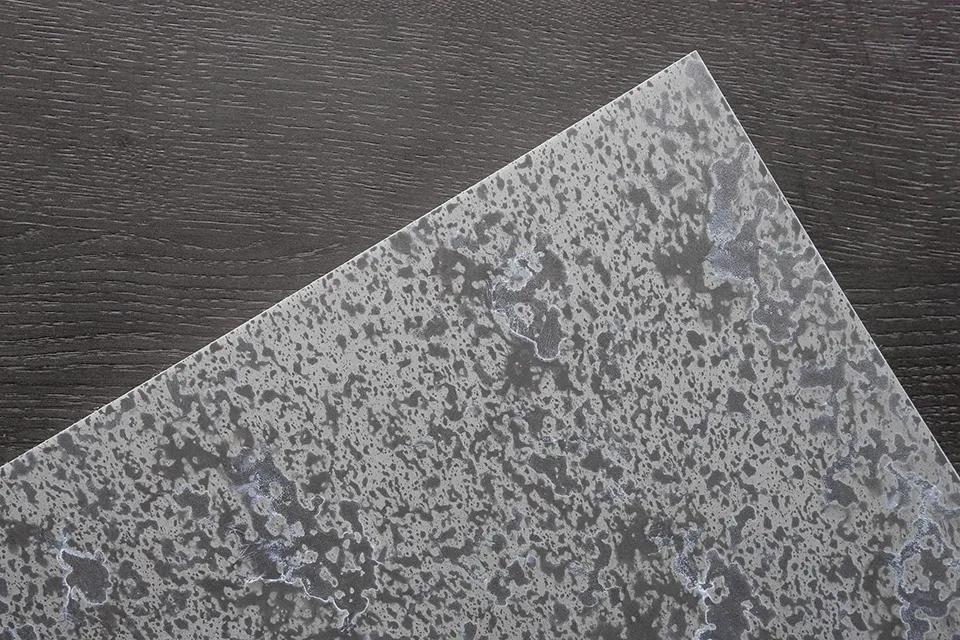
If the object would suit a slightly less polished look, the surface can also be artificially aged, changing its colour to create an attractive vintage finish. “Apply Aquafix Blue-Patina to the dry, sanded surface before applying the topcoat,” Cremers explains. “You can mist it on or apply it in larger drops, evenly or only in certain areas: the choice is yours. After drying overnight, the oxidation solution gives the surface a unique look.”
Topcoating the patina
Here too, it is important to follow up with a protective clear coating. “PUR-Antiscratch HQ G10 is the best choice, as it creates a surface that can withstand knocks,” Cremers recommends in conclusion.
Question about this story? Ask your question
Companies in this story
Keep following this
Get an email when a new story is published. No account needed.
- ThemeDecorative and protective surfaces
- SubjectCoatings & paint
- CompanyADLER Benelux BV