The perfect subfloor, the perfect finish
Text Lieke BousemaImage Bostik
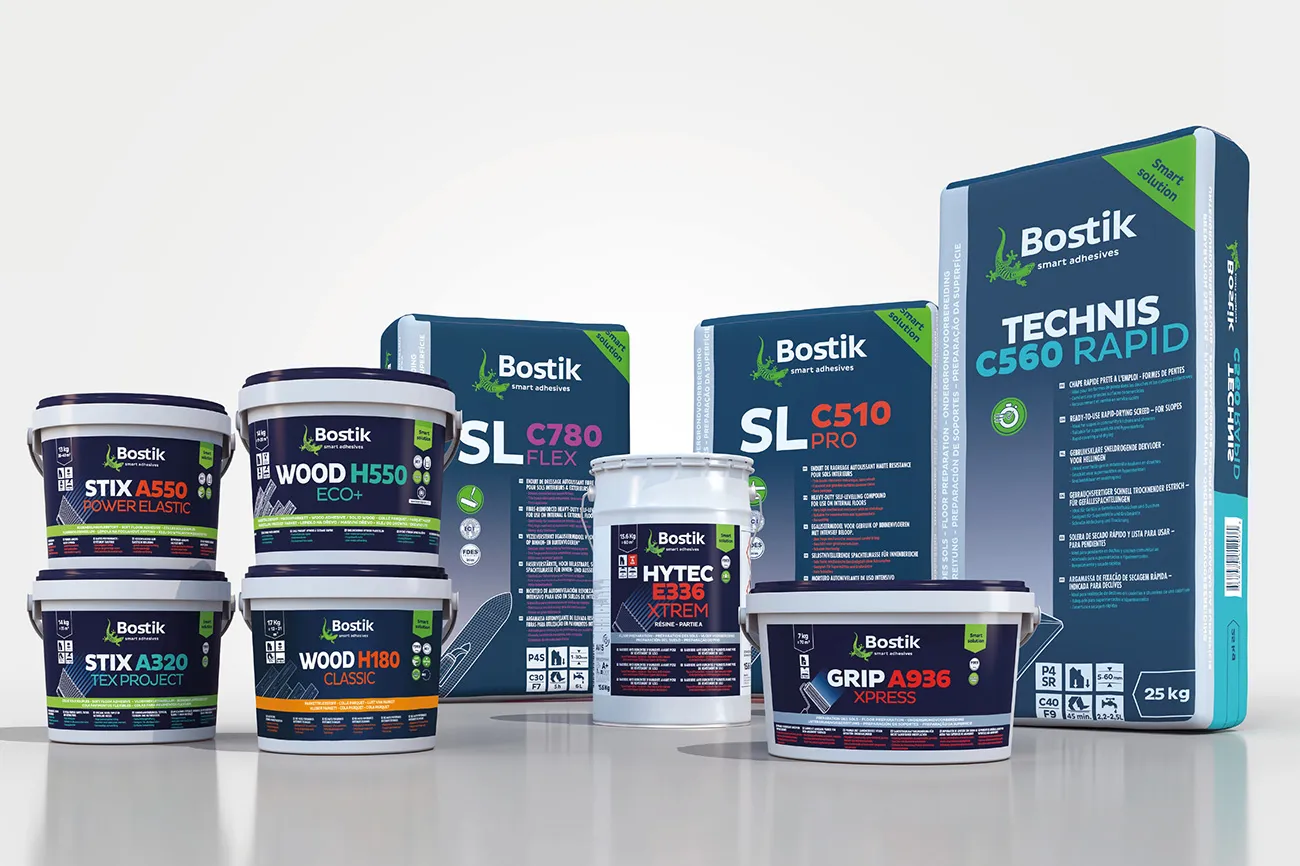
Floor preparation
The quality of the floor finish depends on the quality of the substrate. A level base floor is essential, especially when installing flexible, delicate floor coverings such as vinyl, carpet, PVC or marmoleum. In fact, “The screed can never be perfect enough,” says Luc Wouters, Technical Account Manager Flooring at Bostik. “To achieve this, the right technical preparation is essential. Is the subfloor sufficiently clean, dry, normally porous, sound, crack-free and level?” To create a high-quality, mirror-smooth substrate for every project and in all conditions, Bostik is happy to carry out a comprehensive site survey, for example, to draw up a step-by-step plan and provide detailed advice.
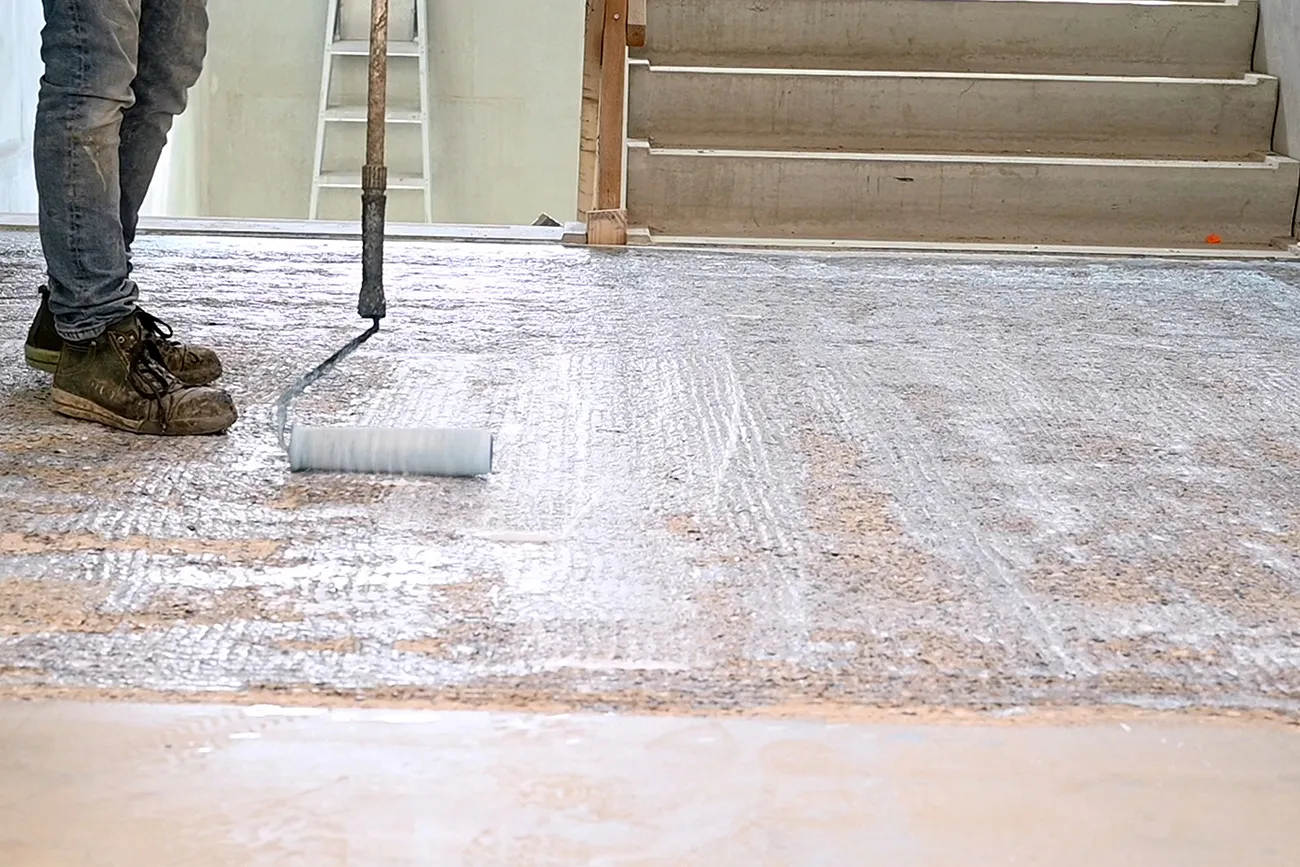
Floor layers taking on a floor-finishing project assume responsibility for the subfloor as soon as they lay the first square metre, Wouters explains. “To eliminate risks, it is important that they follow a number of steps, and Bostik is happy to support them.”
1. A clean floor
He explains that the substrate must be free of contaminants to ensure good adhesion. “Paint and plaster residues, laitance, adhesive and varnish can be removed from the substrate by sanding, for example. It is then important to brush and vacuum the substrate thoroughly.”
2. A permanently dry substrate
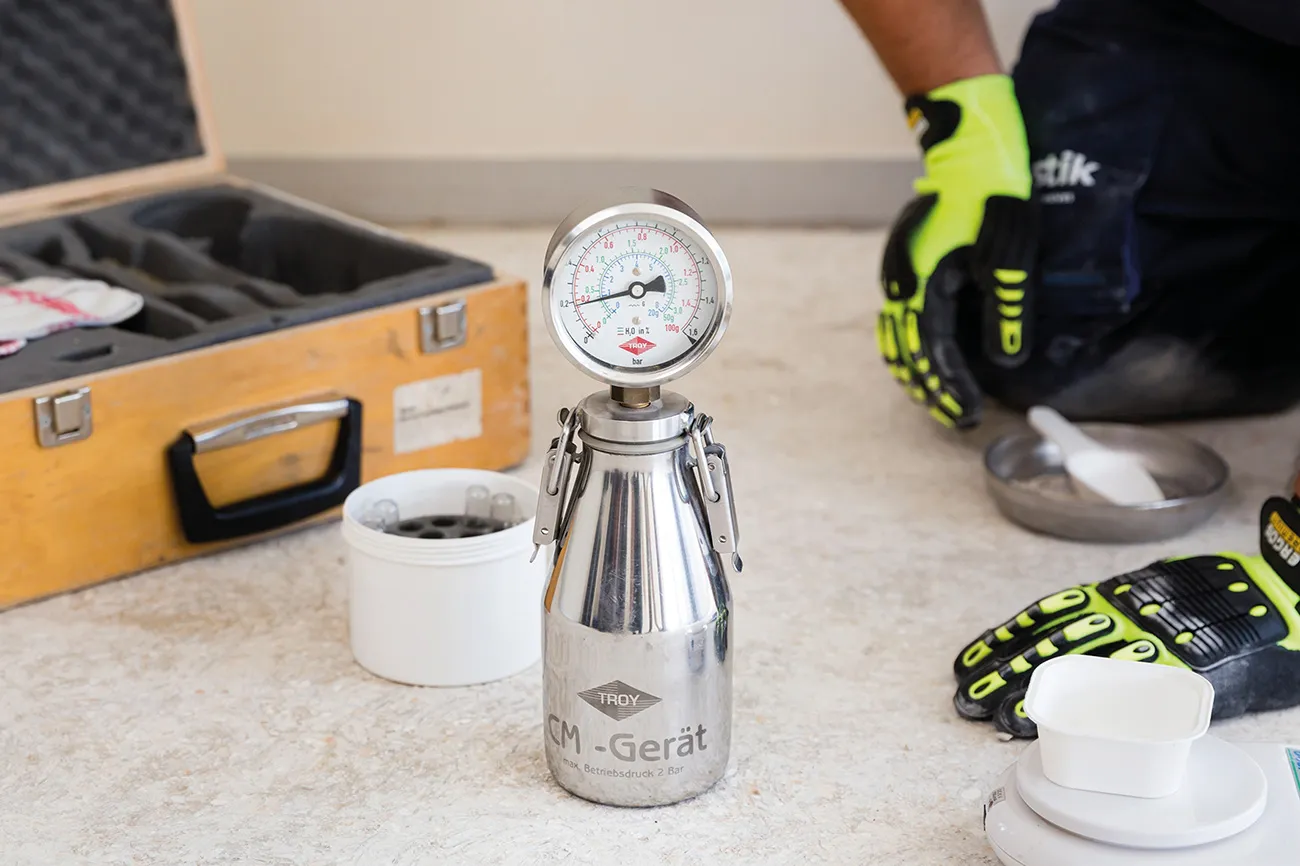
The residual moisture content must be determined to establish whether a substrate is sufficiently dry. “Bostik uses a digital moisture meter for an indicative moisture reading, as well as a carbide test,” says Wouters. “For the latter, a sample is taken from a depth of at least 5 cm and mixed with a calcium carbide ampoule in a carbide meter. The pressure generated by the gas is displayed on the meter as a moisture percentage.” For a cement-based screed, the maximum residual moisture content is 2% without underfloor heating, he adds. “With underfloor heating, the residual moisture content must not exceed 1.8%. If a cement-based screed contains too much residual moisture, a two-component epoxy moisture barrier such as Bostik HYTEC E336 XTREM must be applied.”
Rising damp can be an issue, particularly in buildings built directly on the ground without a crawl space, or where there are tiled floors. “This is especially common in older houses, where there is no plastic membrane beneath the floor. A moisture barrier must therefore always be applied in such buildings, with sufficient resistance to hydrostatic pressure.”
3. Understanding porosity
A droplet test can be used to check the porosity of a substrate. A few drops of water are applied and the time they take to penetrate the substrate is measured. “If they penetrate in less than a minute, the substrate is (too) porous,” says Wouters. “In this case, a specialist primer such as Bostik GRIP A500 MULTI can eliminate the screed’s suction.” For non-porous substrates, a primer such as Bostik GRIP A936 XPRESS is more suitable.
4. Good surface strength
The screed must also have good surface strength, both in compression and tension. “The tensile strength must be at least 0.5 N/mm2, or preferably 1 N/mm2 for parquet flooring,” says Wouters. “The compressive strength of the substrate must be greater than 8 N/mm2. If the floor is not strong enough, a specialist screed hardener can be used. The substrate must also not be (too) granular, powdery, flexible or yielding.” If the substrate does not meet these requirements, it is important to strengthen it with a product such as Bostik HYTEC P510 RENORAPID.
5. A crack-free base
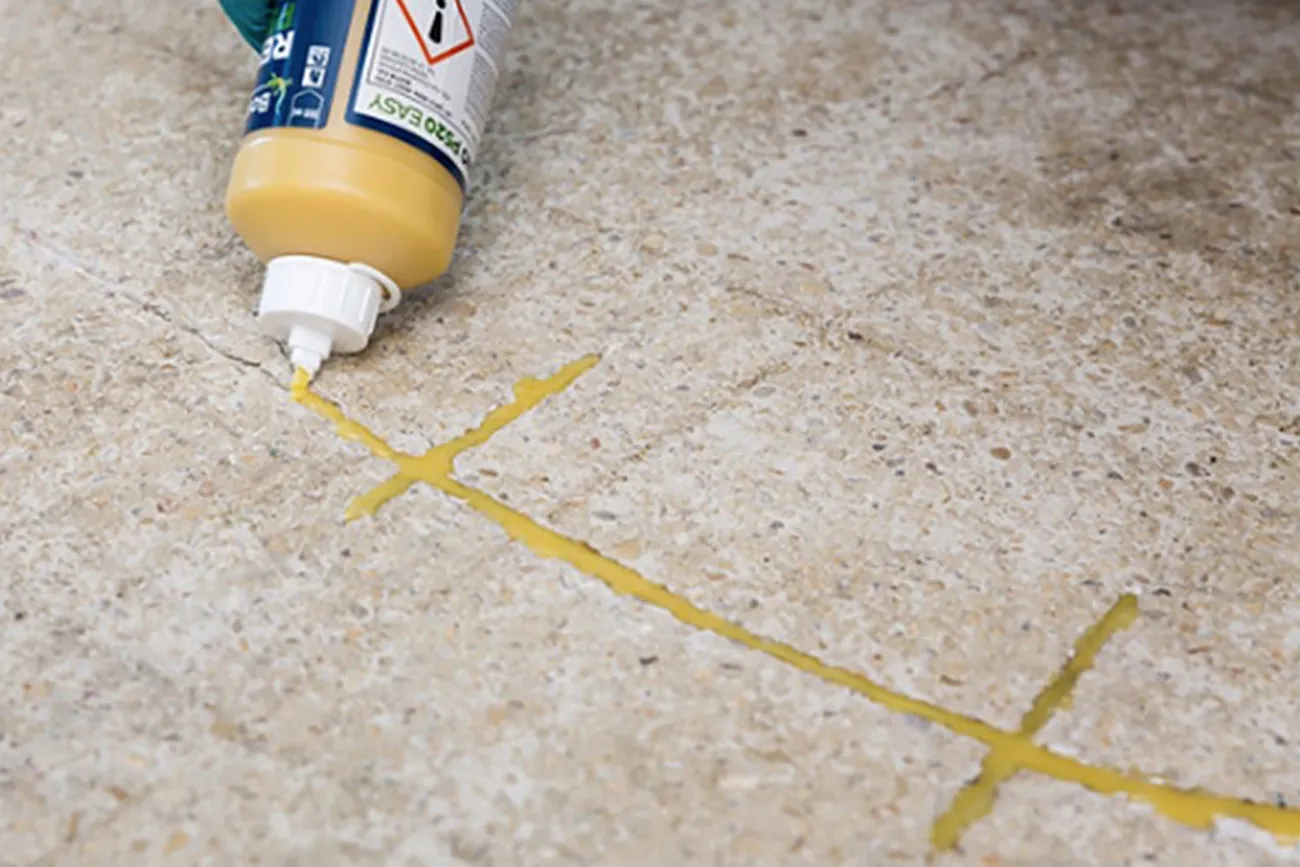
Any cracks and fissures in the substrate must also be repaired. This can be done by grinding out the cracks, inserting staples and filling them with a two-component silicate resin such as Bostik RENO P520 EASY, or by applying the two-component epoxy resin Bostik RENO E742 STRUCTURE.
The right levelling compound for every situation
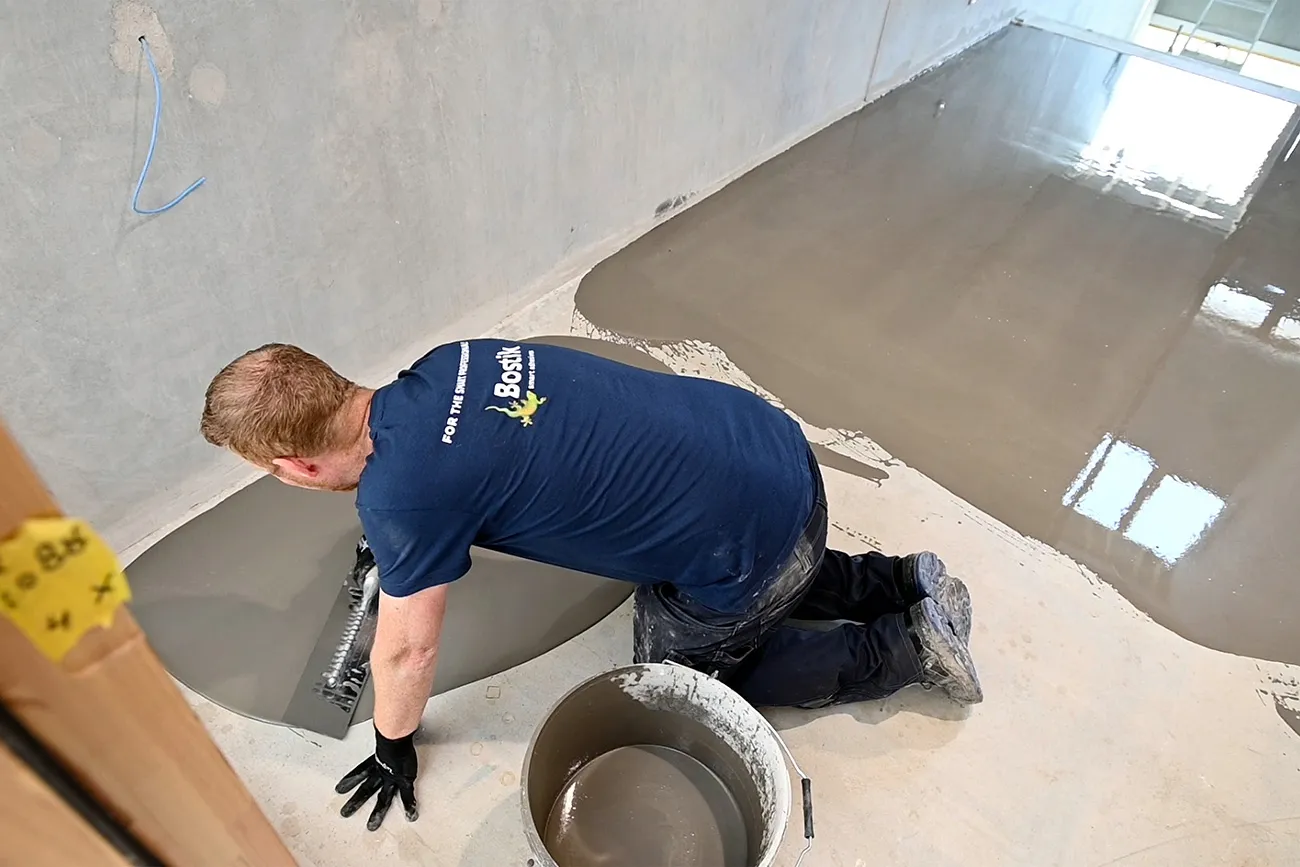
Once these steps have been completed, it is time to apply the primer and levelling compound. “The levelling compound is used to create a beautifully level floor,” says Wouters. “The best compound to use depends mainly on how the space will be used, the type of screed, the required compressive strength, the maximum layer thickness and the drying time. In addition to standard levelling compounds, flooring contractors can also turn to Bostik for fibre-reinforced compounds, such as Bostik SL C740 FIBER MAXI for flexible (wooden) floors. There are also fast-drying compounds such as Bostik SL C990 SPRINTER, which can be worked on just 2 to 4 hours after application. Where high compressive strength is required, we recommend Bostik SL C980 XPS, with a C40 compressive strength classification. Our Bostik SL C940 XL levelling compound is also very popular, as it can bridge a height difference of 50 mm. Selecting the right products is a standard part of our advice. We can also provide product and application training on request, either at our premises or on site, to ensure the products are applied correctly.”
A business enquiry for Bostik Benelux? Get in touch
Companies in this story

Keep following this
Get an email when a new story is published. No account needed.
- ThemeFlooring and atmospheric spaces
- SubjectCoatings & paint
- CompanyBostik Benelux