Traditional staining gives pearwood the appearance of ebony
Anyone looking to colour wood can choose from a range of stains from various brands. There is a suitable tin of stain for almost every job. However, furniture restorers cannot always reach for these modern stains. A successful restoration sometimes calls for the use of specific types of wood or colouring techniques from times gone by. Since a furniture restorer must not improve or enhance an object by using modern products, this can sometimes present a challenge. This may happen, for example, when ebony is required. It is an expensive wood, both today and, even more so, in the past. Even then, however, a solution had already been found…
Long live the gallnut
Furniture makers who wanted to make something in ebony but could not afford to use ebony itself would once turn to pearwood. Like ebony, this wood has a dense structure and a straight grain with relatively little figuring. To achieve an attractive ebony appearance, the wood had to be stained black. This was done by boiling the wood with a colouring agent, such as Indian ink or pigment from gallnuts. Boiling allowed the wood cells to absorb the liquid more readily, made the wood more pliable and opened up its structure slightly. This enabled the coloured liquid to penetrate deeper into the wood, resulting in a rich black finish.
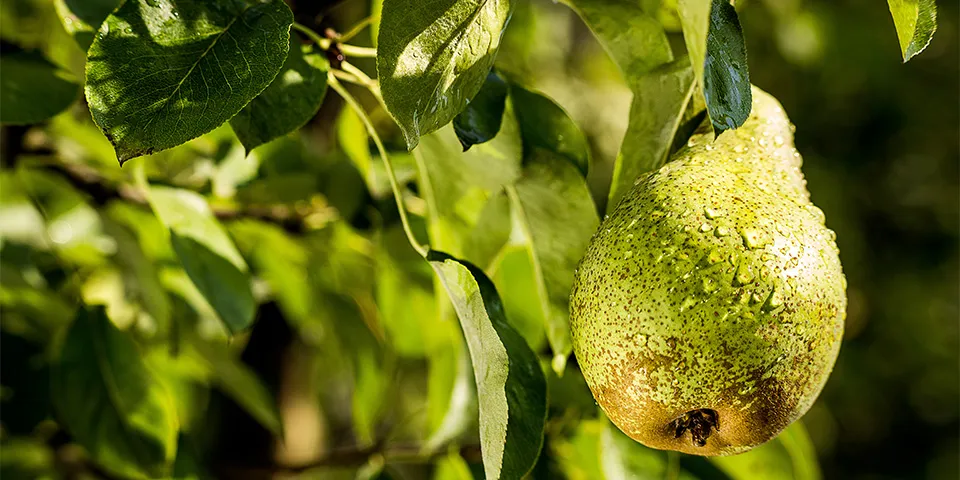
Like ebony, pearwood has a dense structure and a straight grain with relatively little figuring.
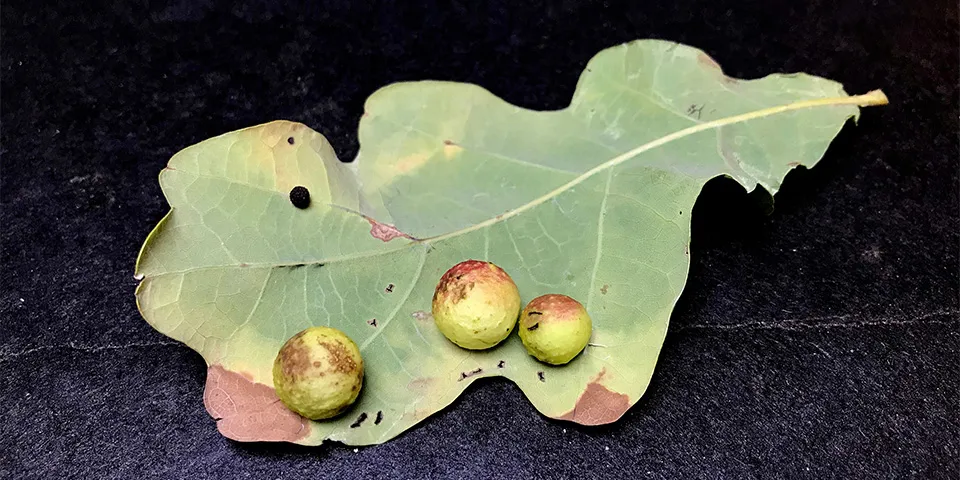
The gallnut that provided the black pigment is not a true ‘nut’, but an encapsulation of gall wasp eggs on an oak leaf. Encapsulation is the tree’s natural response to isolating foreign substances on its leaves. These nut-like growths were scraped from oak leaves, then dried and ground finely. This provided the base pigment for staining wood black, as well as for dyeing wool and textiles. This method is still used in furniture restoration today when traditional types of wood or colouring techniques are required.
Staining in 2020
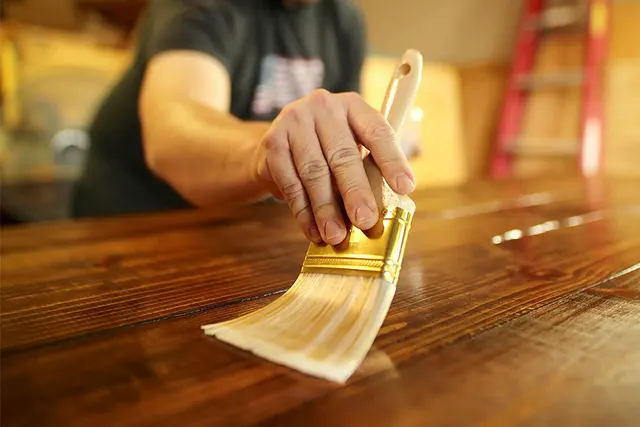
Staining as described above is primarily intended to alter the appearance of the wood. Today, people tend to think of staining as a way to protect wood. Stain leaves the wood’s structure visible and penetrates deeper than lacquer. It regulates moisture and protects against wood rot. Because stain accentuates the character of the wood, fewer sanding passes are needed than when aiming for a perfectly smooth finish with lacquer. Lacquer is a good solution for colouring wood where impact resistance is important. It forms a film on the surface, leaving the grain barely visible or completely obscured.
Question about this story? Ask your question
Keep following this
Get an email when a new story is published. No account needed.
- SubjectCoatings & paint