











A consistent appearance is becoming increasingly important in veneer
As automation increases at companies processing veneered panels, automatic panel storage systems are becoming an increasingly familiar sight. As part of process optimisation, they make work far more efficient, but there is a downside too.
Erik Leeuwenburgh, owner and managing director of Leeuwenburgh Fineer BV in Raamsdonksveer, explains the potential consequences. “Interior and kitchen manufacturers used to check panels for consistency before putting them through the saw. With the introduction of automatic panel storage systems linked to an automated production process, the machine now cuts panels without anyone checking them first. Colour differences only come to light once the furniture has been assembled. By then, there is no going back, and you can write off the materials and labour. It is therefore essential to be able to rely on the veneered panels you put into storage having the same appearance.”
The veneer supplier as a cog in the automation process
With an impressive collection of more than 100 wood species available from stock, Leeuwenburgh is renowned for its extensive veneer expertise. This knowledge enables the company to supply panels with a consistent veneer appearance. “That doesn’t happen by itself. The panels are often stained and lacquered to a spray-grade finish for this very reason, which also brings out the wood grain to the full,” says Leeuwenburgh. “You could say that working this way helps automation to function in the first place. The veneer panels can be sorted by pallet, so our customers can truly rely on them without checking.”
Building a co-making partnership with the customer
Customers see Leeuwenburgh as a partner with whom they can build a co-making relationship. “We then become part of the production process, right at the start of the chain. It’s a genuine partnership: we guarantee the material and a consistent colour range, help the customer optimise the process, and work towards a long-term, high-quality relationship. For the customer, the added value lies in shorter lead times and less waste. Fortunately, more and more people are recognising that what counts is the bottom line, not just the size of a purchase invoice.”
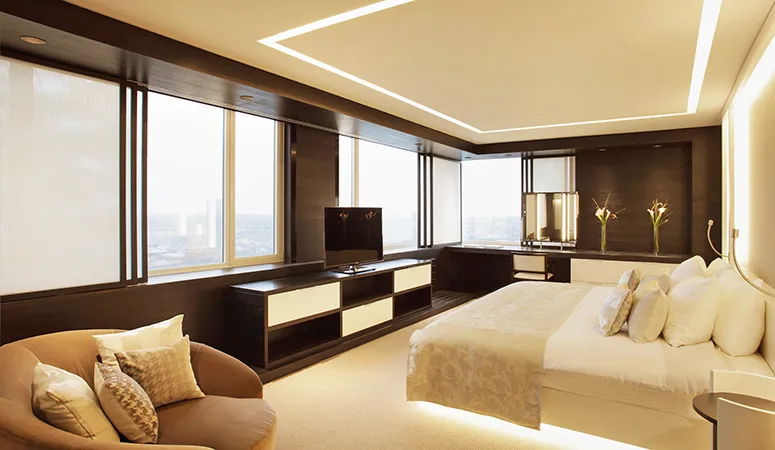
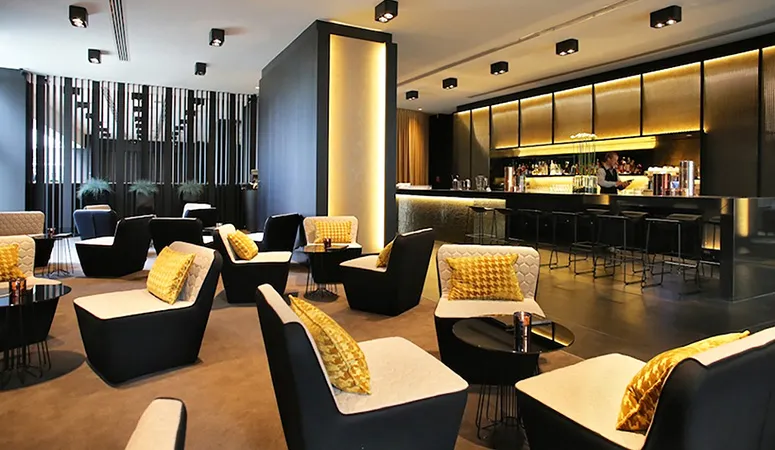
Lignapal Selectie Oak Rift Swamp used in a hotel lounge in Brussels.
Interior architects are increasingly specifying veneer for projects
Leeuwenburgh has noticed a growing trend among interior architects, particularly on projects: veneer is being used more and more. Does this mainly involve exotic wood species? “There is demand for exotic species, but at the moment it is mainly abroad. Oak veneer remains by far the most popular, in all its forms, from ultra-sleek to highly rustic. We offer 20 variations of oak, across the full range. Alongside standard oak options, we also have grey and various grades of smoked oak. With 100 wood species, we serve a wide range of markets, but oak remains our biggest seller, along with walnut.”
Making it possible to choose without wood expertise
“Without in-depth knowledge of wood species, processing, quality requirements and jointing options, it is difficult to write a watertight specification for a project. An architect may have a particular look in mind, but could be very disappointed when the project is completed. We have set ourselves the goal of creating standardised decorative wood surfaces. A designer can choose a reference and know straight away what colour, texture and gloss level their project will have. ‘What you see is what you get’, as it were. This makes veneer much easier to specify, enabling architects to use it in their designs without hesitation,” Leeuwenburgh concludes.
Words: Jan Mol Images: Leeuwenburgh Fineer BV
Question about this story? Ask your question
Keep following this
Get an email when a new story is published. No account needed.
- ThemeFrom sheet materials to construction
- SubjectGeneral







