











A match made in heaven: HPL and real veneer?
Knowing the latest trends in interior design is a real asset for veneer specialists. Erik Leeuwenburgh, director and owner of Leeuwenburgh fineer, keeps his finger on the pulse and knows what gets designers excited.
“Today’s interior designers work a lot with melamine-faced board. Ultra-matt, anti-fingerprint boards are a hot item at the moment, in solid colours such as black, anthracite grey, grey, beige and white. The board is mainly used horizontally, for worktops or furniture tops. But what about drawer fronts and doors? Today’s designers are turning to veneer instead of HPL. It’s a natural choice, because veneer goes beyond the visual appeal of HPL. There’s a world of difference between touching cold HPL and feeling the warmth of real wood.”
Veneer developed specifically for combined applications
To meet demand for veneer that can be used in combination with HPL, Erik contacted Arpa Industriale.
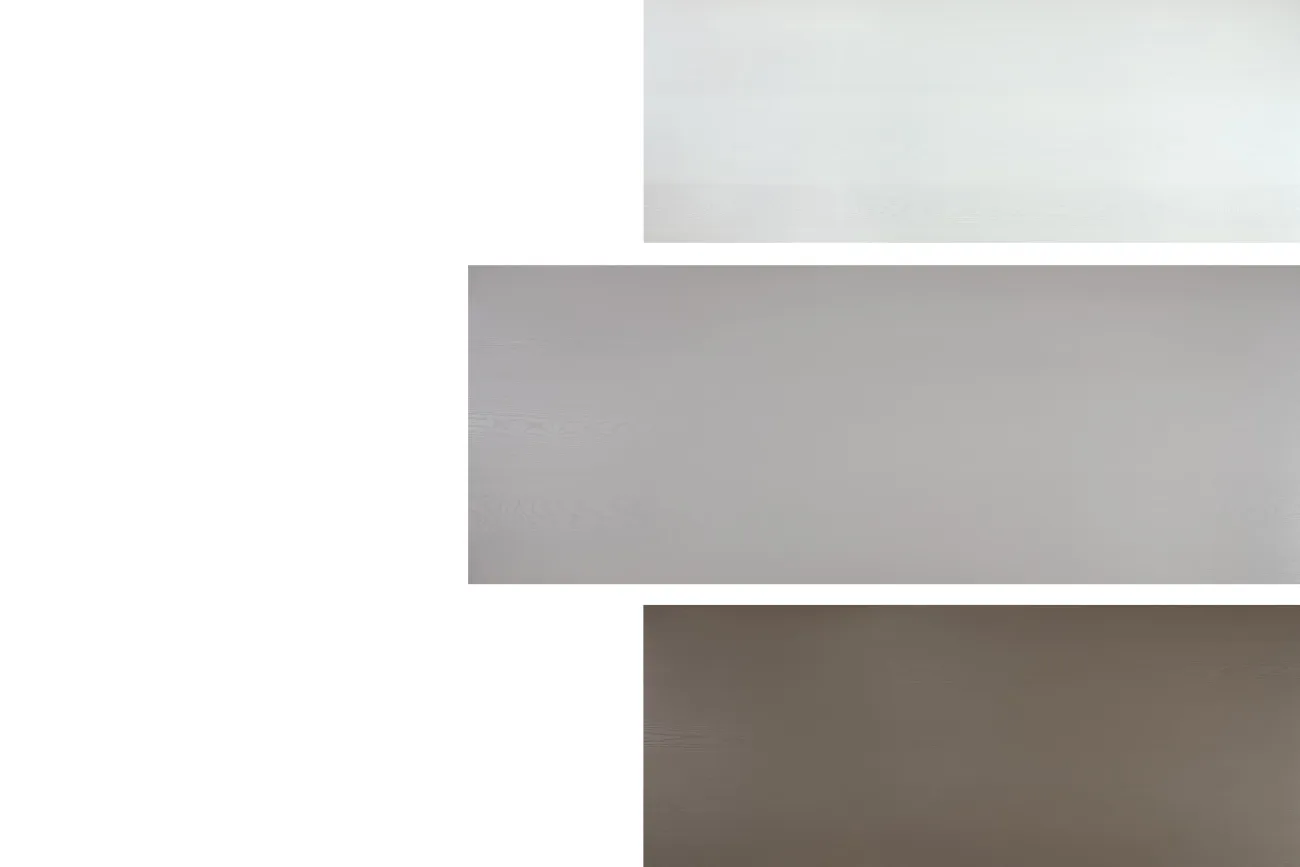
“They told me which colours in their HPL FENIX range are currently the absolute bestsellers. We developed veneer specifically to complement those HPL colours. You can now use HPL horizontally and easily pair it with veneer for vertical applications. The base is ash. We carried out extensive, careful testing to find the right way to apply the lacquer and the right gloss level. A matt finish didn’t work, because you couldn’t see the wood grain. A very slight increase in the gloss level solved the problem.”
Opaque without obscuring the grain
A lot of work went into achieving an opaque finish in the solid colours mentioned. Erik explains: “We pour the lacquer onto the veneer. This works better than having interior fitters spray the veneer themselves, as that risks clogging the wood grain. Too much lacquer does the veneer no favours. We have the pouring process fully under control, which means we can offer veneer in solid colours while retaining its texture. The warmth you feel to the touch is in no way comparable to the cold feel of HPL. So, combining veneer with HPL ensures visual appeal and a lovely tactile quality.” The solid-coloured veneers work well with ABS edging. “That’s very useful, since ABS offers better protection for the board’s end grain. We see our solid-coloured veneer being used in kitchens and interiors across a broad range of applications. Nothing beats the allure of real wood. Even the most expensive HPL with a wood print and artificially embossed grain is exposed when placed next to veneer in the same colour.”
Unique down to the last square centimetre
The response from the market has been very positive. “A wood look in HPL may look good, but it has a repeating pattern. Once you notice it, you can’t ‘unsee’ it. Veneer, on the other hand, brings a space to life. Mother Nature has created the pattern, and every square centimetre is unique,” Erik concludes.
Question about this story? Ask your question
Keep following this
Get an email when a new story is published. No account needed.
- ThemeFrom sheet materials to construction
- SubjectGeneral







