











Applications where hygiene is essential: from gunpowder to building material
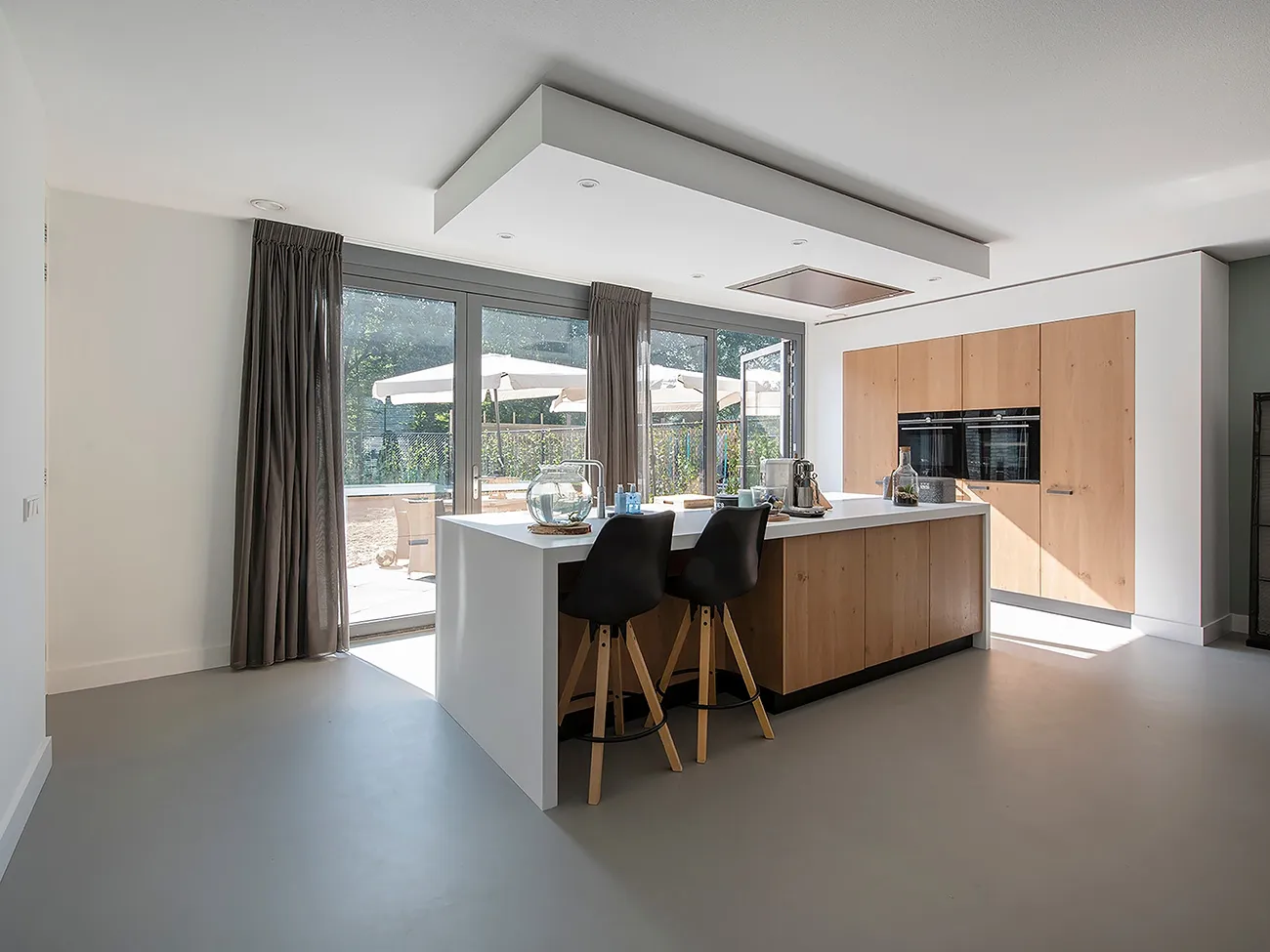
When E. I. du Pont de Nemours and Company was founded in 1802 to manufacture gunpowder, no one could have imagined that 165 years later it would lay the foundations for the Solid Surface we know today. This now hugely popular building material was first developed in the DuPont laboratory in 1967. DuPont immediately saw the potential of ‘Corian’, the name it gave its Solid Surface product. Corian was made from polyacrylate and aluminium hydroxide derived from bauxite.
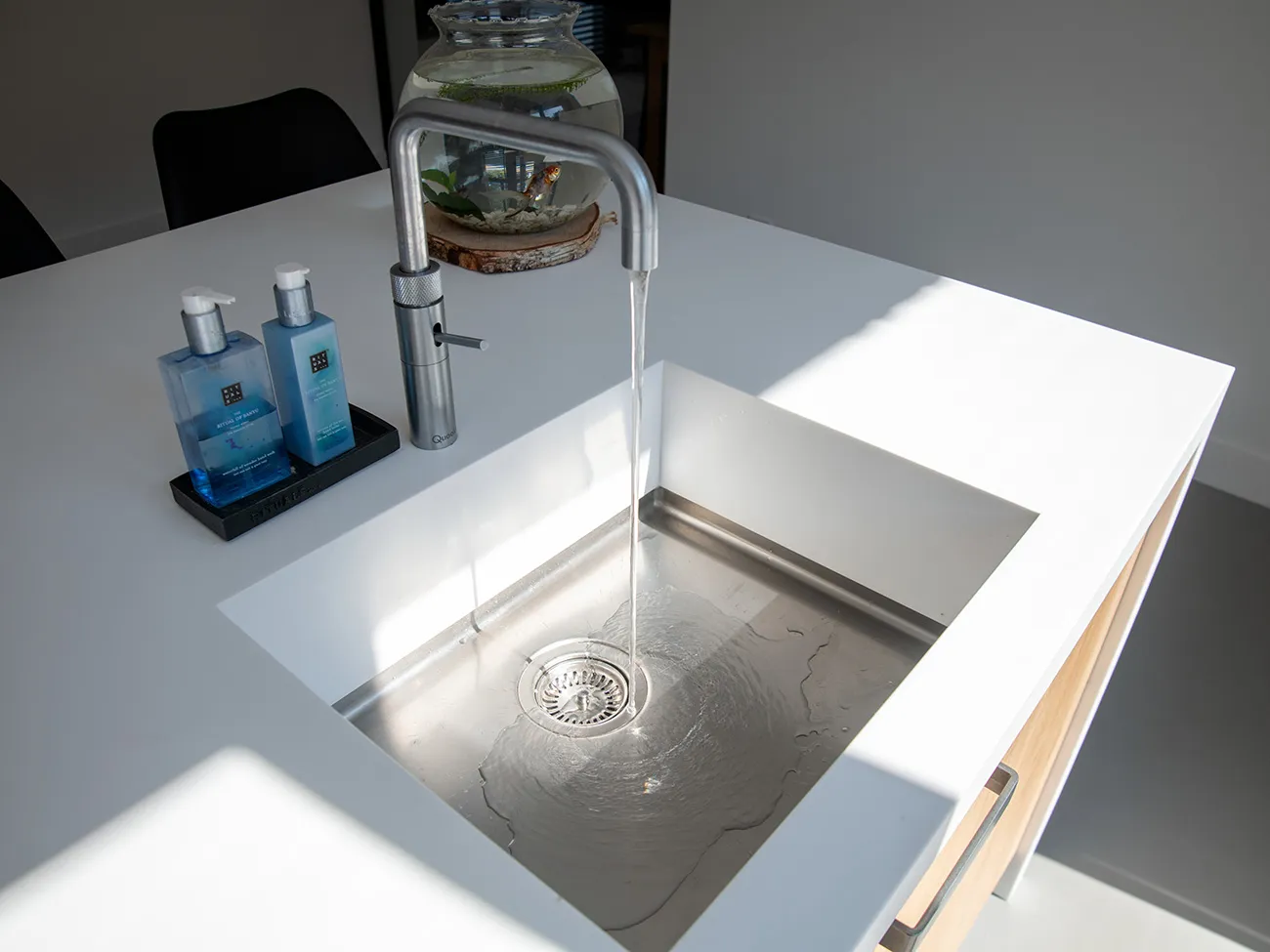
In the twentieth century, DuPont developed many more polymers. Corian had become known for its wide range of applications and properties, and was copied by various other manufacturers, either in the same composition or in a variation on it. All building materials derived from this initial development fall under the same generic name: Solid Surface. Literally, a ‘solid surface’, which is exactly what Solid Surface offers. The material is impermeable because it is non-porous.
The manufacturing process behind Solid Surface
Solid Surface consists of natural minerals and pigments bound in a matrix of aluminium trihydrate (ATH), acrylic, epoxy and/or polyester. The finished product has a smooth structure, without seams or pores. This makes Solid Surface waterproof, hygienic and low-maintenance, ideal for applications in wet areas and places where hygiene is essential.
To achieve the right mix, the substance is blended, degassed and then injected into a mould. It is cured in an oven. The casting process allows Solid Surface to be made in all kinds of shapes, from a simple sheet to a solid washbasin. The material is then finished, a process that can now be carried out in several ways thanks to product development. Finishing options include matt, gloss, metallic and textured. Sanding is crucial for Solid Surface: it creates its soft texture.
Nothing but good qualities
Solid Surface offers many advantages. Its non-porous surface makes it antibacterial. When multiple sections are used, they are bonded seamlessly using the same material for the joint. With no seams, water and bacteria cannot build up in cracks or crevices. Thanks to its composition, Solid Surface can be repaired almost invisibly using heat. Its scratch-resistant nature means it retains its aesthetic appeal even after years of use.
Design freedom for designers
Interior designers often use Solid Surface, especially in applications for wet areas such as bathrooms, toilets and kitchens. Solid Surface is therefore used for wall panels, baths, washbasins, shower trays, splashbacks and worktops. Its ability to be shaped also means it is increasingly used in ‘dry’ settings, such as shops and public spaces. Whether it is a reception desk, counter or display unit, it is perfectly normal for these to be made from Solid Surface. The effect, however, is anything but ordinary: used creatively, Solid Surface usually delivers a ‘wow factor’.
Question about this story? Ask your question
Keep following this
Get an email when a new story is published. No account needed.
- SubjectGeneral







