











Doing your own sealant work gives you more control
Text Tamara BrouwersImage Maiburg
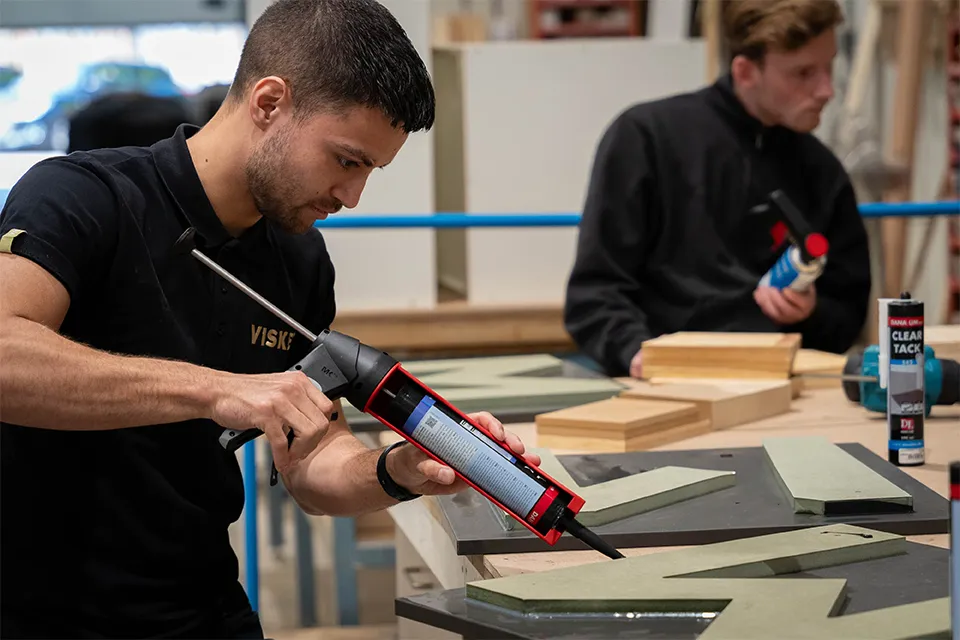
Practical training in sealing and bonding
Working efficiently in interior fit-out depends not only on the choice of materials, but also on how they are applied. Maiburg addresses this with practical sealant training for professionals who want to carry out finishing and bonding work themselves.
The training is aimed at interior fit-out specialists, furniture makers and kitchen manufacturers. It takes place on site, at the companies’ own premises. Maiburg brings materials and substrates so teams can practise with scenarios that reflect their day-to-day work.
According to adhesive specialist Bas van de Ven, in practice it is mainly about maintaining control over planning and quality. “Having worked in interior fit-out myself for years, I know better than anyone how useful it is to be able to apply sealant properly yourself. You are not dependent on external contractors and their schedules, but can plan ahead and ensure the quality yourself.” He says knowledge of sealant application is often fragmented on site. “Many professionals learn on the job, but without clear guidelines. This leads to differences in working methods that show up in the end result.”
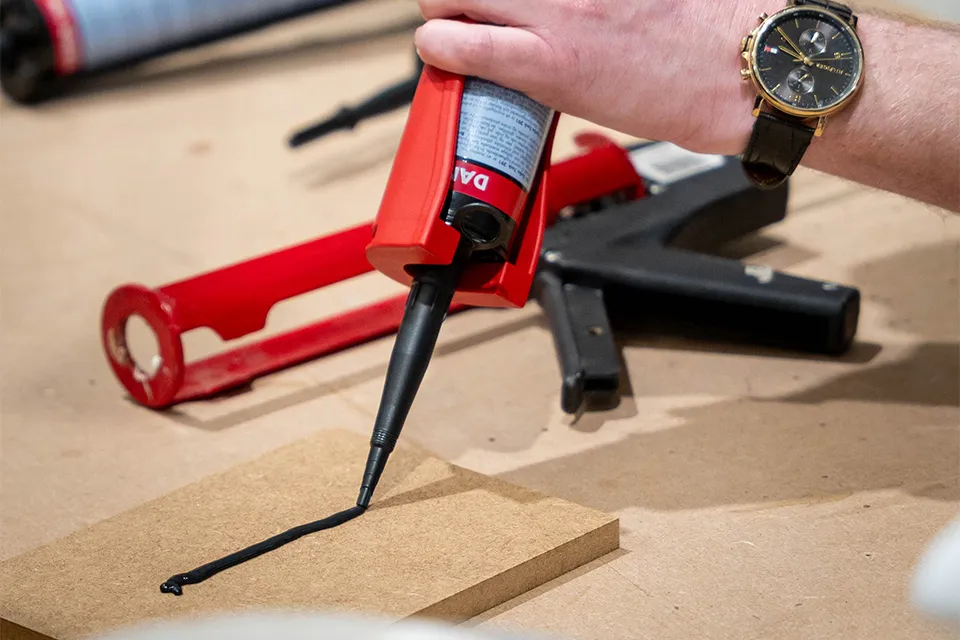
Choice determines the result
An important part of the training is material selection. Each type of sealant has its own applications. Mistakes still occur regularly on site, for example when an acrylic sealant is used where movement occurs, or when a silicone sealant is used where paintability is required.
During the training, participants gain an understanding of these differences. They learn when silicone sealant is needed for waterproof applications, when acrylic sealant is suitable for interior finishing, and when MS polymer sealant can be used for both bonding and sealing.
According to Van de Ven, this delivers immediate benefits. “Using the right sealant in the right place prevents rework. That saves time, but above all avoids disputes afterwards.”
Practice at the heart of the training
The training combines theory and practice. Participants practise with different substrates and applications, such as junction joints and internal and external corners. The products used are from Dana Lim.
According to Van de Ven, the choice of product also plays a part in the learning process. “It is no coincidence that we use Dana Lim products during the training. These materials were developed in Scandinavia for professional use, with a focus on application, curing and safety. You can see that participants quickly gain a better understanding of what a product can and cannot do, and where its limits lie.”
He emphasises that technique makes all the difference to the finish. “Applying sealant may seem simple, but a neat joint requires control over pressure, pace and finishing. Focused practice quickly leads to visible improvement.”
Preparation is also covered, including cleaning, masking and assessing substrates. These steps are often skipped in practice, even though they determine the end result.
The training supports a way of working in which interior fit-out specialists take on more tasks themselves and rely less on external contractors for finishing and installation.
Have a business enquiry for Maiburg? Get in touch
Companies in this story

Keep following this
Get an email when a new story is published. No account needed.
- SubjectGeneral
- CompanyMaiburg







