











Getting to grips with edge banding
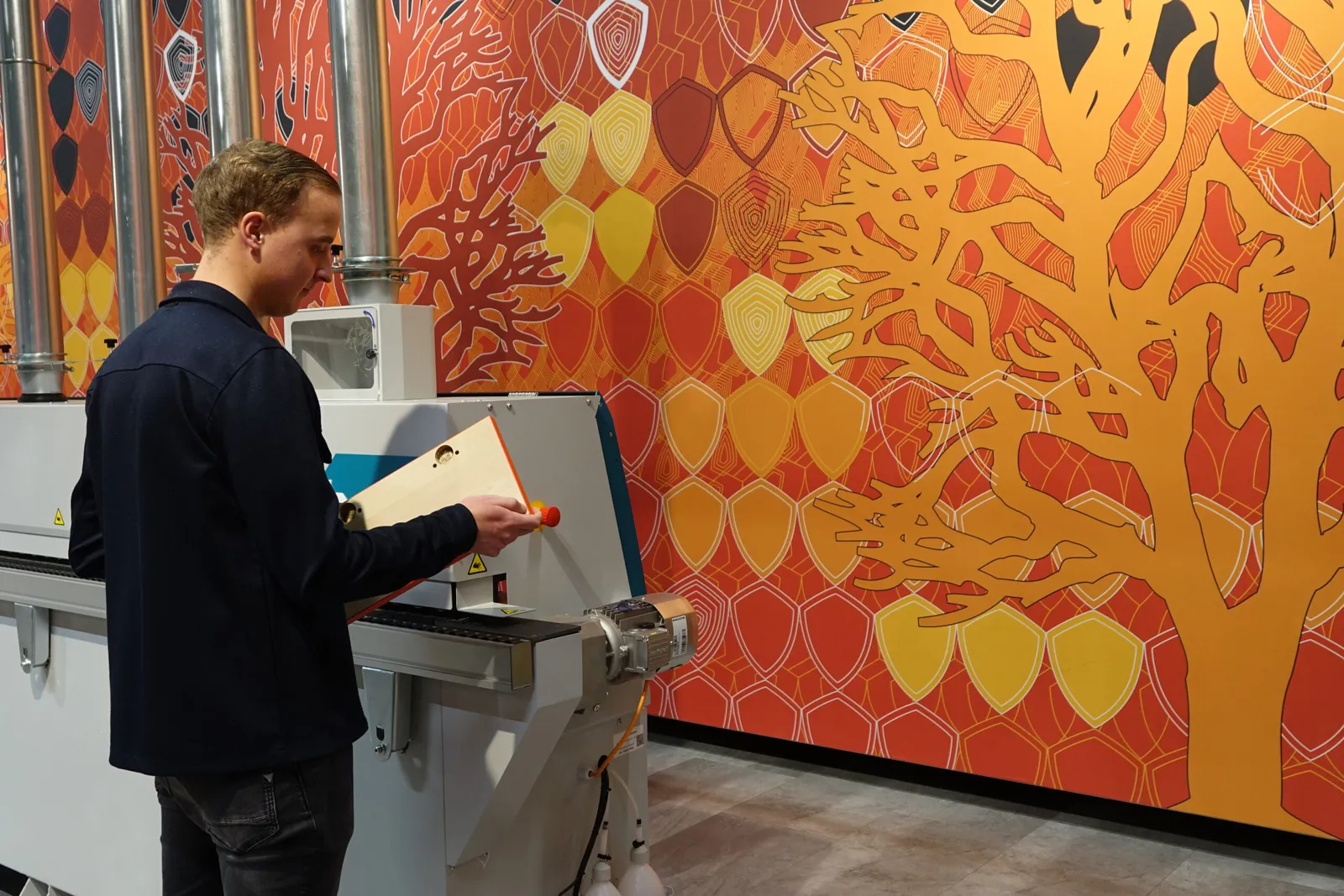
The process requires technology and use to be aligned
Edge banding has a major influence on the final quality of a piece of furniture or an interior component. A consistent result also requires careful coordination. According to Daan van den Akker, product specialist at De Groot Bewerkingsmachines, the main challenge is making this complexity manageable. At the knowledge session ‘Getting to grips with edge banding’ on 10 June, the company will demonstrate how.
“Edge banding involves a lot of factors,” says Van den Akker. “Think of temperature and humidity, but also the adhesive, the edge banding material, the machine and the operator. If one of those factors is wrong, you see it straight away in the result.”
According to him, the complexity lies not only in the various factors, but also in the way the machine itself is configured. “An edge bander performs many operations in succession. Something can go wrong at every stage. That makes the process sensitive, but it can be managed with the right coordination and settings.”
Operator and maintenance are key
In practice, much of this control rests with the operator and the maintenance of the machine. “Things still go wrong regularly, especially with the settings and maintenance. That’s why, during the sales process, we look at who will be operating the machine and how we can support them. Getting to know the machine is essential to achieving a stable process.”
Support plays a major role in this. More and more customers are using De Groot’s digital Customer Portal, which includes information on operation and maintenance. “Many questions can be resolved this way. We find that customers need to call less often about simple matters. Someone called the sales department on a Saturday morning with a technical question. I was able to help him straight away through the portal, without needing to call in a specialist.”
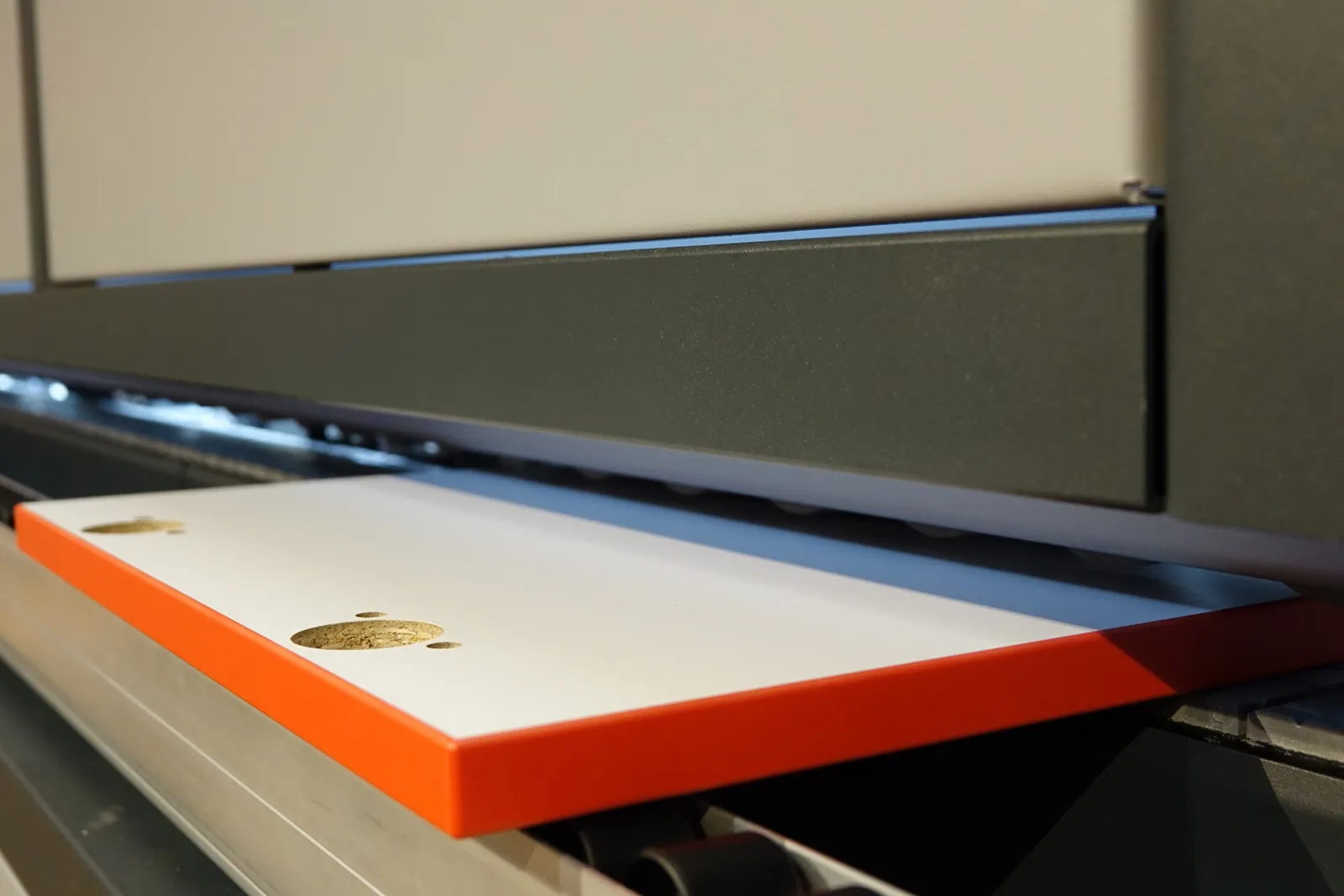
Developments in materials and adhesives demand precision
Developments in materials are creating new challenges for edge banding, such as the growing range of panels with embossed and tactile textures, including those from DecoLegno. Van den Akker says: “You have to set the machine much more precisely to follow the profile properly.” He also notes that demand for PU adhesive is increasing, as it delivers a neater, more durable result, with a narrower glue line and better resistance to moisture and stress. At the same time, bonding with PU requires a different approach: more attention to planning, a clean and well-organised workshop, and careful maintenance of the adhesive system. De Groot Bewerkingsmachines works with each customer to assess their specific situation and helps align the process, machine and working method accordingly.
Insight as a starting point
According to Van den Akker, improvement starts with insight. “We often ask customers how many metres of edge banding they process. It helps if they have a clear picture of this, as it is an important starting point for determining what suits their situation.”
At the knowledge session on 10 June, De Groot Bewerkingsmachines will focus on sharing knowledge. “We want to show what matters in practice. It’s not about one factor, but the whole picture. When the machine, material, settings and expertise are properly aligned, a complex process becomes manageable.”
Een zakelijke vraag aan De Groot Bewerkingsmachines? Get in touch
Companies in this story

Keep following this
Get an email when a new story is published. No account needed.
- ThemeDecorative and protective surfaces
- SubjectGeneral
- CompanyDe Groot Bewerkingsmachines
- CompanyDecoLegno







