











How can special tooling optimise your machining operations for furniture and door hardware?
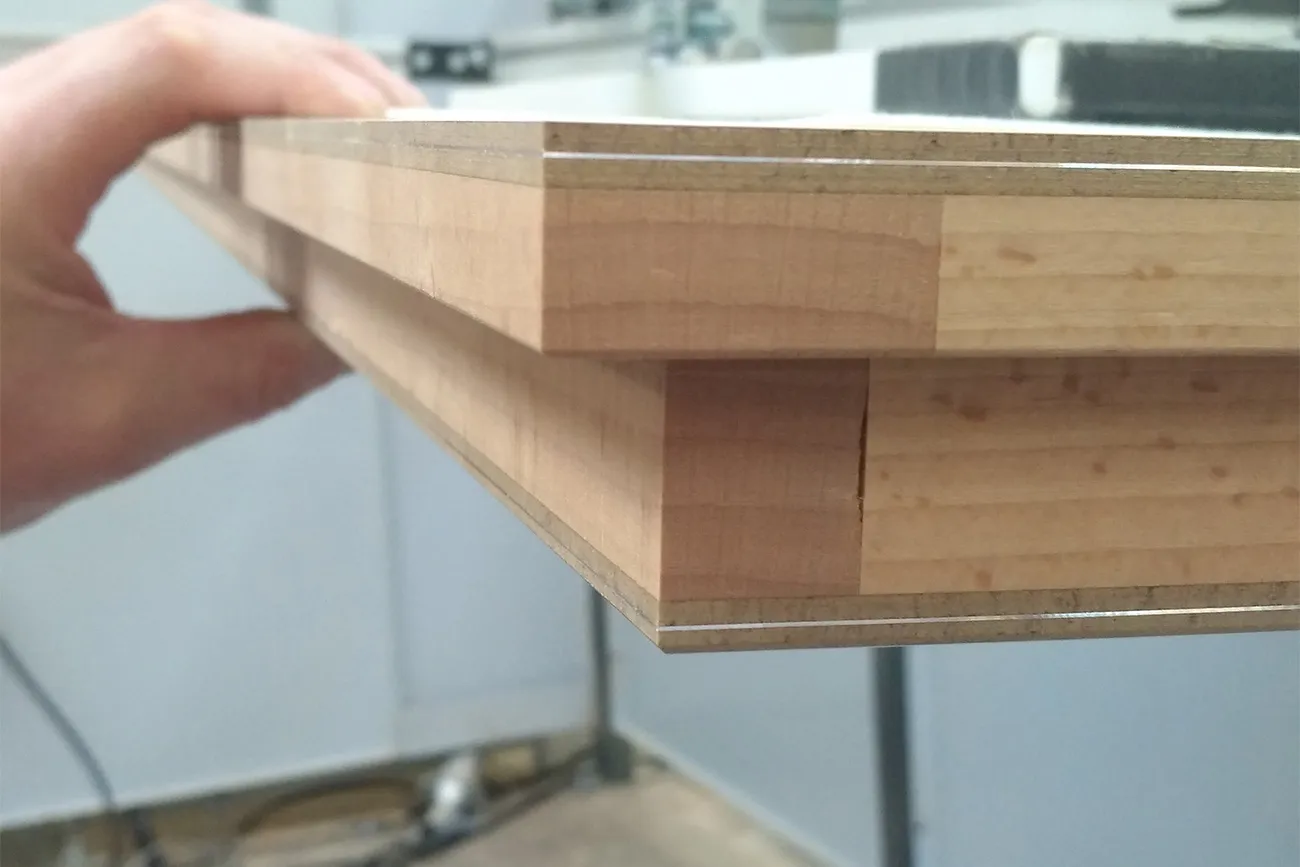
Machining operations for furniture and door hardware are highly varied. Companies also want to produce sustainably, so an increasing amount of recycled material is being incorporated into panels. This can include textiles, plastics, aluminium and all kinds of other fibres, such as glass fibre. Adjustments are therefore needed to machine these combined materials effectively. But how?
Standard or special tooling?
Taking recycled materials into account when selecting the cutting material and the geometry of a drill, router or saw can improve the machining of these materials and extend tool life. This helps prevent problems in the production process.
Standard tools are suitable, for example, for straight routing or sawing operations on a bare MDF panel. If the MDF panel is veneered and needs to be mitre-sawn or profiled, the operations are more complex. Standard tools may still be suitable, but the quality of the routed finish will be lower and production slower. The risk of veneer chipping means you will not achieve the desired end result. For larger production runs, special tooling can ensure higher quality and better productivity.
Do you need different tools for your machining operations? Then consider special tooling, too!
It is possible to combine two or more operations in a single router, avoiding tool changes and saving production time. The more clearly you define what you expect from your tooling, the more precisely it can be configured.
One more thing worth knowing: special tooling does not have to cost more, yet it can deliver a significantly better result. The choice is an easy one, isn't it? You want both quantity and quality, don't you?

Managing your tool inventory
You may be thinking: “But with special tooling, I am still dependent on placing individual orders each time, with the associated lead times.”
Then consider the options for agreeing a continuous supply. This can be very beneficial if you regularly need a particular router or drill. This applies to standard tools, but it is also the solution for special tooling.
In consultation, you determine how many tools you need for a given period. You then enter into an agreement, and the tools are produced for you. They are available immediately on call-off. You take delivery of the stock within the agreed period. At the end of the period, you jointly take stock of the remaining inventory, and the new call-off order for the next period is determined on that basis.
You will never run short, keeping your production running smoothly. You also have a clear view of your tooling costs, as the agreement sets a fixed price for the tools. Your tooling is therefore not subject to material price increases during the contract term.
Special and optimal
For furniture and door hardware, special tooling for more complex operations and combined sustainable materials helps keep production running smoothly, without adding to your costs. Effective collaboration on inventory management is an excellent way to complement this.
Would you like tailored advice on which special tooling will help you achieve optimal production? Our specialists will be happy to help! www.kmwetoolmanagers.com
Question about this story? Ask your question
Keep following this
Get an email when a new story is published. No account needed.
- ThemeFurniture and door fittings
- SubjectGeneral







