











Inspiring and innovating for a sustainable, green world
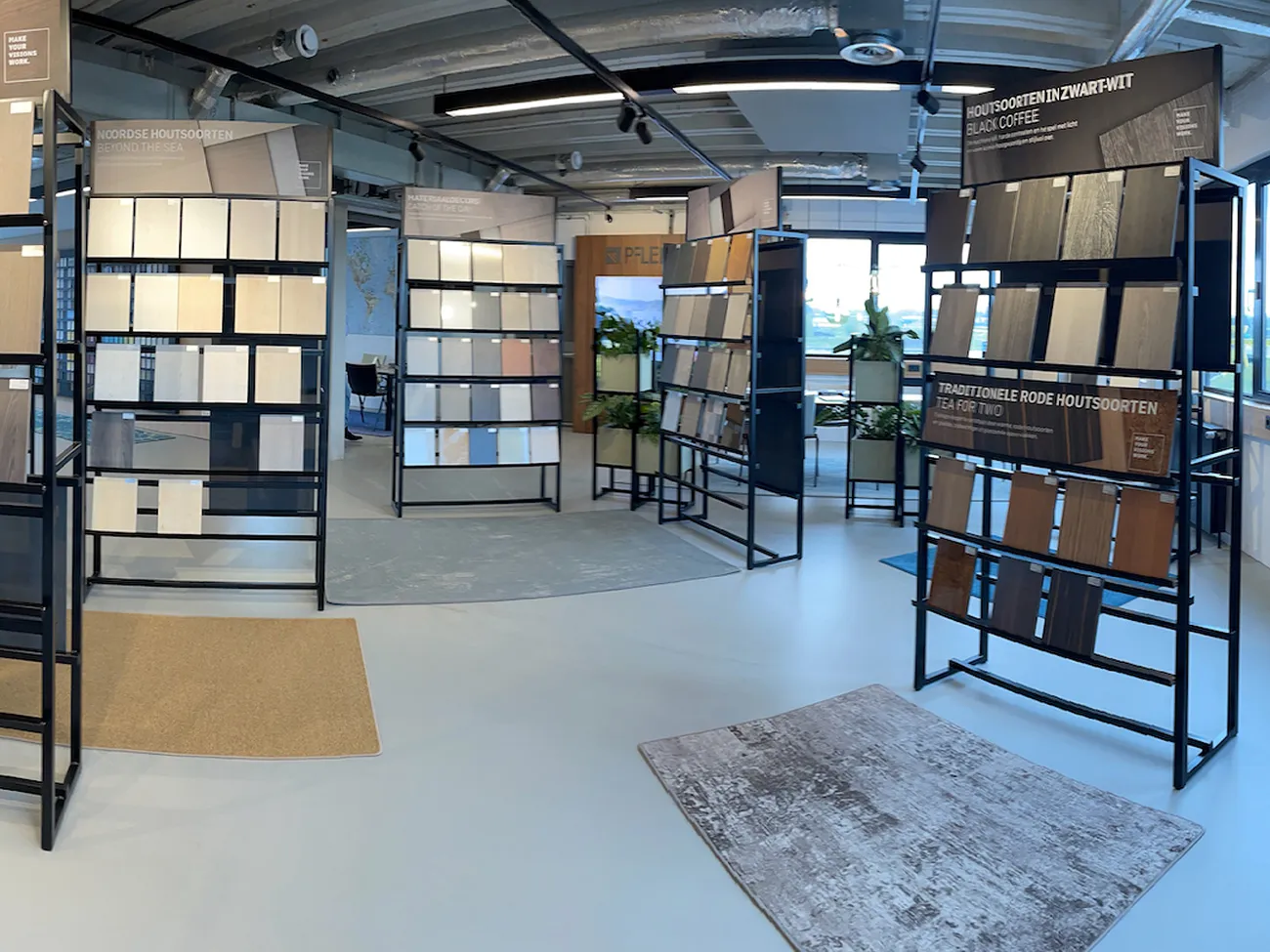
In recent years, Pfleiderer, as a market leader in the panel industry, has made innovation a top priority, bringing us one step closer every day to a reliable and sustainable world. Important steps have already been taken. Since 2008, for example, companies have been able to join the Pfleiderer circular system, which turns wood waste from the kitchen industry, office furniture manufacturers and interior fit-out companies into new, 100% circular particleboard.
An inspiring circular process
“Since we launched the Pfleiderer circular system, more than 100 partners have joined in the Benelux alone,” says Claus Seemann, Head of Product Management, Substrates. “This means that every week, Pfleiderer and our partners PreZero and Greenwaste process between 80 and 110 truckloads of wood waste from the Netherlands and Belgium into new, 100% circular particleboard. This prevents wood from going to waste and ensures that trees are not felled unnecessarily. We are proud that more than 1000 projects using fully circular wood have now been completed.”
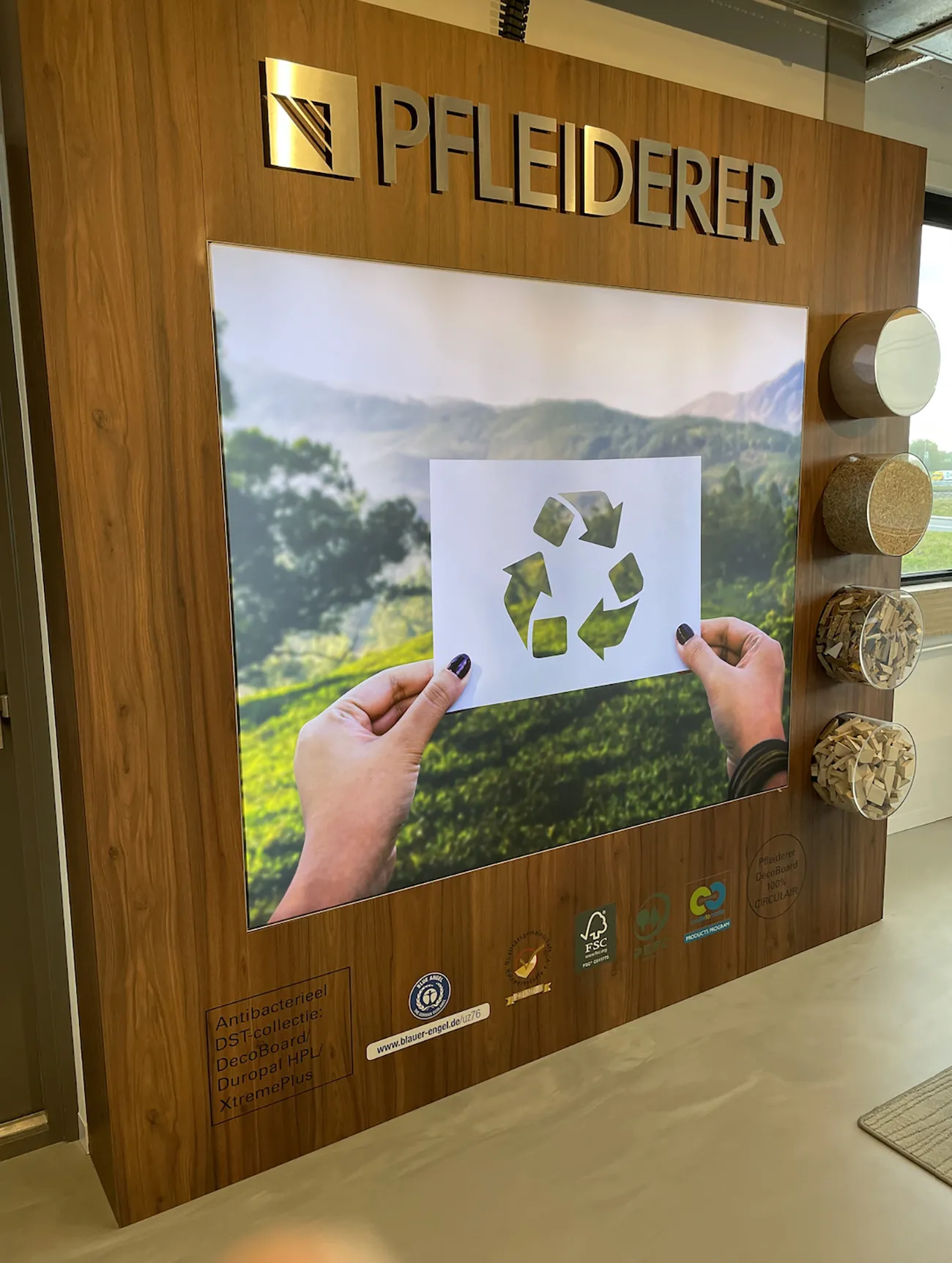
“Fortunately, we are seeing the circular production trend we started become increasingly popular, with other companies also taking steps in this area. Pfleiderer’s mission is to bring even more partners into our process, because only by working together can we make our entire industry circular and create a world we can pass on to future generations.”
“High-quality waste wood that used to be burned as a matter of course can now be made into beautiful, high-quality new panels for long-lasting use in furniture and interior design.”
The world’s oldest environmental label
Of course, a circular process is an important step, but sustainability goes further. “That is why we do everything we can every day to keep improving our sustainable production process. For our particleboards, we make sure that no trees are felled unnecessarily. For every tree we do fell, we plant a new one straight away. This sustainable approach, and the resulting reduction in CO2 emissions, have earned Pfleiderer the world’s oldest environmental label: Der Blaue Engel.”
Producing Cradle to Cradle
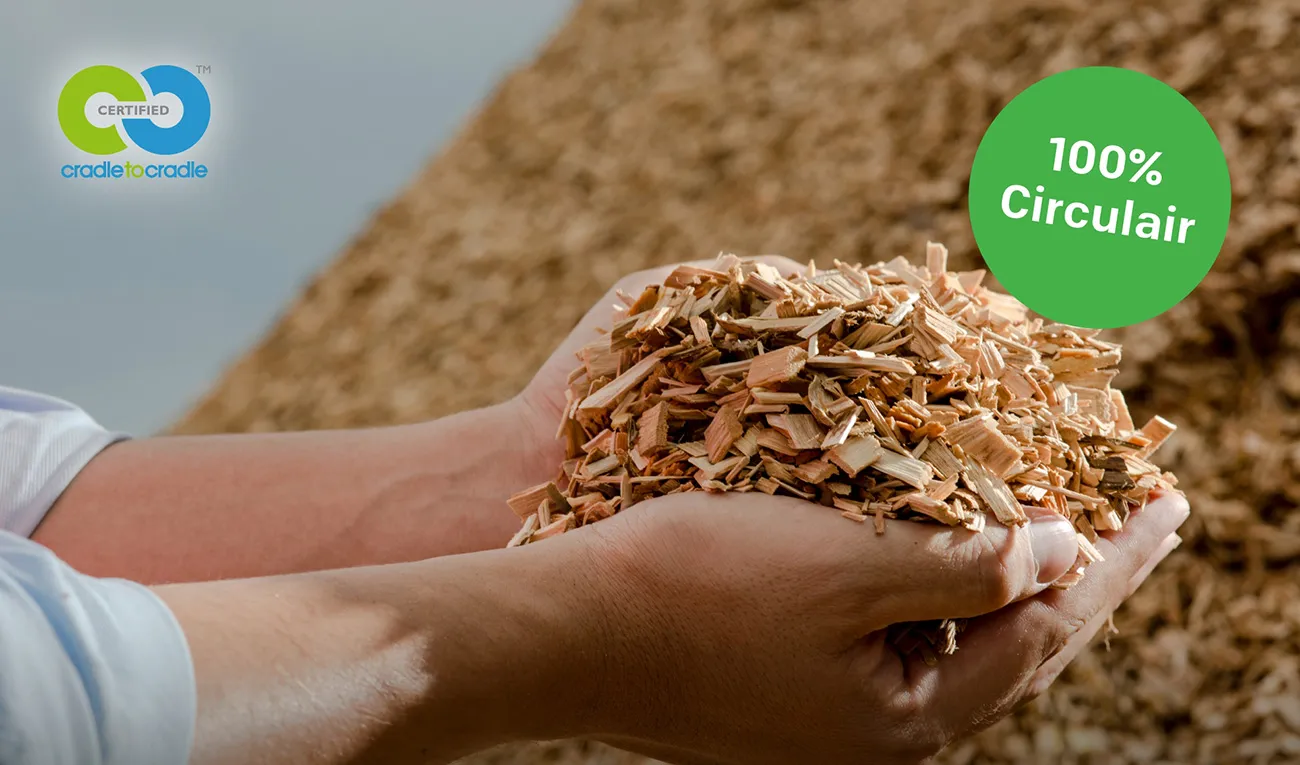
In addition, the DecoBoard/PrimeBoard and Livingboard products are fully cradle
to cradle (C2C) certified. This approach goes beyond simply recycling a product. The term literally means ‘from cradle to cradle’ and was developed by German chemist Prof. M. Braungart, Diplom-Ingenieur, and American architect William McDonough.
As demand for a growing range of products increases, more raw materials are needed to supply them all. At the same time, this also generates more waste. There is an urgent need to use our raw materials more thoughtfully. At the current rate, they will eventually run out.
The cradle to cradle approach offers a sustainable solution to this problem. It keeps all the materials in products in continuous use in a production process, reducing waste to zero. Every component of a product is reused, either to make a new product or to serve as fuel in a biological process. The processing of these materials is also powered by green, renewable energy.
Products seeking certification under the Cradle-to-Cradle Certified Product Standard are assessed on material health, circularity, the use of renewable energy, responsible water stewardship and social fairness.
Since 2010, the Cradle-to-Cradle Certified Product Standard for circular economic systems has been awarded by the non-profit Cradle to Cradle Products Innovation Institute, based in San Francisco.
“Of course, we will continue to innovate in this area and aim to achieve this certification for our other products too,” says Claus Seemann.
Sustainable cascading
Wood is becoming an increasingly attractive raw material, and not just for housebuilding, furniture and interior fit-outs. In the coming decades, sustainable forestry alone may no longer be enough to meet the huge demand from a wide range of industries. Cascading offers a solution to this dilemma: the raw material, wood, is used multiple times at different levels, from harvesting through recycling to energy recovery.
A study by the Chair of Wood Science at the Technical University of Munich demonstrated the substantial savings potential of cascading. One tonne of waste wood was first processed into sawn timber and then twice into particleboard. For comparison, the same products were also made from virgin wood. Cascading significantly improved resource-use efficiency, partly by reducing the use of virgin wood and requiring less land. “All these important steps help us create a sustainable world that we can pass on to future generations.”
Question about this story? Ask your question
Keep following this
Get an email when a new story is published. No account needed.
- SubjectGeneral







