











‘It takes one to start building a dream’
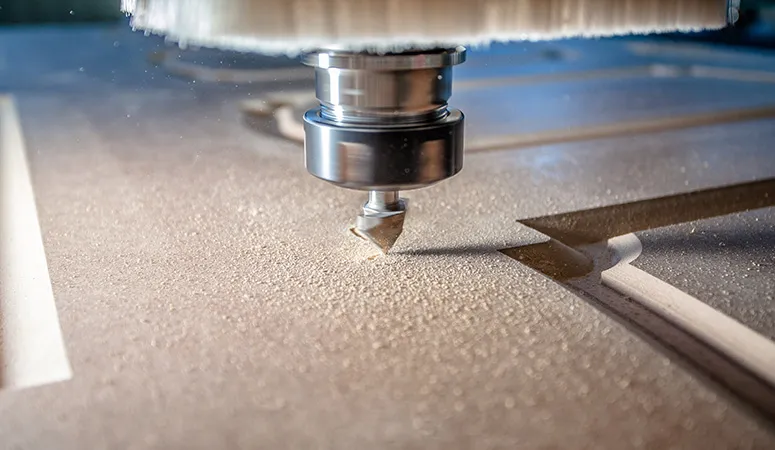
The statement above was the answer I received at a trade fair showcasing metalworking and woodworking machinery, when I asked whether a fully automated workshop was a utopian idea. After all, the investment has to be recouped. The man I spoke to had his own philosophy on the matter. One that is actually quite realistic.
What would the ideal situation for a woodworking workshop look like in 2019? In my view, it would have a fully automated machine park, with every machine controlled by software designed to make work as easy as possible. The machines would be connected to each other and the office via the Internet of Things, and could be monitored with ease.
Industry 4.0 is not built overnight
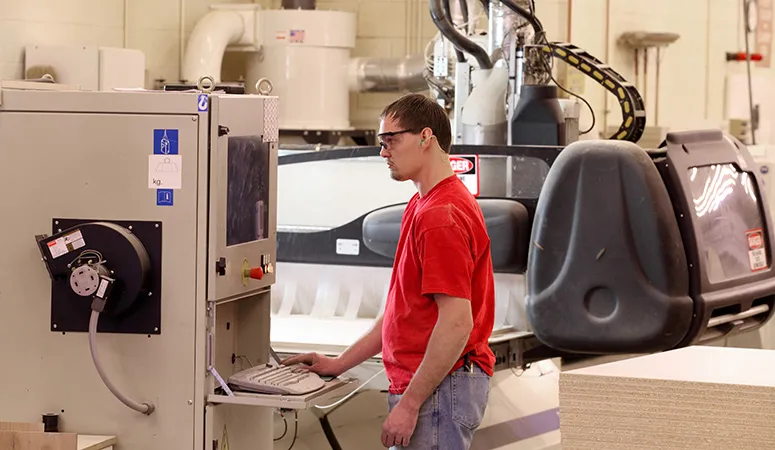
If we take the statement ‘It takes one to start building a dream’ to heart, that would mean replacing the machine that is used most and forms the heart of the business with an Industry 4.0 model first. Later, as other machines reach the end of their service life, the machine park can be expanded around it with equivalent equipment, bringing operations ever closer to an optimised setup. One of the major benefits of automating as many woodworking machines as possible is that businesses can move towards a paperless workflow. Orders appear on displays at the machines, and fewer people are needed to operate the machine park.
‘Won’t that cost jobs?’ is a fair question. With the current labour shortage, it is a blessing that fewer people can manage more machines. Moreover, Industry 4.0 will also renew young people’s interest in the woodworking trade. After all, operating the machine park via touchscreens is just what young people expect.
Predictive maintenance
With the many sensors that can be added to machines, it is possible to collect data on wear to various components and tools. This makes it possible to carry out maintenance as needed rather than at set intervals. The system indicates when the machine and tools need maintenance and can adjust the machine’s speed based on preset thresholds to prevent damage until the work is carried out. This saves money, and maintenance can also be scheduled in advance for the most convenient times.
Less heavy lifting and greater precision
Automation is becoming increasingly accessible to many businesses. Again, there is much to gain by replacing, expanding or upgrading key woodworking machines to meet current standards. Small and medium-sized woodworking businesses can benefit too. Just consider adding an automated storage system to a flexible drilling machine, sander or panel saw. Automatic loading means there is no longer any need to lift the panels by hand, reducing the physical strain on employees.
After machining, grippers neatly unload the panels behind the machine, ready for onward transport. Offcuts are measured by machine, assigned a code and reported back to the system. Using the digital drawings of new workpieces, the same system calculates how much sheet material is needed and checks whether it can ideally be cut from offcuts. This is sustainability in its purest form, as it reduces waste.
So all it takes is one fully automated machine to start turning the workshop into a dream workshop. Have you started yet?
Words: Jan Mol Image: Shutterstock
Question about this story? Ask your question
Keep following this
Get an email when a new story is published. No account needed.
- ThemeMore bespoke work from the workshop
- SubjectGeneral







