











‘Matchmaking in woodworking as a success factor’
Text and images Jerry Helmers / Cutr BV
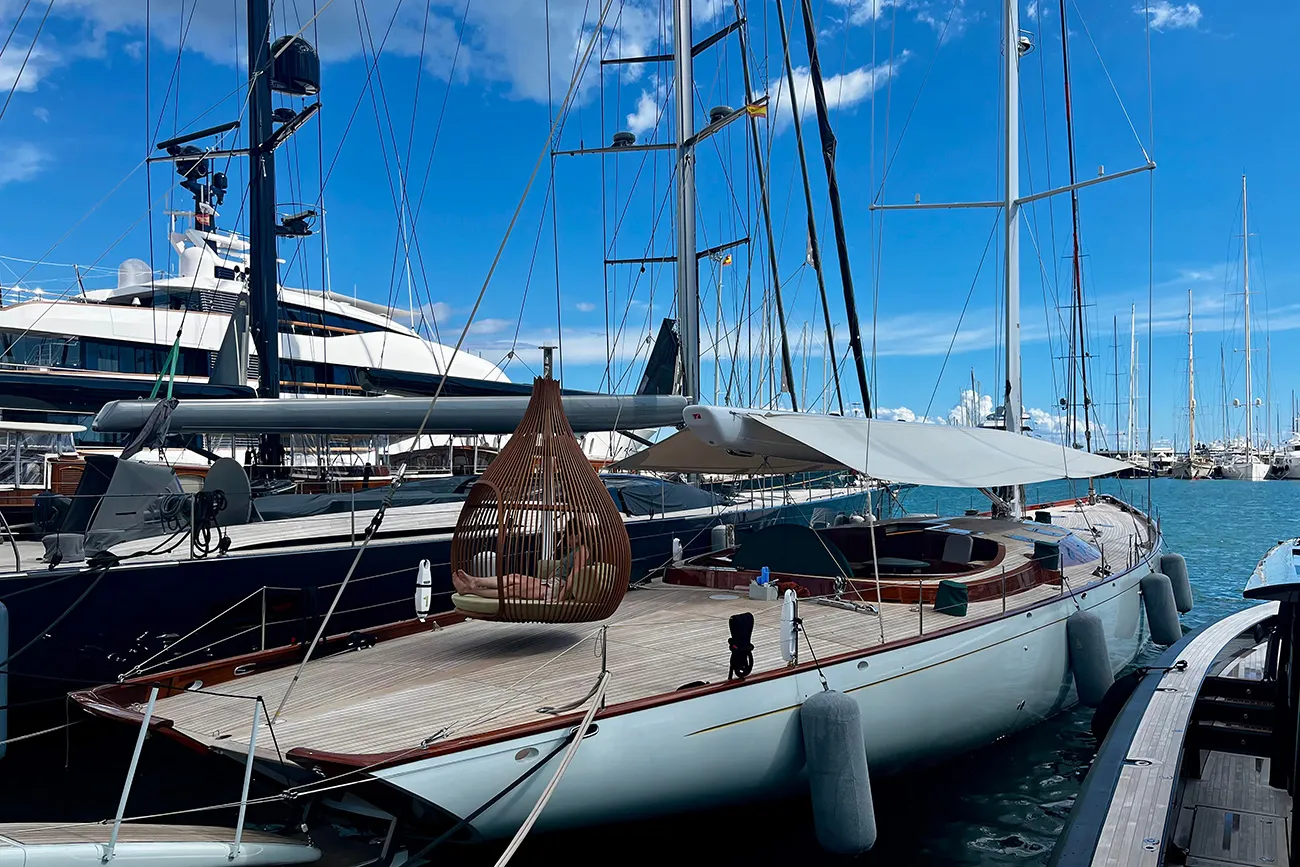
How a unique hanging chair for a yacht came to life
At first, it seemed an impossible brief, but now he sees it as his most unique design. Read the story of Robert Coleby and his stunning Teardrop Hanging Chair. This was no straightforward project. The question was which supplier could meet Robert’s exacting quality requirements, and at what price. The Cutr team brokered the deal and found the right supplier. Cutr is an intermediary in the woodworking industry with one clear goal: to make the entire supply chain more efficient by using smart technology to connect designers with manufacturing partners. Thanks to Cutr’s matchmaking, the finished product was more than perfect.
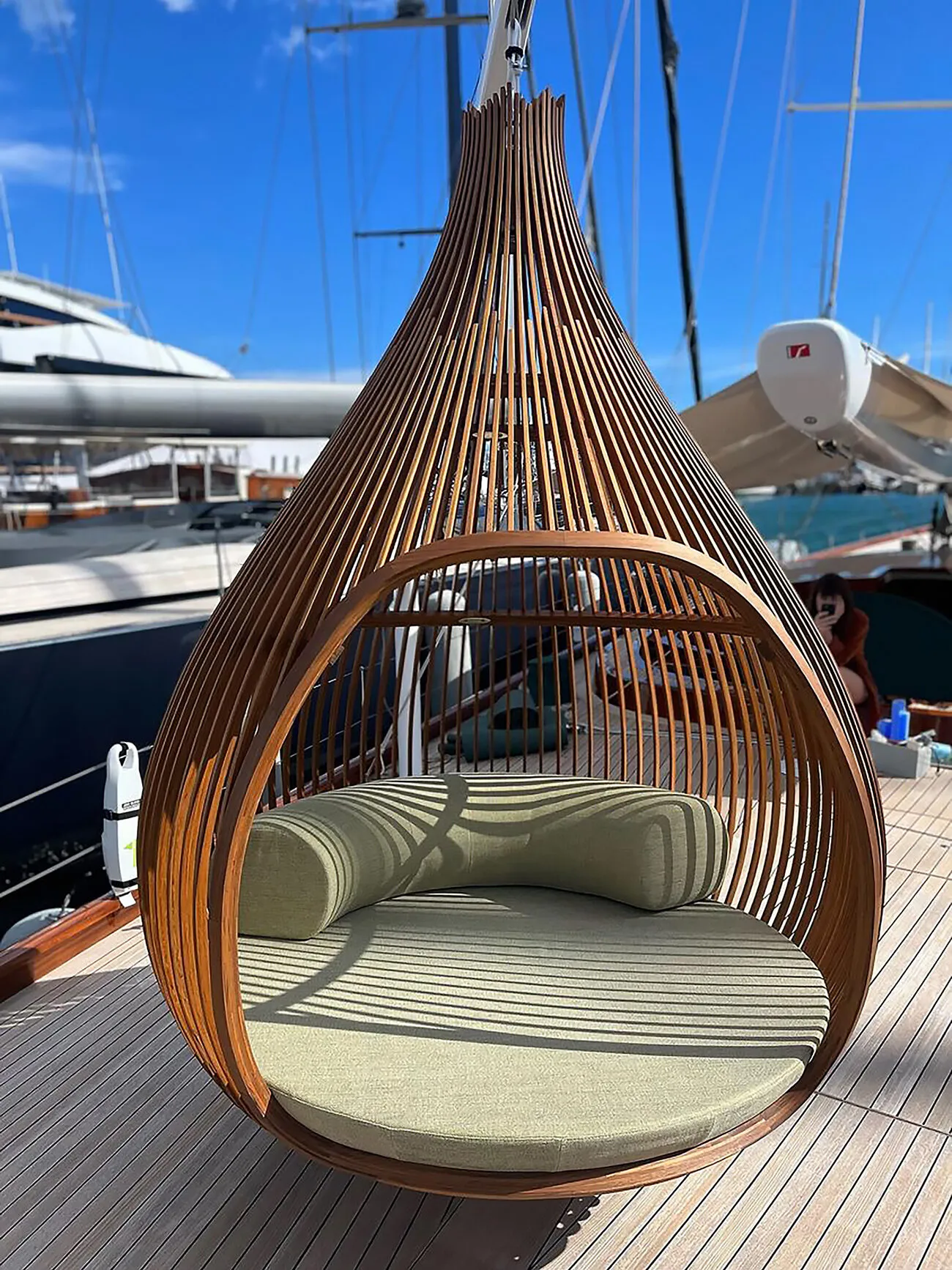
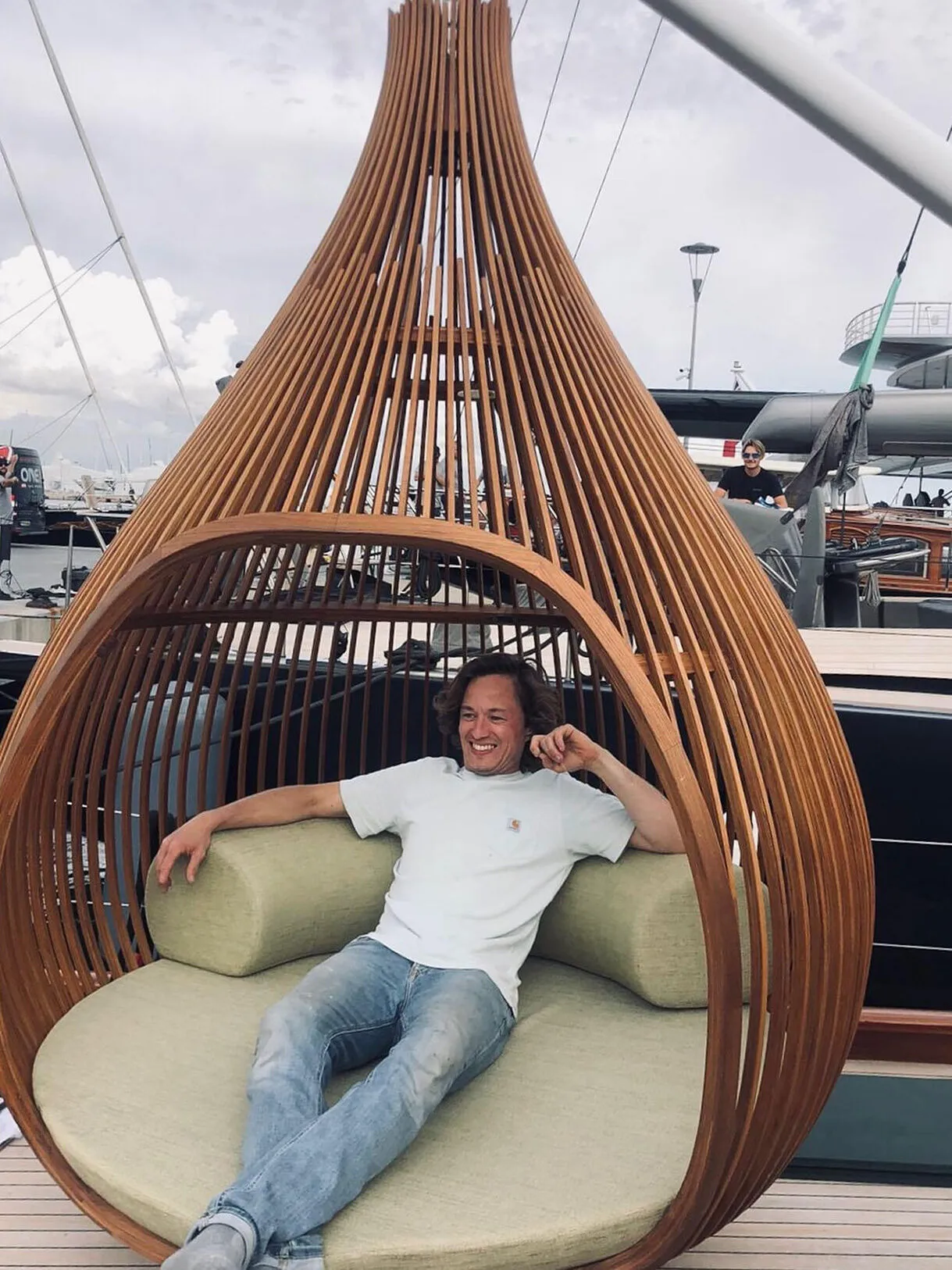
Robert is a designer with a deep passion for making furniture. He gained extensive experience in yacht building at Spirit Yachts, where he specialised in solving complex design challenges.
When Robert was asked to design a hanging chair for a yacht, he jumped at the chance. It was a project that allowed him to showcase all his skills and creativity.
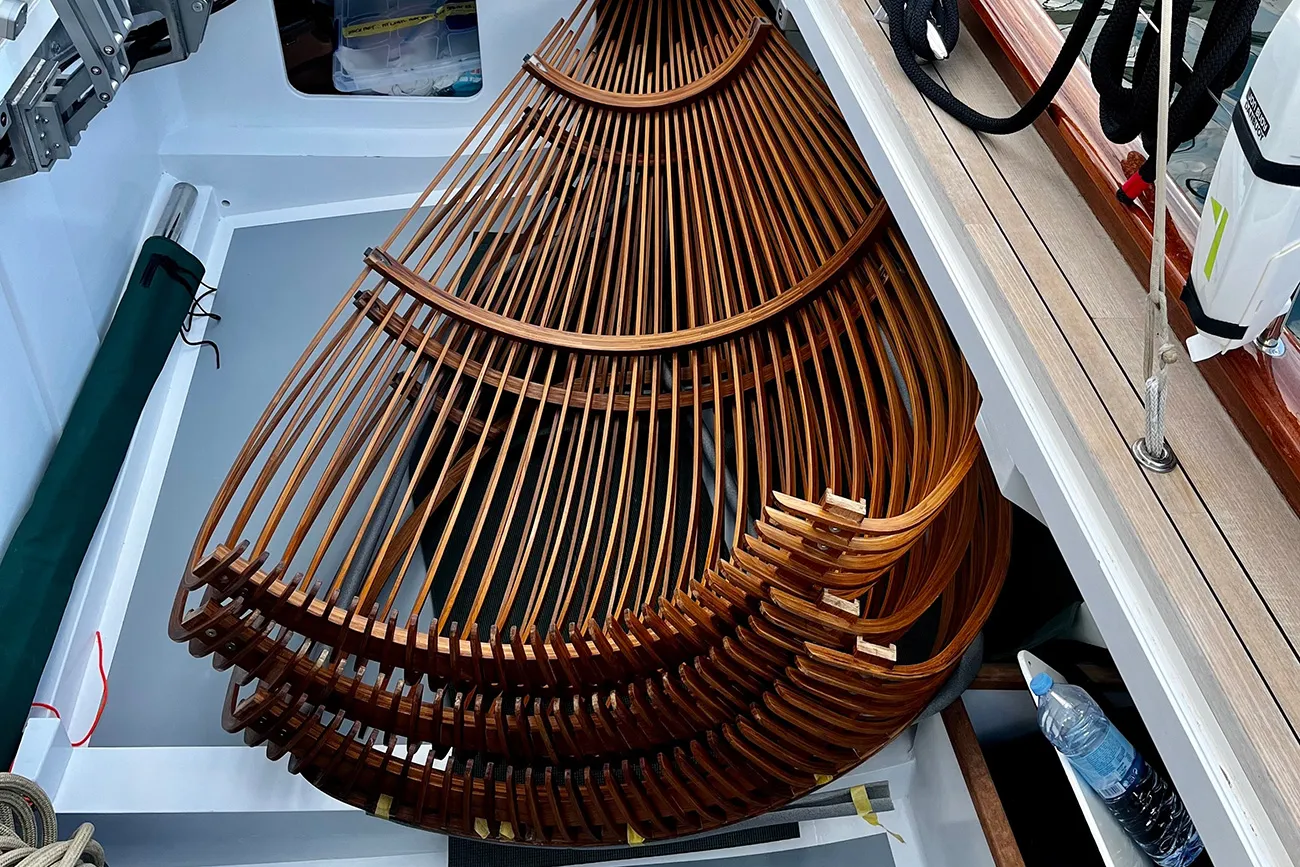
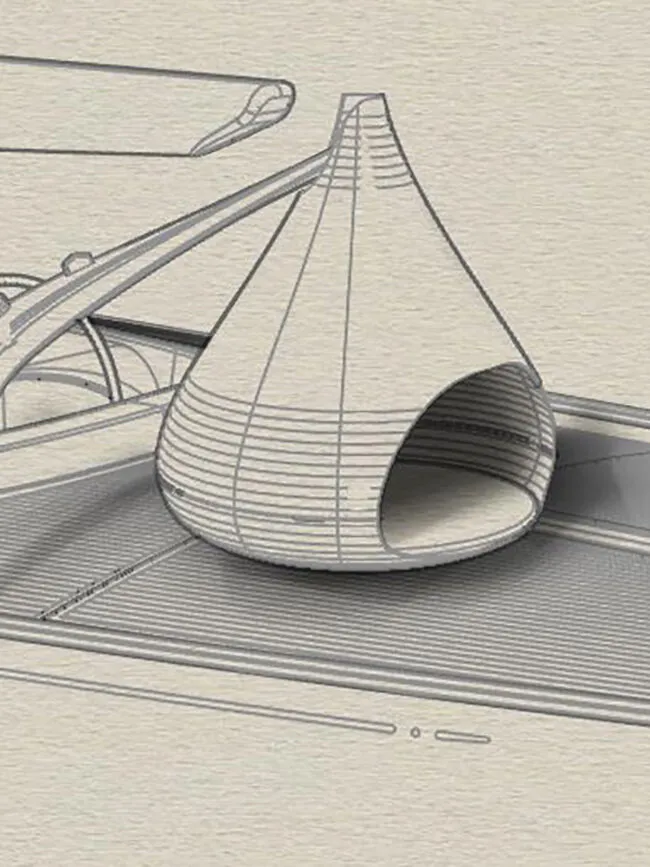
The yacht had a unique interior featuring smooth, organic forms. Below deck, there was not a single square or upright element. The client had already drawn up a sketch based on the interior. Robert says: “The design looked fantastic. But I could also see that some changes were needed. The chair had to be able to rotate freely to withstand the pressure and movement of the sea. It also had to be designed so that it could be easily dismantled, allowing the separate parts to be stored in the hold.”
The design process
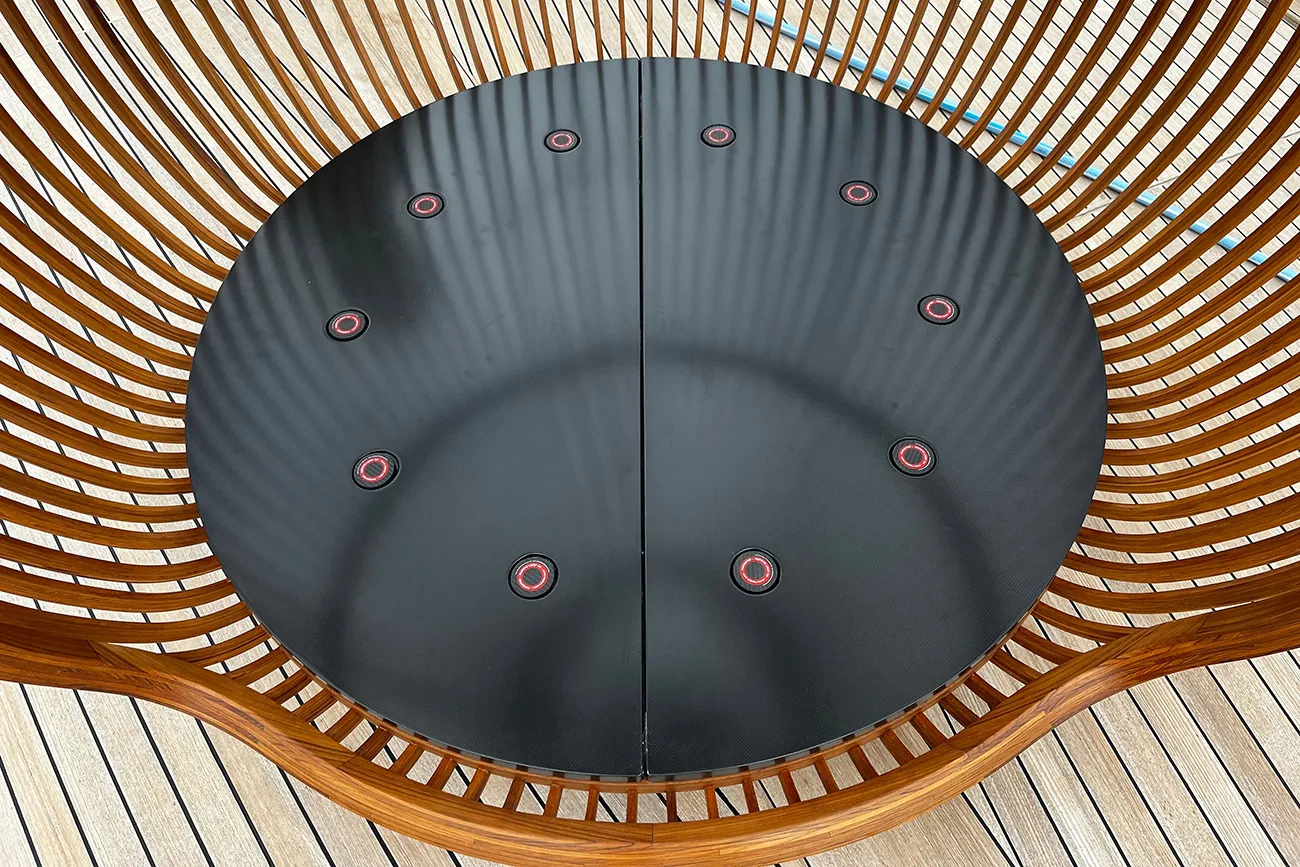
“We carefully studied the proportions. We did this by making life-size 2D cut-outs from cardboard. This gave us a good idea of the shape and how the chair would look on the yacht.” Robert used the cardboard model to visualise the chair. He then realised that the existing hoist was not high enough. They opted for a longer carbon-fibre hoist. This meant the chair could be large enough while leaving sufficient clearance for it to rotate.
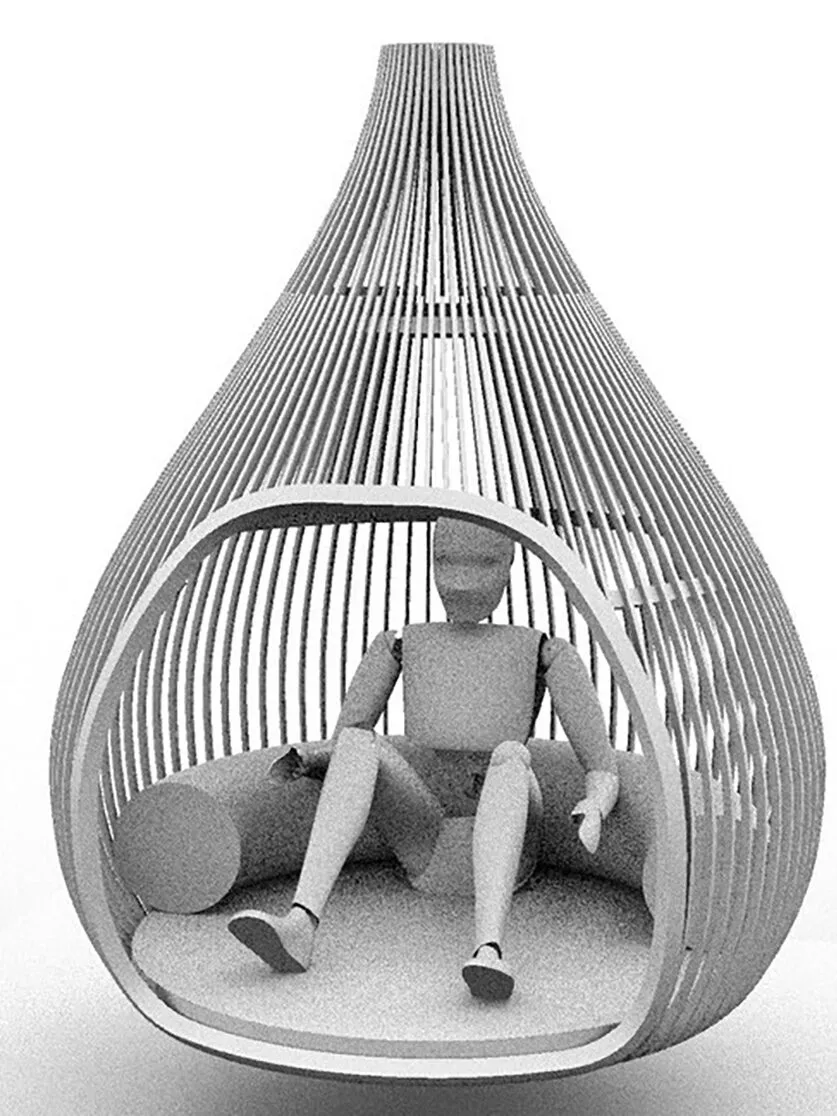
Robert worked closely with naval architect Neal Pawson on the chair. Neal’s CAD expertise allowed them to turn the 2D plans into a detailed 3D model. Together, they kept refining the chair’s dimensions and curves until they found the perfect balance between practicality and aesthetics.
Challenges
“The process did not get off to a particularly smooth start,” Robert admits. “We encountered a few obstacles during production. For example, we needed a complex mould for the opening hoop, which in turn required a specialised 5-axis CNC machine. Finding one nearby proved quite a challenge.”
Robert was advised to contact Cutr in Amsterdam, an innovative intermediary for bespoke woodworking processes. Cutr drew up a shortlist of potential manufacturing partners, and Robert worked with them to select a suitable one. “They knew exactly what I needed. They quickly found the ideal woodworking partner: Kleizen, a team of specialised engineers, craftspeople and machine operators.”
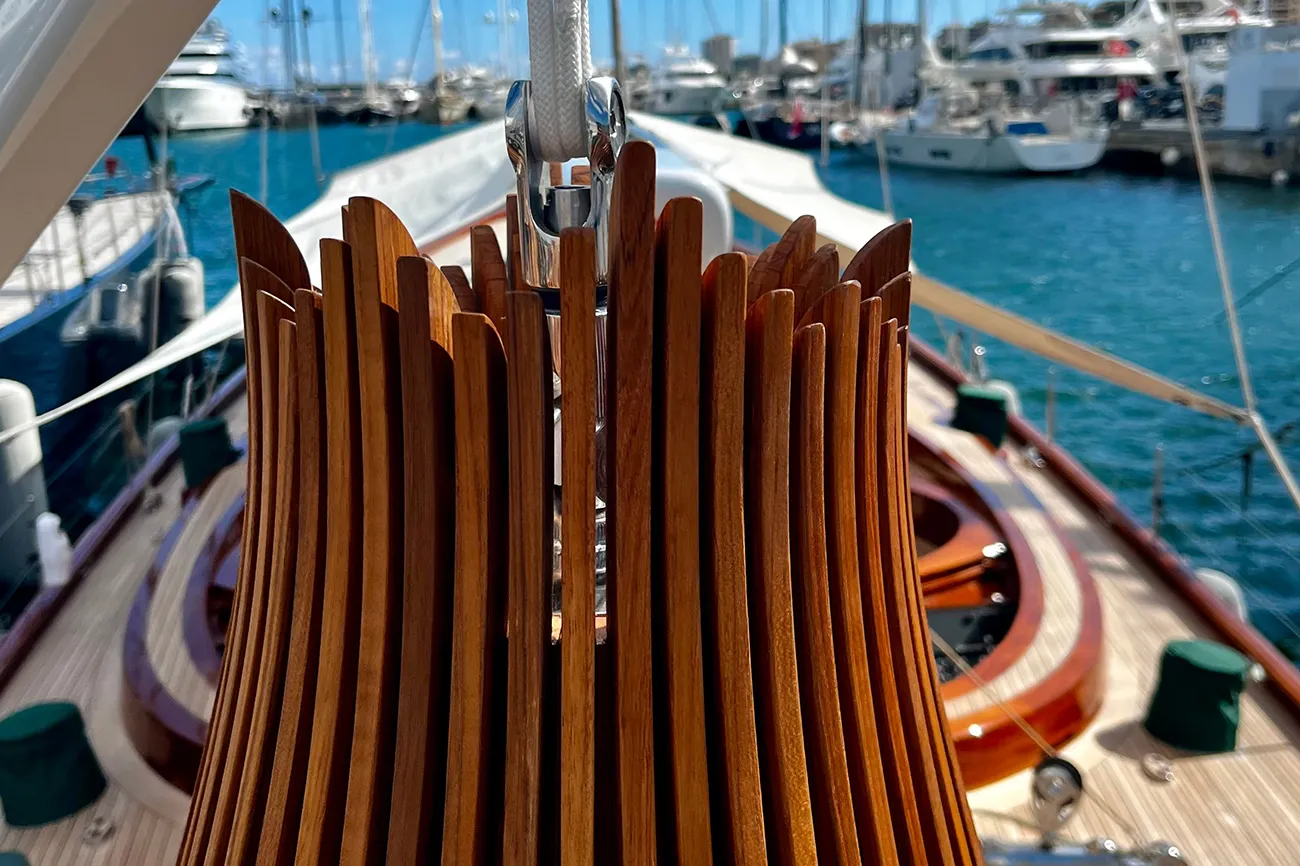
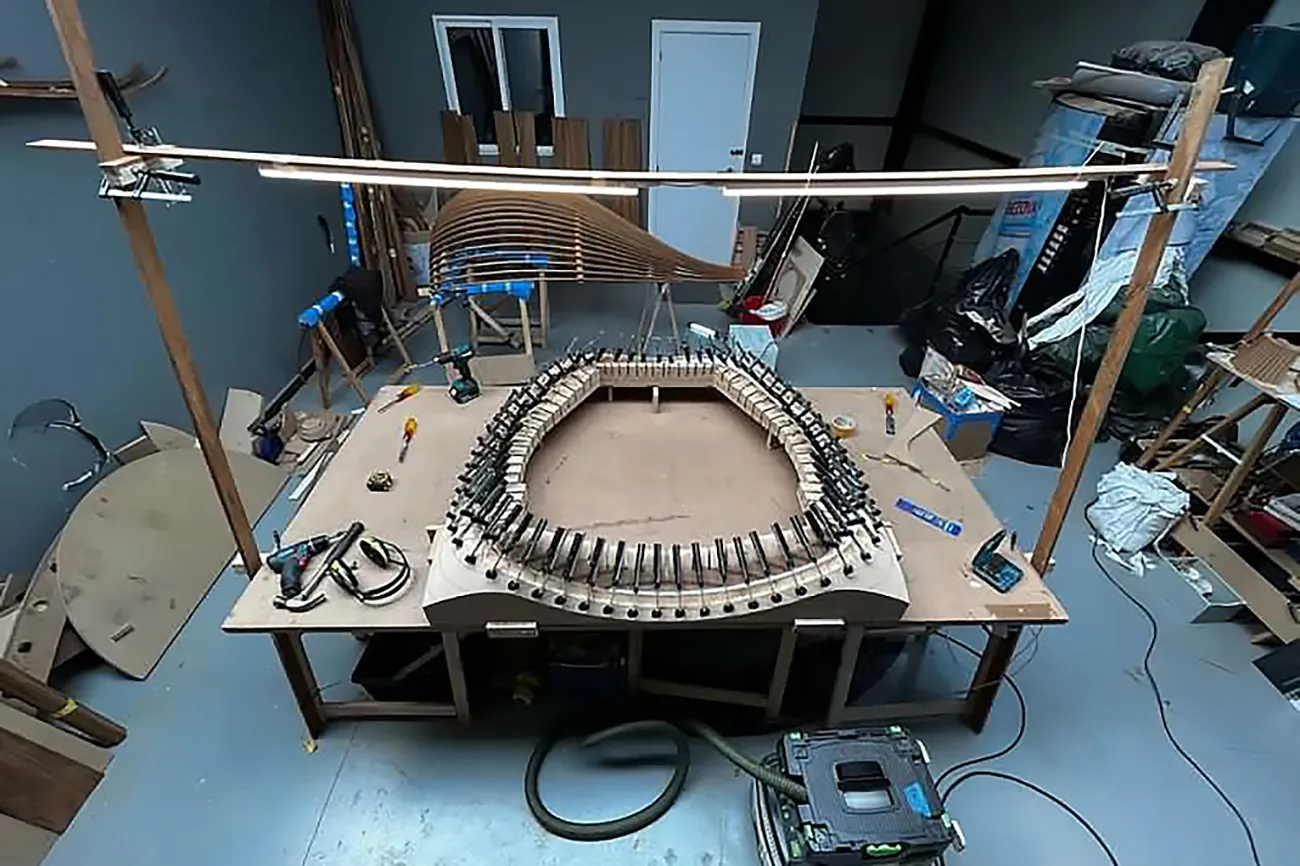
The production process initially took quite some time. The original design called for complex machining angles and specialised cutters. Simplifying the design made production run more smoothly. When the final mould arrived, it could be fitted and used perfectly straight away. Then came a new challenge: creating the chair’s complex opening.
Robert says: “Each hoop consists of seven layers of teak. To get all the joints tight and ensure the wood took exactly the right shape on the mould, we had to glue it layer by layer. The vertical sections of the chair consist of 96 slats. These were carefully made by laminating strips of teak together and expertly clamping them onto the moulds.”
Looking back, Robert thinks more of the chair’s components could have been made using CNC machines. “That would mean less manual work, while the chair could still be made with great precision. I do think the handmade aspect of the chair is important, but there are certainly opportunities to make it considerably more affordable by producing it with CNC. This might also allow me to experiment with different types of wood and design other beautiful chairs for interiors.”
Robert says: “It was great working with Cutr. They found the perfect match, with all the expertise and skills we needed. Together, we overcame some major challenges. The final mould made by the woodworking partner was perfect. And I was able to present the client with the finished result of my most unique design!”
Een zakelijke vraag aan Cutr? Get in touch
Companies in this story

Keep following this
Get an email when a new story is published. No account needed.
- ThemeMore bespoke work from the workshop
- SubjectGeneral
- CompanyCutr







