











New Amsterdam Courthouse features Solid Surface furniture
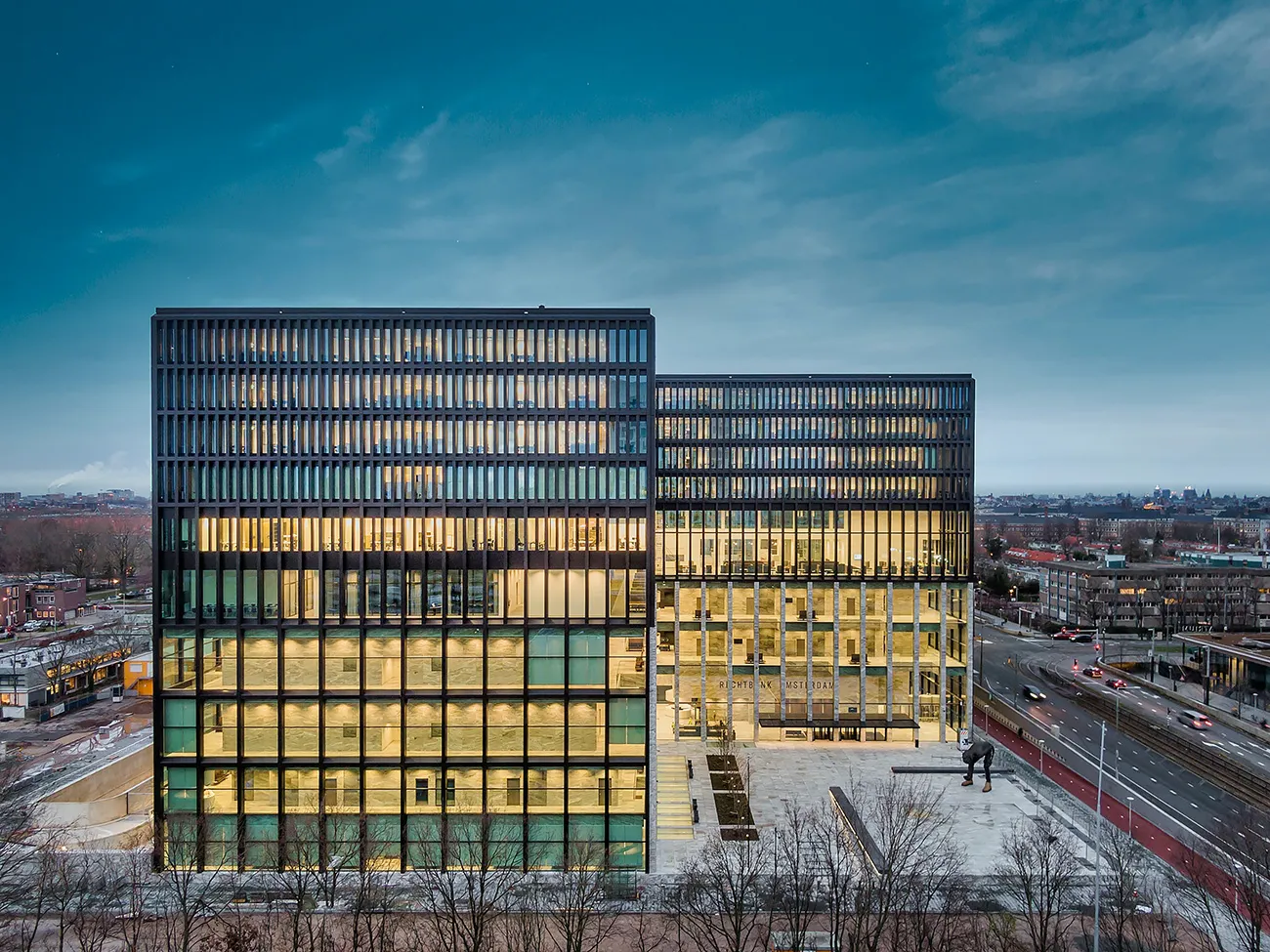
The New Amsterdam Courthouse cuts an imposing figure. Its architecture reflects the building’s important function, while the interior makes a major contribution to this impression. The New Amsterdam Courthouse was built by the NACH consortium, comprising Macquarie Capital, ABT, DVP, KAAN Architecten, Heijmans and Facilicom. Desque engaged Bone Solid to deliver the interior. Kaan Architecten deliberately chose Solid Surface as a modern material for its durability and unlimited design freedom. The project was completed in June 2021. We spoke to Hein Noten of Bone Solid about delivering the interior.
Bone Solid delivered a high-quality finish
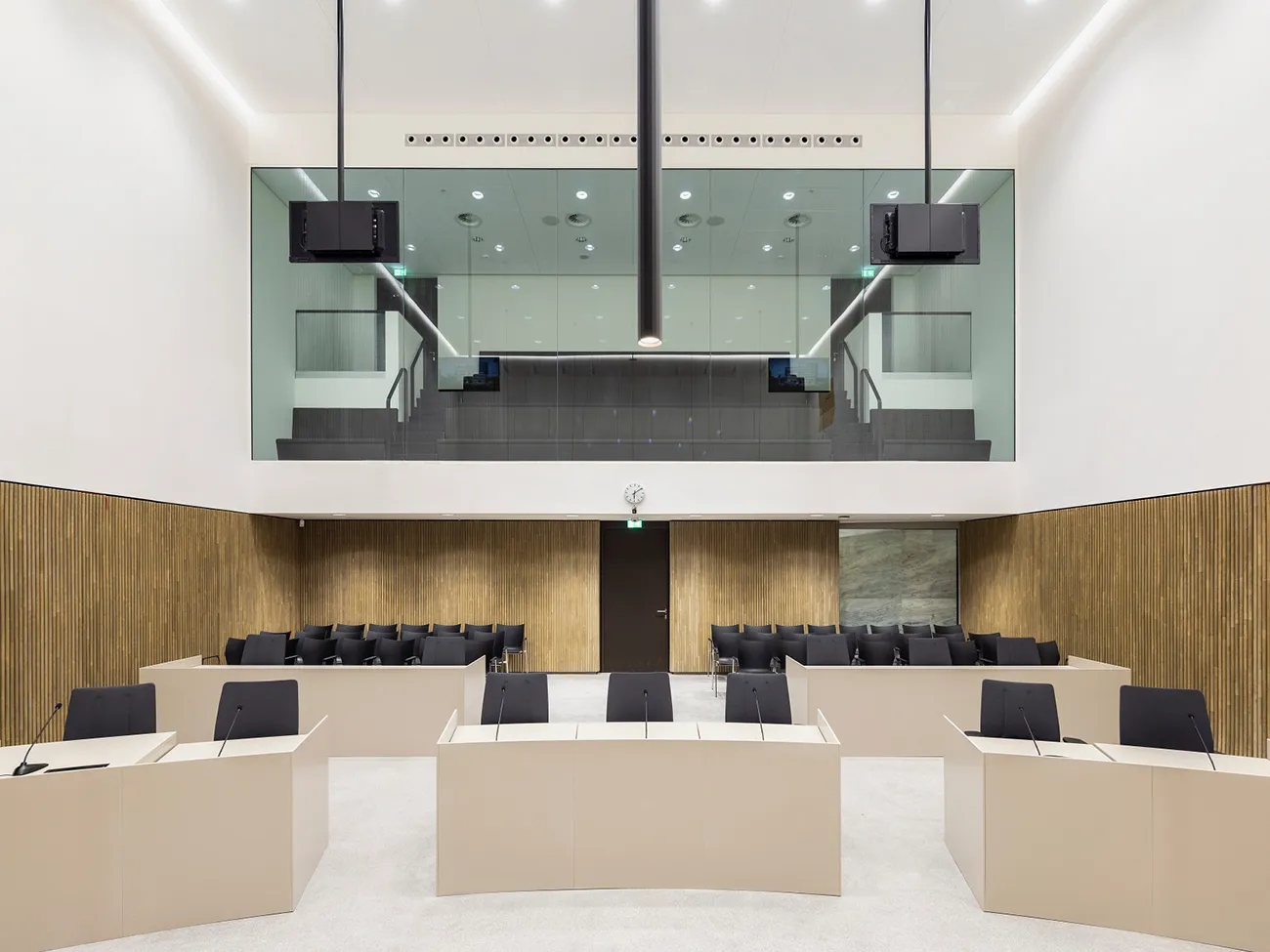
Calm and balance
“The design was created by KAAN Architecten, and Desque came to us with the architect’s drawings,” says Noten. “On that basis, we prepared a quotation for work in Corian Solid Surface. Once we had been awarded the contract, we procured the materials and went to site to take measurements. Bone Solid then produced the working drawings, which Desque submitted to the architect. Once these had been approved, production and installation could begin.”
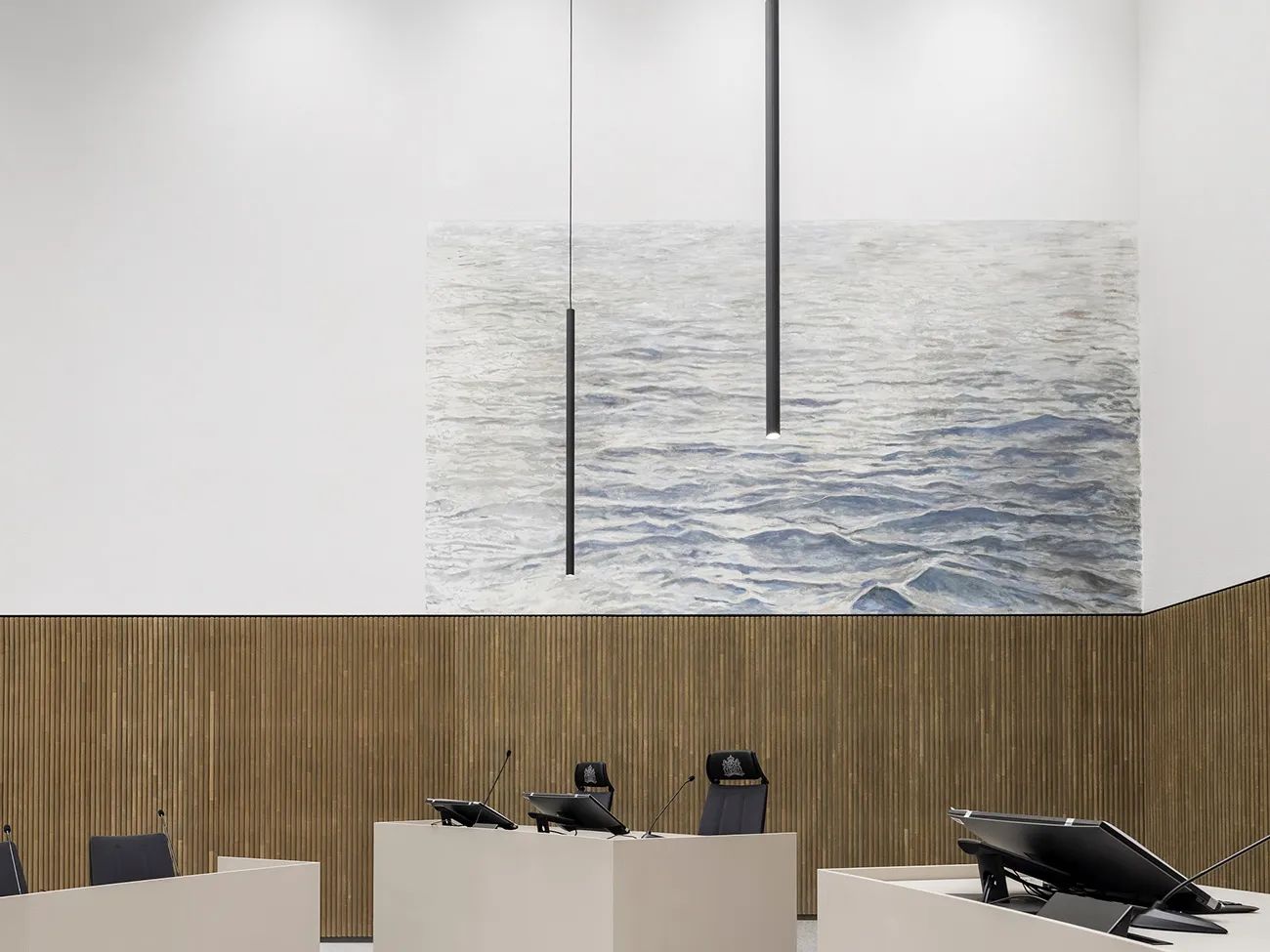
“For the project in Amsterdam, we were commissioned by and worked with Heijmans and Desque to fit out the courtrooms, using predominantly curved solid surface elements. The architect chose the highly durable material Corian®, in Elegant Gray,” says Noten. “The material is supplied as flat sheets and, as is well known, can be reshaped by heating. The heated sheets are laid over moulds in a vacuum press. After the cooling period, they retain the shape of the mould. Almost all the fronts were bent over moulds to the specified radii, then finished on a large-format CNC machine so that the panels could be bonded together almost seamlessly. The judges’ benches were made using the same method. Most of the bonding took place on site, and everything was then finished with a satin to matt surface. The parties’ areas feature demountable layouts, allowing the courtrooms to be arranged or expanded as required. Each panel was bent individually and fitted with recessed pockets and inserts for mounting to the desks supplied by third parties. Here too, the architect chose a satin to matt finish. The end result speaks for itself and fits perfectly with the atmosphere of the courthouse. Visually, everything feels calm and balanced.”
Question about this story? Ask your question
Keep following this
Get an email when a new story is published. No account needed.
- SubjectGeneral







