











Once born of scarcity, now a luxury product
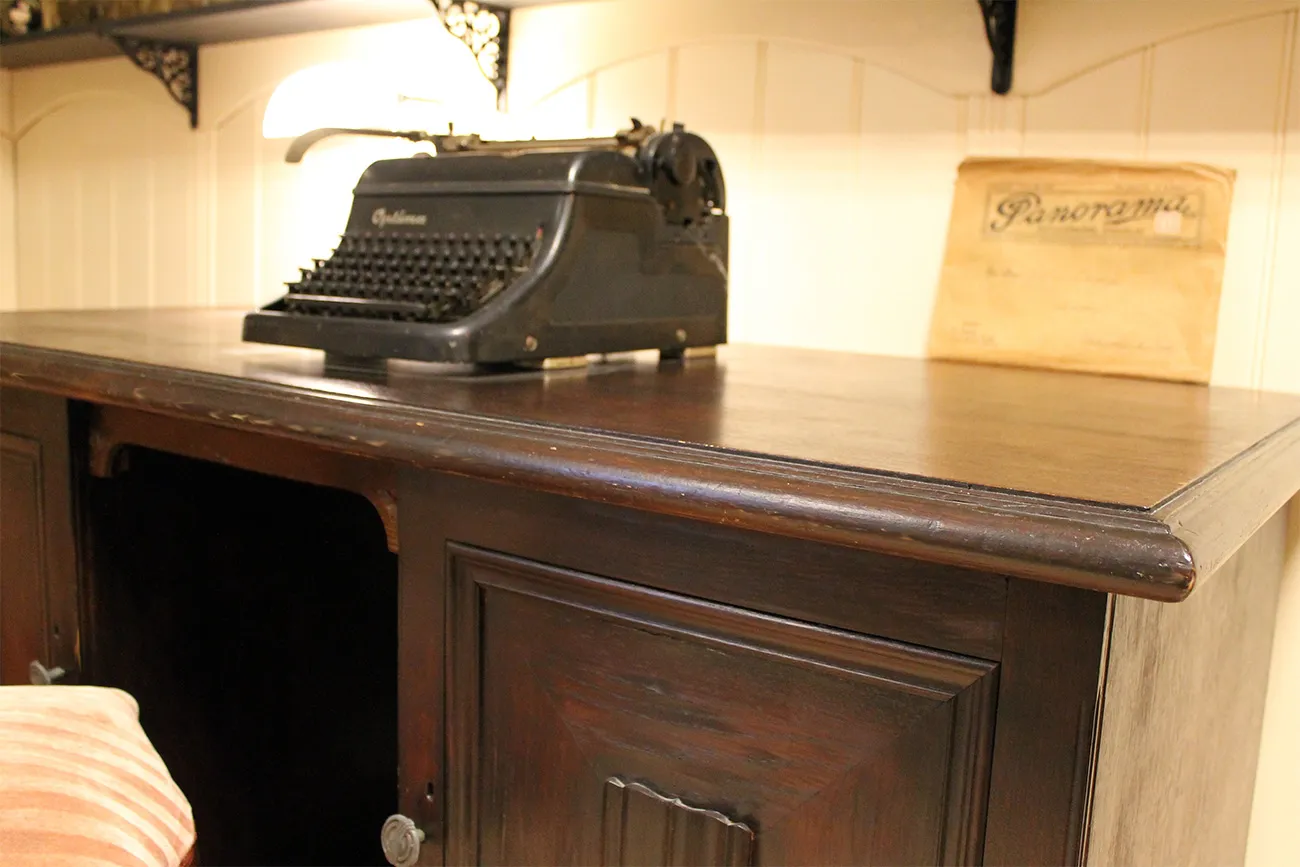
Anyone who has visited my office will know that I have furnished a meeting room with furniture and accessories dating from 1940 to 1955. It is a vintage space that, if it suits your taste, has plenty of character. One of the interior’s centrepieces is an antique desk from 1947, picked up via Marktplaats from a young couple who were moving house. As always, I was curious about the story behind such a find. And there was one. The desk was made by a cabinetmaker in 1947 for a chaplain. A striking detail: the cabinetmaker’s notes are still there, written in pencil on the inside of a drawer.
What is most remarkable about this desk? Although the writing desk looks solid, it is featherlight. A pleasant surprise when lifting it. Closer inspection revealed that the desk was made from thin, lightweight wood covered with veneer. I learnt that this was common practice in the furniture industry just after the war, as materials were in short supply. Veneer was therefore the perfect solution for giving the desk a different appearance. This reason for using it goes back as far as the invention of veneer itself.
Already used in Egypt
The origins of veneer are still the subject of debate. Some claim that it dates back to ancient China, while others are convinced that the ancient Egyptians were the first to work with veneer. What is certain is that trees were scarce in the Nile region, so the choice of attractive timber was limited. The finest pieces of wood were therefore made into veneer and used to cover less attractive timber. Magnificent wooden elements were found in the tomb of Tut-Anch-Amon, covered with ebony veneer.
Veneer in Western Europe
While the art of veneering faded into the background in China and Egypt, veneer-making was taken up in Italy around 1300. During the Renaissance, the technique spread across Europe, and the luxurious appearance of veneer found particular favour with the nobility. Combining different types of veneer in artistic patterns became popular. The exotic character of this inlay technique brought natural beauty to all kinds of surfaces.
After 1600, the craft of veneer-making benefited from the development of new, finer and thinner saw blades. These enabled woodworkers to produce thinner sheets of veneer and create more intricate pieces for inlay. In the 18th century, a shift in furniture styles brought changes to veneering techniques. The emphasis moved away from decorative veneered inlays and towards using veneer to give furniture the appearance of solid wood. In the 19th century, veneer was used mainly to imitate desirable, scarcer species such as walnut and mahogany. More readily available species such as maple and birch were used as substrates. These common species were also used for the first time in the manufacture of plywood using veneering techniques. Naturally, the plywood could then be covered with high-quality wood veneer.
Veneer today
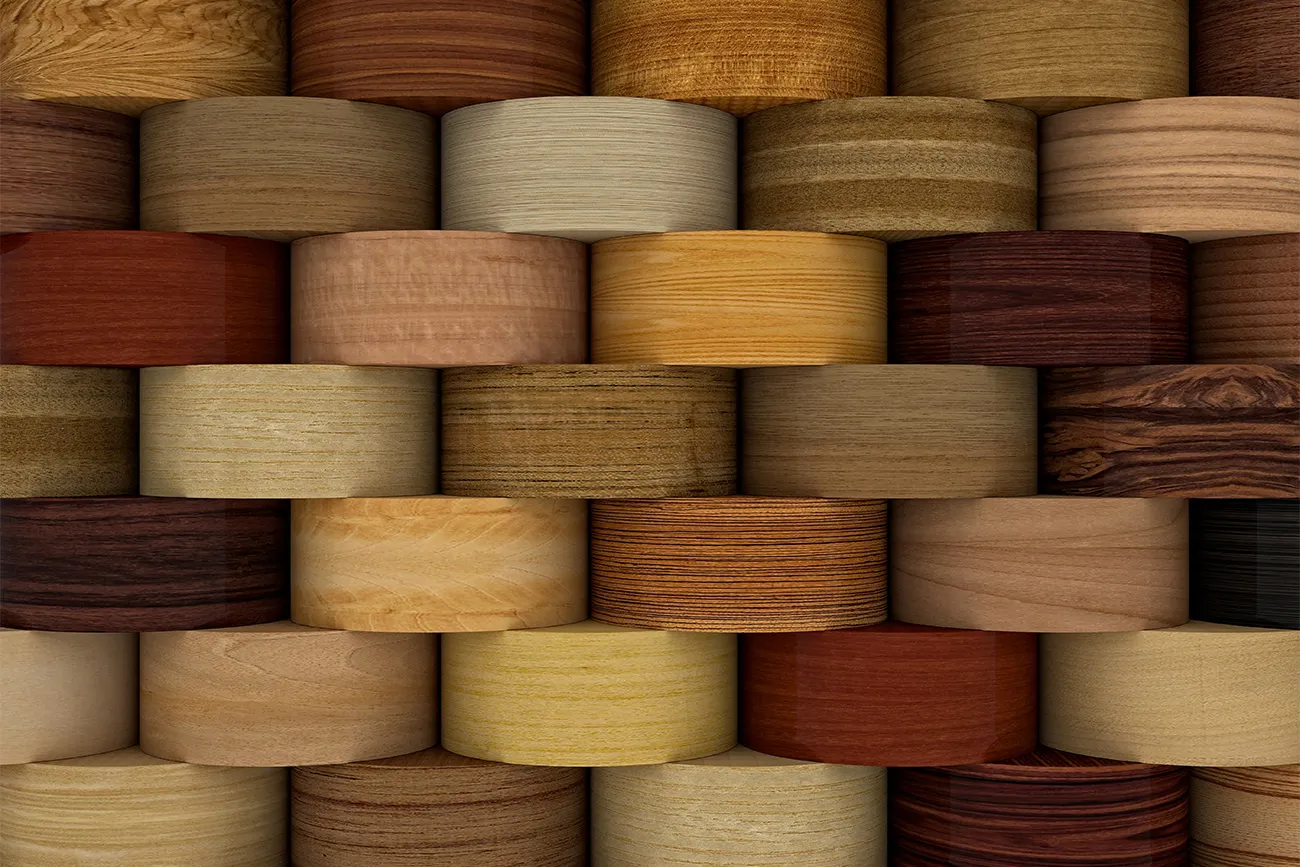
Veneer-cutting techniques have now advanced to the point where sheets can be as thin as paper. Veneer has become a product synonymous with a luxurious appearance. Once used to prevent furniture from being made of ‘ugly’ wood, today it is an upgrade for any piece of furniture or interior.
Question about this story? Ask your question
Keep following this
Get an email when a new story is published. No account needed.
- SubjectGeneral







