











Preparing students for the future of interior construction
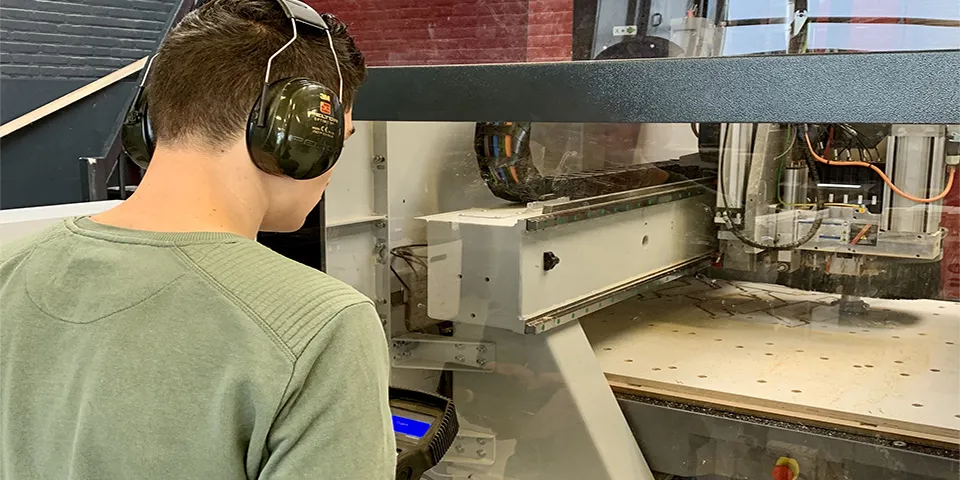
Students on the practical Building, Living and Interior (BWI) programme at Baanderherencollege in Boxtel are working enthusiastically, or rather ‘studying’. The school is the first VMBO and practical education school to teach students how to operate a CNC-controlled flatbed router. This gives students a head start in their future careers, whether they go on to a job or further education.
Baanderherencollege in Boxtel focuses on general education subjects and vocational programmes. With tailored guidance and, above all, plenty of hands-on experience, students not only learn, but also discover what they would enjoy doing in the future. This allows each individual student’s potential and strengths to be put to the best possible use.
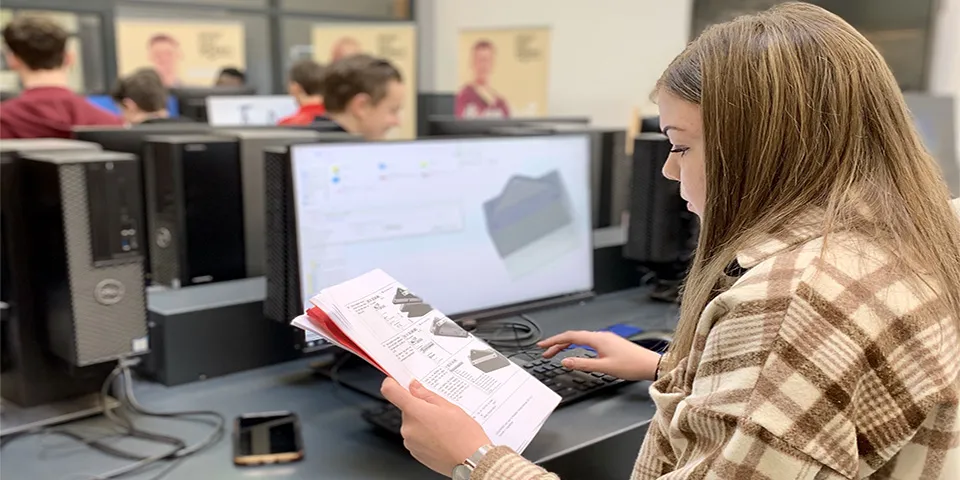
Student Evi Spierings working on a 3D design
Government support
“Today, it is incredibly important to train students for the future. Developments are moving so quickly that you have to adapt the curriculum accordingly. Students cannot turn up at an employer’s with outdated skills.” So says Rob Kouwenberg, a construction technology teacher at BHC. “I come from the yacht-building industry myself and moved into education 13 years ago because I believe in innovation & development. That can sometimes be a challenge in education. I am therefore delighted that the government has given our field a tremendous boost by subsidising the purchase of the Biesse Rover K FT. They too recognise the importance of promoting technology and innovation in education. We submitted the right plans for this, and are grateful to be able to make use of the subsidy.”
Tailored practical education
Two students who are already quite advanced are busy working with bSolid on the Biesse Rover K FT. Another group of students is hard at work in the computer room, creating 3D drawings in SolidWorks for their current project: Making & Improving. Students can decide for themselves what they want to design and develop. As a result, the project ends with 22 different types of furniture.
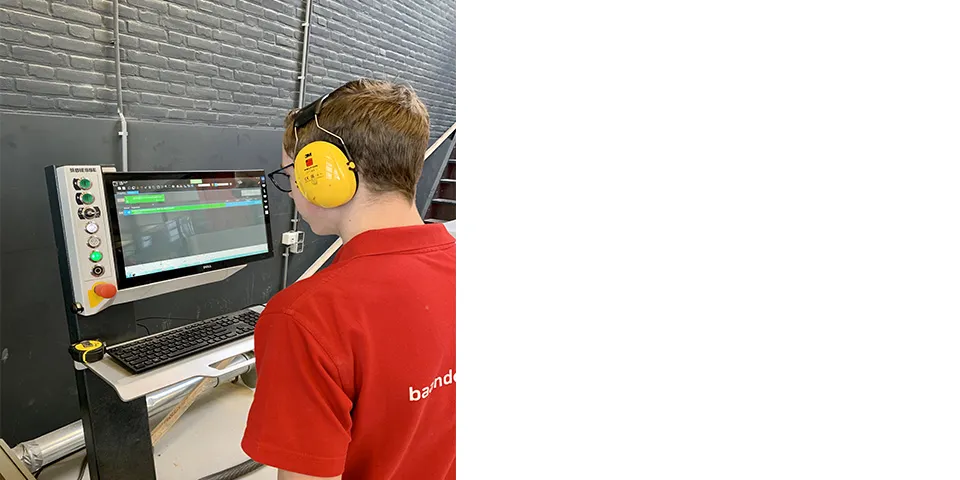
Student Milan Merks working on a 3D design
Rob continues enthusiastically: “The great thing about having the Biesse Rover K FT is that we can tailor teaching to what each student can do and how quickly they learn. We configure the machine for different skill levels. If a student is highly skilled, we do as little programming as possible and let them work things out for themselves. If their skill level is a little lower, the programme can offer more ‘help’. It is also great to hear that students are allowed to operate CNC-controlled machines much sooner on their work placements because they already know how to programme them. We also chose Biesse because most further education courses use the same machines, software and drawing package. Students are often already ahead in terms of their skills, rather than having a big gap to bridge. In short, if you choose ‘technology’ as a student, Biesse gives us the best equipment.”
Investing in the future pays off
BHC stands by its decision to invest in the technologies of the future. The great thing is that it is already reaping the benefits. The Biesse Rover K FT was running throughout the open day. Since then, there has been a higher number of student enrolments, particularly among girls. This is expected to increase further, with the high-tech demonstrations being given on the machine. After all, students are curious about the latest technologies.
Question about this story? Ask your question
Keep following this
Get an email when a new story is published. No account needed.
- SubjectGeneral







