











Profiling starts at the preparation stage
Text Tamara BrouwersImage Bonsink Jachtbetimmering
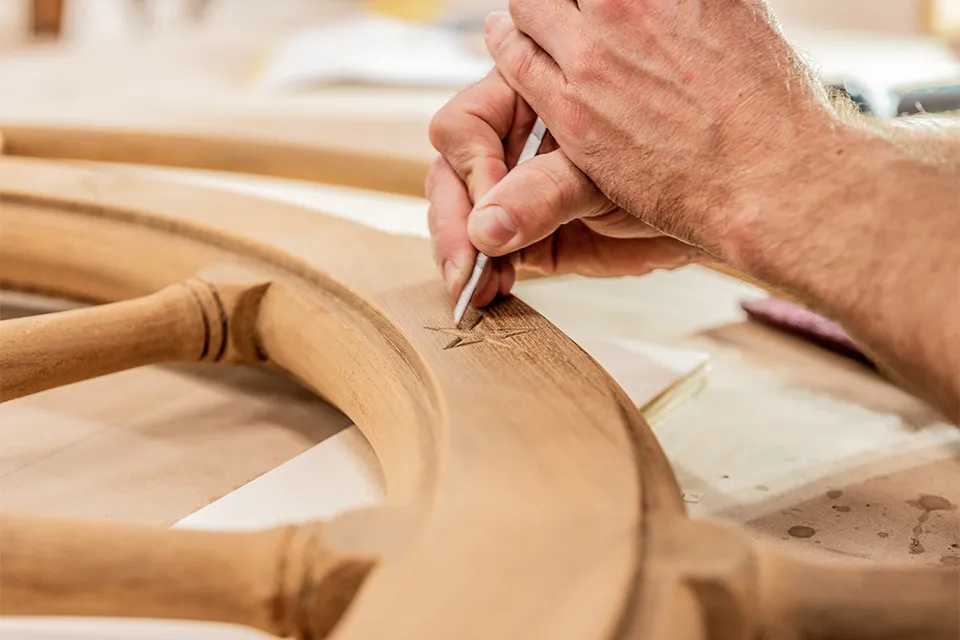
Early technical discussions help keep projects under control
In high-end yacht building, projects are large and costly, making thorough preparation essential to keeping schedules and budgets under control. For Bonsink Jachtbetimmering, this means starting a project by calculating profiles and machining operations. By working with tooling supplier Leitz Service B.V. from the outset, the company gains a clearer picture sooner of the technical options, lead times and financial impact of particular choices.
Bonsink Jachtbetimmering makes interiors, exteriors and bespoke components for the luxury yacht-building industry. In recent years, a separate yacht-interior division has developed within Bonsink, led by operations manager Jurjen Hiemstra. He oversees the entire process, from purchasing and design work to production. “We have grown considerably in recent years. There are currently 21 people working here, and two or three new colleagues will be joining us soon,” he says. Exterior projects in luxury yacht building can easily require 20,000 to 25,000 joinery hours and take around a year on average.
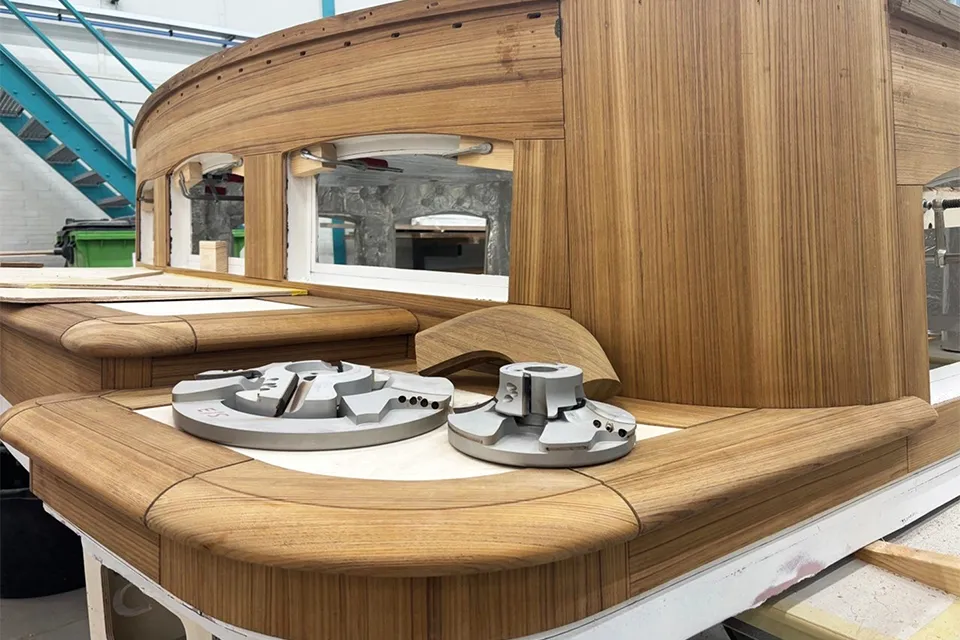
Early discussions
The relationship with Leitz began several years ago through a machinery supplier. “I’ve been with Leitz for more than twenty years now,” says Jan van Marle, sales adviser at Leitz, based at its Zwolle branch. “I started out in grinding services and sales. I first came into contact with Bonsink five or six years ago.”
Initially, the work involved supplying cutterheads. It soon became clear that both parties would benefit from discussing projects earlier in the process. “It’s important for me to know at an early stage what a cutterhead will look like and what the financial implications will be,” says Hiemstra. “Not just because of lead times, but also because you can immediately see the impact on the project.”
In yacht building, almost every design has its own lines, curves and profiles. “Every architect draws different shapes. If you calculate everything properly in advance, you avoid running into problems or extra costs later in the process,” Hiemstra explains.
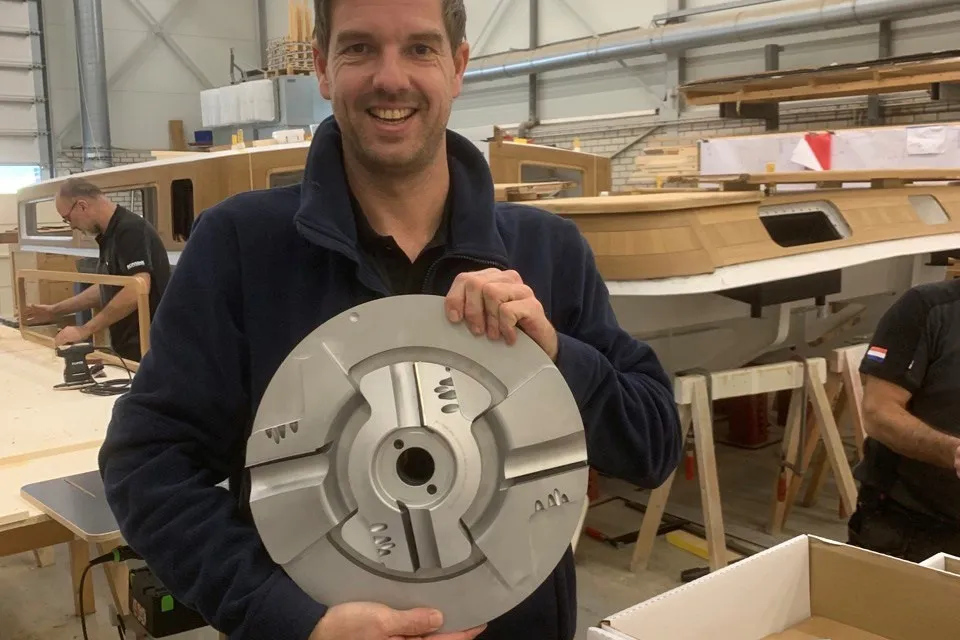
Complex shapes
That preparation is essential. “On a boat, almost everything is curved in two directions,” says Van Marle. “This means that sometimes four people have to guide the timber at a spindle moulder. That’s why it’s important to mill some profiles in a single operation, to reduce material waste. The ProfilCut Q system gives you much better control over the process.”
That is why Bonsink is increasingly opting for the ProfilCut Q system, which completes the work in a single operation. “In the past, much of the profiling was done by hand. Investing in a properly profiled cutterhead means you can work more accurately and efficiently.”
Replaceable knives
Bonsink uses the ProfilCut Q system from Leitz for many applications. This profile tooling system has a lightweight alloy tool body and replaceable carbide knives. Its lower weight is an important factor. Hiemstra says: “Every time it starts up, the motor has to get the cutterhead moving. The lighter it is, the less strain it puts on the machine.”
Maintenance is also simpler. “Bonsink works a lot with teak,” says Van Marle. “It contains lime, which causes tools to wear relatively quickly. With this system, users can replace the knives themselves and get back to work almost immediately. With a cutterhead fitted with fixed knives, it can sometimes take a week to have the tool sharpened.”
For applications where tooling wears even faster, for example when milling filler or other abrasive materials, Bonsink sometimes opts for ProfilCut Q Diamond or bespoke DP tooling.
A practical partnership
According to Hiemstra, the main added value lies in the input provided during the preparation stage. “We work from the architect’s drawings and a three-dimensional model. Jan then works out the profile technically and sends it back for us to check. That saves us a lot of time. I manage a large team and can’t get deeply involved in everything myself. It’s helpful to have a supplier who takes care of the technical side properly.”
Van Marle sees that as an important part of his job. “It’s not just about supplying tools. We build partnerships with our customers and try to help them find the best production method. That means sometimes looking beyond the tooling itself.”
According to Hiemstra, this way of working together makes it easier to clarify decisions earlier in the process. “If we know from the outset how we’re going to profile something and what tooling we need, we avoid making changes later in the workshop. That brings peace of mind to the project and helps keep schedules and costs under better control.”
A business enquiry for Leitz? Get in touch
Companies in this story

Keep following this
Get an email when a new story is published. No account needed.
- ThemeMore bespoke work from the workshop
- SubjectGeneral
- CompanyLeitz







