











Revolutionary plan enables circular working in the panel processing industry
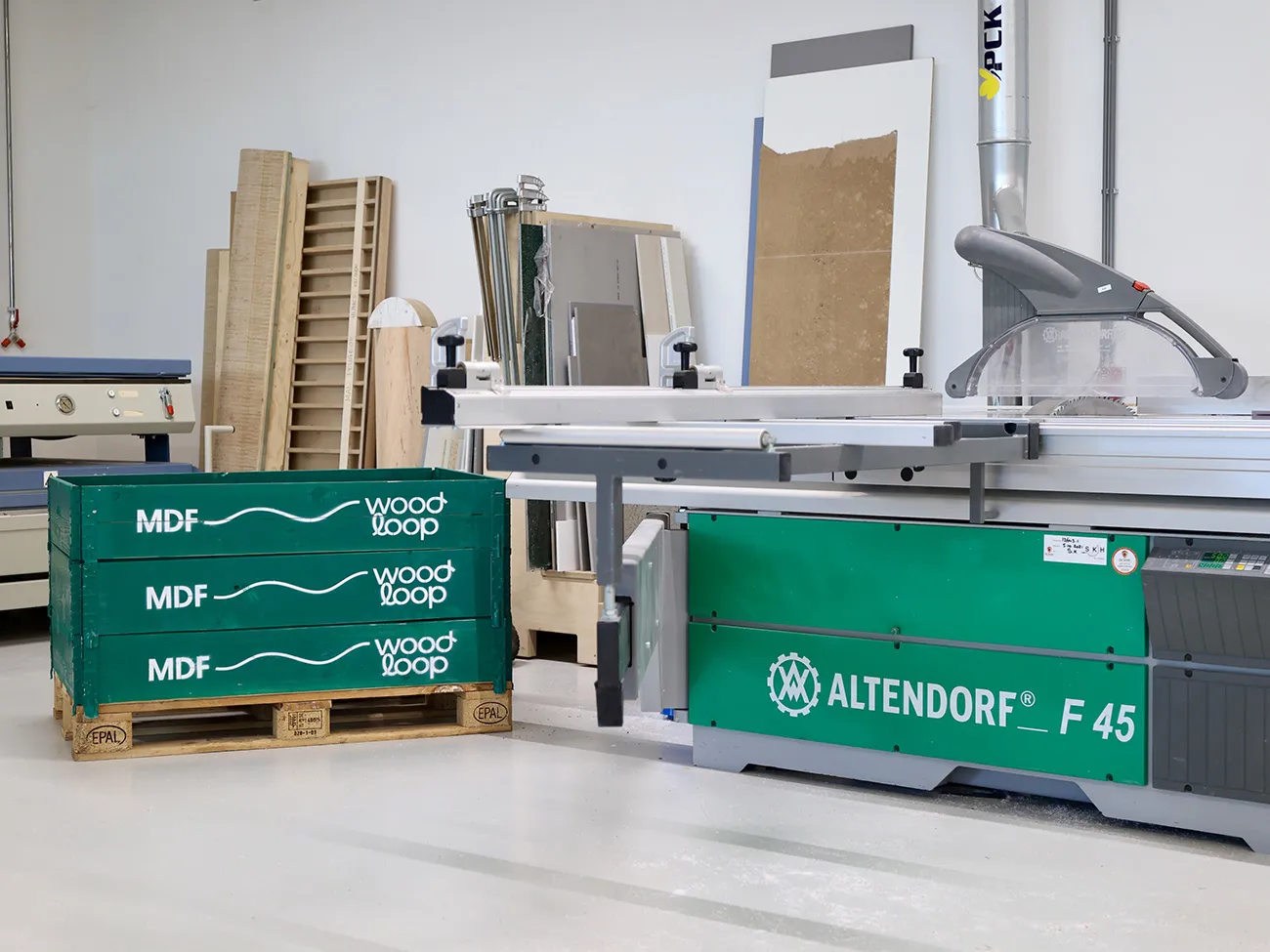
All the great technological and social achievements we know today have one thing in common: they began with pioneering work. A visionary idea, developed with passion, sometimes against all the odds. In the same pioneering spirit, we present the Wood Loop concept, a revolutionary circular plan for the panel processing industry. The initiative came from John Faas, Business Unit Manager at Baars & Bloemhoff. With support from Koninklijke CBM, his colleagues at Baars & Bloemhoff and customers willing to look ahead, John developed a return system for sawing offcuts, which are then used to make new panel material. We talk to him about the pilot currently under way.
Turning the logistics chain around
Once again, the name ‘Broeinest’ does justice to the concept launched by Baars & Bloemhoff. In 2019, a group of industry professionals gathered at Broeinest Rotterdam to brainstorm about the question: ‘How should we handle our circular responsibility when it comes to residual materials?’
John explains: “Our pitch was: ‘Why don’t we turn the logistics chain around?’ That planted a seed with the think tank. As reported in an earlier article, UNILIN has mastered the process of recycling particleboard, MDF and HDF. Building on this, we came up with a plan to establish a return stream for panel material. I shared the idea internally and gained more and more enthusiastic supporters. Dirk van Deursen of Koninklijke CBM was also convinced that it deserved serious investigation. After two years of working on the plan, we can safely say that we have set a whole movement in motion. That is how the Wood Loop concept came about.”
It proved possible to press ahead, although a fair number of hurdles had to be overcome. “At Baars & Bloemhoff, we got our teeth into this because the idea fits with our search for the kind of company we want to be in 10 to 20 years’ time. I am convinced that there is no place for linear goods in a truly circular economy,” says John.
“As the driving force, we have to make it possible for everyone to get involved in this initiative. By proving that it can be done, we can overcome objections across the market. It is a major logistical challenge, but I’m ready to take it on. With my background in logistics and packaging, I know what is possible. You have to develop and innovate to keep making progress. We faced a lot of resistance from the waste processing industry, which sees us as a competitor. But what we send back to Belgium is not waste, it is a residual raw material.”
Partners in a unique process
At the time of writing, a pilot is under way with 10 customers, with the aim of scaling up to 25. “We no longer talk about customers, but partners in a unique process,” says John. “By processing residual streams together, we preserve value in the chain. Especially with the current shortage of raw materials, the process will become more profitable as we fine-tune it.”
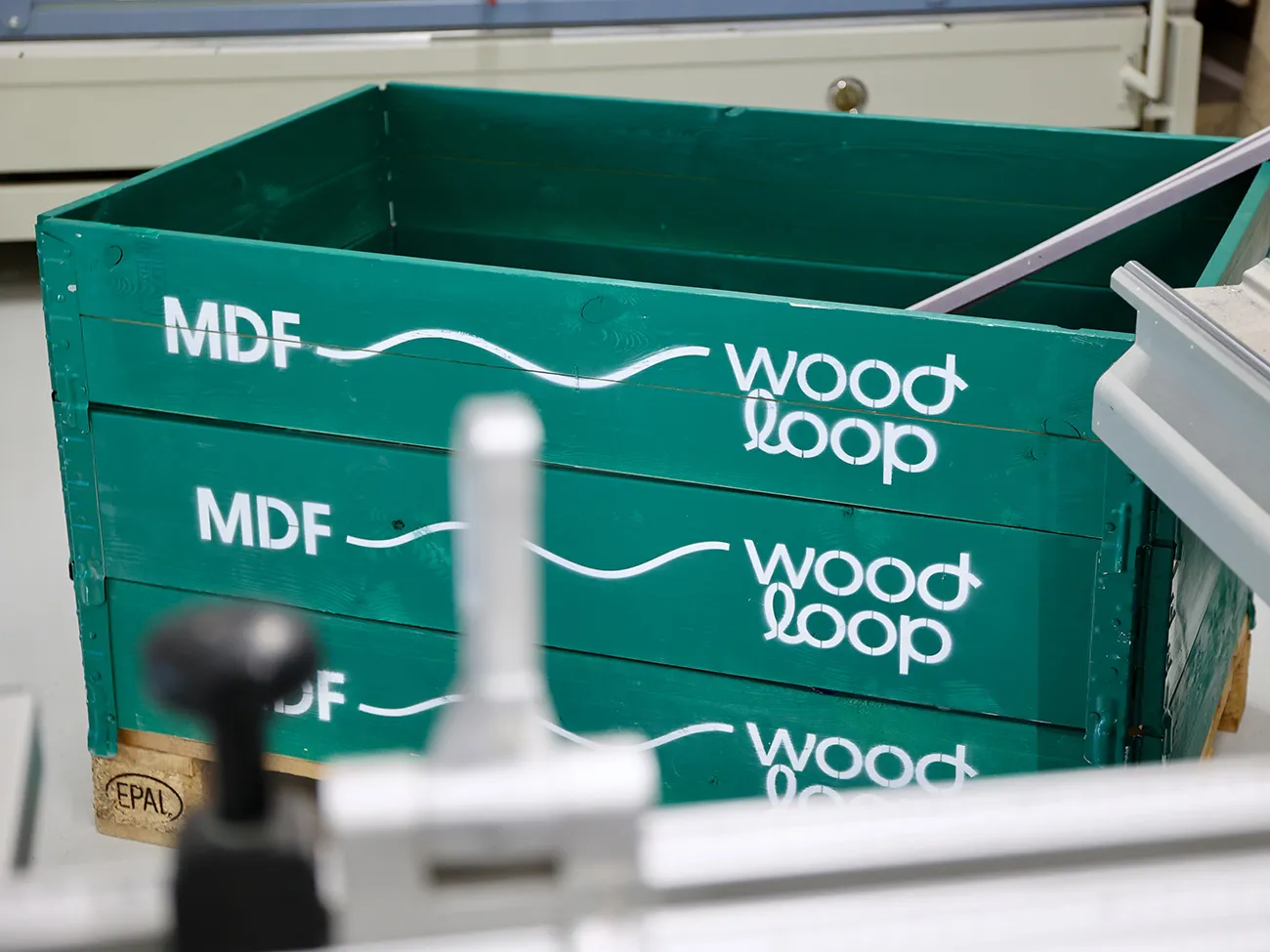
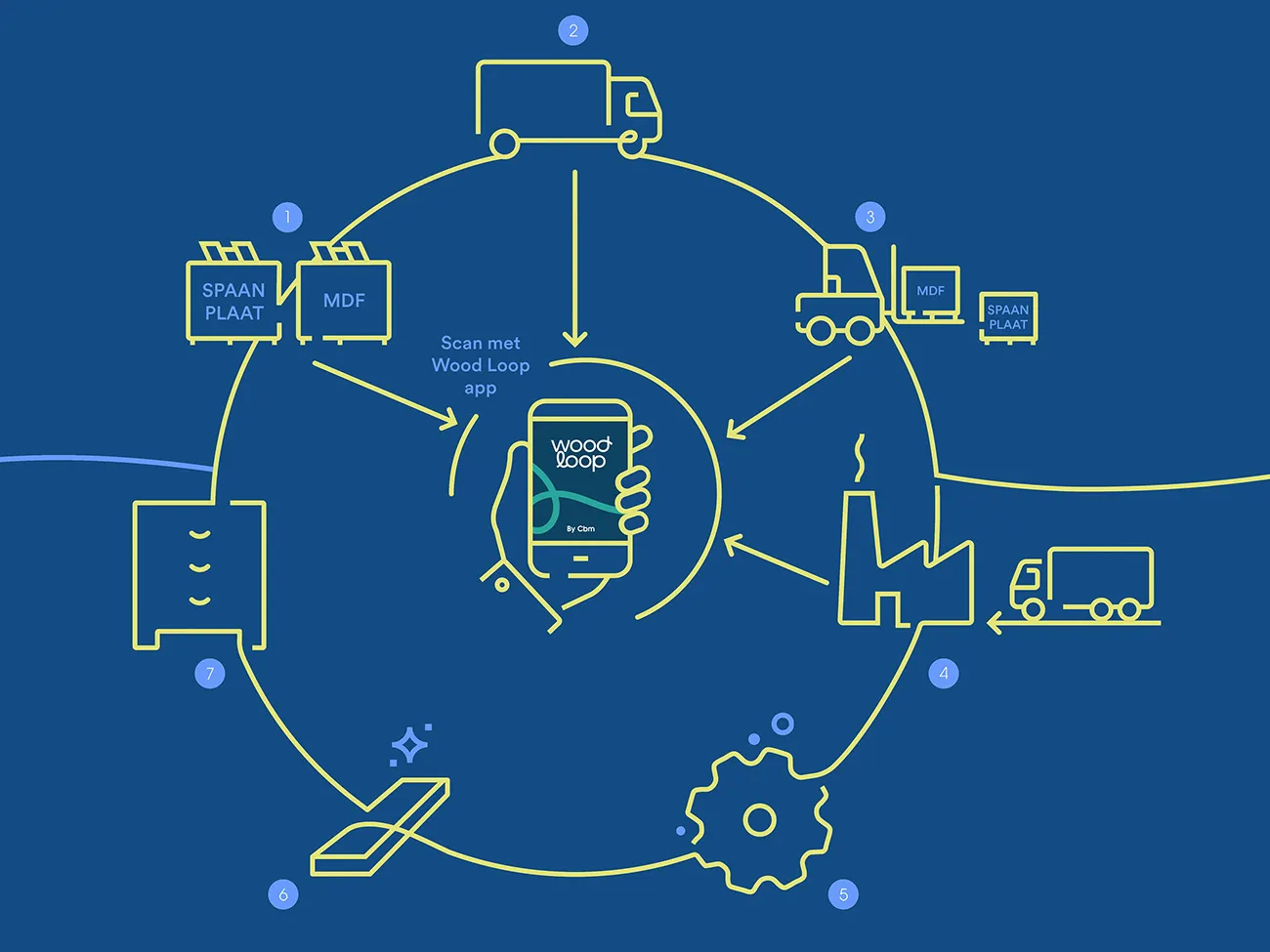
How does it work? John explains: “Our logistics network brings us within 10 km of every interior construction company every five days. This allows us to set up a return schedule, combining deliveries and collections to save a huge amount of CO2 emissions. It is a good solution both ecologically and economically. We store the crates at our premises and weigh them there. Once we have a full trailer of crates, we notify UNILIN, and the crates are sent to Belgium by ship or lorry. We do not handle the residual material any further. We simply store it and ship it on. The return process is quick: everything is collected from us within a day of notification. It still has to be entered manually, despite our high level of automation. That is why you need people who are committed to making this work, and we have them!”
Covering costs
With 25 companies in the pilot, Baars & Bloemhoff receives 25 crates a week. “Financing those crates upfront alone is a major undertaking,” says John. “But with this pilot, we can find out whether we can scale up to a level where returning the material costs no more than having it collected as waste. So the costs really do come before the benefits here.”
Wood Loop is creating an entirely new dynamic, both internally and externally. “You cannot do this without passion. We are proud of what we are achieving together. It suits Baars & Bloemhoff as a family business, because what we have started is not about turnover or profit, but about generations,” John concludes.
Question about this story? Ask your question
Companies in this story
Keep following this
Get an email when a new story is published. No account needed.
- ThemeMore sustainable materials and longer use
- SubjectGeneral
- CompanyBaars & Bloemhoff







