











Second survey on the impact of coronavirus on the furniture industry and interior construction

On 27 February 2020, CBM presented the first results of its survey into the impact of the COVID-19 virus, better known as coronavirus, on the furniture industry and interior construction in the Netherlands. Three weeks later, a second survey found that a large proportion of the sector was already experiencing negative effects and/or expecting them.
The percentage of companies actually experiencing problems rose from 10% to 43% in three weeks. The percentage of respondents who were not yet experiencing problems but expected to do so also increased, from 30% to 52%. The proportion of companies neither experiencing nor expecting problems fell from 60% to 5%. This was the situation at the end of March, around the deadline for this issue of Binnenwerk. It is difficult to make predictions for April, but the intelligent lockdown means that April will certainly remain challenging for the interior construction sector.
Problems
In three weeks, the health situation and the global economic outlook have changed completely. Many countries have run into difficulties as a result of the coronavirus outbreak. The virus has now become a pandemic, causing widespread damage. Share prices are tumbling worldwide, borders are closing, trade fairs are being postponed or cancelled, travel is being banned and people in many countries are spending weeks in quarantine. In the Netherlands, sectors such as hospitality and culture have come to a complete standstill. Our industry has also been hit by the negative impact of coronavirus, and many companies are seeing their turnover fall. Work and employment are coming under increasing pressure.
Response rate
Back to the surveys: 199 CBM members completed the first questionnaire, while 230 respondents took part in the second. The response rate therefore rose from 40% to 46%. Almost half of all members responded, giving a representative picture of developments in our sector.
Question 1: Are you experiencing or expecting problems because of the coronavirus outbreak?
In the first survey at the end of February, 10% of respondents said they were already experiencing problems directly attributable to the coronavirus outbreak. In three weeks, this figure rose from 10% to 43%. Over the same period, the proportion of companies not yet experiencing problems but expecting them increased from 30% to 52%. The proportion of respondents who did not expect problems in the first survey fell sharply, from 60% to 5%. The second survey shows that the situation has clearly deteriorated. More and more members are feeling the damaging impact of coronavirus or expecting negative consequences.
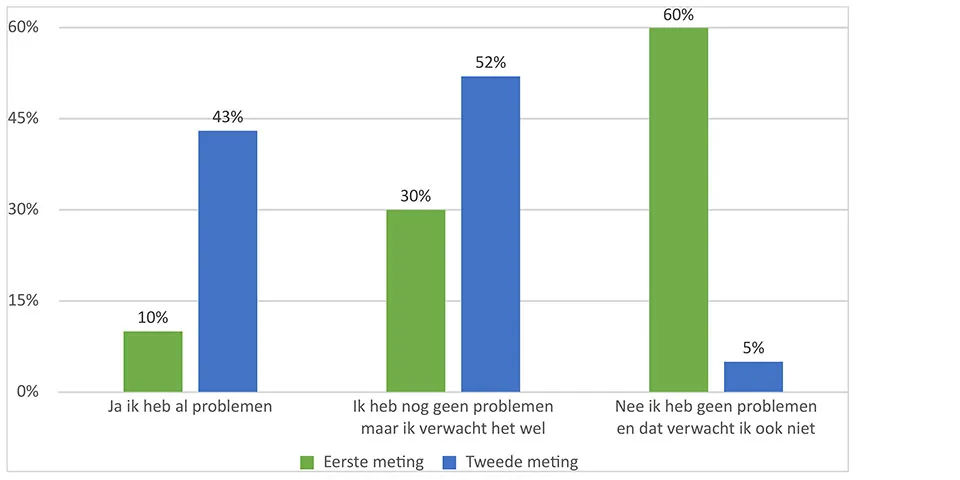
Question 1.
For example, respondents report problems with installing furniture and interiors on site.
Installation projects are being halted, and installers can no longer work at hospitality venues, conference centres, schools, care facilities, hospitals, nursing homes, shops and so on. Businesses are also having difficulty ensuring staff availability. Employees are off sick or have to arrange childcare because schools have now closed. In addition, businesses are experiencing problems with the supply and availability of the essential raw materials, materials and semi-finished products needed for production.
Question 2: Is your company experiencing problems with exports?
In the first survey, only one respondent reported problems exporting to China. We therefore broadened the question to cover export problems in general. The second survey shows that one in ten respondents is actually experiencing problems exporting products. These mainly concern exports to European countries where shops are closed, such as France, Germany, the Czech Republic and Denmark.
Question 3: Are you experiencing or expecting problems with the supply of components and semi-finished products for furniture and interiors?
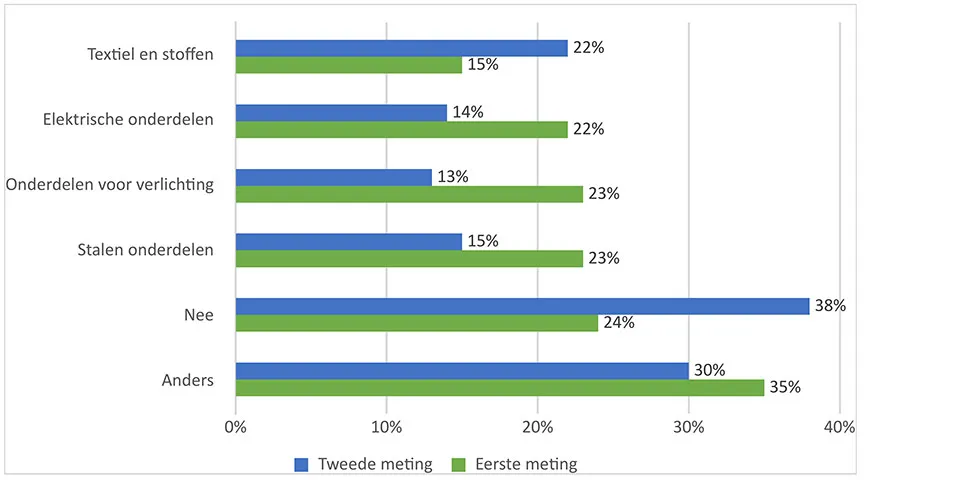
Question 3.
As in the first survey, companies expect problems with the supply of electrical components, lighting and lighting components, steel components, textiles and upholstery fabrics, and leather. The percentages are in line with the first survey, but have risen or fallen by a few percentage points.
Question 4: Are you experiencing or expecting production problems and longer lead times due to shortages of raw materials, components and semi-finished products?
The proportion of respondents expecting production problems and longer lead times is in line with the previous survey. The second survey shows a slight increase in problems. More than 1 in 10 companies (16%) are already dealing with production problems. Two thirds of companies (67%) are not yet experiencing production problems, but expect to do so soon. More than 1 in 5 companies (21%) have no production problems and do not expect any.
Question 5: Are you dealing with orders that have been cancelled?
This was a new question, added to the first survey. The results show that around one in five respondents (19%) are now dealing with cancelled orders. A further 43% expect to encounter cancellations soon. It is clear that this is a growing problem, which will increasingly affect the furniture industry and interior construction. Cancelled orders lead to higher costs and lost turnover.
Question 6: Are you experiencing or expecting additional costs due to late product deliveries?
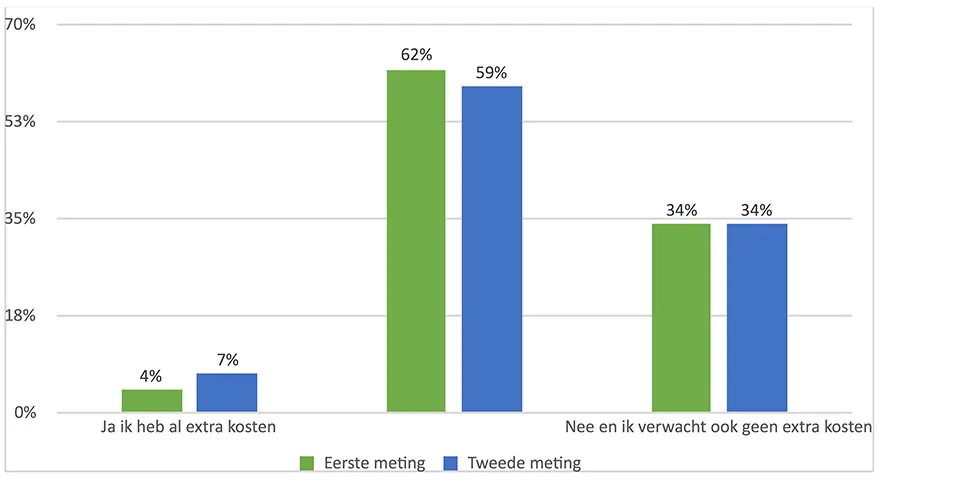
Question 6.
The percentage of companies expecting additional costs soon because of the delivery problems mentioned has fallen slightly, from 62% to 59%. The proportion of companies already incurring additional costs has risen slightly, from 4% to 7%. A third of companies (34%) do not expect costs to rise as a result of late deliveries. Expectations of additional costs have remained more or less stable. Many respondents find it difficult to estimate the scale of the extra costs and left this question blank. Among companies that did provide an estimate, figures ranged from €10,000 to €75,000.
Question 7: Are you experiencing or expecting problems with logistics and transport, and if so, in which countries?
In the first survey, 15% of companies were experiencing higher transport costs. In the second survey, this figure fell to 8%. The percentage of companies not yet experiencing problems but expecting them rose from 47% to 61%. In the second survey, 30% of respondents did not expect any logistics or transport problems. This is a decrease of 8%.
Question 8: Are you considering switching to other suppliers because of coronavirus?
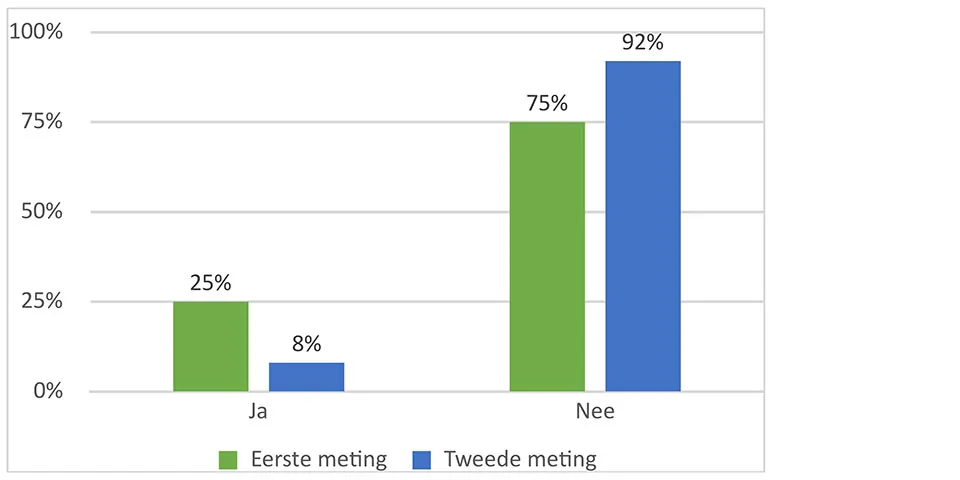
Question 8.
In the previous survey, 1 in 4 respondents were still considering switching to other suppliers if supplies from China were disrupted. In the second survey, this figure fell to 8%. Companies were mainly expecting to turn to other suppliers of upholstery fabrics and textiles, for example in Eastern Europe. This is still evident in the second survey.
Question 9: Are you experiencing or expecting (legal) problems because you cannot meet your delivery obligations?
This was an additional question in the second survey. Only 1% of respondents had already encountered legal problems related to delivery obligations. A quarter of companies expect such problems to arise. Respondents’ additional comments indicate that companies expect to resolve the matter through constructive discussions with the parties involved.
Question 10: Is your company using the short-time working scheme?
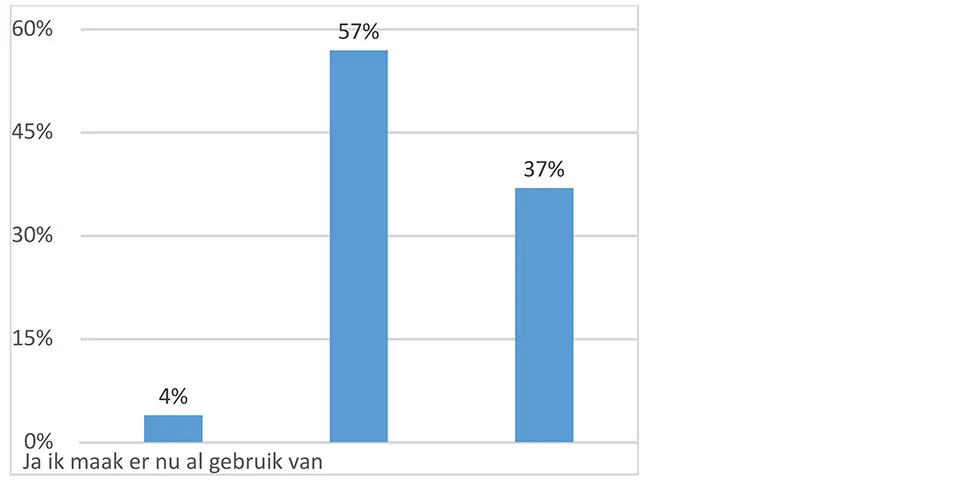
Question 10.
This additional question was included in the survey following the government’s recent launch of emergency measures. More than half of respondents (57%) expect to start using the short-time working scheme announced by the government soon.
Conclusions
The second survey showed that disruptions to the supply of raw materials, products and semi-finished products had increased slightly in scale, but had become more varied. It also showed that the proportion of companies experiencing supply problems was slightly higher than three weeks earlier.
Companies are not yet experiencing major transport problems, but expect to do so in the coming weeks, particularly if more countries close their borders. Businesses will only switch to alternative suppliers when absolutely necessary. They will mainly seek suppliers closer to home.
The final conclusion from this online survey is that, in just three weeks, the coronavirus outbreak has affected almost the entire furniture industry and interior construction sector. More and more companies are experiencing problems or expect to do so in the short term. The availability of essential raw materials, materials and products is becoming more problematic and will hinder production. In addition, more and more businesses fear that orders will dry up and turnover will fall.
As work dries up, employment in the furniture industry and interior construction will also decline in the short term. More than half of businesses therefore expect to make use of the new short-time working scheme and the other proposals in the package of emergency measures recently announced by the government.
In recent weeks, CBM has been closely following the coronavirus news. All relevant information about the virus can be found on the website www.cbm.nl. The trade association is also continuing to lobby actively in The Hague, alongside fellow trade associations and VNO and MKB, to minimise the negative effects on our businesses.
Question about this story? Ask your question
Keep following this
Get an email when a new story is published. No account needed.
- ThemeRunning an interior fit-out business
- SubjectGeneral







