











Sustainability you can see, feel and smell
Text and images Tamara Brouwers
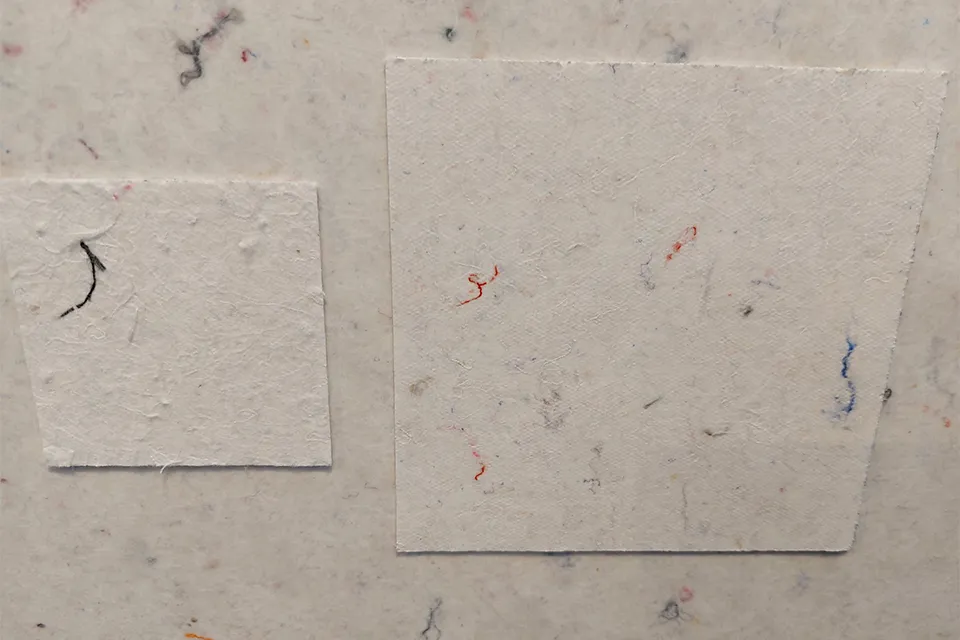
Materials with a minimal ecological footprint open up new possibilities for interior applications
At MaterialDistrict 2025, Maiburg presented a range of innovative, sustainable materials that take the future of interior design and construction a step further. Visitors could not only look and feel, but even smell how sustainability and aesthetics come together in the latest product developments.
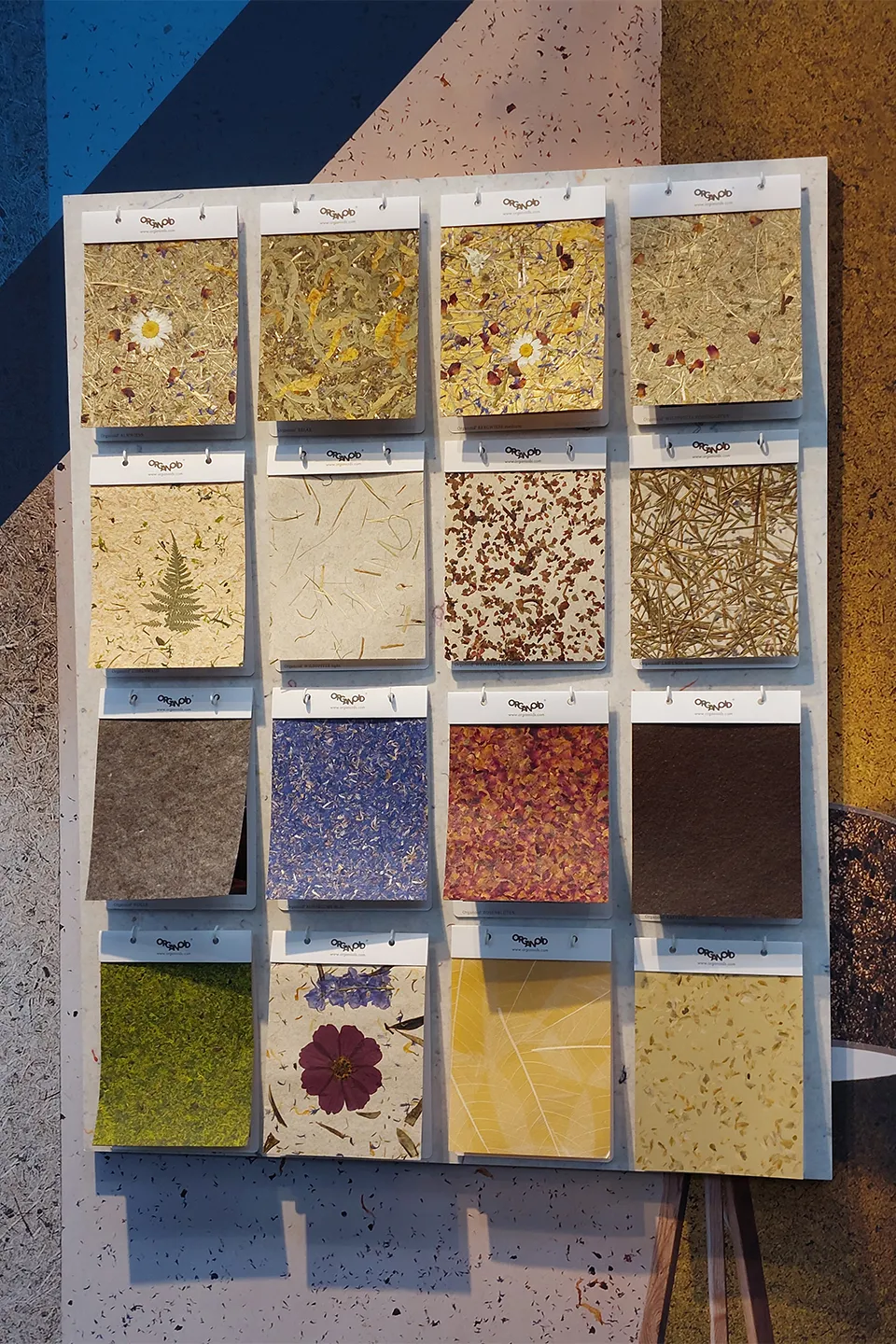
One of the most striking materials showcased by Maiburg was the Organoid Natural Surfaces collection. This wall covering is made from natural residual materials such as hay, flowers and moss. The result is not only visually appealing, but also smells lovely. “These materials retain the scent of nature without triggering allergic reactions,” explains Leon van Dun, sustainability strategist and product adviser at Maiburg.
Organoid Natural Surfaces is produced in the Austrian Alps, where the raw materials are harvested using traditional methods. The backing for most designs is made from flax fleece, and the bio-based resins used contribute to the material’s sustainability. “It is an exclusive product that literally brings nature indoors,” says Van Dun. The collection includes a wide range of designs, including versions featuring coffee grounds, rose petals and wool. The wall covering is available on rolls, as well as in sheets measuring 2,950 x 1,360 mm, making it suitable for a wide range of interior applications.
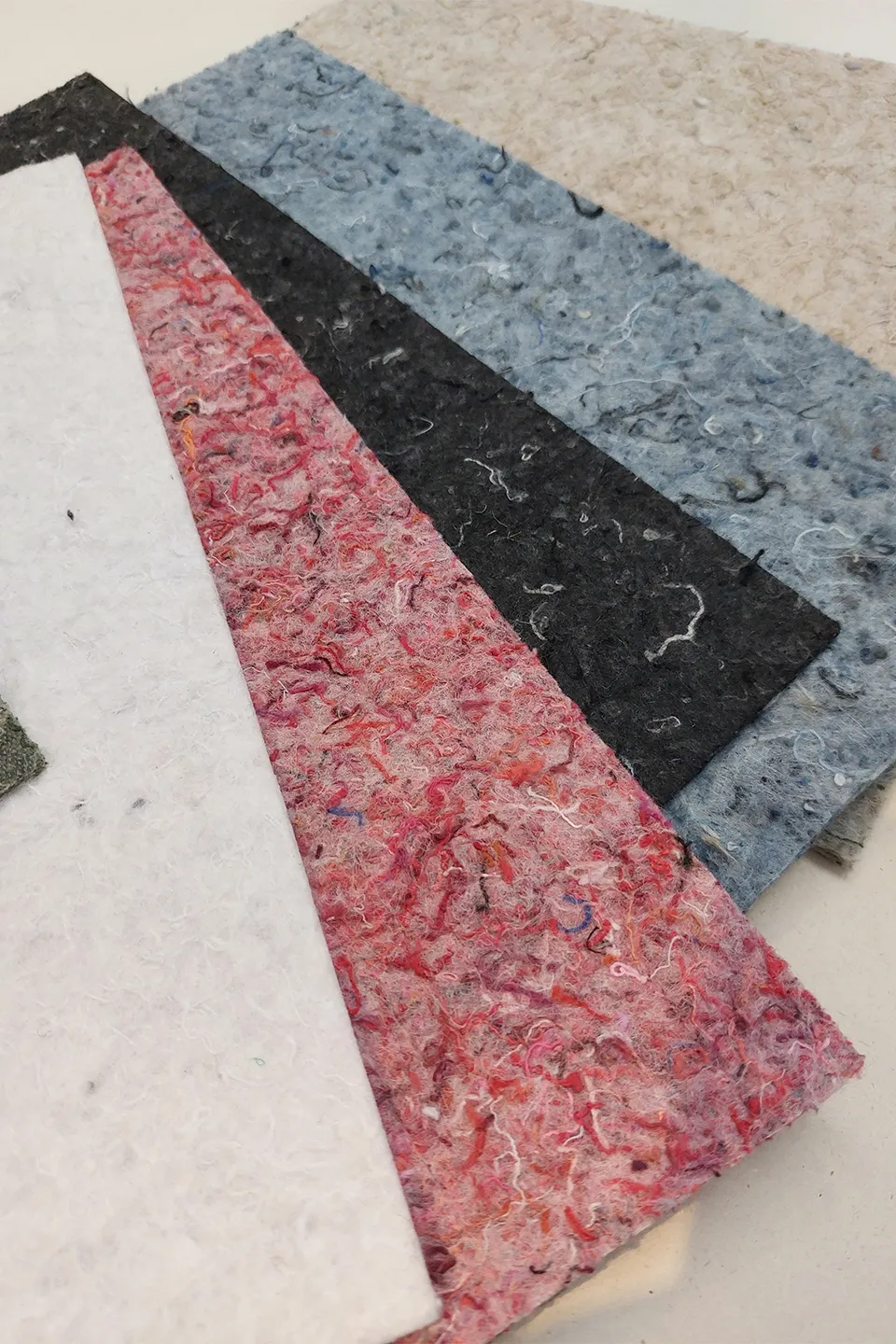
DenimX: Stylish textile reuse
DenimX BIO-Laminate also caught visitors’ attention. This material combines textile waste with bioplastics and is compressed to create a strong bio-laminate. The origins of the fabrics are often reflected in the colours: military clothing produces a green hue, denim a blue one, and Maiburg even offers a unique red version. “You don’t often see that shade of red in recycled textile products. What’s more, DenimX has two visible sides, each with a different colour tone and texture, offering greater design freedom,” says Van Dun.
DenimX BIO-Laminate is particularly suitable for vertical interior applications. The laminate can also be thermoplastically moulded, opening up creative possibilities for products such as chair seats and lampshades. The collection also includes ECO felt and ECO-HPL, which is ideal for furniture and heavily used horizontal surfaces. The HPL is environmentally friendly because it uses bio-based resin instead of phenolic resin, and its decor consists of actual recycled textiles. “With DenimX, we combine sustainability and creativity without compromising on quality.”
Honext: Circular and carbon-negative
Honext was also a must-see at the trade fair in Utrecht. This groundbreaking sheet material is made from waste fibres from the paper industry and is fully recyclable, as well as carbon-negative. “Honext meets the strictest sustainability requirements and is Cradle-to-Cradle Certified® GOLD,” says Van Dun. Its major advantage is that no resins or toxic chemicals are used, making Honext a safe choice for interior applications such as ceilings, walls and furniture. With these innovative materials, Maiburg is reaffirming its commitment to a more sustainable construction and interiors sector. “We want not only to offer products, but also to share knowledge and help customers make informed choices,” Van Dun emphasises.
Have a business enquiry for Maiburg? Get in touch
Companies in this story
Keep following this
Get an email when a new story is published. No account needed.
- ThemeMore sustainable materials and longer use
- SubjectGeneral
- CompanyMaiburg







