











The finest finishes and best sustainability in woodworking
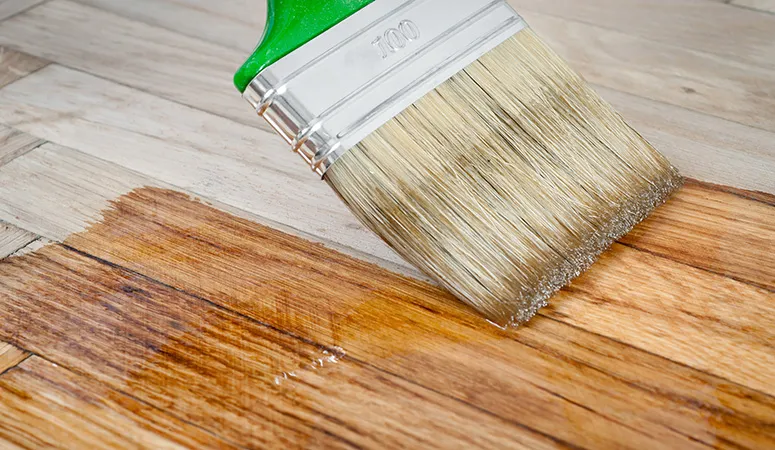
Stains and lacquers are essential for a good finish on all wood used in interiors. Ask a layperson what stain is used for and the standard answer will almost certainly be: “It’s for all outdoor timber.” But interior stain enhances the appearance of wood indoors. By penetrating deep into the wood, it adds colour without detracting from the natural look of the grain.
Stain is an open system and can be either impregnating or film-forming. Film-forming stains behave more like interior lacquer, covering the wood with a protective layer. In practice, impregnating stain is more often used in combination with clear interior lacquer.
Sanding is critical to the end result
For wood to be stained, it should be as dry and clean as possible. Thorough sanding, followed by equally thorough removal of the sanding dust, makes the wood receptive to the stain. Good sanding helps achieve a more even colour. The choice between a water-based stain and a solvent-based stain depends largely on the brand being used. Almost all stain manufacturers have developed their own product for interior use, each with its own application advice. Development has not stood still, as you can read elsewhere in this magazine.
Interior lacquer has become a high-tech product
As with stains, interior lacquers currently marketed for professional use have undergone a genuine evolution. The main difference between lacquer and stain is that lacquer leaves a film. Clear lacquer can be used to protect, preserve and enhance bare or stained wood. The durability required of the lacquer coating will naturally depend on the application: a piece of furniture is subject to different wear and tear from a floor. The industry helps interior fit-out specialists make the right choice by clearly indicating the intended use of its products. Lacquer is also available in countless colours, with or without a primer.
Thanks to the latest developments, both clear and opaque interior lacquers are available in water-based, single-component systems. The product is therefore more sustainable than ever and provides a durable finish that, depending on the brand and type used, can match the strength of 2K (two-component) lacquer. Of course, the stain or lacquer alone is not enough to guarantee the best end result. That also depends on the skilled professional applying it to the wood. Today’s interior lacquer is less harmful to the environment and easier to apply than ever.
So many shades, so many tints, so many gloss levels
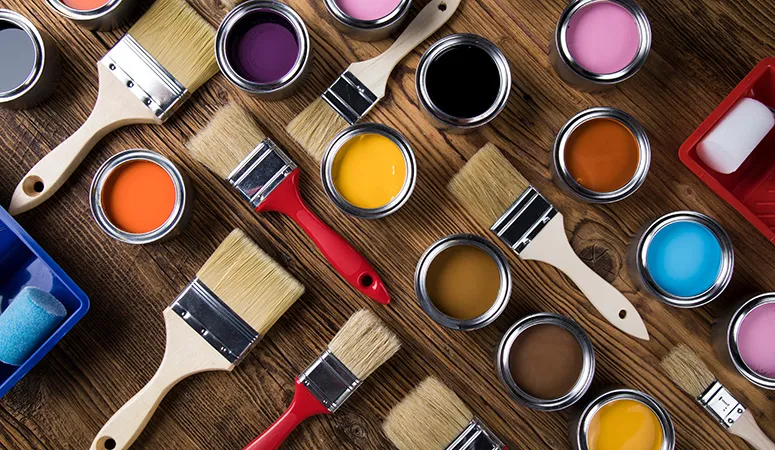
Interior stain is available in so many shades and can be applied in so many different ways that the wood can be given exactly the appearance the customer wants. Anyone mixing their own stain should record the formula carefully in case more is needed later. The same applies to the gloss level of lacquers. From matt and satin to gloss and high gloss, even the gloss level can now be fully customised.
Words: Jan Mol Image: Shutterstock
Question about this story? Ask your question
Keep following this
Get an email when a new story is published. No account needed.
- ThemeDecorative and protective surfaces
- SubjectGeneral







