











The many faces of decorative panels
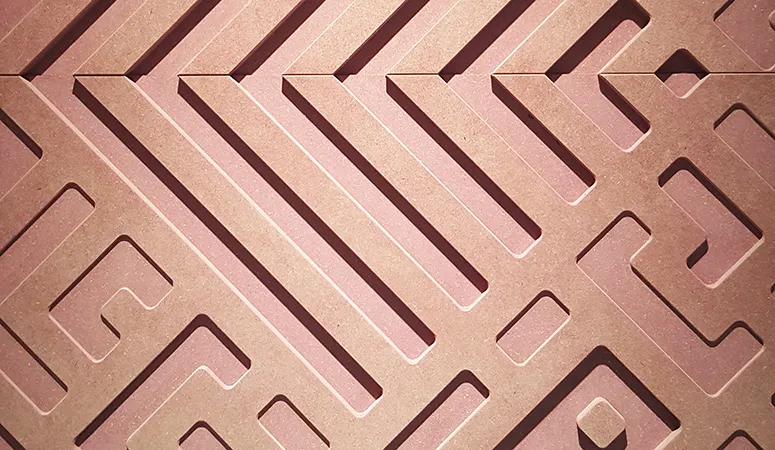
Today, decorative panels are more of a catch-all term than a specific name for a type of panel. The reason is that, alongside the many aesthetic applications for decorative panels, which continue to grow in number, their functionality is also expanding enormously. Decorative panels are evolving more than ever, which is good news for today’s interior designer.
In terms of functionality, decorative panels are ideal for wall cladding. But using them solely to clad a wall is a thing of the past. Increasingly, the panels that adorn the walls of shops, offices and public buildings are being complemented by bespoke furniture designed and made from the same material. The resulting visual unity benefits the interior.
The panel as a starting point for all kinds of designs.
Boundless possibilities in appearance
Decorative panels enable interior designers to respond quickly and effectively to the latest trends, or even to create a new trend in an instant. The many wood-effect designs pair beautifully with other materials in an interior, such as untreated metals, matt-black steel details or the rustic look of Corten steel. It is this combination that adds a sense of experience to an interior.
While wood-effect designs have long continued to develop, with combinations such as ultra-fine printing and tactile woodgrain textures, solid colours are now getting their turn. Gloss laminate is not a thing of the past, but it is being joined by tasteful colours with a matt finish. The fact that these materials do not reflect light brings a sense of calm to a space. There is also an important occupational health and safety consideration: to support the wellbeing of office staff, light levels need to be controllable and glare must be managed.
Glare control, as a measurable factor, is influenced by the available methods for controlling light levels, together with the reflective properties of walls and furniture. It goes without saying that matt surfaces absorb light better than glossy ones, which reflect it. In other words, aesthetics and functionality now go hand in hand.
Decorative panels as the starting point for something much bigger
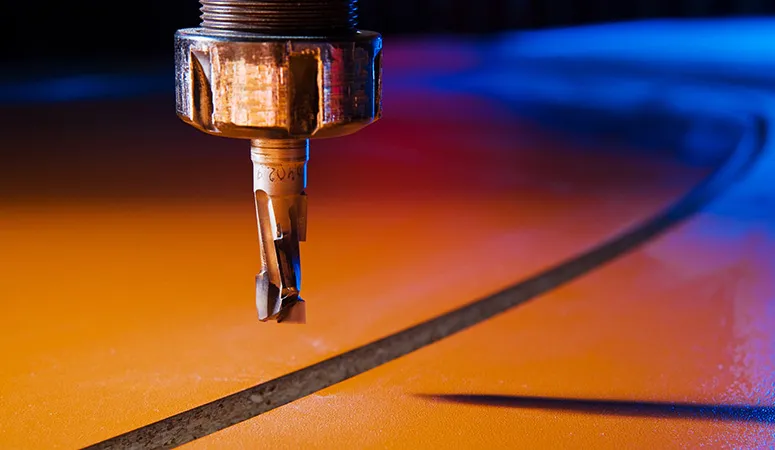
Thanks to modern 3D design methods and the machining equipment used with them, decorative panels are no longer a finished product, but a foundation for something entirely new. Anything from a logo or text to an artistic expression can be milled into a decorative panel. Removing the top layer creates a completely new image: the design of the base panel no longer dominates, and the finished piece as a whole determines its appearance. Some panel suppliers are even responding to this trend, giving designers more tools to create something unique.
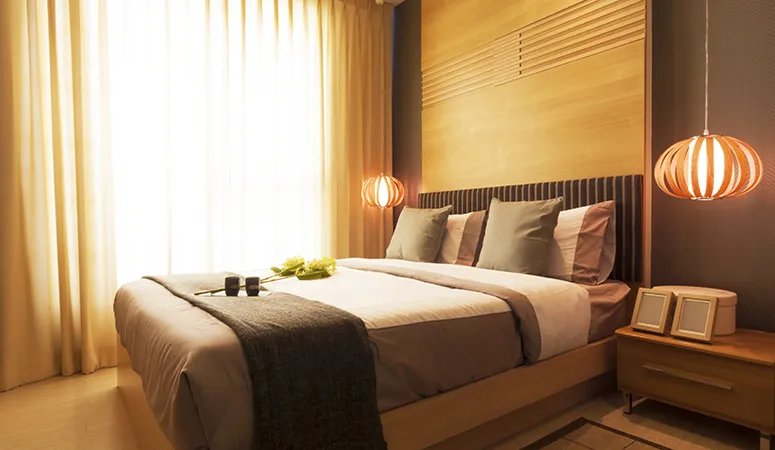
Hotel room with Japanese design. Decorative panels used for the walls, bed and furniture.
Enjoying the quiet
Decorative panels in all their forms bring together the best of several worlds. When an interior architect is given a strict requirement to use acoustic materials for sound absorption, they no longer need to compromise on design. Functional properties such as fire resistance, sound absorption and moisture resistance are no longer limited to a very small selection of decors. It is now a matter of combining function, styling and design. Long live the (r)evolution!
Words: Jan Mol Images: Jan Mol/Shutterstock
Question about this story? Ask your question
Keep following this
Get an email when a new story is published. No account needed.
- ThemeFrom sheet materials to construction
- SubjectGeneral







