Combine your employees’ expertise with your IT department’s ingenuity
I’m delighted to have the opportunity to write this ‘De Pen’ column for Binnenwerk. My thanks to the editorial team! In this guest column, I’d like to explore how the interiors sector can make real progress.
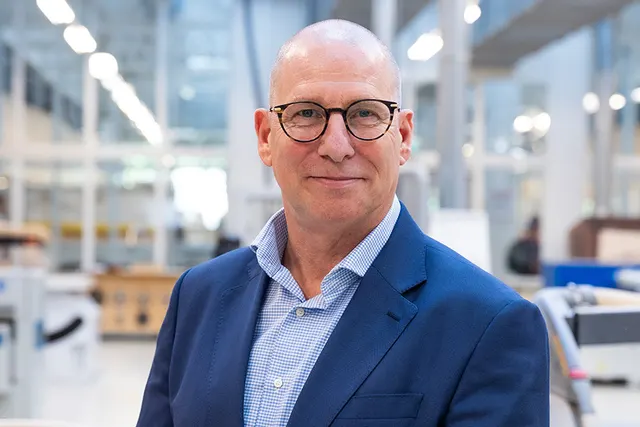
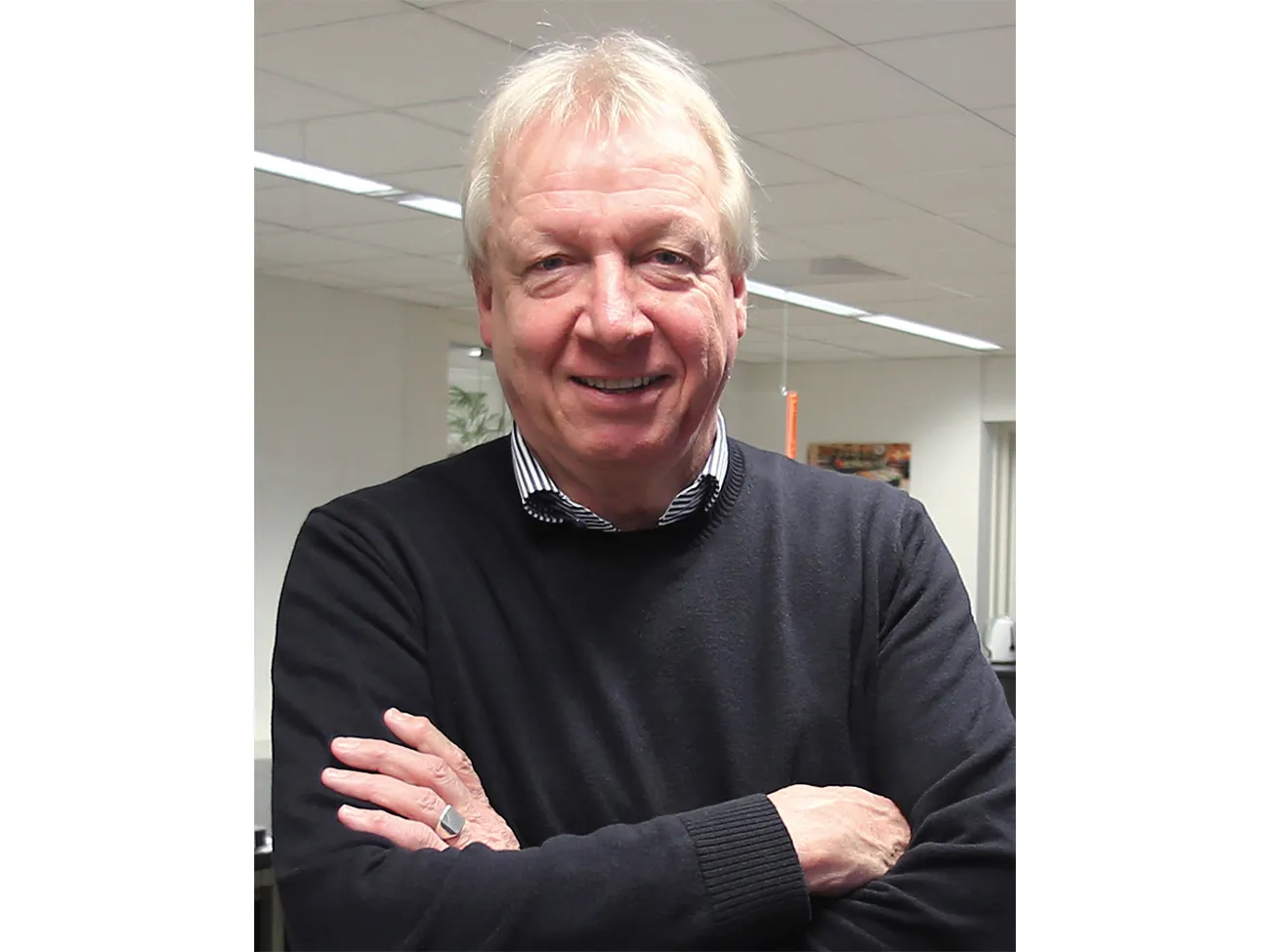
Joop van Keulen (64), managing director and owner of Van Keulen Interieurbouw
I’m delighted to have the opportunity to write this ‘De Pen’ column for Binnenwerk. My thanks to the editorial team! In this guest column, I’d like to explore how the interiors sector can make real progress.
First, a bit of context:
More than 40 years ago, draftsmen worked at drawing boards, drawing with a pen in two dimensions. Text and dimensions were carefully added to tracing paper using templates, after which the drawings were duplicated using a light-printing process. Production planning and material lists were then prepared from the drawings. Next came sawing, milling and other machining work, followed, of course, by installation.
In the 1980s and 1990s, CAD software came onto the market, and more and more machines were controlled by CAM. Once the drawings were complete, the CNC programmes had to be created. This also brought the third dimension into play: 3D design software became the norm. Parametric design made it possible to convert standard carcasses into CNC programmes quickly and easily by changing only the dimensions. However, as soon as a variation or an additional operation is introduced, everything has to be reprogrammed, wiping out many of the benefits. A challenge! Everyone in the interiors industry knows, of course, that almost everything is bespoke.
Over the years, I’ve had plenty of opportunities to observe metal production and machining in the industry. Our own people have also pointed out to me that you need to learn to think differently if you really want to make progress. You shouldn’t be constrained by the limitations of a configuration package. Instead, think in terms of freeform design, generating and analysing shapes.
Our vision is to create a drawing in a 3D environment, with the desired materials specified from the outset. Then, at the click of a few function keys, cut lists, edge-banding instructions and all the CNC programmes are generated automatically. We’ve already managed to achieve much of this. However, implementation requires a great deal of discipline to deliver the best results. CNC programmers’ roles are shifting from execution to checking. A major advantage is not only that the work becomes easier and faster with less effort, but also that programming errors are greatly reduced.
Another challenge we’re tackling is finding a solution to reduce our dependence on the control systems supplied by different machine manufacturers. Ideally, these would be standardised so that machines from different brands could be controlled in the same way. There’s still room for improvement in our industry on this front!
This cross-pollination of our employees’ expertise in woodworking and metalworking, combined with the ingenuity of our IT department, has certainly paid off. It’s about thinking outside the box. I’d recommend it to everyone, because it helps you make huge strides forward.
‘You shouldn’t be constrained by the limitations of a configuration package’
Question about this story? Ask your question
Keep following this
Get an email when a new story is published. No account needed.
- SubjectThe pen