Eye-catchers: use eye tracking to create the best design
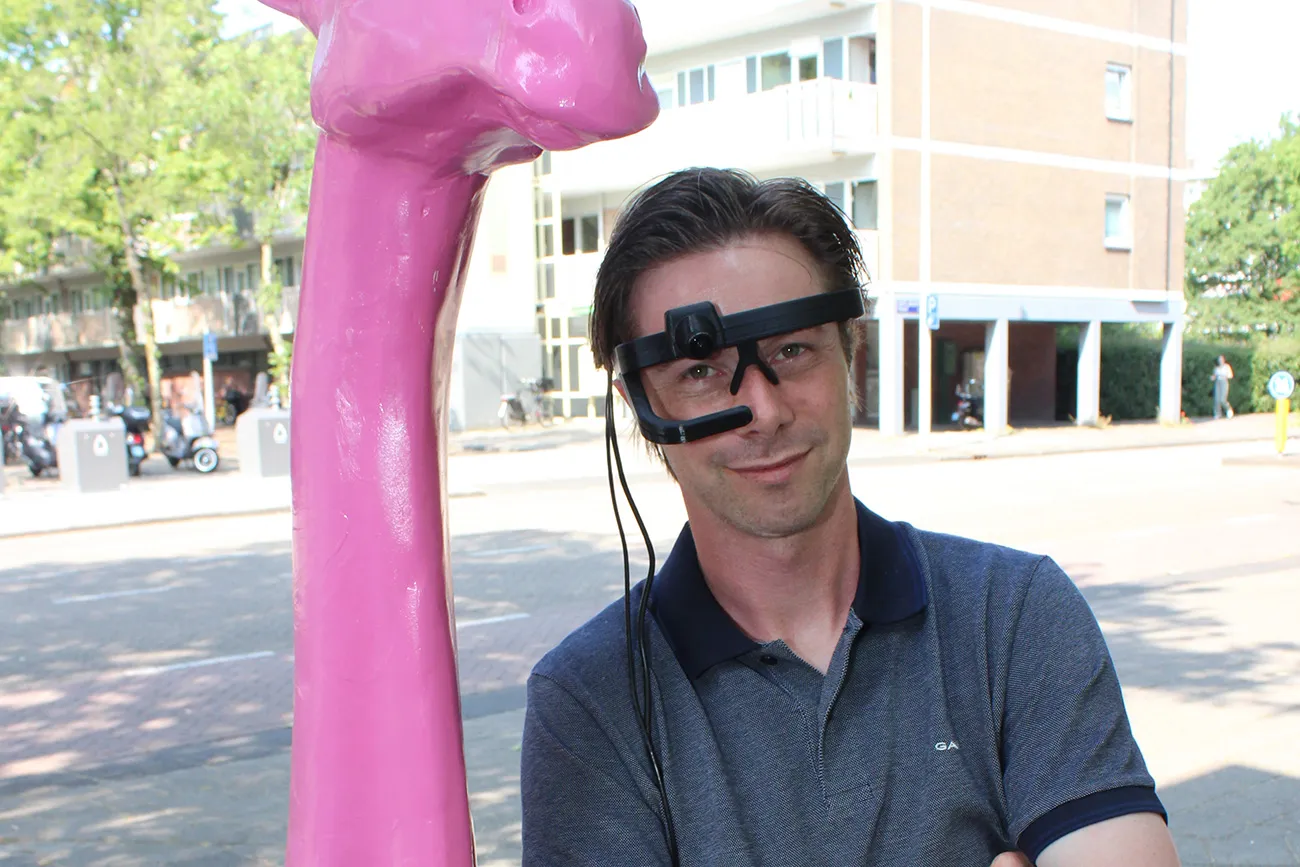
Jurriaan Schreuder, 38, is founder of fast-growing Amsterdam start-up Kexxu. Schreuder and his team develop eye trackers for the market, helping businesses take their marketing and sales to the next level by giving them a better understanding of what customers really look at.
I’m delighted to be writing this column for this edition of Binnenwerk. Many thanks to the editorial team for the invitation and the challenge. I’d like to begin De Pen with a few questions for you, dear reader.
1. Picture the most beautiful interior you have ever seen.
2. And what were the first three things you noticed?
Let me explain why I’m asking these questions. People often think they see everything, as if looking at a photograph where everything is in view at once. But that is not how we see. When someone enters a room, their eyes scan the surroundings. The eyes move around the space five times a second. These movements are called saccades. Our eyes do this because we can only see sharply and in colour within a small part of our field of vision.
To give you an idea of just how small that area is, here’s a fun little exercise: stretch your arms straight out in front of you and hold your thumbs side by side. That’s right… that’s how small the area is. Although you feel you can see everything at once when you enter a room, you actually only see a few things. They are the things that stand out most. People notice this when, for example, they have lost their keys.
Interesting to know, isn’t it?
But this raises another question: how can you, as an interior designer, make smart use of this? The answer is eye tracking.
Eye tracking can be used to find out what people look at most when they enter a room. In a living room, the top five are, for example: the coffee table, the rug, decorative cushions, the floor and the fireplace. In an office, they are the office chair, the monitor, the shelves of cupboards, art objects and, in fifth place, the rug. So something as ‘simple’ as a rug is incredibly important to the first impression an interior makes. Did you know that?
With a good design, you don’t leave the focus to chance. Instead, you make sure you direct it yourself. You decide what should catch the eye, what should stand out, what the eye-catchers are. As a designer, you are the one who determines the first impression a room or space makes. By playing with this, you can create a completely different experience using the same elements.
So, when you next design an interior, think about where you want to draw attention. Have five people enter the room wearing an eye tracker. See where they look. Now try moving a few things around. What stands out? And what can you learn from this yourself?
Exactly… you can direct the focus precisely where you want it. The conclusion? Your design becomes more appealing!
Question about this story? Ask your question
Keep following this
Get an email when a new story is published. No account needed.
- SubjectThe pen