











Who wouldn’t give doors a second life? From pioneering work to a lasting sustainable solution
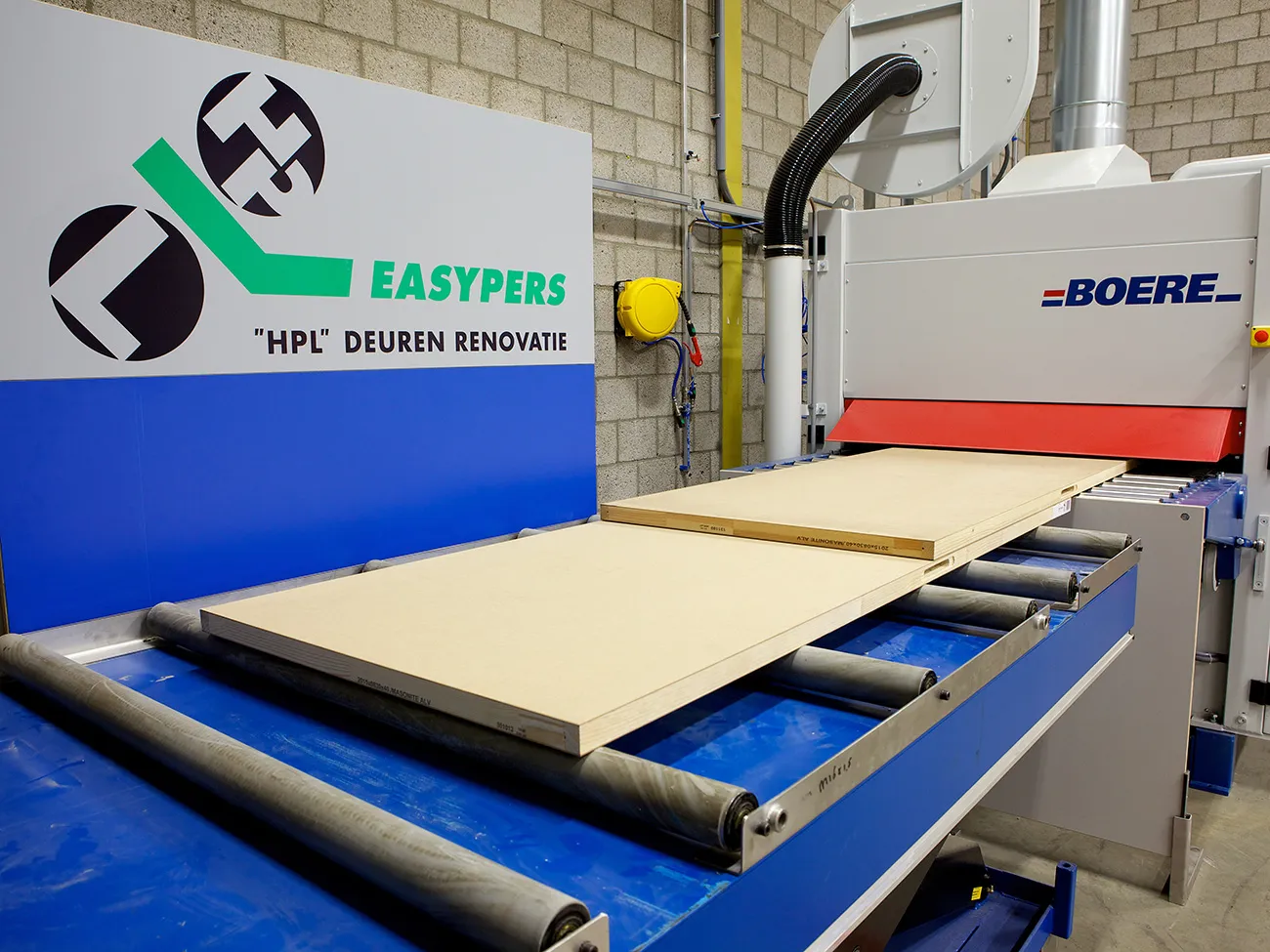
What began as pioneering work in 2011 is now part of the core business. Easypers gives used doors a new, durable surface layer. “The concept was born here out of necessity during the financial crisis,” says director and owner Gerard Koelewijn. “We needed to keep our presses running and were looking for extra work for the laminating line. In a difficult financial climate, renovation companies could save money by giving doors a second life. So it was a win-win for everyone. With the sustainability ambitions everyone has today, we offer not only a financially attractive solution, but also a green alternative.”
A solution for solid particleboard doors
We learn that not every door is suitable for the renovation process. Koelewijn: “This process only works with solid particleboard doors. In other words, doors without a cardboard core, which would be crushed. Plywood doors are also unsuitable, as too much negative tension would increase the risk of warping. Fortunately, most large indus-
trial doors are made of solid particleboard. These doors come to us from renovation projects in offices, hotels, schools and so on.”
At Easypers, door renovation runs alongside regular pressing work. But with rising raw material prices and supply problems in the timber market, Koelewijn is seeing the flow of doors arriving at Easypers for renovation grow by the day.
Old HPL off, new HPL on
The great thing is that today’s HPL colour and design range is so extensive, says Koelewijn. “We remove the old HPL and apply the new. The transformation is incredible to see. You bring an old door right into 2022. We apply all sorts of solid colours and décors.”
As these renovation projects involve removing doors from their existing frames, Easypers can return each door using its reference number.
“The only thing needed is flawless record-keeping at the start of the process. The doors arrive with a unique number that corresponds to the frame they came from. We return them in the same way. The advantage is that the door can be fitted straight away, with no need to rehang it or plane it down. That saves a great deal of installation time and frustration, and ultimately a lot of money.”
Towards circularity
Easypers’ renovation method has also attracted the attention of CBM and runs alongside the ‘Woodloop’ concept. “The sanding dust contains a lot of pigment and minerals. These pigments could serve as a raw material for the paint industry. The first lab tests have been successful. We are now working with CBM to develop this into a larger plan. That would be a great contribution to working circularly,” Koelewijn concludes.
Question about this story? Ask your question
Keep following this
Get an email when a new story is published. No account needed.
- SubjectGeneral







