











Woodworking: past, present and future
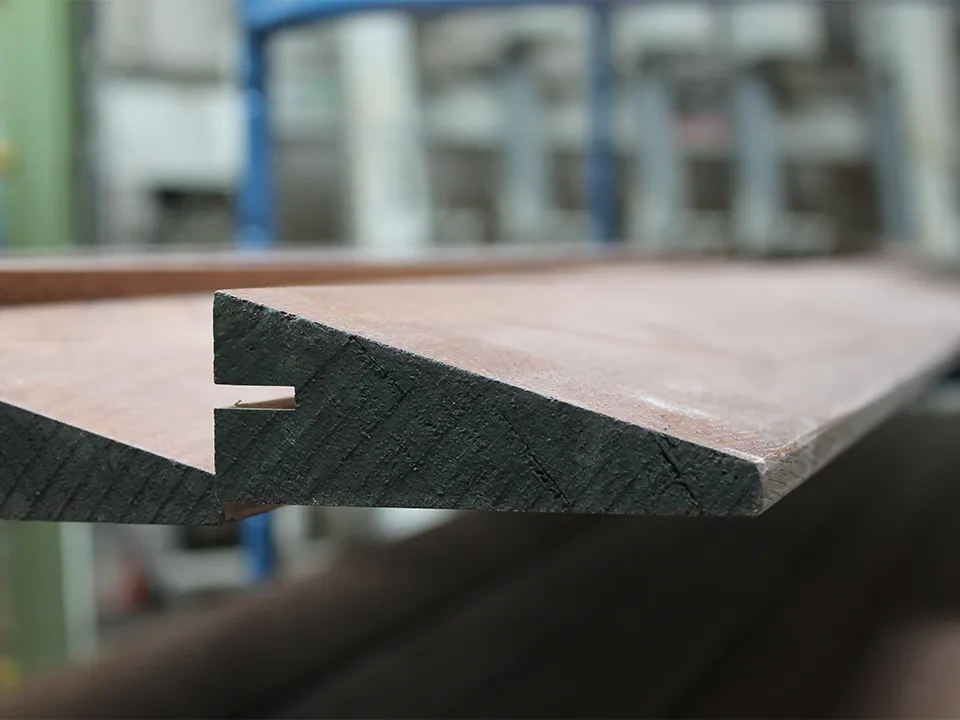
What do you get when you bring three ‘old hands’ from the woodworking industry together? Exactly. Great stories about the past, a picture of the sector as it is today and a glimpse into the future. Fred de Geus, owner of Meubelfabriek FMO, Edwin Klooster, director of Total Timber BV, and Kees van Voorthuizen, Managing Director at SCM Group, speak their minds.
“My father started making beech frames for 3B upholstered furniture 60 years ago. Back then, Houthandel Eecen still delivered wood to our village by horse and cart. There wasn’t even a dust extraction system in the workshop at the time. That changed, though, as more machines arrived. A Helma copying router with return conveyor belts, for example. It was almost science fiction. Half the village came out to have a look,” Fred begins.
Physically demanding work
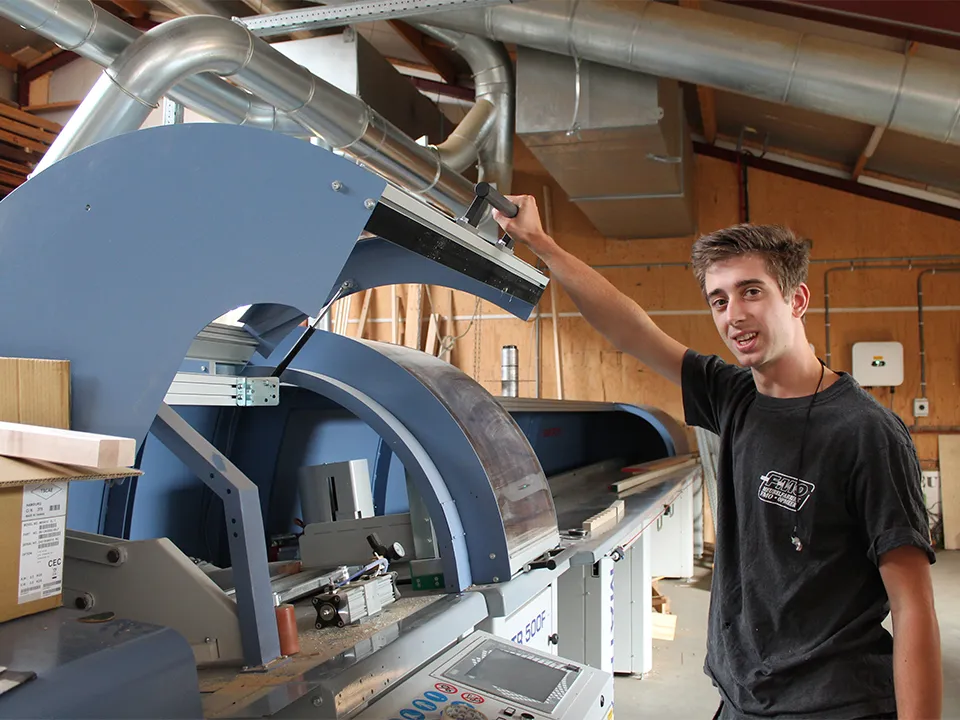
Edwin remembers those bygone days well: “I grew up surrounded by wood and wooden furniture in my parents’ and family’s wood-bending business. Furniture components in solid oak and beech were bent using traditional methods.”
“It was physically demanding, difficult work. A lot had to be done by hand, and in the 1960s, 1970s and 1980s there was enormous demand for oak furniture. The furniture industry was working at full capacity to meet demand for oak furniture in Europe, and later in Japan too. At the time, almost every municipality in the Netherlands had one or more furniture factories. The many timber merchants of the day held large stocks, with lots of ‘the same thing’, so they could meet manufacturers’ needs and keep production running in series.”
Kees adds: “I’ve been active in the machinery trade for 35 years, and looking back, a lot has changed. Much of that change has been positive, showing the entrepreneurship, creativity and perseverance of Dutch wood processors. In the 1980s, many large furniture factories were still operating with series production, using machines such as all-rounders, copying routers and carousel routers. Gradually, these businesses disappeared and production moved to Eastern Europe. There was a fear that our industrial jobs would disappear, but looking back now, we can see that the interior fit-out sector has filled that gap.”
The move into interior fit-out
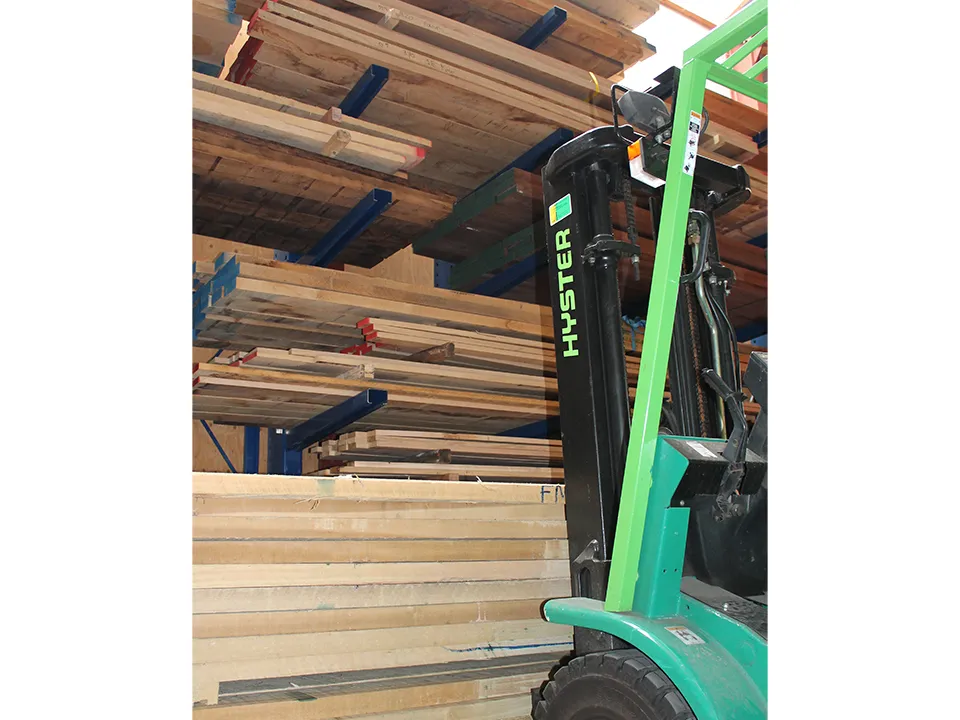
“These days, furniture makers also produce interior fit-outs, and the interior fit-out sector supplies furniture too,” Edwin continues. “Industrial furniture production and interior fit-out today are increasingly characterised by the ability to meet demand for high-quality bespoke work intelligently and extremely efficiently. Short lead times require machines to be set up quickly, and that calls for a partner who thinks and works alongside you and is good at delivering the timber you need ‘just in time’. We specialise in supplying high-quality grades and species from stock. Many of our customers see us as a partner and an extension of their procurement department. Our advisory role and our input into solutions for the end customer are also becoming increasingly important.”
Fred: “At the moment, 95% of our business is with interior fit-out companies, and they are changing really fast. They used to do everything themselves. They might order some rough timber, then over time they started having it planed, and now they have it processed into a prefabricated product. At first, this was mainly something larger companies did, but now smaller organisations are doing it too. One major change for interior fit-out companies is the preparation of work. With today’s design software, every component can be extracted very precisely and reliably. Companies that don’t keep up with this will certainly lose out. We are now testing a system that allows customers to enter dimensions directly into a sawing file. The idea is to be able to produce specifications, for example, by item of furniture or by branch, in a mixed order. The various components should then come out ready to use, labelled with their references.”
A sustainable future
Sustainable working practices are the future, including in the timber sector. Edwin explains: “In recent years, demand for and supply of sustainably produced and certified timber, such as timber bearing the FSC and PEFC labels, has also risen sharply, and it will be used more and more in the future. Timber is very much in fashion, with all its natural beauty and qualities. And fortunately so, because timber has been shown to have the lowest CO2 footprint of all traditional building materials. By using sustainable solid timber, we can therefore make an important contribution to climate targets.”
Modern ways of working also contribute to sustainability. Kees concludes: “Series production has disappeared, and an industry has emerged that excels in batch-one production. With the right software and machines, we can now design and produce a beautiful bespoke piece with the utmost efficiency, making the process more sustainable. The performance of today’s CAD/CAM systems benefits not only design and production control, it has also become a sales tool. Customers can see their design in a 3D environment or walk through it virtually using an Augmented Reality headset. These technologies bring us closer to consumers and will only expand the market. We are also seeing Building Information Modeling (BIM) take on an increasingly important role, as well as the rise of IoT in machinery. These machines are connected to the internet and record and flag important information about production, maintenance and wear. This information makes it easier to manage and maintain the machines, and allows the user, rather than the machine, to decide when they stop for maintenance.”
Question about this story? Ask your question
Keep following this
Get an email when a new story is published. No account needed.
- ThemeMore bespoke work from the workshop
- SubjectGeneral







