Beam CNC or nesting CNC?
Text Tamara BrouwersImage Molendijk Houtbewerkingsmachines
Different production logic behind the CNC choice
For interior fit-out companies looking to automate and scale up production, a fundamental choice soon comes into focus: invest in a beam CNC or a nesting CNC. Both systems combine drilling, milling and sawing operations, but differ significantly in workpiece clamping, machining strategy and production process setup.
Molendijk Houtbewerkingsmachines supplies both types of CNC machine, including models from manufacturer HOLZ-HER. In conversations with interior fit-out companies, it becomes clear that the differences between the two CNC concepts directly affect workshop layout and the production process. “Companies often look first at capacity and options,” says Jeroen Frieman, adviser and sales representative at Molendijk. “But ultimately, the choice comes down to the production process. How does a component move through the workshop, and where do you want to automate?”
Flexibility and machining freedom with a beam CNC
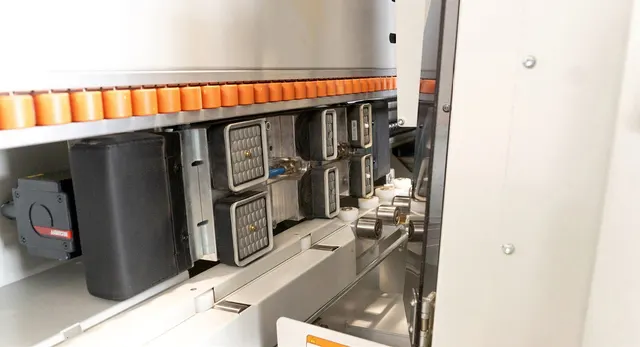
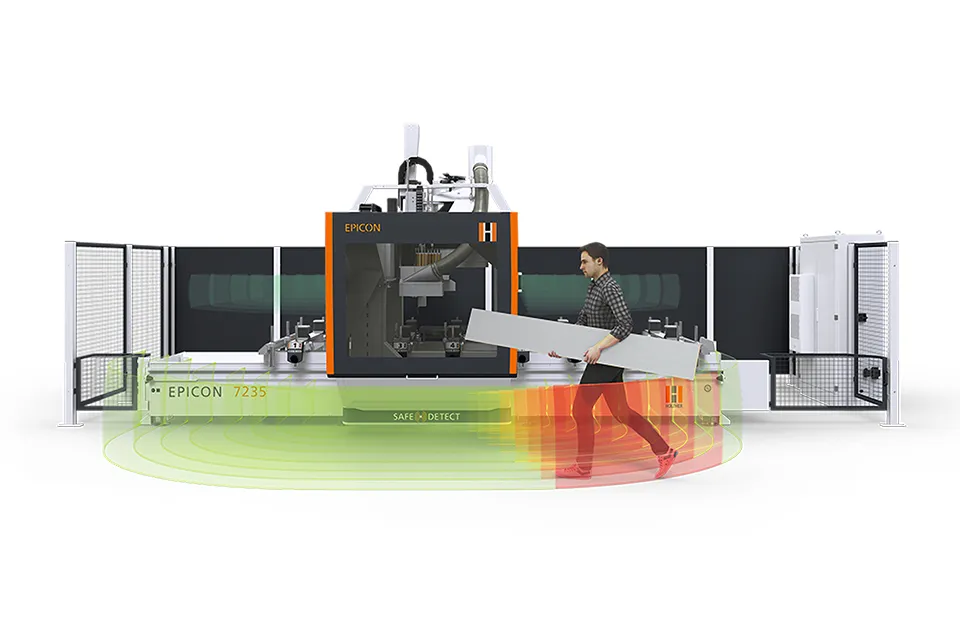
A representative example of a beam or console CNC is the HOLZ-HER EPICON. The workpiece is clamped on individually positionable consoles with vacuum cups. This clamping technology makes it possible to position the workpiece freely above the table.
The advantage is that multiple sides remain accessible in a single clamping. Combined with a five-axis machining unit, this type of machine is suitable for complex geometries, angled milling operations and solid wood applications.
This flexibility does require a more operator-led workflow. Workpieces are loaded individually, positioned and then removed after machining. “You often see beam CNCs at companies handling a lot of custom work and variation,” says Frieman. “You get maximum machining freedom, but handling each component remains relatively labour-intensive.”
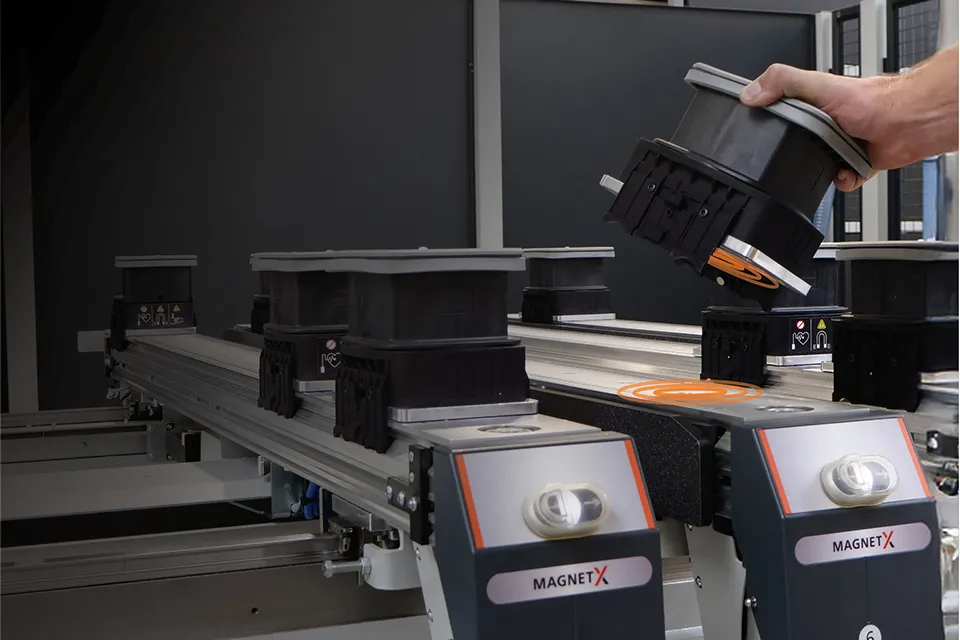
One development in beam CNCs is the use of additional clamping technologies, such as the HOLZ-HER MagnetX table. It combines vacuum technology with magnetic support, allowing workpieces to be positioned more quickly and securely, particularly smaller or narrower components. This reduces some of the handling time per component.
Efficient panel processing with nesting
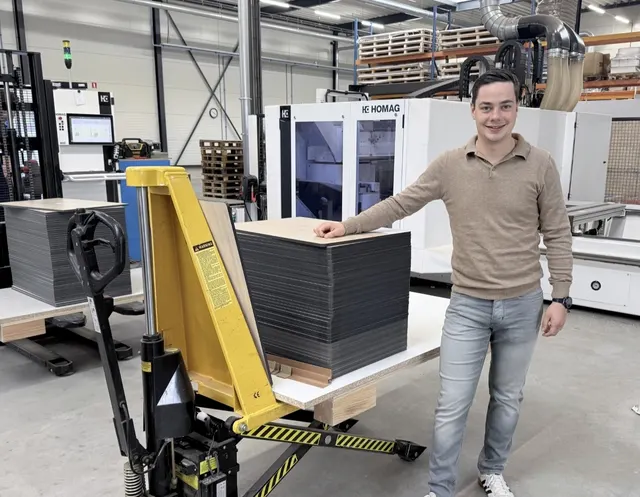
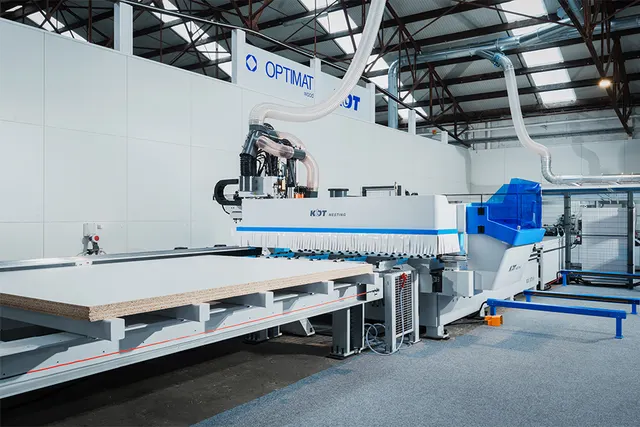
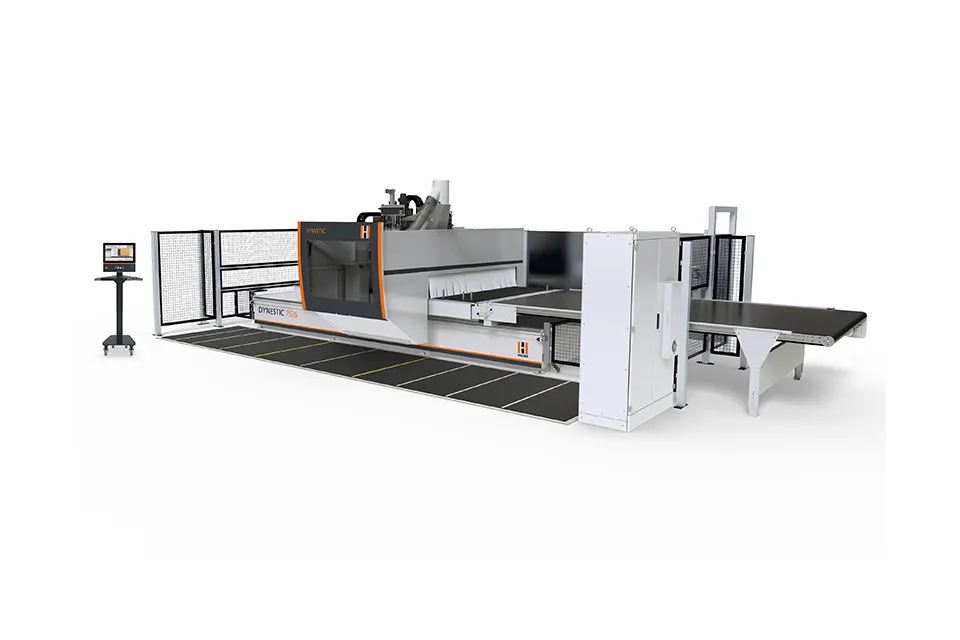
Nesting CNCs such as the HOLZ-HER DYNESTIC are based on a different production logic. A complete panel is secured on a vacuum table, after which all the components are milled out in a single optimised cycle.
Nesting’s strength lies in combining material optimisation with machining. By positioning components efficiently on the panel, material waste is reduced and multiple operations can be completed in a single cycle. The operator’s role shifts from active operation to process monitoring. Other work can be carried out in parallel while machining is under way. “If you work with repeat components made from panel material, nesting can deliver a clear efficiency gain,” says Frieman.
Production structure as the deciding factor
The distinction between the two CNC concepts lies in their production logic. With a beam CNC, machining generally starts with components that have already been cut to size. With nesting, the process starts with a raw panel.
This means the choice has a direct bearing on workshop layout and the desired flow of materials. Companies focused on custom work and complex machining are more likely to choose a beam CNC. Production environments handling repeat runs and high output in panel material tend to favour nesting.
In practice, both concepts continue to coexist, each with its own applications. The choice therefore starts with an analysis of the production process and the desired level of automation.
Beam CNC versus nesting CNC
Beam CNC (e.g. HOLZ-HER EPICON)
Clamping: individual components on consoles with vacuum cups
Starting point: pre-machined components cut to size
Strengths: complex machining, 5-axis work, solid wood
Flexibility: very high
Operator role: active (clamping and unloading)
Application: custom work and variable production
Nesting CNC (e.g. HOLZ-HER DYNESTIC)
Clamping: complete panel on a vacuum table
Starting point: raw panel material
Strengths: material optimisation and batch production
Flexibility: geared towards repeat production
Operator role: process monitoring
Application: series production of furniture and cabinet components
Een zakelijke vraag aan Molendijk Houtbewerkingsmachines B.V.? Get in touch
Companies in this story

Keep following this
Get an email when a new story is published. No account needed.
- ThemeMore bespoke work from the workshop
- SubjectMachinery
- CompanyMolendijk Houtbewerkingsmachines B.V.