Ready for the future thanks to new machinery
When investing in one or more new machines, many businesses immediately think of huge costs. No, it certainly isn’t cheap, but with good advice and a well-thought-out approach, the final bill may not be as high as expected.
That was the experience of Bas Bijnen, team leader at Gielissen. “We made a conscious decision to work with one supplier, and therefore have a single point of contact. After a number of discussions with various suppliers, Klingelnberg Klaus emerged as the best option. Beforehand, I expected the machines to come with a hefty price tag. That wasn’t the case. What I meant was that the price difference between the various suppliers was not that great. It is, of course, still a substantial investment. At no point did we feel they were only interested in making a sale. Their account managers, Martin van Rhijn and Peter van Zijp, would sometimes ask: do you really need that machine, or that level of capacity? He assessed the situation at our branches in Eindhoven and Helmond. In the end, the solution was tailored to our needs: a series of machines that fits our business operations precisely.”
Gielissen Interiors | Exhibitions | Events operates worldwide. Around 360 people work across its various branches. At the beginning of 2019, the production flow in Eindhoven and Helmond was reviewed. Before that, Gielissen had spent two and a half years drawing up a comprehensive plan to improve workflow and identify the right machines. It was an intensive process. Which machines needed replacing? Bijnen: “There are many modern technologies available. That was why we decided to explore the options.” As mentioned, after a number of discussions, Gielissen chose Klingelnberg Klaus. Account manager Peter van Zijp and his colleague Martin van Rhijn were closely involved in the process. Van Zijp: “The new machines could increase Gielissen’s production capacity. This investment will support future growth without affecting staffing levels.”
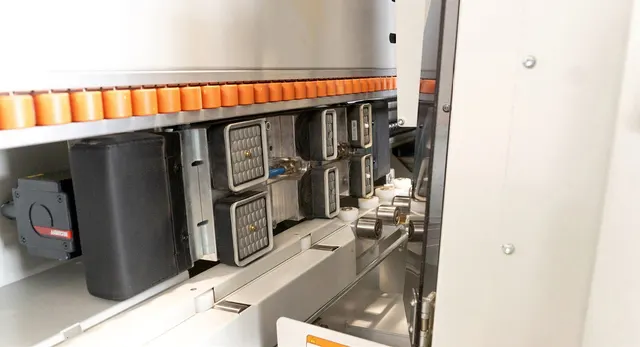
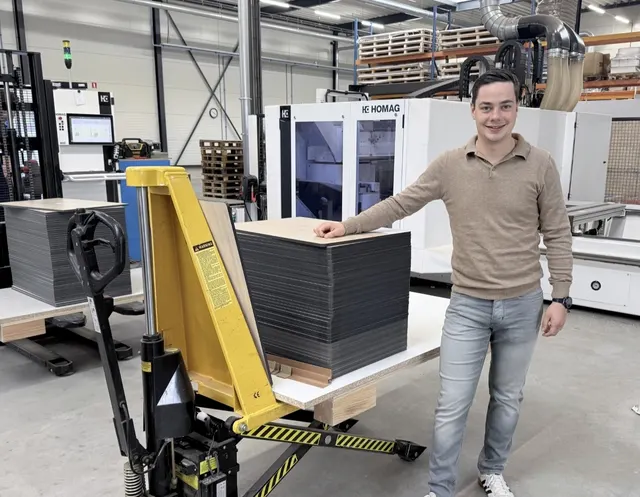
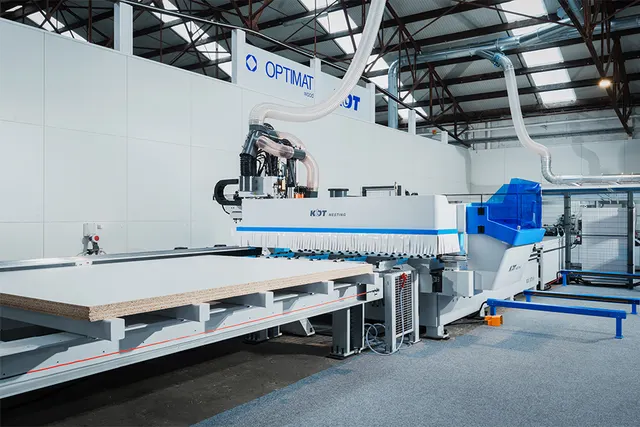
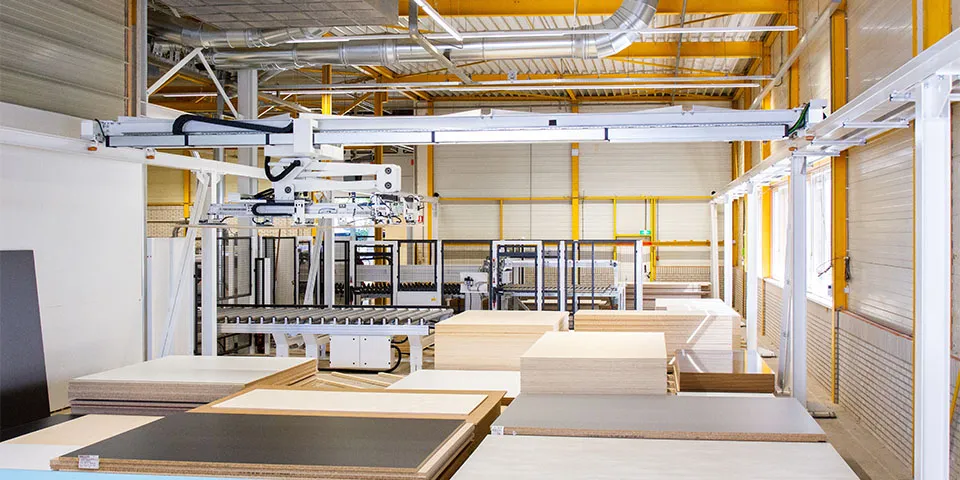
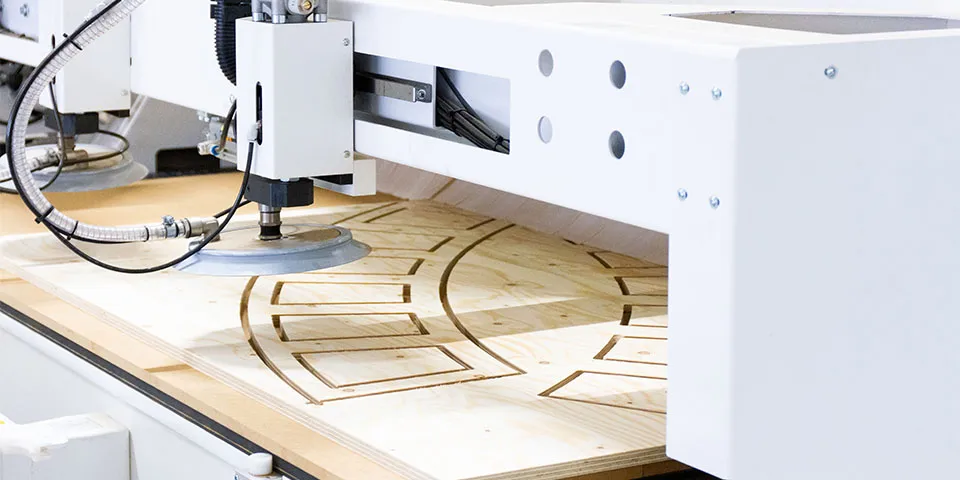
Gielissen opted for an automated Homag Storeteq S-200 panel storage system, connected to a panel saw (Homag Sawteq S-300) with automatic panel labelling. It also bought a CNC nesting machine (Homag Centateq N-500), a CNC drilling machine with a return
system (Homag Drillteq V-500) and an edgebander.
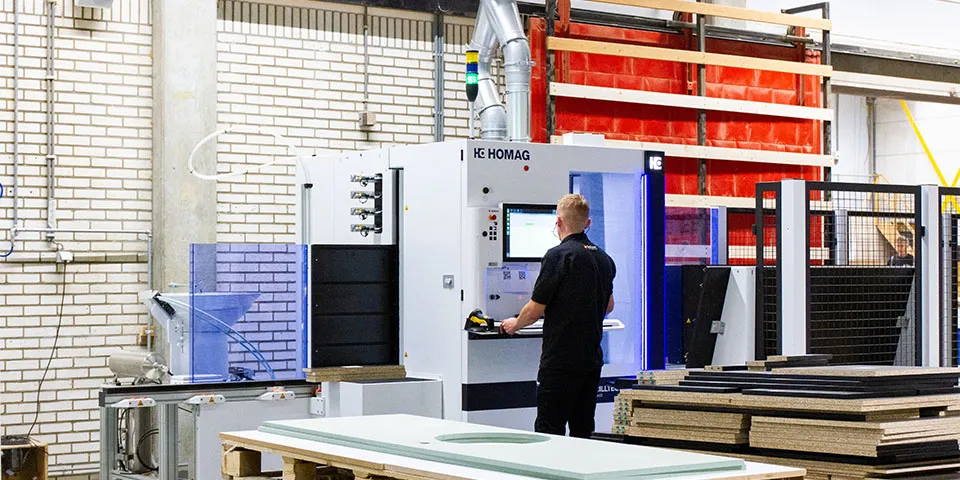
The new machines could increase Gielissen’s production capacity.
Bijnen: “We spoke to two suppliers when choosing the right panel saw. It turned out that the Homag panel saw fitted best between the columns. So that machine was the best match for the new, more efficient layout we had in mind. As production manager, I paid close attention throughout the process to quality, reliability and how the investment would benefit the business. Klingelnberg Klaus guided us through it extremely well.”
Van Zijp nods in agreement. “The available space is certainly an important factor when investing in machinery. Which machines suit the customer’s capacity requirements? We examined this together, right down to the smallest detail.”
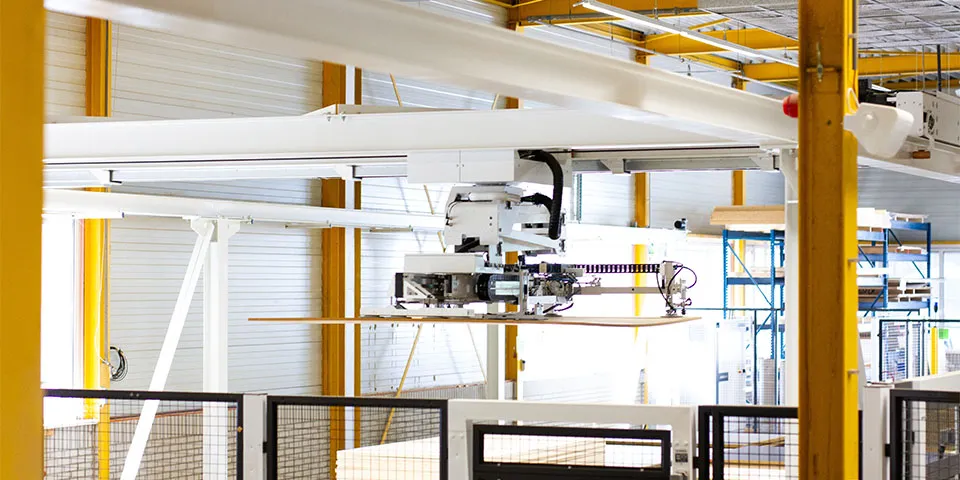
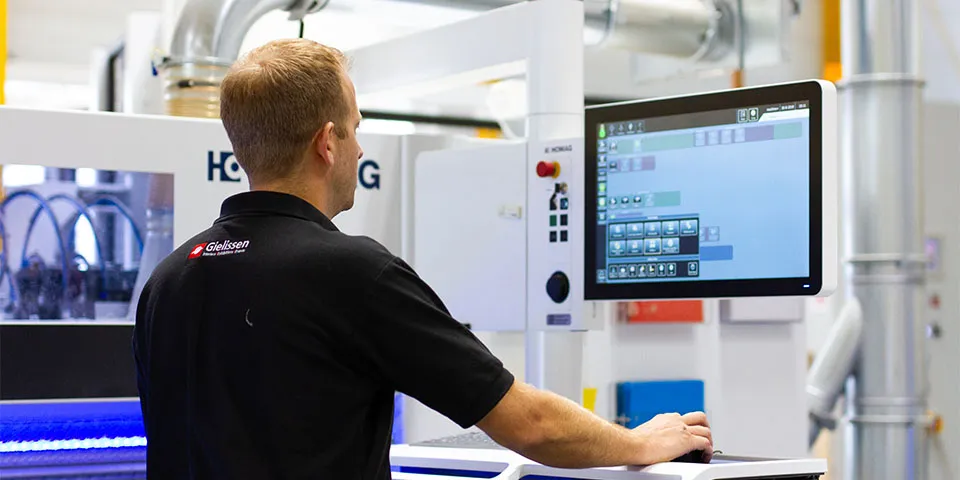
It is essential that the new machines work well with the existing software.
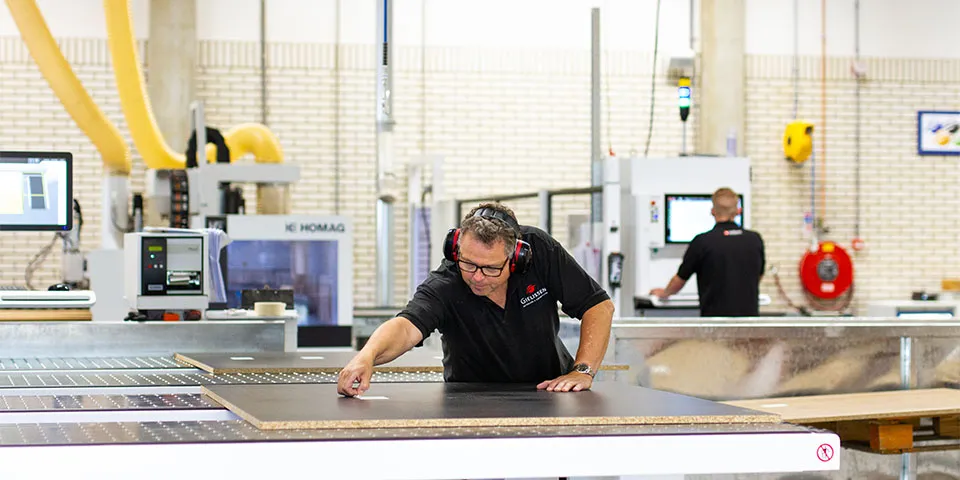
Once the right machines had been selected, the delivery and installation had to be scheduled, as did training for the staff. Bijnen: “You think you have a lot of knowledge, but during this process we were brought back down to earth. Some employees were also a little apprehensive about the new machines, but after completing the training and working with them for a while, they too were enthusiastic.”
Bijnen also says it is essential that the new machines work well with the existing software. “Thanks to the good cooperation between our supplier, Pytha, and the Homag machines, that aspect was quickly sorted too. A number of suppliers could not guarantee the right connection, which was another point in Klingelnberg Klaus’s favour. Production is still being controlled effectively with the new machines.”
Question about this story? Ask your question
Keep following this
Get an email when a new story is published. No account needed.
- SubjectMachinery