Fixed for good!
Text Lieke BousemaImage Bostik
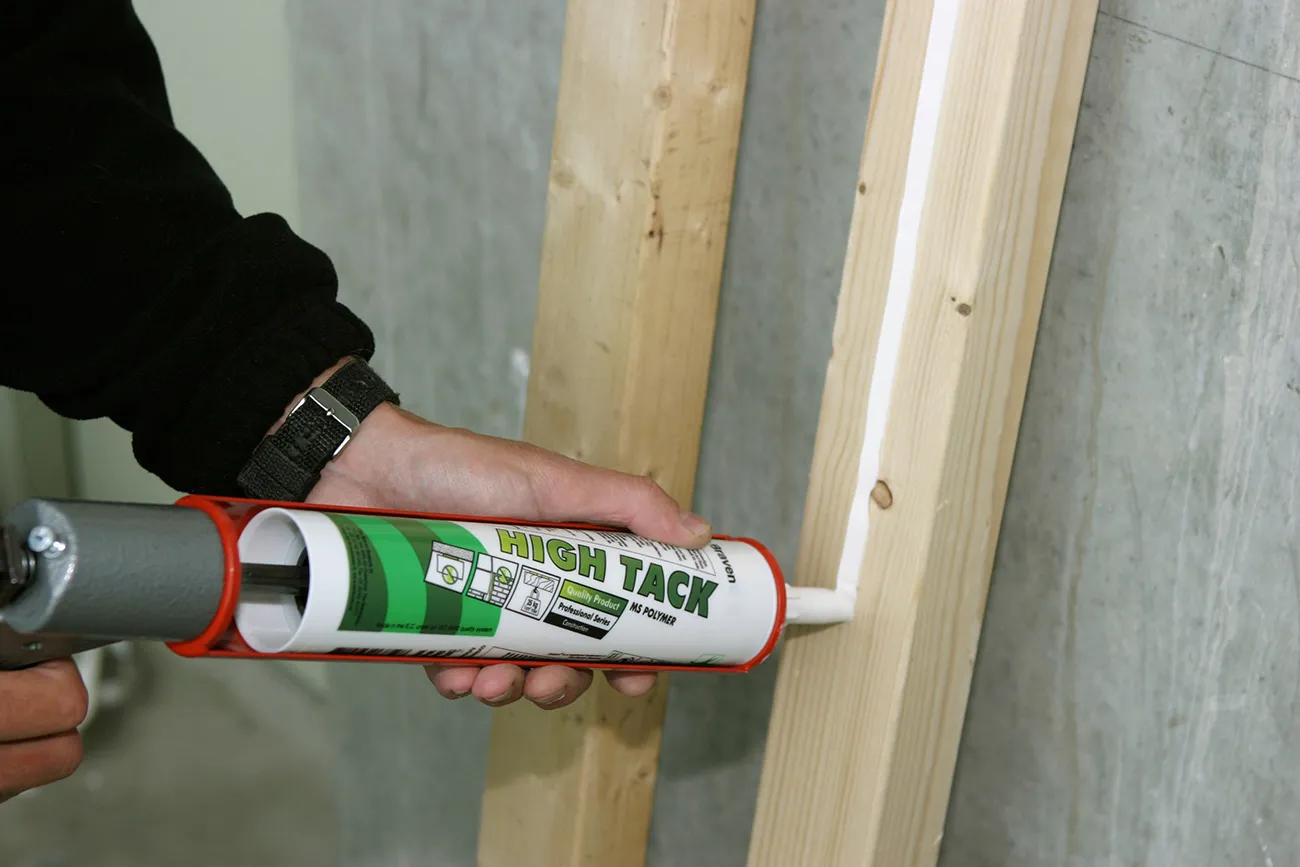
High initial tack construction adhesives
Bonding offers a number of advantages over mechanical fixing. It is easy, quick and durable. What is more, bonding creates an invisible, flexible and elastic joint that can effectively accommodate movement caused by temperature fluctuations or mechanical loads. Those who choose Bostik’s Zwaluw® High Tack adhesives also benefit from high initial tack.
“Our High Tack adhesives allow installers to bond heavy building materials easily to walls, floors or ceilings, without having to fix or support the object,” says Martijn Wegman, Technical Support Manager at Bostik and trainer at the Bostik Academy. “This makes it possible to work quickly and durably. It is no coincidence that these adhesives have become indispensable in modern construction, both new-build and renovation.”
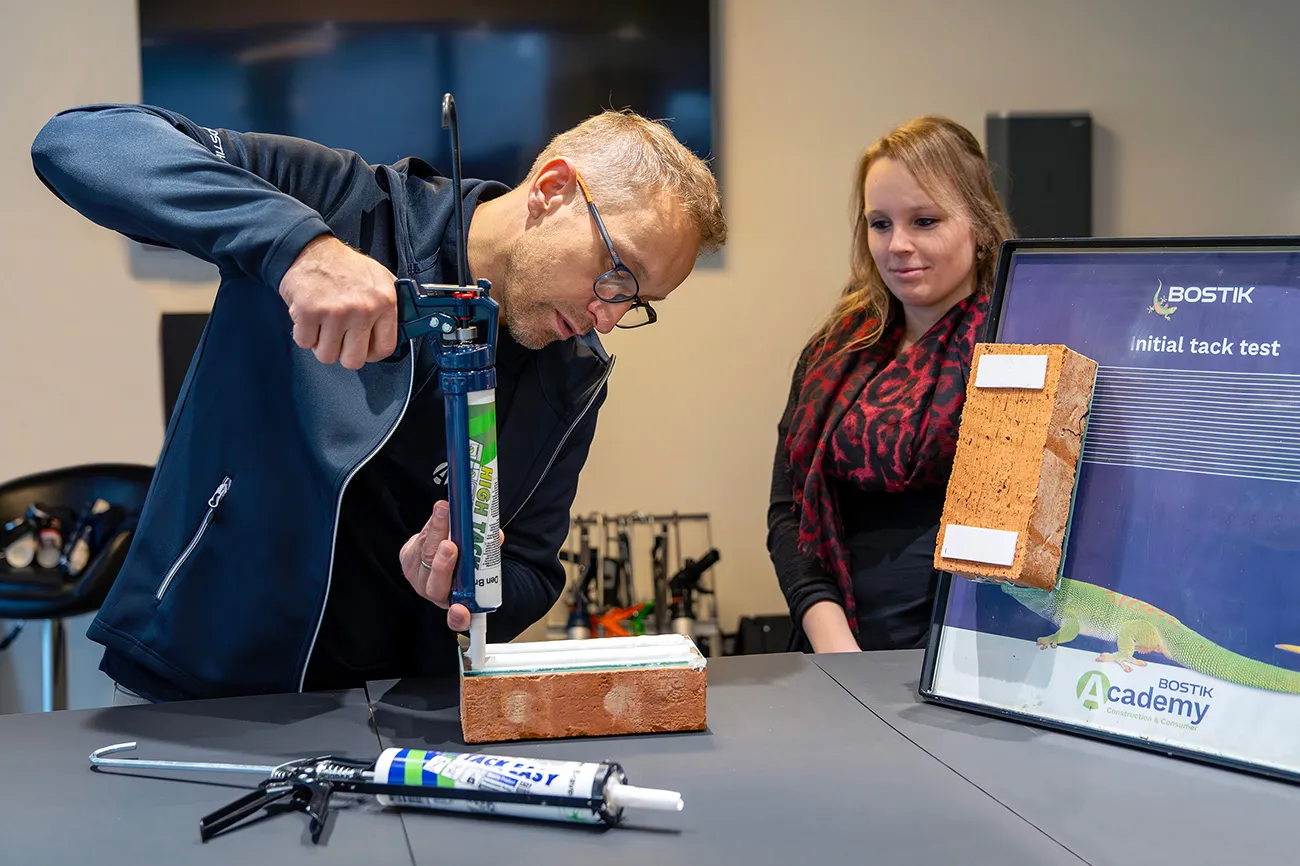
Instant grip, but not instant curing
There is a common misconception in the market that High Tack adhesives cure faster, says Wegman. “But the adhesives in the Zwaluw® High Tack range, like the most widely used one-component adhesives, cure at a rate of 2 to 3 mm per 24 hours. Ambient temperature and humidity naturally play an important role. What sets this range apart is its faster initial adhesion. Applying the adhesive in dots is strictly inadvisable! The adhesive in the centre of these dots can never cure properly, with all the consequences that entails. Even months or years after bonding with dots, mirrors, panels and other objects can still come loose and fall. To prevent this kind of problem, we strongly recommend always applying the adhesive beads vertically and ensuring that the bond is ventilated.”
Bostik Academy
Professional installers looking to expand their knowledge and skills in High Tack bonding can do so at the Bostik Academy. This knowledge centre offers a wide range of (on-the-job) training courses, application instructions and videos, all focused on correct bonding. Everyone can also sign up for a free webinar. Wegman says these resources are already being widely used. “Applicators who are not yet familiar with our products receive an explanation and full training. This is a positive development, as it improves overall quality, not only during application but also in terms of the building’s long-term performance.”
The correct work sequence
An important part of application training is learning about the different types of High Tack adhesives and adhesion promoters (primers), says Wegman. “We also take an in-depth look at the correct work sequence. Substrates must be completely clean and free of dust and grease. Some surfaces also require a primer to improve adhesion. This is the case, for example, with certain types of stone, such as calcium silicate masonry. The primer must be fully cured (the solvents must have evaporated), after which the High Tack adhesive is applied in vertical beads using a V-nozzle. The materials can then be joined.”
It is important to press the object lightly into place, so that the adhesive joint between the substrates is no more than 3 mm thick and allows for adequate ventilation.
Tips for successful bonding
Before starting to bond, it is important to consult the technical data sheet for Zwaluw® High Tack and any other products. You should also check the expiry date. “Our High Tack products have a shelf life of up to 18 months,” says Wegman. Ambient temperature and humidity must also be suitable. “Bostik provides a handy dew point table that lets applicators quickly check whether bonding is possible in outdoor
applications.”
The adhesive system must be applied perpendicular to the surface, at an angle of 90°, he stresses. “It is also important to observe the maximum open time of the adhesive products. Once you have applied the adhesive bead, you have a maximum of 10 minutes to bond the materials, depending again on the ambient conditions, ed. After that, a skin forms, which can cause adhesion failure.”
Professional caulking guns and V-nozzles are required to apply High Tack adhesives. In 2022, Bostik also launched a Zwaluw® High Tack that can be applied easily with a standard caulking gun: Zwaluw® High Tack Easy.
“High Tack Easy is the most accessible High Tack product in the Zwaluw® range and is ideal for bonding lightweight building materials,” says Wegman. Zwaluw® High Tack remains a consistently popular choice for bonding heavier products. Wegman also mentions Zwaluw® Ultra High Tack, which was specially developed for highly porous substrates and natural stone.
The entire Zwaluw® High Tack range is suitable for use in sustainability projects. All products carry EC1PLUS and M1 certificates, as well as the appropriate labels and documentation for BREEAM projects.
A business enquiry for Bostik Benelux? Get in touch
Companies in this story
Keep following this
Get an email when a new story is published. No account needed.
- ThemeMore sustainable materials and longer use
- SubjectProducts
- CompanyBostik Benelux