Warm white American oak flat-cut veneer for Het Industriegebouw in Rotterdam
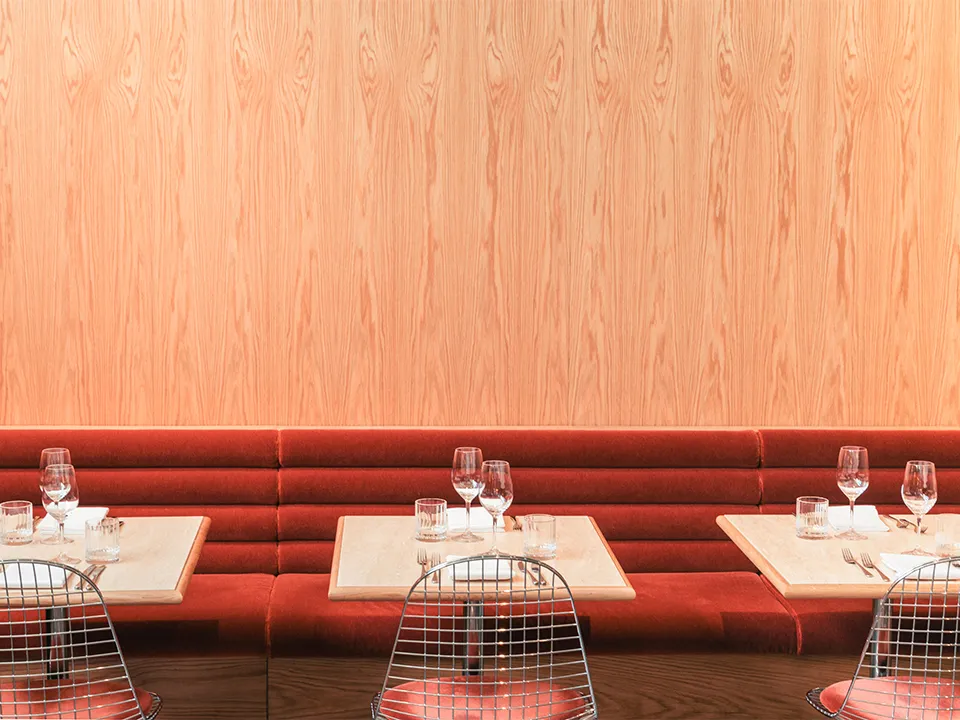
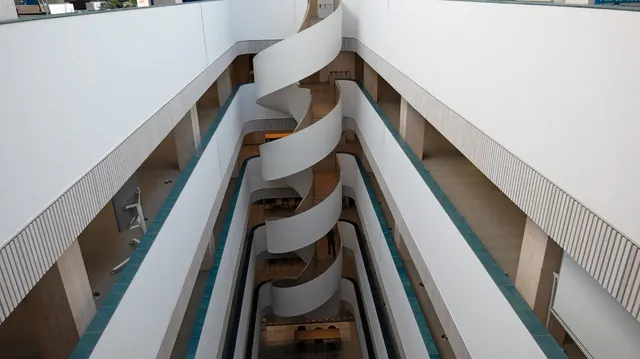
The building that houses Héroine, a restaurant and cocktail bar in Rotterdam, is a revered modernist monument from Rotterdam’s post-war reconstruction period, designed by Hugh Maaskant and Willem van Tijen.
The building had fallen into neglect over the past decades before the current owner bought it in 2015 and began a true renaissance of the modernist values that had made it great in the first place.
A challenging space
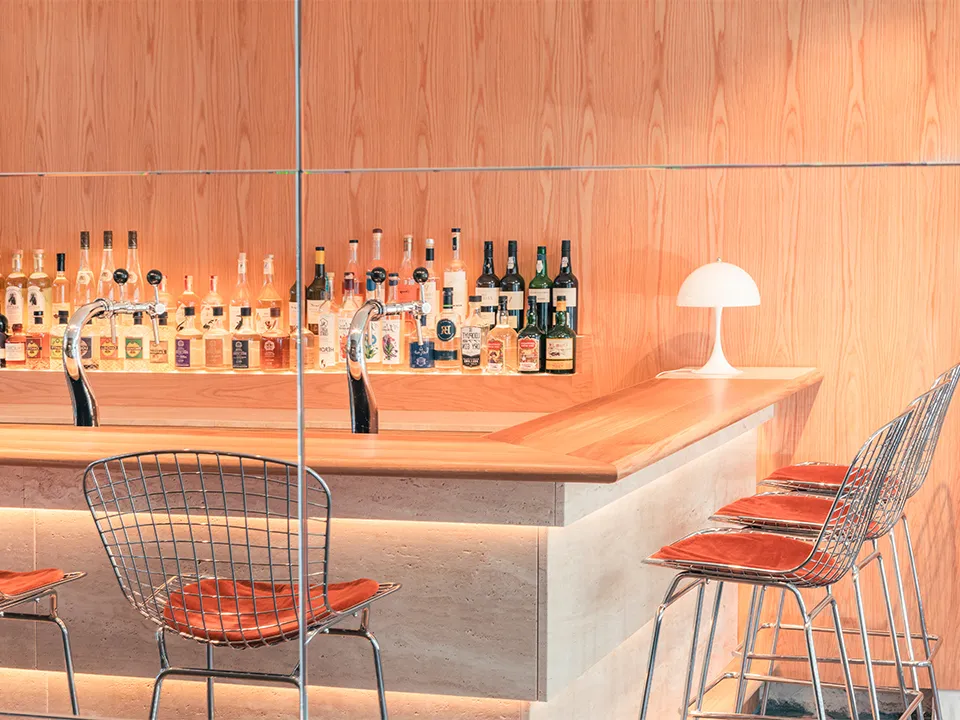
Design studio Modiste was honoured to be commissioned to design a restaurant and bar for a young, fearless trio of hospitality entrepreneurs in one of the most challenging spaces in Het Industriegebouw. This was a large 270-square-metre space in a side wing of the building, which had fallen into considerable disrepair over the 1970s and 1980s. From the outset, the aim was to honour the building’s origins and strip the space back to its raw structural elements of concrete, metal window frames and open-plan layout, as intended in the original design.
1970s atmosphere
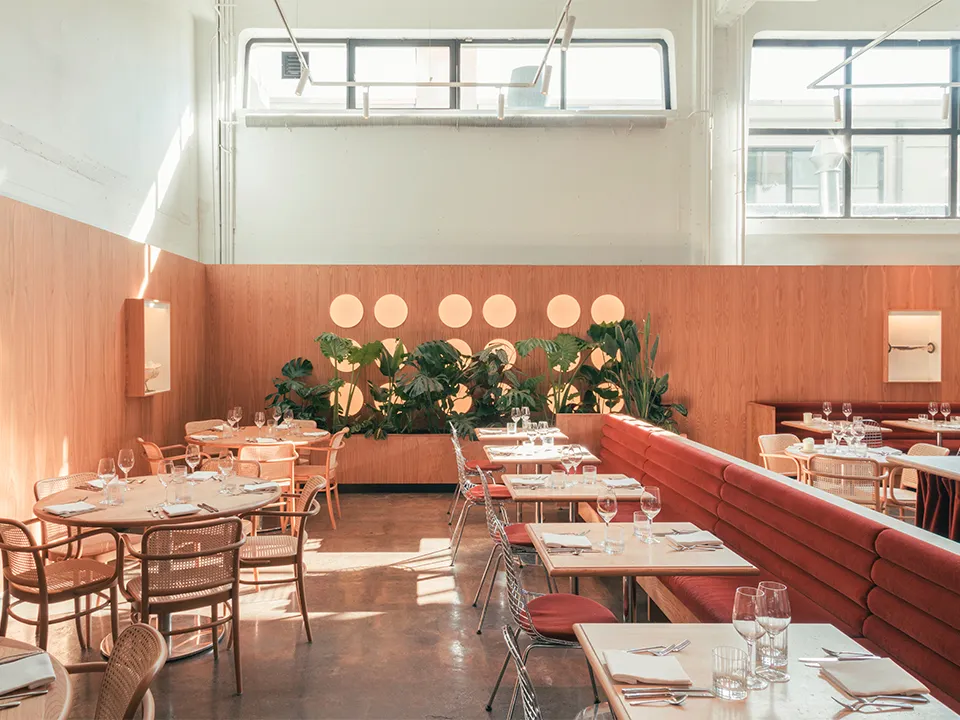
What remained was a large open space bearing many scars from the past. The designers decided to preserve this character. The aim was to create a sumptuous 1970s atmosphere while remaining firmly within the building’s modernist design tradition. Inspiration came first and foremost from the vibrant, stylistic cuisine of Michael School, chef at Héroine. The modernist design idiom itself also remained important to the designers. While most people think of Le Corbusier’s classic white cubic masterpieces and those of our own Dutch designer Gerrit Rietveld, the aim in this space was to let the 1970s wood panelling, oversized planters and decadent chrome of Warren Platner take centre stage. The result is a balanced mix of simplicity and drama, a juxtaposition of the essential and the sumptuous in the design, materials and finishes, showing that modernism still had another ace up its sleeve.
Modiste Studio opted for veneered panels with project veneer from Kuiper Holland. White American oak veneer was selected from individual logs, matched for colour and grain, then joined in sequence. This created a beautiful, uniform appearance. The components were manufactured and installed by Valkema Meubelmakerij, and the oil finish gave them a warm glow.
Question about this story? Ask your question
Keep following this
Get an email when a new story is published. No account needed.
- ThemeFrom sheet materials to construction
- SubjectProducts