Jan Blok: ‘In interior construction, it’s all about quality, creativity and design’
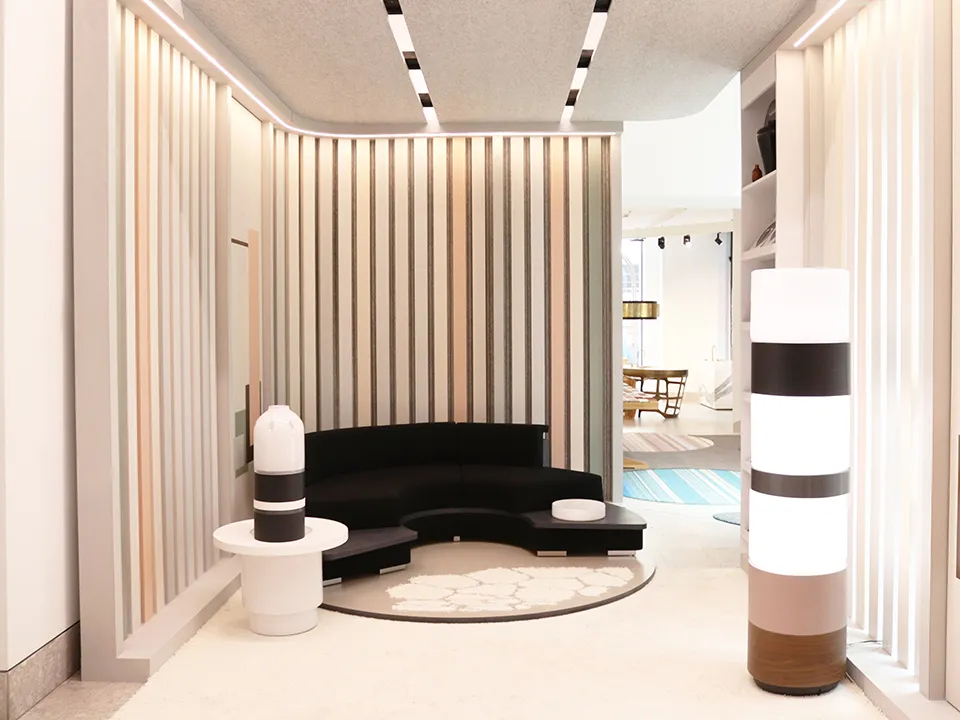
The stories of successful entrepreneurs are often a source of inspiration for others. Take Jan Blok, owner of Blok Plaatmateriaal. By his own account, he was anything but a brilliant student during his training. Yet he now heads a family business that has been around for more than 40 years.
The entire industry faces many challenges
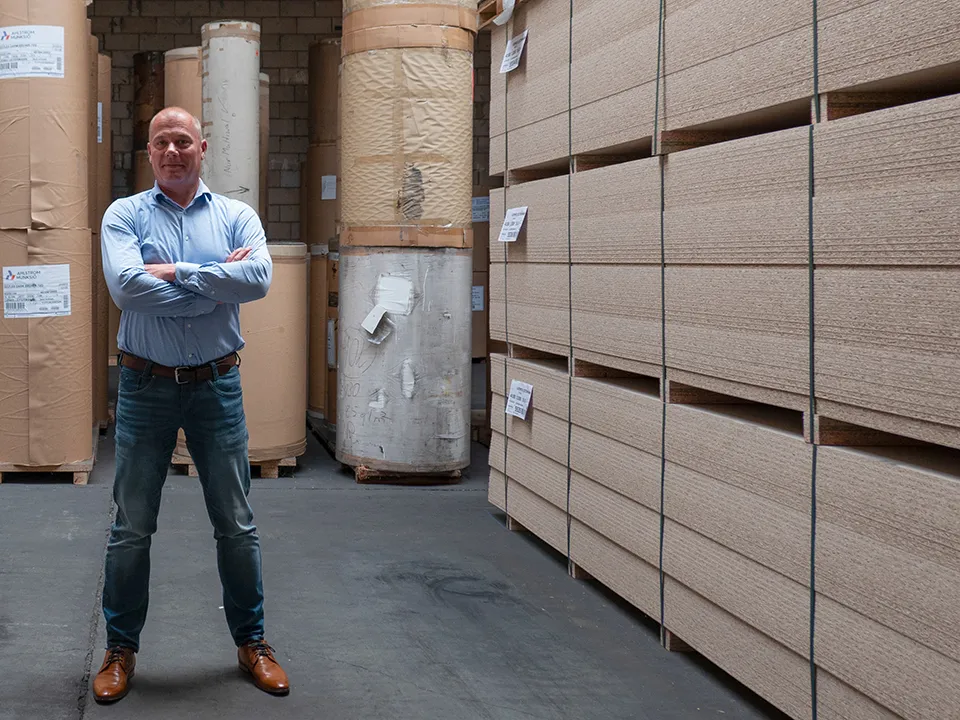
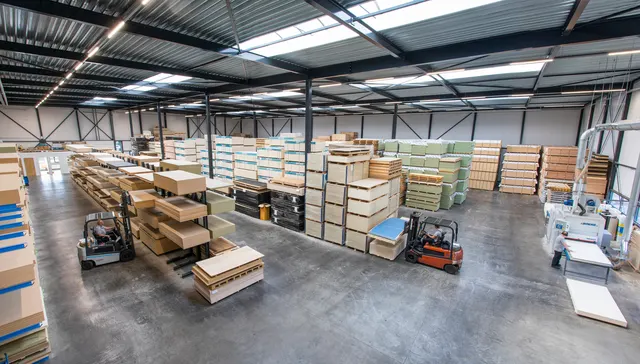
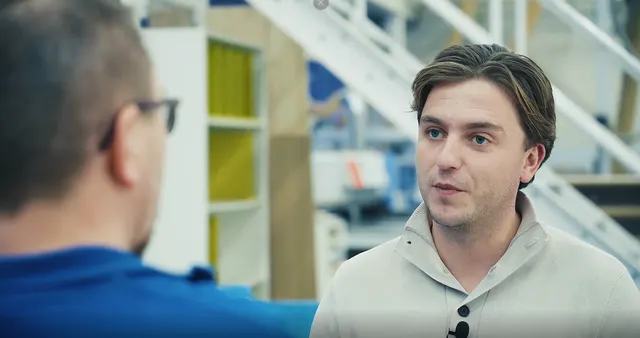
“My father said, ‘You should go to the Hout- en Meubileringscollege.’ I scraped through and got my diploma. In the mid-1990s, I was allowed to work as a sales representative for his company. I got a company car, visited customers and increasingly enjoyed the work. I took over the company in 2008. When it started in 1981, it had fourteen employees. Now there are 52 of us here, and we’re still growing.”
Materials
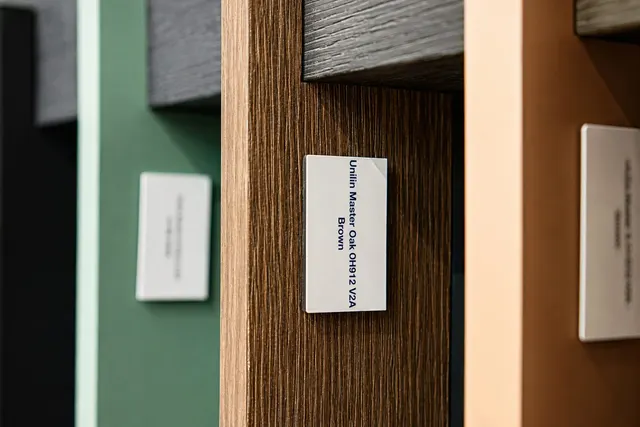
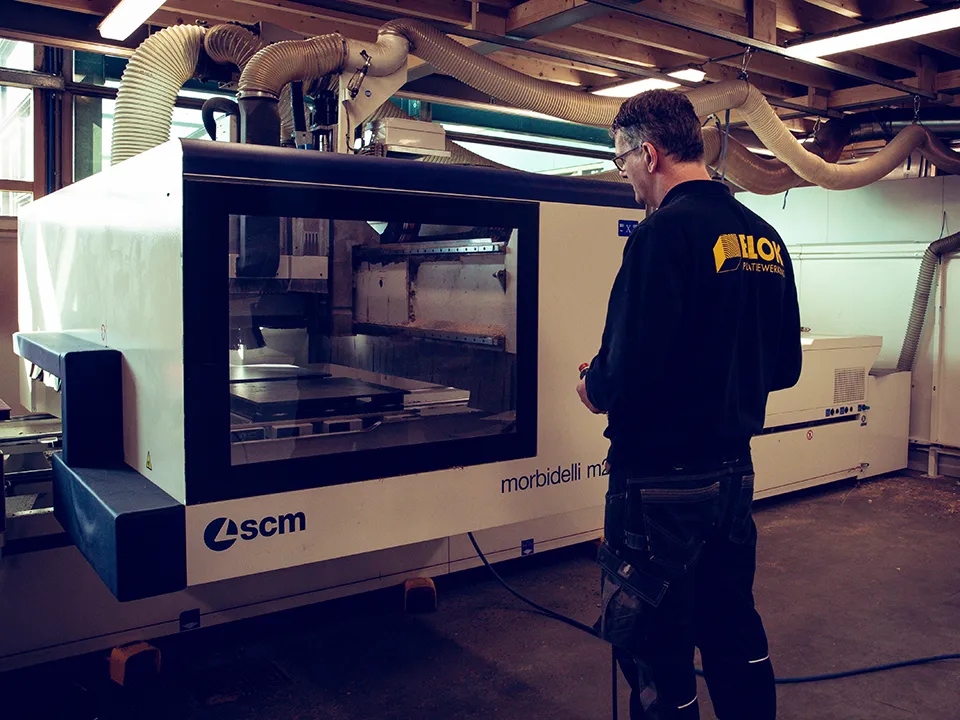
Despite the company’s enormous expansion, Blok sometimes looks back fondly on his years as a sales representative. “Back then, you really went to visit your customers. We were the ones with the know-how, and we did it all without a computer. These days, a sales representative’s first move is to open their laptop and look for information.” It was those visits to interior construction companies and furniture makers that fascinated Blok so much. “They’re fascinating people who come up with and make beautiful products. You see a tangible result taking shape. And they always aim for a ten out of ten. They won’t settle for less. I prefer working on new developments such as Lisocore. It’s a lightweight, strong, high-quality sheet material. It consists of at least two thin outer layers connected by a three-dimensional pressed core structure. A powerful adhesive creates the final bond.
A new generation
Modern developments are creating new challenges not just for Blok Plaatmateriaal, but for the entire industry, Blok knows. “It’s difficult to retain the right skilled people in interior construction and find new ones. My son is currently studying at the Hout- en Meubileringscollege. There are ten students in his year. That’s far too few. Young people are interested in becoming work planners or doing something else with computers and software, but not in working with traditional materials. There’s simply a shortage of real enthusiasts for the trade. Companies are increasingly having to rely on part-timers. Is that practical? I’ll leave you to decide. There’s no reason to complain, but it does deserve our attention. Fortunately, I still visit customers myself. But I can only do that because I have a fantastic team behind me who support me and take their responsibilities seriously.”
Niche product
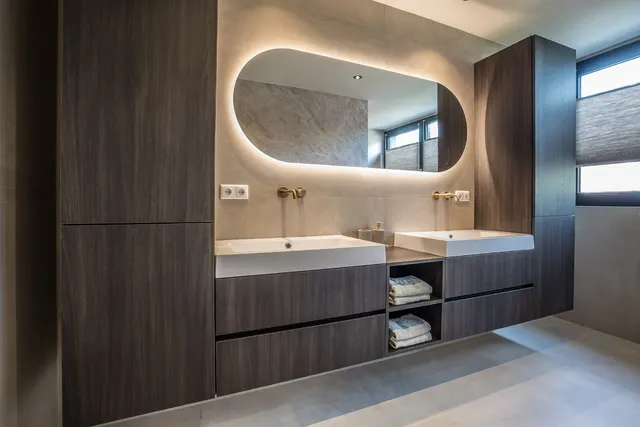
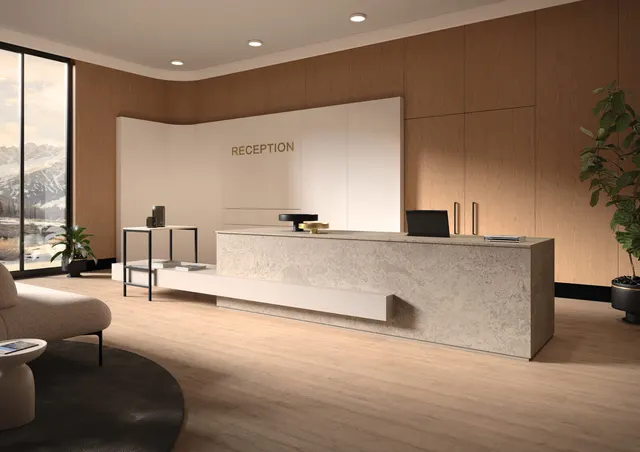
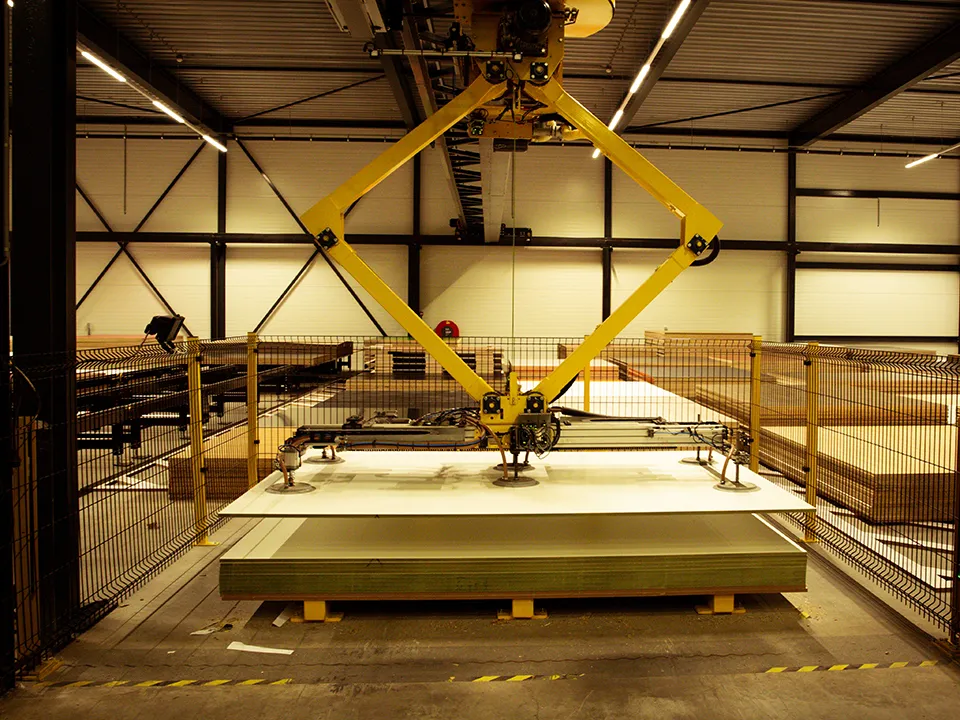
Another development that has gathered pace in recent years is the importance of marketing and digitalisation. “We didn’t do much of that more than five years ago. In 2023, you can’t ignore it. In the past, you placed an advert and went to a trade fair. You also visited customers. These days, there’s a whole department working on Facebook, Google and the online shop. We have an in-house creative designer who develops unique designs for our products. That person is something of an influencer. People used to call the sales representative, but now they search online themselves. That’s why all your digital communications need to be in order, just like our sheet materials. They need to be high-quality branded products. We develop a niche product. It’s all about quality, creativity and design. That really appeals to me, which is why I’m constantly making sure that standards remain high and continue to improve. That gives me plenty of challenges.”
Question about this story? Ask your question
Keep following this
Get an email when a new story is published. No account needed.
- ThemeFrom sheet materials to construction
- SubjectTimber & sheet materials