Plywood edging strips and veneer edging
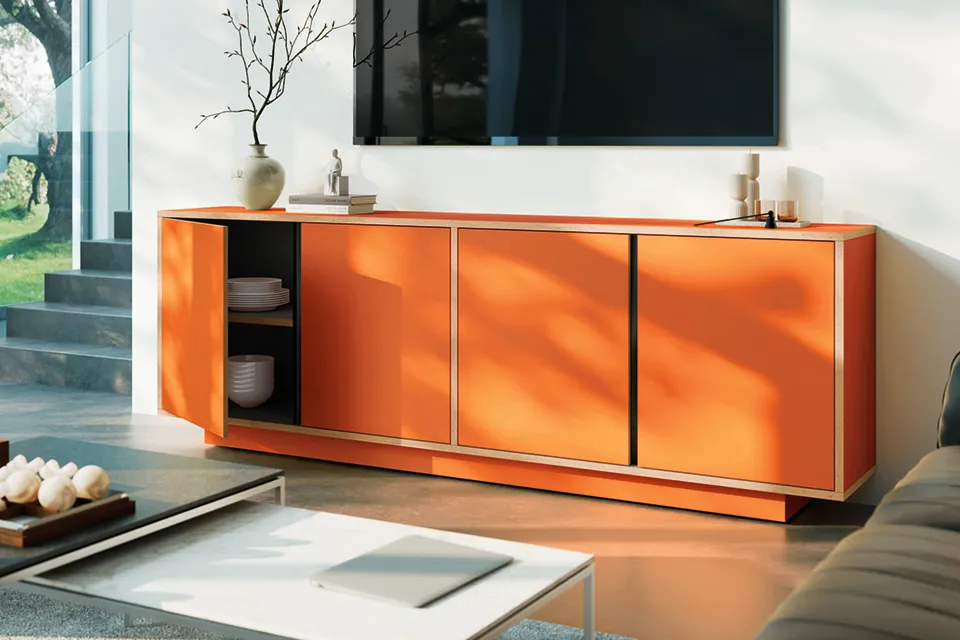
Coated plywood panels give furniture a high-quality appearance. When an alternative to a plywood panel is required, kitchen, furniture and interior manufacturers can use real wood edging to ‘transform’ a panel into one with the look of solid plywood. Ostermann supplies plywood edging straight from stock.
From designer furniture in the office or living room to robust furniture for children’s rooms, coated plywood panels offer kitchen, furniture and interior manufacturers a wealth of possibilities. One reason for the surface’s popularity is its layered appearance, which gives furniture a high-quality, warm look. Further treatment with stain, oil or lacquer can turn it into a real eye-catcher. However, the desired look can also be achieved using chipboard combined with real wood plywood veneer edging. This is particularly useful when plywood panels are not readily available or are too expensive for a project. Ostermann stocks edging in Beech and Birch, in various widths and thicknesses. On request, the edging is also available pre-glued with hot-melt adhesive or prepared for processing with various zero-joint technologies. To save time, order the edging together with the other materials, such as furniture fittings, installation products and workshop supplies. More information about the options is available by searching for “#Highlights06” on the Ostermann website www.ostermann.eu.
The creative solution
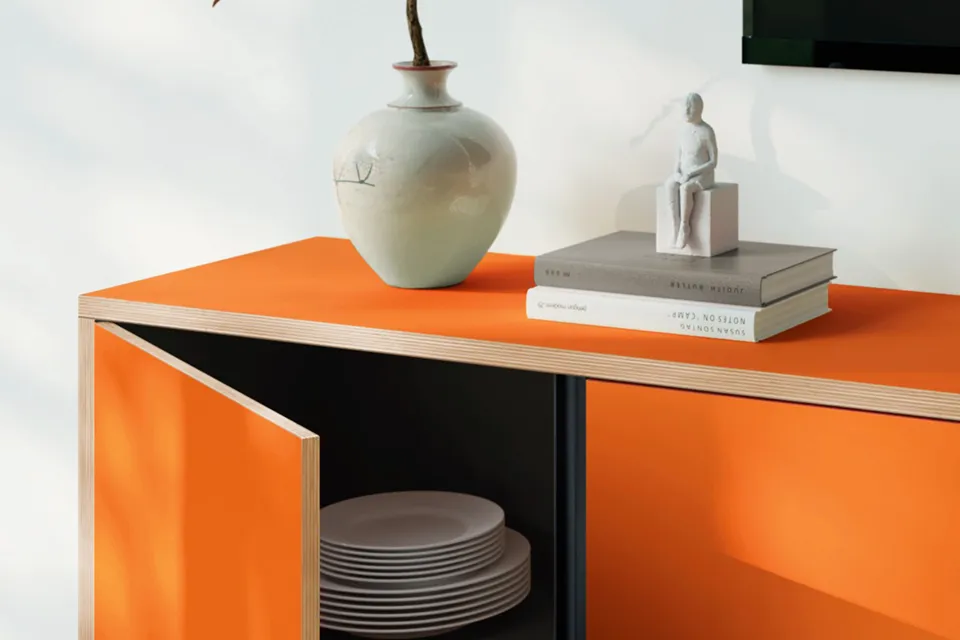
Depending on the quality requirements, application and budget, there are various ways to achieve the plywood look. An MDF or chipboard panel can be given a high-quality finish by first applying solid real wood edging with a plywood look, then covering the panel with an HPL or Furniture Linoleum surface. Ostermann’s range includes the 2.65 mm-thick edging strip Veneer edging, original Birch plywood, sanded for this purpose. It is available in two widths (23 and 43 mm) and a length of 4000 mm. Both sides of the edging have a 4 mm milling edge, leaving sufficient room for radius machining.
The practical solution
Alternatively, it is quicker and more cost-effective to apply conventional plywood veneer edging (on a roll) to a panel that has already been coated. Ostermann stocks veneer edging in Birch and Beech, in 4 widths (24, 30, 33 and 43 mm) and 3 thicknesses (0.5 mm, 1 mm and 2 mm). Kitchen, furniture and interior manufacturers who cannot bond the veneer edging by machine can order the 0.5 mm version pre-glued with hot-melt adhesive, straight from stock. The other two thicknesses (1 and 2 mm) are supplied with a primer. On request, Ostermann can also supply these thicknesses pre-glued with hot-melt adhesive or suitable for processing with zero-joint technology.
Birch or Beech?
Birch and Beech plywood veneer edging differs not only in wood species, but also in appearance. The individual stripes (layers) in Birch edging are more irregular and finer, while those in Beech veneer are slightly wider, noticeably straighter and more uniform. Both types of edging are supplied with a sanded surface, straight from stock, and acquire their final colour and effect through surface finishing.
Practical accessories
Ostermann also supplies suitable accessories for applying the edging, including white adhesives and hot-melt adhesives. For manual bonding of edging strips, Ostermann’s experts recommend using REDOCOL Kombicoll Super-N D3 white adhesive. Ostermann offers a wide range of products from leading brands for bonding veneer edging with an edge banding machine. The products sold under REDOCOL, Ostermann’s own quality brand, are both high-quality and competitively priced.
A business enquiry for Ostermann? Get in touch
Companies in this story

Keep following this
Get an email when a new story is published. No account needed.
- ThemeFrom sheet materials to construction
- SubjectTimber & sheet materials
- CompanyOstermann