Primed edging: Variety. Applications. Differences.
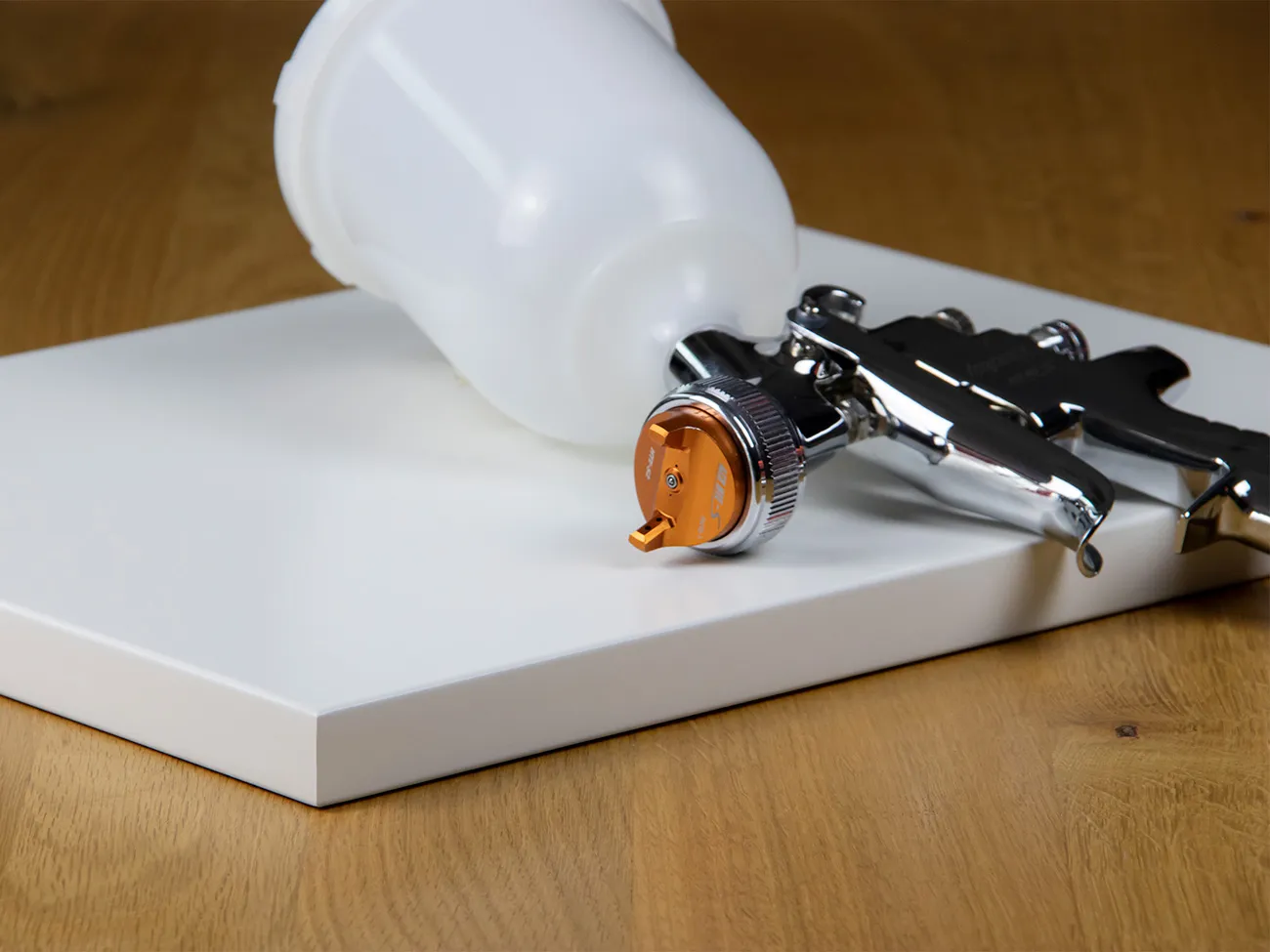
To achieve a perfect lacquer finish on sheet material, kitchen, furniture and interior fitters can quickly and easily edge the cut surfaces with edging. Ostermann offers special primed edging in a range of materials for this purpose. But which type is suitable for which application?
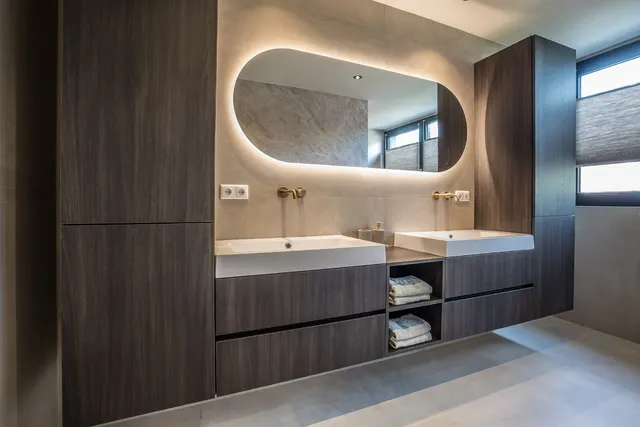
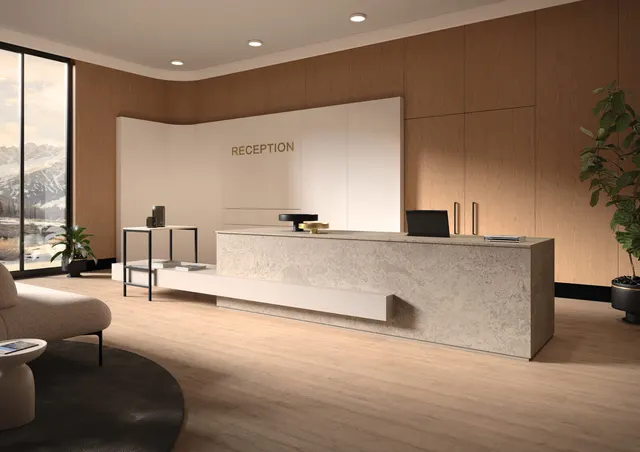
The seamless appearance of lacquered surfaces makes them particularly striking. However, producing lacquered surfaces is labour-intensive, especially when it comes to treating the cut edges of sheet material. If the surface is left untreated, the substrate quickly absorbs the lacquer, resulting in the so-called orange peel effect. Using primed edging can save a great deal of time when lacquering sheet material. Ostermann has a range of solutions available. An overview of all primed edging available from stock can be found by searching for “#Grundierkanten” on the Ostermann website, www.ostermann.eu.
Always carry out a lacquer test
Because of the different types of lacquer, coating systems and solvents used, an unwanted chemical reaction can occur even with primed edging. Kitchen, furniture and interior fitters should therefore take care when choosing the right edging. Ostermann’s experts recommend always carrying out a lacquer test and allowing sufficient drying time.
Melamine primed edging
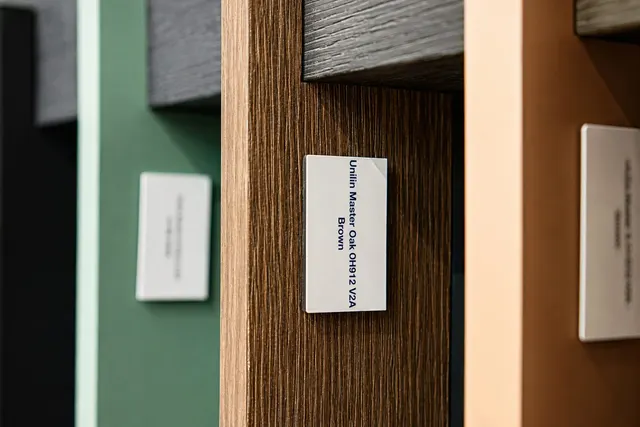
Melamine primed edging is the economical option for sealing open cut edges before lacquering. It is made from melamine resin-impregnated paper. Ostermann stocks it in a wide range of colours, thicknesses and widths. The MDF brown primed edging and MDF black primed edging have an MDF appearance and are a perfect visual match for the surface of MDF sheet material. For applications requiring white primed edging, a single-layer version is available in thicknesses of 0.3 and 0.5 mm, as well as a multi-layer version in a thickness of 0.9 mm.
ABS primed edging
ABS primed edging is available in a range of colours and thicknesses, and in any width up to 100 mm. The brown version with an MDF appearance is ideal for uncoated MDF panels, while the white ABS primed edging is designed for sheet material with white priming foil. Ostermann’s experts recommend using ABS primed edging with primer on both sides. A specially applied primer layer on the surface provides extra adhesion, making this edging particularly suitable for over-lacquering, even with lacquers that do not adhere well, such as water-based lacquer. The ABS edging primed on both sides is available in black and white. Important: the edging must not be sanded or treated with solvents, as this will prevent the lacquer from adhering properly.
Exwood primed edging
Exwood primed edging is made from a mixture of wood fibres and polypropylene (PP). Its particular advantage is that it responds to climatic conditions in the same way as the panel materials. This makes it ideal for furniture exposed to significant heat from direct sunlight or lamps. In practice, this means the edging does not shrink, even when exposed to high temperatures. No gap forms. Ostermann’s Exwood primed edging is flame-treated and primed on the front, and is suitable for all commercially available lacquer systems. This edging must not be sanded or treated with solvents either, as this will prevent the lacquer from adhering properly.
Best option: PU hot-melt adhesive
Ostermann’s experts have another tip for kitchen, furniture and interior fitters using primed edging: use PU hot-melt adhesive for edge-banding wherever possible. It must be fully cured before further processing and lacquering. Because of the wide range of solvents used, in a few unfavourable cases the solvents in EVA hot-melt adhesive can damage the lacquer. This is another reason why it is important always to carry out a lacquer test, allowing the adhesive and lacquer the appropriate drying time.
Question about this story? Ask your question
Companies in this story
Keep following this
Get an email when a new story is published. No account needed.
- ThemeFrom sheet materials to construction
- SubjectTimber & sheet materials
- CompanyOstermann