MaterialDistrict Utrecht 2026 brings material innovation into construction practice
Text Viveka van de VlietImage MaterialDistrict
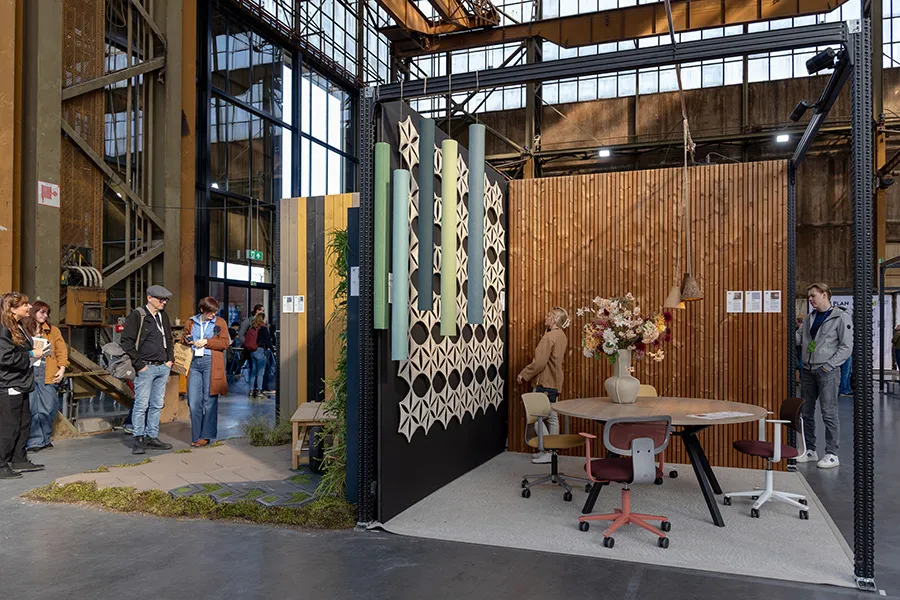
More than 125 exhibitors show how new materials are shaping the future of architecture and construction
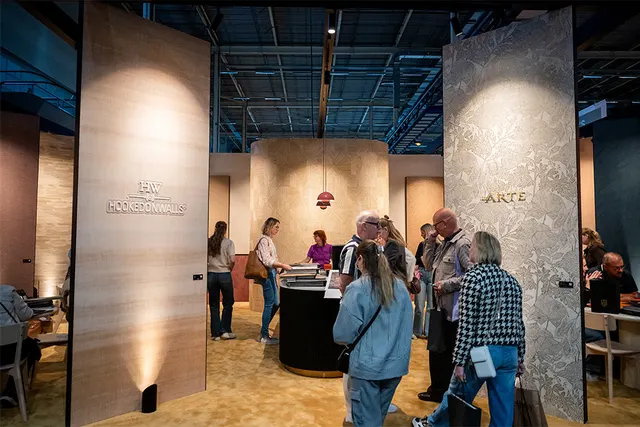
A tile grown with the help of bacteria, façades made from residual streams of locally sourced willow, and acoustic panels made from mycelium, seaweed or collagen. With these and many other innovative materials, MaterialDistrict Utrecht once again took over the characterful Werkspoorkathedraal. For three days, from 4 to 6 March, the venue became a dynamic meeting place for professionals from the worlds of architecture and interiors.
MaterialDistrict Utrecht, now one of Europe’s leading events for material innovation in architecture and design, continues to evolve. While for many years it was primarily a source of inspiration for designers and material scouts, its focus is increasingly shifting towards practical applications. New initiatives such as the NextNow pavilion, the Tomorrow’s Timber Talks and the partnership with construction company TBI show how material innovations are increasingly finding their way into the construction sector.
A meeting place for the materials sector
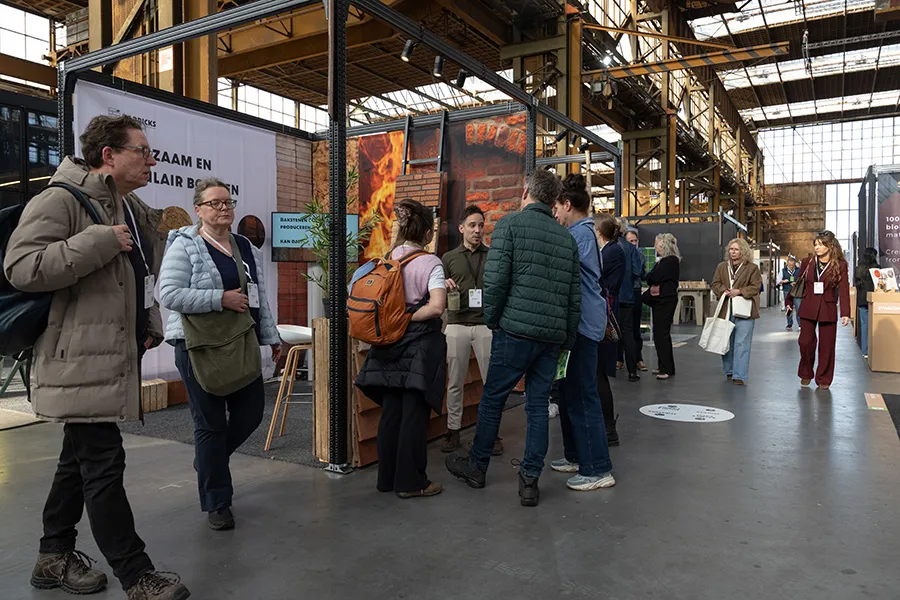
It is precisely this combination of inspiration, knowledge sharing and new partnerships that makes MaterialDistrict a regular meeting place for the international materials sector. Established manufacturers, startups, designers, researchers and students present their innovations here to architects, interior designers and other professionals in the design and construction sectors.
According to director Jeroen van Oostveen, the event’s strength lies in its unique mix of participants. “Nowhere else will you find such a broad mix of companies, startups, designers, researchers and students. They meet here, share knowledge and forge many new partnerships.”
For many visitors, the event is also an opportunity to get an overview of new material developments in a short time. The physical aspect plays an important role: materials can not only be viewed, but also touched and compared, an essential part of the design process. Architect Jacques Dupuis describes the fair as “a creatively buzzing innovation lab that leads to lasting contacts and new partnerships”.
NextNow: solutions that already exist
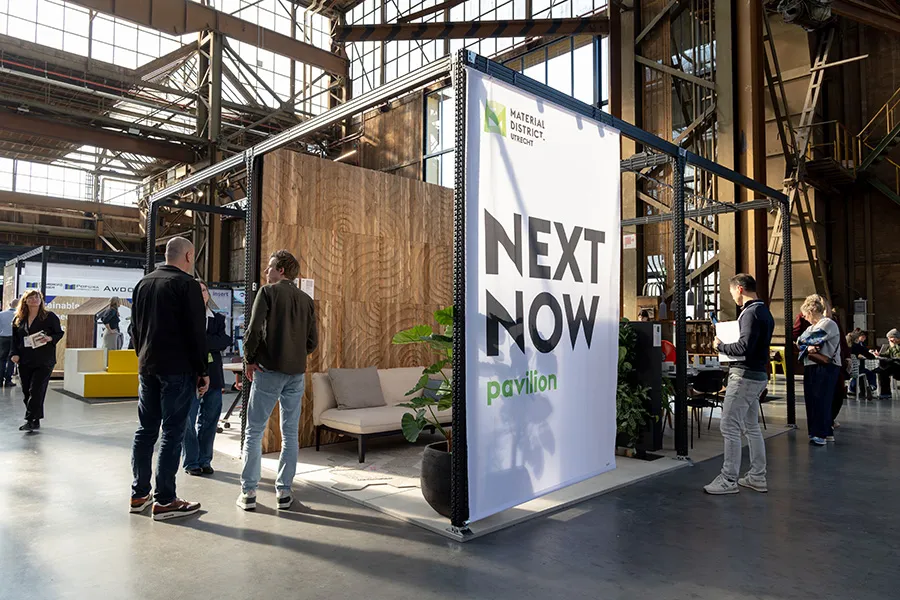
The central theme of this edition was NextNow. With this, MaterialDistrict aims to emphasise that many solutions for more sustainable construction are already available. “With this theme, we are highlighting the fact that the solutions for the future already exist,” says Van Oostveen. “Building more sustainably, fairly and healthily is not something for later. The future starts now.”
To bring this idea to life, the NextNow pavilion was introduced, among other initiatives. Innovative materials were not just displayed as samples, but also used in recognisable indoor and outdoor settings, such as a living room and kitchen. Presenting materials in a spatial context showed how biobased and circular solutions can become part of everyday living and working environments.
Innovations on the exhibition floor
The exhibition floor showed just how broad the field of material innovation has become. Front Materials, for example, presented the Mimmik Tile, developed with Biomason. Inspired by the growth of coral, the tile is produced with the help of bacteria. According to Ward Massa of Front Materials, this technology could significantly reduce the carbon footprint of building materials.
SAM Panels presented a structural I-beam made from local residual fibres as an alternative to traditional timber beams. Taking part in the previous edition generated more than 250 leads for the company. It is now working on an application for the construction sector.
Other examples show how residual streams are increasingly being turned into high-quality materials. DC Bricks developed a brick made from dredged material from the IJ in collaboration with the municipality of Amsterdam, while HempWood Nederland produces flooring, panels and beams from hemp. The German project LignoLight is also exploring how lignin, a by-product of the paper and cellulose industries, can be used in products including lightweight furniture and shoes.
From innovation to practice
A major step towards practical application this year was the partnership with construction and engineering company TBI. Twenty exhibitors had the opportunity to pitch their innovations to a company jury. Three received a €10,000 practical application voucher to further develop or test their innovation in collaboration with one of the TBI companies.
The vouchers went to Reduco, a producer of biobased façade panels made from Dutch willow; Mycelium Material, which develops materials based on mycelium; and Isohemp, a producer of natural hemp blocks for insulation and construction.
A knowledge platform for architecture
The programme also continued to develop alongside the exhibition. In partnership with PEFC Nederland, MaterialDistrict organised the Tomorrow’s Timber Talks, a series of lectures on timber construction and biobased materials in architecture. The lectures are registered with the Architectenregister as official continuing professional development.
With its broad range of exhibitors, new partnerships and increasingly strong links with construction practice, MaterialDistrict Utrecht once again reaffirmed its role as a leading platform for material innovation. The event will return to the Werkspoorkathedraal from 10 to 12 March 2027 for its twentieth edition.
Question about this story? Ask your question
Keep following this
Get an email when a new story is published. No account needed.
- ThemeRunning an interior fit-out business
- SubjectTrade fair