A good story about linseed oil

100 years ago, linseed oil was the key binder in paint, until petroleum largely took over this role. But newer is not always better, as RIGO Verffabriek knows. The company uses linseed oil in TOPLIN Lijnolie Standverf and ROYL Olie. Thanks to the company, oilseed flax has returned to the Dutch landscape, as RIGO Verffabriek meets part of its linseed oil requirements from its own production.
Home-grown wood protection

“We are one of the few paint manufacturers producing linseed oil paint,” says operations director Henriëtte van Westerhoven, Beaujon. “Sustainability is certainly one reason for this. Fossil-based petroleum generates additional CO2 emissions and will eventually run out. Linseed, by contrast, can be sown and harvested year after year.”
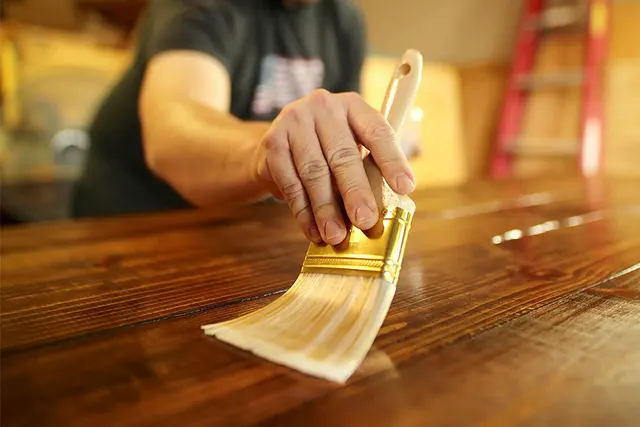
According to Van Westerhoven, using linseed oil also has other benefits. “Paint with linseed oil as a binder stays flexible for longer and penetrates the wood more effectively. It is no coincidence that we find intact linseed oil paint layers hundreds of years old in historic buildings.”
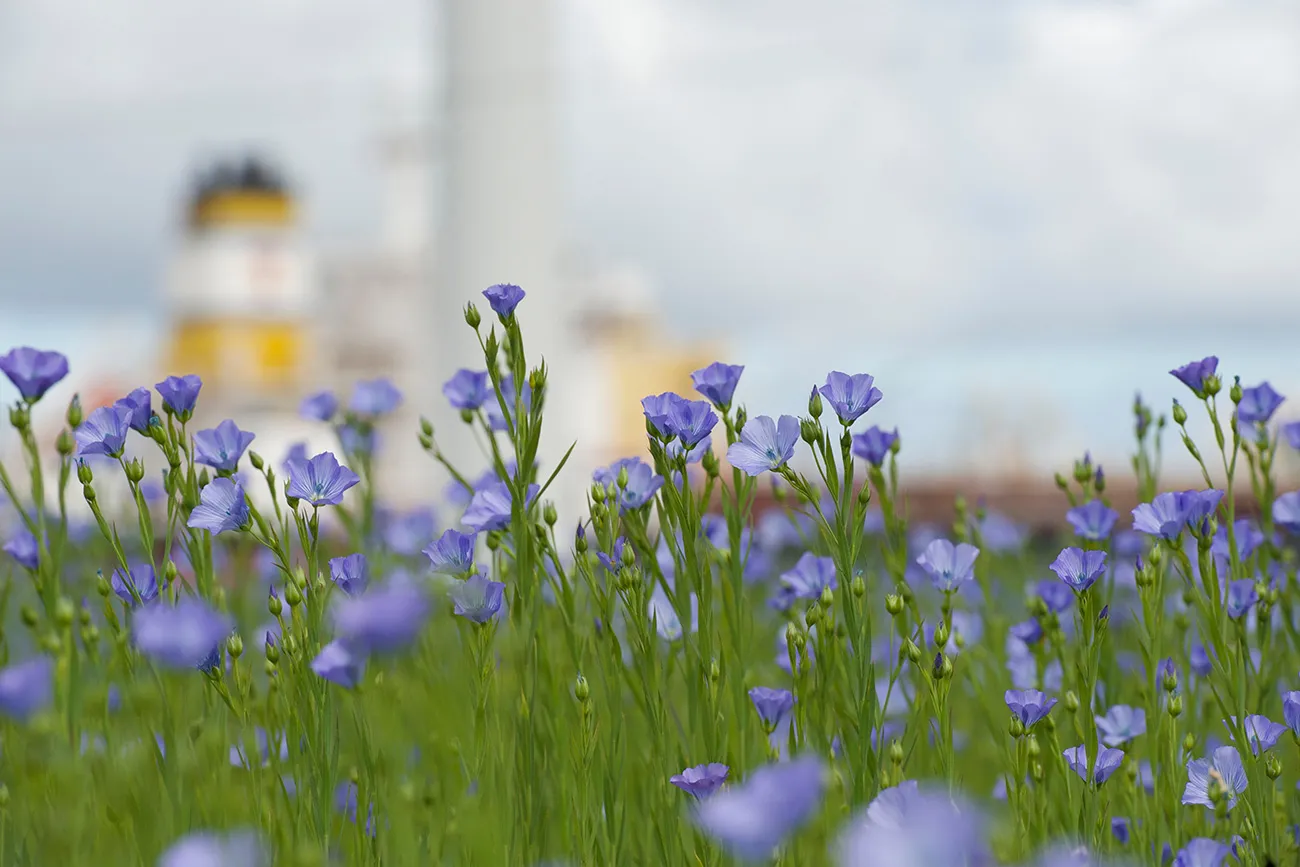
The company has been producing paints with modern linseed oil since the 1970s. “At first, we imported all of it from Canada. In the past, however, oilseed flax was also grown in the Netherlands and pressed for oil at the windmills of the Zaanse Schans. We wondered aloud whether there were still farmers growing oilseed flax. In 2013, we found a farmer in Friesland who was willing to sow one field for us, yielding 20 litres of linseed oil.”
Growing and processing linseed oil at home
A cautious start that left us wanting more! “Since 2014, RVR Loonbedrijf has sown 5 to 6 hectares of fallow land for us around Schiphol. But that was not enough. The flax still has to be cleaned and pressed. This can be done in two ways, mechanically or using the Zaanse windmills at the Zaanse Schans. We eventually chose the windmills because the process is beautiful and it helps keep this World Heritage Site in operation. We extract around 1,000 litres of oil from the seed per hectare. This meets 25% of our requirements for a whole year.” The by-products of the process, linseed cake and flax straw, are used by local farmers.

“We are certainly looking to expand further,” says Van Westerhoven. “That would also be beneficial given the rising price. Pressing oil in windmills becomes difficult when the quantities get too large, so we need to think carefully about how to proceed. One thing is certain: we will continue with this! We find that people come to us because of our story. Many purchasing organisations are looking for ways to become more sustainable, which is why they turn to our oil products.”
When choosing paints, lacquers and oils, appearance and character matter, but a good story about the origin of the raw materials is important too. “Linseed oil is still the best oil for protecting wood. Using it as a base, we make products that preserve the authentic character of the wood. ROYL floor oils, made from 100% plant-based oil, penetrate deep into the pores of the wood, protecting it from within against water and dirt for a long time. Our master paint makers and laboratory staff developed TOPLIN Lijnolie Standverf specifically for historic buildings. This is a water-based linseed oil paint that complies with legislation for interior painting.”
Een zakelijke vraag aan RIGO Verffabriek? Get in touch
Companies in this story

Keep following this
Get an email when a new story is published. No account needed.
- ThemeDecorative and protective surfaces
- SubjectCoatings & paint
- CompanyRIGO Verffabriek