











MaterialDistrict Utrecht 2025: ‘The best edition yet!’
Text Viveka van de VlietImage Viorica Cernica
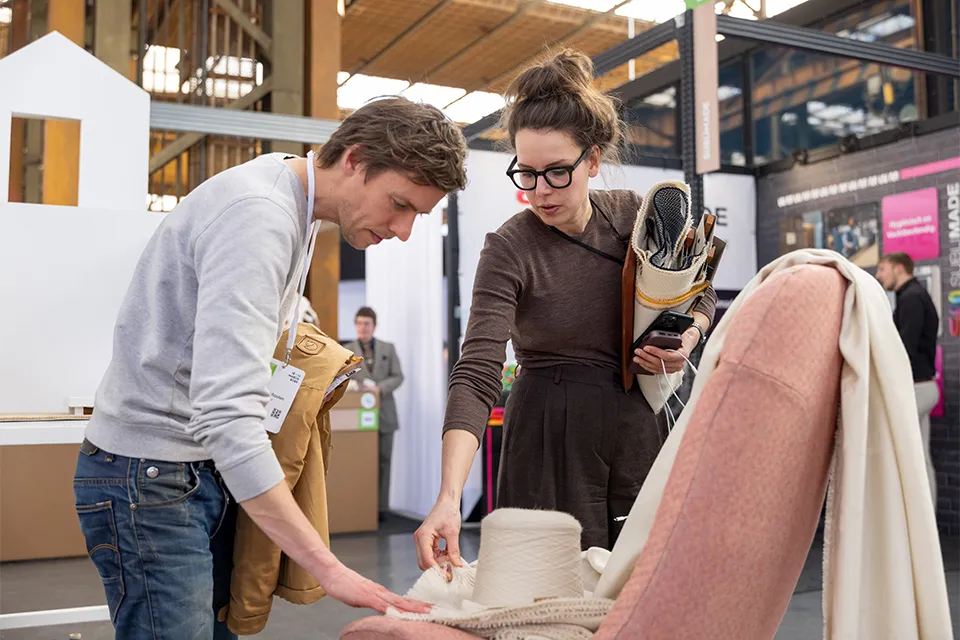
‘More valuable conversations and connections’
For its 18th edition, MaterialDistrict Utrecht returned to the atmospheric industrial Werkspoorkathedraal. From 12 to 14 March, the event was the vibrant hub where a diverse audience of exhibitors and visitors discovered the latest developments in sustainable, innovative, biobased, circular and regenerative materials. From ‘ceramic’ bricks made from date pits and 3D-printed nettle filament to a reed fur coat and acoustic building materials made from mycelium and shell waste, the diversity was unprecedented.
MaterialDistrict is an inspiring platform showcasing the latest developments in innovative and sustainable materials. Jeroen van Oostveen, managing director and owner of MaterialDistrict, emphasises the importance of hands-on experience: “Architects and interior designers only specify materials they have physically held in their hands. Nowhere else in the world can designers experience so many new materials in person. That is the great value of MaterialDistrict Utrecht.”
2025 theme: Biophilic Design
This year, MaterialDistrict Utrecht focused on biophilic design, an approach to design that puts the connection between people and nature at its heart. In collaboration with co-curator Lianne Bongers of the Biophilic Design Academy, natural elements were incorporated throughout the fair, allowing visitors to experience the power and necessity of biophilic design first-hand. One of the highlights was the Biophilic Nest Pavilion, a green oasis demonstrating how natural materials contribute to healthy and attractive living environments.
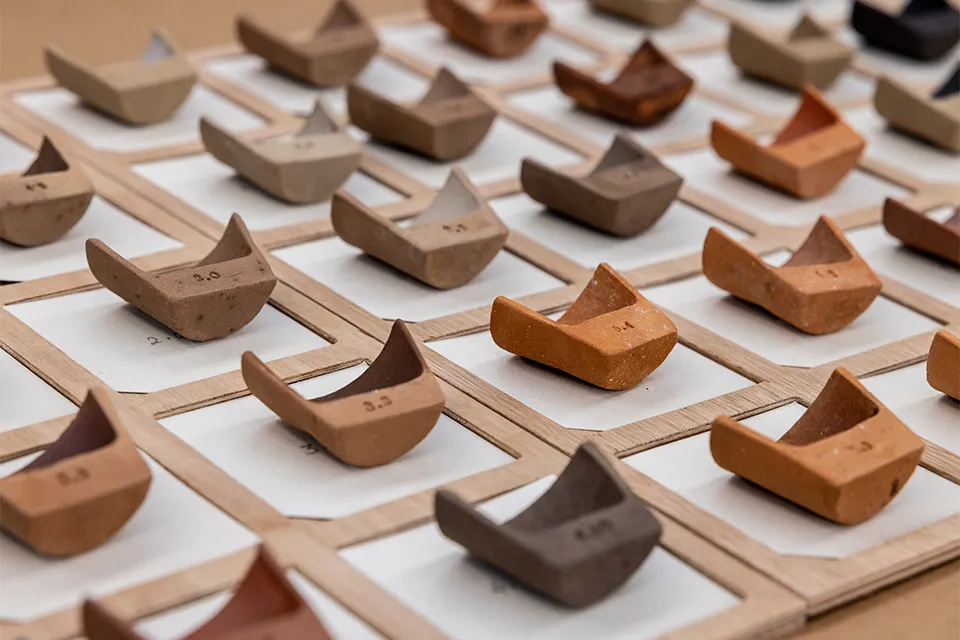
An exhibition of 250 innovative material samples
Under the direction of Sigrid Lussenburg, editor-in-chief of MaterialDistrict, another impressive sample exhibition was assembled. Visitors could discover more than 250 innovative material samples, ranging from bioplastics and mycelium to flax and recycled wool. The exhibition attracted considerable interest: countless visitors examined the materials’ textures and tactility, once again confirming the importance of physical contact with materials in the design process.
Mauricio Affonso, innovation leader, and Nadiya Andersson, innovation manager at IKEA Sweden, visited the exhibition to discover the latest material developments. “We came away inspired and are particularly curious about the potential of mycelium as a possible application in our furniture industry.”
A successful trade fair concept and satisfied exhibitors
The three-day event provided a strong platform for the presentations of its 150 exhibitors. The combination of an extensive material sample exhibition, an inspiring talks programme and a focus on biophilic design created a dynamic environment where professionals from the architecture and interior design sectors met and forged new partnerships.
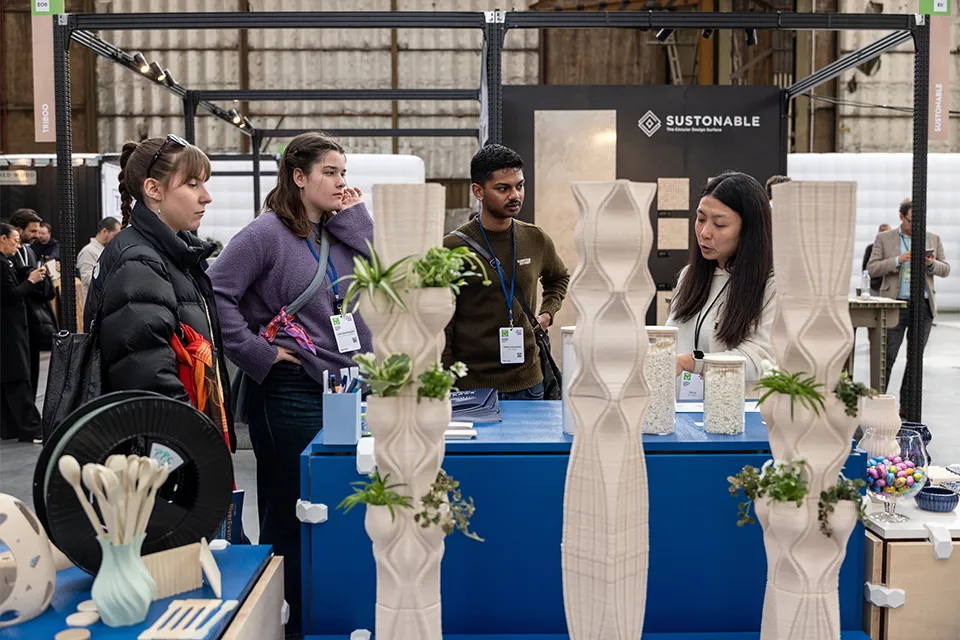
Exhibitors were enthusiastic about the quality of the visitors, the organisation and the inspiring atmosphere. John Smits of SAM Panels looked back with satisfaction: “Our team created a beautiful stand, which prompted fantastic reactions from visitors. We’ll be busy following up on more than 250 new leads over the coming weeks.”
Marianne van der Sande of Qbiq was equally enthusiastic: “I’ve been to a lot of trade fairs, but this was by far the best. We’ll definitely be back!”
MaterialDistrict Innovation Fund: support for start-ups
MaterialDistrict also supports start-ups with sustainable and circular innovations through the MaterialDistrict Innovation Fund. “Every year, we invest 15% of our revenue in this fund, which gives innovative start-ups the opportunity to take part in the fair with a subsidy up to three times,” explains Jeroen van Oostveen.
One of the participants was Eggxpert, which turns eggshell waste into circular façades and interior products. Sponge Building Project, which develops 3D-printed ceramic structures for green façades, also presented its work. Architect Michael van Leeuwen highlights the importance of these opportunities: “I’m delighted to see how these talented people grow from start-ups into fully fledged businesses. Initiatives like this accelerate innovation in the sector.”
Young Talents Programme: the next generation of designers
Under the direction of curator Leonne Cuppen, 20 promising young designers were selected for the Young Talents Programme. Their experimental projects and innovative materials brought fresh energy to the fair. “Biobased materials are becoming increasingly important for sustainability and circularity, but I’m looking further ahead: towards materials and products that are regenerative and contribute to our health and wellbeing,” says Cuppen. One standout presentation was by Morris Bouwman and Arjen Witteveen, whose speculative trade fair HumanDistrict got visitors thinking about the future of materials.
Focus on quality and relevant visitors
A key priority for this edition was to improve the quality of the visitors. In response to exhibitor feedback, student tickets were limited to final-year students, creating a better balance between professionals and students. This resulted in more valuable conversations and connections.
With a total of 4,701 visitors, exhibitors saw an increase in the relevance of conversations. Alexander Wolf of NUDUS summed it up neatly: “As tiring as it was, I really enjoyed my time here. I had some interesting conversations and made valuable connections.” Sander van Doorn of Circuform agreed: “This was another great edition, and I can say it was the best yet. The quality of the visitors was simply good.” Lisa McLaughlin, an Irish designer, added: “I really appreciate the warmth and friendliness of everyone: designers, companies, students and, in particular, my fellow exhibitors.”
Looking ahead to MaterialDistrict Utrecht 2026
MaterialDistrict Utrecht will return to the Werkspoorkathedraal in 2026. The 19th edition will take place from 4 to 6 March 2026. Next year, further steps will be taken to broaden the target audience. Alongside architects and interior designers, there will be an increased focus on housing associations, local authorities, property developers and builders. These are essential links in the transition to sustainable and circular materials, and an increasingly relevant target group.
This broader focus will be reflected not only in the visitor strategy, but also in partnerships and the talks programme. By actively pursuing this approach, MaterialDistrict Utrecht aims to continue growing in 2026 as the central platform for professionals in innovative, future-proof building and design.
Question about this story? Ask your question
Keep following this
Get an email when a new story is published. No account needed.
- ThemeMore sustainable materials and longer use
- SubjectGeneral







