











‘More focus on ‘Made in Holland’ in 2025’
Text and images Louwers Mediagroep, Freepik
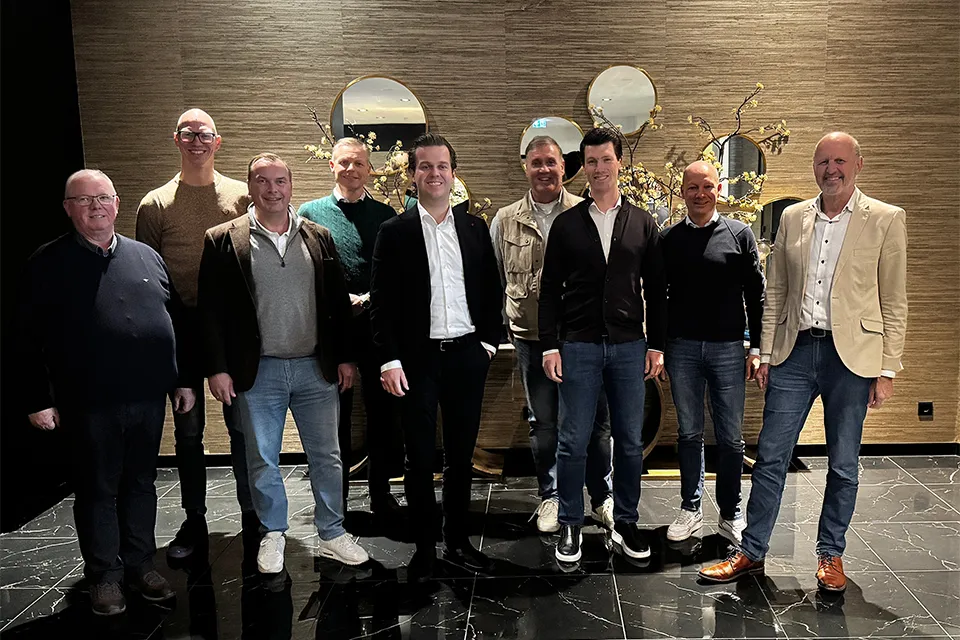
Binnenwerk editorial board established and gets underway
In December, the editorial board of the Binnenwerk platform officially got underway. At Van der Valk Hotel in Zaltbommel, members discussed what the sector needs in terms of knowledge-sharing and the creation of relevant content. After an inspiring session lasting more than two hours, the conclusion was clear: “The Binnenwerk platform is a strong brand in the industry, but we need more successful business stories. The sector also needs stories about companies in the supply chain that have established successful partnerships.”
“Our industry faces a number of challenges: increasing regulatory pressure in our country, the new generation of entrepreneurs and skilled workers coming through, a tight labour market and a growing need to profile ourselves under the ‘Made in Holland’ banner,” says Jerry Helmers, who chaired the round-table session in Zaltbommel. “These are topics we need to keep discussing together, and we want to read inspiring stories about them. And, importantly, they are also things we can learn from!”
Trump
“I couldn’t say exactly what a possible ‘ranking’ of the challenges mentioned above might look like, or which would come where, but I do believe that ‘Made in Holland’ will become a very important theme, perhaps the most prominent one, in 2025 and the years that follow,” Jerry continues. “Of course, you can certainly make the case for ‘Made in Holland’ from the perspective that we should all want to become a little more sustainable, and that ‘supply chain responsibility’ will also play a prominent role in that. But given what is happening in the United States in the first few weeks after President Trump’s inauguration, it makes sense that in Europe, and indeed in the Netherlands itself, you would want to find more partners who are, so to speak, active just around the corner. And, to be completely honest, what is wrong with that? Why shouldn’t you give businesses and companies in your area the opportunity to trade within the supply chain? I also think this is good for end users. After all, if there are problems with delivered products, which can always happen, because wherever people work, mistakes are made, you can act more quickly because supply-chain partners are relatively close by. They are not a long way away in the Far East or somewhere like that. Put simply, communication is easier.”
Artificial Intelligence
Artificial Intelligence also came up in the discussions of this editorial board. “We all noticed that by now everyone knows what AI is and what it could mean for their day-to-day work. Yes, it means greater efficiency and faster working. And, as a result, fewer errors. But the question is how exactly to integrate it into your organisation and the supply chain. Here, too, you need supply-chain partners to make progress together. At the same time, it is also about how to acquire the right knowledge and where to find it. I think we at Binnenwerk can play a major role in this by, for example, giving leading experts a platform to explain clearly how everyone working in this field can embrace AI more effectively and intelligently. In that respect, we still have quite a list of intended ‘Lessons Learned’ for all of us.”
“Of course, we at Binnenwerk have a good picture of what is happening, but it was useful to discuss it together and see where we, as an editorial team, can focus our efforts,” says Jerry. “It has definitely given us new insights. And, importantly, it was good to see that the editorial board, which we will consult for advice from time to time, also provided valuable networking opportunities.”
“We have already started putting the guidance, as well as the critical feedback we received, into practice to raise the quality of our content to an even higher level. I’m looking forward to it, and I’m grateful to everyone who attended for joining us and sharing their input,” Jerry Helmers concludes.
The Binnenwerk editorial board consists of Paul van Keulen of Van Keulen Interieurbouw, Bas van Meurs of Pfleiderer, Hans Pohlen of Leitz, Martijn de Groot of De Groot Bewerkingsmachines, Frank Knapper of Häfele, Sander Tiems of Palettecad, Kees Hogendijk of CBM, and Stefan Louwers and Jerry Helmers of Louwers Mediagroep.
“I expect Dutch manufacturing companies in the interior fit-out sector to focus strongly on automation and boosting productivity. Collaboration with other Dutch companies and the government will be crucial to promoting innovation and sustainability and strengthening the international position of ‘Made in the Netherlands’, despite all the regulatory pressure and the tight labour market.”
Paul van Keulen, Van Keulen Interieurbouw
“I expect a positive year for our company, with growth and plenty of opportunities to meet our customers at various trade fairs in the Netherlands and abroad. The market will remain challenging but stable, with enough opportunities for the true entrepreneur.”
Frank Knapper, Häfele Nederland
“We will all need to be even more alert to major internal and external developments in the sector. We can already see that Trump’s election will lead to import tariffs. And that Fast Furniture will make an even bigger push into the European market. ‘Made in Holland’ is more important than ever!”
Stefan Louwers, Louwers Mediagroep
“Demand for home furniture fell considerably last year, not only in the Netherlands but also in neighbouring countries. Hopefully it will pick up in the coming year. Profitability remains a concern, as businesses are facing ever-rising costs on many fronts. Although interior fit-out companies are facing this too, they seem somewhat more optimistic about the coming year. Across the industry, margins will remain under pressure in 2025.”
Kees Hoogendijk, director of CBM
“We are seeing steady growth in grinding and new tooling for the furniture and interior fit-out sectors. Some of this may be due to increased market share, but that does not explain the scale of the growth. I am seeing an increasing shift from manual processing to automated processing. This means that products and components are increasingly being fully finished on CNC machines, with fewer people handling the product. Smart assembly systems and joints are therefore in high demand.”
Hans Pohlen, director/CEO Leitz Services BV
“In 2025, I expect economic growth and a greater willingness to invest, which will create more opportunities for businesses. I am also excited about technological developments, such as AI and automation, which we can use to create greater value for customers. By focusing on sustainable and circular materials, we can reduce our environmental footprint and respond to the growing demand for environmentally friendly products.”
Martijn de Groot, managing director of De Groot Bewerkingsmachines
“More than ever, entrepreneurs and their businesses in our field will need to demonstrate what they mean by entrepreneurship and how they put it into practice. Investing in knowledge and embedding that knowledge in your business is the key, and a necessity, for 2025.”
Jerry Helmers, Binnenwerk.
Question about this story? Ask your question
Companies in this story


Keep following this
Get an email when a new story is published. No account needed.
- SubjectGeneral
- CompanyLeitz
- CompanyDe Groot Bewerkingsmachines
- CompanyHäfele







