Smarter automation starts with collaboration and knowledge
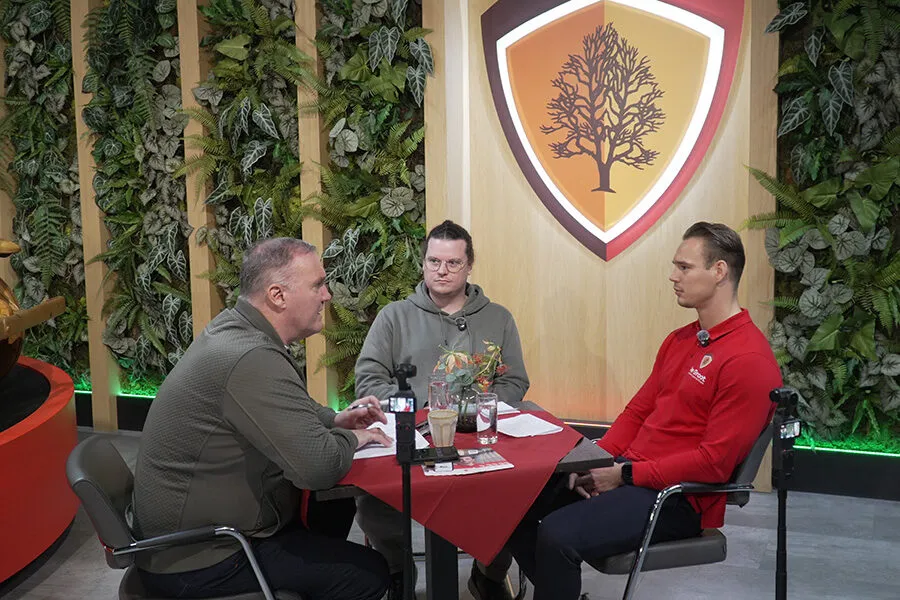
Speaker(s): Luuk Teurlinx, team leader of automation specialists at De Groot Bewerkingsmachines / Jeroen Smeets, co-owner of PaletteCAD Nederland | Moderator: Jerry Helmers.
Staff shortages, rapid technological developments and the rise of AI are presenting interior fit-out specialists and furniture makers with new challenges. How can companies optimise their production processes while retaining their craft knowledge? In this episode of Binnenwerk, the podcast from Louwers Mediagroep, presenter Jerry Helmers talks to Luuk Teurlinx of De Groot Bewerkingsmachines and Jeroen Smeets of PaletteCAD Nederland. They discuss the importance of smart automation, knowledge transfer and strong collaboration between machine and software suppliers. They also look ahead to the role of AI in interior fit-out.
A business question for De Groot Bewerkingsmachines? Get in touch
Full transcript
Read the full transcriptCollapse transcript
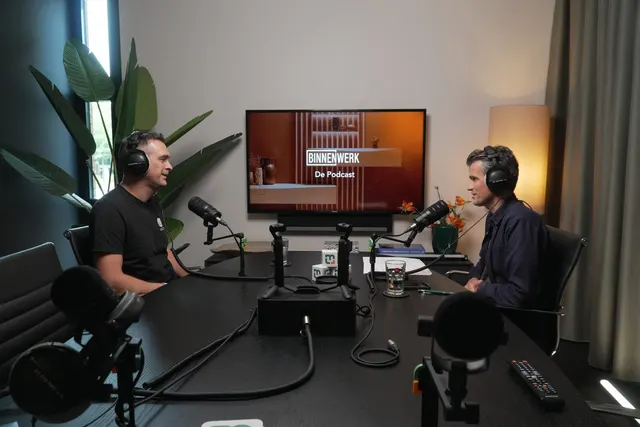
Jerry Helmers Great, dear listeners, that you've tuned in again for a new episode of Binnenwerk, the podcast. And it's actually a special episode, because we're visiting De Groot Bewerkingsmachines in Rosmalen, near Den Bosch. I've already spotted the Bossche bollen here, so I'll be staying a bit longer today after this podcast recording. We're here for the Samen Vooruit days organised by De Groot Bewerkingsmachines. And in this episode of about thirty minutes, my guests are Jeroen Smeets, co-owner of PaletteCAD, and Luuk Teurlinx, team leader of the automation specialists at De Groot Bewerkingsmachines.
Jerry Helmers Luuk, thank you for having me as your guest. But I'll say thank you the other way round too, for being a guest on this podcast. Before I introduce you both in a bit more detail, I'd like to know: who should be listening to this podcast, and why? Well, who shall I look at? Luuk first. Tell me. Who absolutely has to listen?
Luuk Teurlinx I think every interior fit-out specialist who has a CNC machine, or who is looking into a CNC machine with the right software, should watch or listen to this podcast.
Jerry Helmers Yes, so everyone. Are you talking about sole traders as well as large companies? Really everyone?
Luuk Teurlinx I think everyone. From beginners to those who have been at it for several years.
Jerry Helmers Exactly. Jeroen, who do you think should keep listening? Or do you agree with what Luuk just said?
Jeroen Smeets I agree with Luuk. It's interesting for everyone. We'll be covering several topics. Automation and the other subjects we're going to discuss are relevant to everyone these days.
Jerry Helmers Perfectly clear. We'll introduce you in a bit more detail shortly. But first I'd like to put a proposition to you both. And I'll start by asking Luuk whether he agrees or disagrees.
Jeroen Smeets Go on.
Jerry Helmers And then we'll see what comes out of it. Or perhaps we'll come back to it later in the podcast. The proposition is: in 2026, you have to collaborate, otherwise you're no longer relevant.
Jeroen Smeets Agree.
Jerry Helmers Agree, really? Yes, I see Jeroen is nodding emphatically too. Otherwise you're no longer relevant. Okay, both agree.
Luuk Teurlinx Yes.
Jerry Helmers Shall we come back to that later in the podcast? Because you are, of course, collaboration partners yourselves. That's why I came up with this proposition. Because I'm curious later on about what makes a collaboration successful, and what the secrets might be. Okay. Luuk, who are you? Introduce yourself. You work at De Groot Bewerkingsmachines. What do you do there?
Luuk Teurlinx My name is Luuk Teurlinx. I'm 29 years old and I'm team leader of the automation specialists, as you said yourself. In that role I'm responsible for linking our machines to external software providers. I oversee that from the sale right through to delivery of the machine.
Jerry Helmers Ah, so a lot of contact with customers too.
Luuk Teurlinx Yes, sometimes during the sales process, when it's needed.
Jerry Helmers Yes.
Luuk Teurlinx We often already have good standard agreements, of course, but where necessary I join in to support that. And I make sure the right people are on site with the right preparation to set up the links with the external parties, or the software we make ourselves...
Jerry Helmers Yes. What's your background? Industrial engineering and management, or something like that? Or mechanical engineering? What should I be thinking of?
Luuk Teurlinx I studied mechanical engineering myself.
Jerry Helmers Ah, okay.
Luuk Teurlinx And I started here at De Groot from there. Initially as the company's first automation trainee, six years ago now. Then I grew into the role of automation specialist, and for the past few years I've been team leader of this department.
Jerry Helmers Okay, so, good. There were placements available for a traineeship.
Luuk Teurlinx Yes, definitely. First learn plenty, then apply it in the process.
Jerry Helmers A question of conscience. Why is it fun to work at De Groot Bewerkingsmachines?
Luuk Teurlinx Well, first of all, we're simply a really nice family business where everyone wants to help each other. We also have a wonderful showroom and all the great facilities we can use here. And that makes for a pleasant working environment anyway.
Jerry Helmers Yes, exactly. It certainly shows, because we're recording this podcast during the Samen Vooruit days. It's now the end of October 2026. Can you say very briefly why these days are organised? Why do you do it as De Groot Bewerkingsmachines? Because it's nicely busy here. I can see quite a bit of buzz. I even had trouble finding a parking space when I drove up this morning. Tell me, why do you organise these days?
Luuk Teurlinx I think it's also a matter of visibility in the market. Many people know De Groot as a company, but they don't know everything that's behind it. And when you walk in, you see our beautiful showroom, you see all the people behind it, you see our workshop, our service desk. Then you really see: okay, there's a very large company behind the machine that gets delivered. We're not box shifters, we're a genuine added-value partner. And that's how we've developed ourselves over the past few years.
Jerry Helmers Yes, exactly. Don't get too commercial. You'll do that later in your sixty seconds at the end. Because we agreed beforehand that you'll get a little Loeki the Lion moment later. But you're right that you've made clear what De Groot is. How many people work here, by the way?
Luuk Teurlinx There are about 110 of us.
Jerry Helmers Wow. Well, that's more than I'd expected, I have to say. Right, so that's clear. You, I believe, are the co-owner.
Jeroen Smeets That's right.
Jerry Helmers How did that come about? And also tell us, for all the people who may never have heard of you, and I think you'd really have to search for them like a needle in a haystack: what does PaletteCAD do?
Jeroen Smeets Well, let's start there. PaletteCAD is a supplier of CAD/CAM software. It's a program for creating designs for interior fit-out specialists. It's a very user-friendly program. Service is a very high priority for us. I won't go into that Loeki the Lion moment too much, because that comes later. But we do the software, we sell it, we also support it, we provide training, we help with machine control, to connect well with, for example, De Groot.
Jerry Helmers Yes.
Jeroen Smeets And how did I end up in this position? My father founded the company.
Jerry Helmers Ah, the family tie. The family tie.
Jeroen Smeets Yes. So I'm the second generation. And six years ago, let me think back properly, I took over the baton together with Sander Tiems.
Jerry Helmers Do you have a division of roles? What is your specific task within PaletteCAD?
Jeroen Smeets Yes, it changes a great deal. I moved from support specialist to sales. I did that for many years, with great pleasure. But over time my role has increasingly shifted towards improving our organisation, improving our processes.
Jerry Helmers Perfectly clear, indeed. Right, a question for you both: what challenges is the market facing? We're talking, of course, about furniture makers and interior fit-out specialists. You said they really ought to listen to this podcast. Can you name some major, relevant, important or complicated challenges they face? Luuk?
Luuk Teurlinx I think staff is the biggest challenge at the moment.
Jerry Helmers Yes.
Luuk Teurlinx Good staff in the office, but also good staff on the shop floor. There is a lot of staff turnover. Knowledge is being lost.
Jerry Helmers Are you also talking about scarcity in the labour market? Because I imagine it's simply very difficult to find people at all.
Luuk Teurlinx I think it certainly comes down to scarcity in the labour market. But also that staff turnover is much higher than it was, say, ten years ago.
Jerry Helmers Why do you think that is, this turnover?
Luuk Teurlinx I think the new generation also wants to move around more. So they don't want to stay in one place for twenty years. They want to keep having new challenges. Whereas the older generation is more content to simply carry on doing what it does.
Jerry Helmers Absolutely. 29-year-old Luuk, who I think is also part of the new generation, isn't he?
Luuk Teurlinx Definitely, definitely.
Jerry Helmers Definitely, indeed. But he has been here for 6.5 years now, because after the traineeship he never wanted to leave. So you've named staff as a challenge. I'll look at Jeroen too. Can you also name a specific challenge the market is facing?
Jeroen Smeets Yes, and besides staff, which I fully agree with, another challenge is of course the pace of change. There are more and more new rules, new standards, new software, new machines, new techniques. And our customers have to find their way through all of that.
Jerry Helmers Oh, so when you talk about change, you mean on the one hand changing legislation, rules and standards. And then there are also technological changes, which of course come straight from the market.
Jeroen Smeets Exactly.
Jerry Helmers Well, gentlemen, we have half an hour with a great deal to discuss, if so many challenges have come the way of interior fit-out specialists and furniture makers in recent years. Let's start, and I'll look at Luuk again, with the staffing problem. It exists. Yes, Luuk?
Luuk Teurlinx Yes, that's a good question. I think that when you have staff turnover, it's very important that you have the processes in your company properly documented. And those processes can of course be set up in the machine or in combination with the PaletteCAD software. But also that, when there is turnover, knowledge is passed on again and people are retrained.
Jerry Helmers And is that what you support, or what your team helps with? Can you make that concrete?
Luuk Teurlinx First of all, we naturally have a good working relationship with parties such as PaletteCAD, among others, with which we have agreed a great many things. We also offer a wide range of training, in many different formats, where customers can send one person or several people for a refresher or a basic course in the machine software or machine operation. On top of that, we offer the De Groot customer portal, which is essentially a very large digital reference library for our machines and our software. Customers can always fall back on it, so they have less need to call our service department.
Jerry Helmers What does a training day look like? You say you invite customers here in Rosmalen for a day of brushing up their knowledge. They arrive in the morning. Can you talk us through such a day? What does it look like?
Luuk Teurlinx Certainly. The day actually starts with a nice cup of coffee in our central hall.
Jerry Helmers Yes. Sign me up too.
Luuk Teurlinx Of course. And Bossche bollen as well? Usually not. Then the course day begins. We always have a fixed training programme that we want to cover on those days. Lunch is always provided from here. We are now also setting up our large production line, well facilitated by our facilities department. The training day continues, and at the end of the day there is room to ask a specific question, perhaps going into more depth or broadening the scope, depending on the needs of the person attending.
Jerry Helmers Does everyone come to you? The young interior builder, the start-up freelancer, to name an example. But also the interior builder who has built a whole company with fifteen or twenty people. Do you really see everyone walking in?
Luuk Teurlinx For the fixed training days, you often see that the somewhat larger companies that have some staff turnover, and therefore want to train new employees, send those people. Then we naturally have the training days that we deliver with new machines. And there, of course, the type of person who attends differs depending on the profile of the customer who bought the machine.
Jerry Helmers Okay. Your aim, of course, is to help your customers and clients automate smartly. I may be springing this question on you, but do you have a concrete example from your recent work? Something along the lines of: I got a call at such and such a time, this is what the customer asked me, and this is how we solved it.
Luuk Teurlinx I have a few customers, a few cases, of course. A funny example is a customer I had on the line last week. He had a question about adding a new connector. That had already been set up from PaletteCAD. I still had to carry out a few actions to get it configured properly. But at the same time we started talking about how things could be done even better.
Luuk Teurlinx I then changed a few settings in the software, using the knowledge we have now compared with what we had a few years ago. That gave this customer some more time savings, less wear on his tools and a longer tool life. And he was very pleased as a result. What we also see is that customers increasingly hire us for, say, a day of process optimisation. So I, or a colleague of mine, will spend a day on site purely looking at the customer's specific process.
Jerry Helmers So you really do go out to the companies.
Luuk Teurlinx Yes, then we simply look at how you work now and what could be smarter, what could be better. And that can be in all sorts of areas. It can be based on tool lead-ins. It can be based on settings in our nesting software. It can be many different things.
Jerry Helmers How do you know, when you drive somewhere and arrive at the customer's premises, do you often visit such a customer? Because I am also wondering: you have to know what to ask, don't you?
Luuk Teurlinx Yes, with this customer, for example, it is about once a year.
Jerry Helmers Yes.
Luuk Teurlinx And they simply need some extra training. For example, a member of staff has left. That person had a great deal of knowledge and did all the preparation, but this has been handed over to a few other colleagues. They have a lot of knowledge, but they were not there from the start with the machine, so they do not have all of it. And for them it is also very helpful to be able to spar with someone who knows a great deal about the software and also visits other customers, so that we can share the knowledge and experience we have gained over the past few years with them to change their process.
Jerry Helmers But do you see that increasing? That you have to visit companies more often? Also because you said at the start of this podcast that staff turnover is rising, because the younger generation wants to switch jobs faster. And what you just said very specifically: someone leaves, so knowledge is lost as well.
Luuk Teurlinx Well...
Jerry Helmers Are you on the road more often?
Luuk Teurlinx I think we could do it even more often. I think customers often still want to do too much themselves and simply carry on doing what they have always done, instead of thinking: okay, what could be better? I think there are still plenty of gains to be made there.
Jerry Helmers Clear. So it is nice to welcome customers here in Rosmalen, but you are also on the road to the companies yourself, to help people there take another step forward.
Luuk Teurlinx Certainly.
Jerry Helmers Okay, I think there are solutions once again. Jeroen, you said earlier that the speed of change in this day and age is a challenge for the furniture maker and interior builder. And if I listened correctly, you could split that into legislation, new rules and new standards on the one hand, and technological change on the other. If we first look at legislation, new standards and rules: where does the problem or bottleneck lie for that furniture maker and interior builder, and what can you do for them?
Jeroen Smeets Ultimately everything goes hand in hand. In terms of legislation, the challenges are, above all, that everything has to become more sustainable. So the interior builder is forced to think about that. But there is also a great deal of changing legislation on HR policy and how to deal with it.
Jerry Helmers But also, for example, on occupational health and safety?
Jeroen Smeets Yes, from the health and safety side. As an employer you have to take a great many things into account. It is simply a lot. And interior builders, our customers, are often skilled craftspeople, very good at what they do, very good at the craft, with their heart in the business. But there are so many other things to take into account as well.
Jeroen Smeets Just now, while Luuk was talking, I had a lot of moments of: oh yes, I need to mention that, and I need to mention that. And ultimately it all comes together. Because in the end, in this day and age, you simply have to automate to keep up. You have to automate to fill the staff shortage and to work more efficiently. And because you have to keep up, a lot changes as well. It also has to do with the fact that you have to make choices to work smarter. In the end you have to choose to start using that other machine, or a different panel connector, or a different software programme.
Jerry Helmers Yes, the question is of course always: do you know which machine you want to use? Those technological changes are moving incredibly fast. It is going very quickly. That is, in my view, the challenge for that furniture maker.
Jeroen Smeets What that makes me think of, and I find it quite funny: we have a lot of contact with our main partner in Germany. I sometimes find it funny to draw comparisons between how things work in Germany and how they work in the Netherlands.
Jerry Helmers Okay.
Jeroen Smeets Because in Germany they are still very much stuck in their ways. They still predominantly use a lot of cup CNC machines there. And that is fine. They really have their added value and things they do well. But at the same time you see everywhere else in the world, in the Netherlands but also in South-East Asia and America, that nesting machines are simply the thing of our time. But in Germany they are very conservative. That is part of the culture.
Jeroen Smeets But then you see our main partner thinking: is nesting really used that much? Nesting is simply the future. And in that sense they lag well behind. I think that is a very good example of how things change. New techniques come along. And if you move with them, you can work smarter, become more efficient and automate.
Jerry Helmers Yes. And knowing you at PaletteCAD, I will throw my slogan into the group: support is the core.
Jeroen Smeets Support is the core, yes. We are big on that.
Jerry Helmers Is that also the basis for the collaboration you have with De Groot Bewerkingsmachines?
Jeroen Smeets Absolutely.
Jerry Helmers How did that come about? I will look at Luuk again. How did this collaboration come about? The market is also, I don't know whether it is a case of everyone knowing everyone, but you undoubtedly know each other from all the trade fairs. But how did your collaboration come about? What does it look like?
Luuk Teurlinx I think we have been working with PaletteCAD for a very long time. Our customers choose a machine and they choose a software package. So you are obliged to work together, of course.
Jerry Helmers Obliged. Well, dear listener, he said that with a smile. Obliged. There is no need to read too much into it.
Luuk Teurlinx Certainly. But what matters here is that we were reinventing the interface every single time. Every customer naturally has their own wishes, but at heart it is all the same. And when I first arrived here, I thought: this can be done far more efficiently, this can be done far better. We are all nerdy enough to get it all sorted properly.
Jerry Helmers Why? Hold on, do you consider yourself a nerd?
Luuk Teurlinx I am a bit of a nerd.
Jerry Helmers A bit of a nerd. What is the hallmark of a nerd? I do want to know that.
Luuk Teurlinx You can fill that in yourself.
Jerry Helmers Oh, I can fill that in myself. Yes, no. I will give that some thought. No, I interrupted you. Carry on.
Luuk Teurlinx Certainly.
Jerry Helmers So in a nerdy way you were thinking: this can be done better.
Luuk Teurlinx We simply don't want to repeat ourselves. I love automating. So I get irritated when I have to do things over and over again. So I want to make sure that when we build an interface with PaletteCAD, 80 to 90 per cent of it is already set up correctly. Then we can spend the time we have together, because we almost always spend a day on site together, on a piece of customisation for that particular customer.
Jerry Helmers Can you give an example of that? I may be springing that on you too. When you talk about how that customisation takes shape. Who do I look at? I will look at Jeroen now. Because the two of you are sometimes at a customer's together, as I understand it.
Jeroen Smeets Yes.
Jerry Helmers How do you arrive at the customisation for the customer?
Jeroen Smeets Look, ultimately there is a certain basis to an installation, and you prepare that. Let me give an example. If a customer buys the postprocessor from us, so to control that machine, a questionnaire always comes first in which the customer has to fill in: how do I work? Which connectors do I use? Which tools do I use? Of course, we often consult a tool supplier as well. Which machines do I have? What is my production sequence? And on the basis of all that information, we build a custom postprocessor. That is where it starts.
Jeroen Smeets And we prepare that for the installation. Then, together with De Groot, certainly with a new nesting machine, we test the installation together with De Groot at the customer's site. And then we immediately look at what could be better, and we can still adjust it on the spot. But on top of that, a customer also arrives at insights after the installation day that he hadn't thought of beforehand. And then it is very important to keep the lines short and to be able to respond quickly: look, I see this differently after all. I want the lead-in of that router cutter to be different. I use other materials, can we come up with something for that? To ask the question and then pick it up quickly with the three of us, as three parties.
Jerry Helmers It also has to click somehow, doesn't it? I mean, I understand that at a certain point companies have to choose, or make the strategic choice, that we have to work together.
Jeroen Smeets Yes.
Jerry Helmers But this all requires great precision. Why does it click between you? What is the secret of good collaboration? Because that makes me think of the proposition I put to you at the start: in 2026 you have to collaborate, otherwise your company is no longer relevant. Is there a mutual goodwill factor or trust? What is the secret of good collaboration?
Luuk Teurlinx I think a degree of goodwill and trust. But also that both parties simply want to do it really well. So when I talk to the guys on the PaletteCAD support team, they really want to deliver the best solution for the customer.
Jerry Helmers Are they a bit nerdy, then?
Luuk Teurlinx Yes, they are certainly a bit nerdy.
Jerry Helmers Jeroen, you employ nerds.
Jeroen Smeets Absolutely, yes. Almost everyone.
Luuk Teurlinx Shout-out to Danny and Mark.
Jeroen Smeets Yes, yes.
Jerry Helmers So you are in contact with the guys from support?
Jeroen Smeets Yes, definitely.
Jerry Helmers But you also have to trust each other, don't you? Because how do you know that the other has the expertise to arrive at a solution? In other words, how do you develop your own knowledge?
Jeroen Smeets Well, if I may, I can respond to that. Look, ultimately you don't want to work with everybody. But the basis of good collaboration lies simply in, well, it's almost too much of a cliché to say, but just being honest and having the best intentions.
Jerry Helmers But clichés are true, aren't they?
Jeroen Smeets Yes, clichés are true. If you want to help the customer, as Luuk also said, and you have that customer's best interests at heart, and if there is ever a problem that lies with you, then you pick it up and acknowledge it, and you don't point fingers. The collaboration with De Groot has proved to be like that from the start, since we really took up the collaboration. It came naturally. It was pleasant, there was no frustration. There is no reason not to work well together.
Jerry Helmers Can you add anything to this?
Luuk Teurlinx Difficult, difficult. No, we simply have very good contact with each other. We have a group chat that includes our technical people and their technical people. And if they are at a customer's site, or we are, and something comes up, we have direct contact very quickly.
Jerry Helmers Yes, exactly.
Luuk Teurlinx And then you simply have to be able to switch quickly. And also, as I said, we always go on site together for new machines and new installations, so that the day can be used efficiently. And so we have those short lines too. And per machine it depends very much on how we have to set it up and on the customer's wishes.
Jerry Helmers For both of you it means thick textbooks, I'd almost say, just like for a doctor. You keep studying, don't you, to know what is technically possible. You already said it, Jeroen, technical and technological development is moving incredibly fast at the moment. So is it still the textbooks every day?
Luuk Teurlinx You simply have to keep up with what is happening in the market, at your supplier and with your partners. I spoke with partners again yesterday and today. They have new developments in their software. And those are things you take with you. And when we have a sales project, you start thinking again: okay, where can I deploy something? And also, that person has this. Well, I have a good relationship with that person. So let's all sit down together.
Jeroen Smeets Yes, exactly.
Luuk Teurlinx And also look at what your software can do. What developments has Biesse, in this case, introduced here? How can we then use that together with PaletteCAD to improve things for the customer?
Jerry Helmers But if you say you have to know what is happening in the market, then I dare to put the next question to you. Can you make a prediction about what the market will look like over the next five years? Suppose we make another podcast in five years. How different is the market then compared with now? Luuk is now looking at Jeroen.
Jeroen Smeets Nobody has a crystal ball, of course. No, I think we can all see that the pace of automation will only accelerate. We can see now what is possible with AI. If you look at how AI differs in quality and capability between a year ago and now, it is really not twice as good. It has become ten times as good.
Jeroen Smeets I think, above all, more robotics, more automated systems, more autonomous systems. And something I see everywhere, taking it very broadly: the specialist role will keep control. It is very important that people, and you arrive at that gradually through training, continue to direct what the intention is. They keep giving the direction. They keep checking. But ultimately the normal processes will all be automated, from start to finish.
Luuk Teurlinx So control actually stays more with the human. Some individual tasks will be replaced by software or by robotisation.
Jerry Helmers Yes, I sometimes wonder whether control stays with the human. But perhaps that falls outside the scope of our thinking. Because perhaps in five years' time control is no longer with the human at all. Now I'm being too much of a doom-monger.
Jeroen Smeets If we go fully philosophical, I think you could even let it go so far that control no longer stays with the human. Because I do think that in five years an AI will be far better able to make certain decisions than we are. Certainly in five years. But I think, and this is where the philosophical part comes in, that at some point we as humans also have to make the choice, and here and there we already do, to say: even though this is possible with AI, we are keeping this part for ourselves. Because otherwise, what use are we?
Jerry Helmers Yes, we switch ourselves off.
Jeroen Smeets We switch ourselves off. So sometimes you simply have to make the choice: we will automate this and that, but this is our passion, this is what makes me human, I get enjoyment from this, so I keep doing it.
Luuk Teurlinx Yes, I think you will talk to that software much more, along the lines of: okay, this is what I would like. So that, for example, the end customer can already produce a proposal of their own: okay, this is how I want my interior to look, my kitchen, et cetera. And that afterwards some craftsmanship still follows: okay, how do we make it technically feasible? Which, I think, could again largely be done by AI or by software.
Jerry Helmers Yes, because you also see it with consumers, and I'm one myself, with a new kitchen. You take a photo and ask all kinds of AI programs: make a nice design out of that.
Jeroen Smeets Yes.
Jerry Helmers You go to the kitchen showroom and say: this is how I want it.
Jeroen Smeets Yes, that's possible. Yes, definitely.
Jerry Helmers It is going to be quite something, indeed. But these are also exciting times. It is also a kind of moral and ethical dilemma. How far should you go? Aren't we, as humankind, switching ourselves off at the moment? So yes, we will of course have to wait and see what actually happens.
Jerry Helmers But one more thing, because we have already discussed AI and those technological developments for you as suppliers in the chain. But what will AI look like? Or what can the furniture maker or interior fit-out contractor do with AI? How does it apply to him or her, Luuk?
Luuk Teurlinx I already have a great many customers who are experimenting with AI themselves. Just last week I happened to get a lot of questions from customers along the lines of: hey, how can I read out production data, for example? Because they want to build a kind of dashboard themselves to gain more insight from it. So they want to build their own MES system...
Jerry Helmers You're saying they have discovered it.
Luuk Teurlinx They have discovered it, certainly. But it also differs a lot per customer. If a customer has the passion for it and the time for it, they dive in. Then there are customers who say: well, I certainly don't need it, I'll do it the old-fashioned way and draw everything by hand.
Jerry Helmers Are those the older men and women in the trade? Or do you also see young people who say: well, I don't need AI yet?
Luuk Teurlinx Certainly, genuine craftspeople sometimes don't want to work with it. But the people who, to come back to it, are a bit nerdy and spend a lot of time with computers do want to go on that way.
Jerry Helmers Yes, or because I think: I'm also looking for efficiency.
Luuk Teurlinx But both are fine. Because if you are a small company and you want to deliver craftsmanship, you don't always have to do that. If you want to grow as a company, save on staff or ultimately have to replace people, but do more with the same people, then you will... Yes, you can't avoid it any longer, no.
Jerry Helmers Can you add anything to this? Because I also want to move on to the tips we have for listeners. Or at least, I hope you have come up with them. But AI for the furniture maker, Jeroen?
Jeroen Smeets Well, that's it. Look, what is important, there is some overlap here too. There are people who have been working on this for the past few years, and they want to do it. I think that for the many companies that don't feel like doing it themselves, and there are of course plenty of other companies, we are involved too, but I think plenty of other companies can support customers in this. Look, we are also very busy now with: okay, what is possible with AI? You can't think of anything too far-fetched, but we are already working on it: oh yes, can't we relieve our customers of the burden by offering what you can do with AI in an easier way?
Jerry Helmers Well said.
Jeroen Smeets That is really what it comes down to. So that they don't have to deal with it themselves, but can still make use of it.
Jerry Helmers Arranging it for them. If you have that ambition, exactly. Good.
Jerry Helmers Can we give the furniture makers and interior fitters a few useful tips to get started with as soon as they've finished listening to this podcast? Luuk, may I ask you first? I may be catching you off guard. Do you have a good tip, Luuk?
Luuk Teurlinx Certainly. I think it's already very important to ask yourself: what could be better in your process? Especially if you've been doing the same thing for six years. Come to a day like today. Attend the knowledge sessions, talk to colleagues, look closely at the demos. Take away what matters to you.
Jerry Helmers Yes, very cool. So you wake up in the morning and think: what can I do better today than yesterday?
Luuk Teurlinx Exactly.
Jerry Helmers Just to sum it up. A good tip. I'm looking at Jeroen. Do we have a second tip?
Jeroen Smeets Yes, dare to ask questions, that was mine anyway.
Jerry Helmers But do people sometimes not dare to ask questions?
Jeroen Smeets Yes, unfortunately that happens often enough. People start out full of enthusiasm with PaletteCAD, for example. But I do sometimes get an email a year or two later saying: Jeroen, I never really got off the ground.
Jerry Helmers Yes, yes.
Jeroen Smeets And I find that terribly frustrating myself. But then I look back in our system and see that they have never asked a question or never come to a training session.
Jerry Helmers Well, you seem like quite an approachable company. I think you're a nice guy, Jeroen, so I'll just say that to the listeners too. You can quite safely ask Jeroen those questions. There's no need to be afraid. Do we have a third tip?
Luuk Teurlinx It ties in a bit with what we've already said, I think. But above all, take ownership. This is your company, this is your process. Don't just sit back and think: oh, PaletteCAD has to give me information, or De Groot has to give me information. Look at what matters to you, because every company is a little different. You have different people, different machines, different customers, different needs. Get out there and pioneer, work out for yourself what works for you in the software.
Jerry Helmers Just do it.
Luuk Teurlinx And let us know every now and then, because we like to hear that too.
Jerry Helmers Exactly.
Luuk Teurlinx And we can sometimes learn from customers too.
Jerry Helmers Yes.
Luuk Teurlinx I enjoy that enormously as well. But above all, take ownership, because it's your company.
Jerry Helmers I think that's a great statement. Take ownership. Lovely.
Jerry Helmers You know what I'm also hoping for? That you have a good statement in your Loeki the Lion moment. There you go. Because you get, and I'm looking at Luuk now, sixty seconds to record your own commercial. You can say whatever you like. I'll keep my mouth shut. Jeroen will keep his mouth shut. So I'm asking you: are you ready for your 60 seconds of fame?
Luuk Teurlinx I'm ready for my sixty seconds. Okay. First of all, I'd like to invite everyone to come to days like Samen Vooruit in future. Talk to us, you take away an enormous amount. I'd also tell our listeners: you need to be at De Groot for your CNC machining centres, or for all your machining centres. That's because of our innovative software. We are the only ones who can truly simulate in 3D on our machine. A lot of new functions have also been released in our software in recent years.
Luuk Teurlinx A good example is StayDown. StayDown within B_Nest, which lets us greatly improve tool life. We offer many fixed training days, so your staff can be trained further. We do that in combination with the De Groot customer portal, which gives customers a digital reference guide, lets them resolve faults themselves and find everything again. And once again, we do all of this with highly skilled staff who want to do everything properly. That goes for the office, but also for the technicians at the machine, who even trim the cable ties neatly, route the cables properly and take care of everything down to the last detail.
Jerry Helmers You finished practically on one minute. Luuk, well done. Good time management. Now give us the website too. Or a phone number, or your email address, for all I care. I'll give you another three seconds.
Luuk Teurlinx You can find all the information at www.degroot.nl, a very nice, newly redesigned website. There you can find all kinds of information about the fixed training days, the customer portal and the other services we offer.
Jerry Helmers There you go, I gave you that one as a gift. Yes, I can see Jeroen from PaletteCAD looking at me as if to say: hold on, I'd like to mention my website too. Do you have ten seconds for your own commercial?
Jeroen Smeets Ten seconds, then I'll do it quickly. Oops.
Jerry Helmers Yes, we're guests at De Groot here.
Jeroen Smeets Yes.
Jerry Helmers Give him sixty seconds.
Jeroen Smeets Oops.
Jerry Helmers But you're a nice guy.
Jeroen Smeets Yes, exactly. Perfectly fine. No, if you're interested in intuitive, user-friendly software, do visit www.palettecad.info. We're available to everyone. And above all, get in touch.
Jerry Helmers Good. Gentlemen, Jeroen Smeets and Luuk Teurlinx, it was great to have you as guests on this podcast. But I'm looking at Luuk again. Thank you for letting us set up our podcast studio here at your Samen Vooruit days. It is now the end of October 2026.
Jerry Helmers You organise this event almost every year, I believe, so I hope we may be back here next year. We don't have to wait five years to see what technological developments have taken place. But in a year's time we could perhaps look at it again: a year on, what has happened in this field? So thank you in any case for this enjoyable...
Luuk Teurlinx Certainly, yes. Thank you.
Jerry Helmers Right, may I come back again?
Luuk Teurlinx Fine by me.
Jerry Helmers Very good.
Jerry Helmers Thank you for this podcast. And of course I thank the listeners for listening and watching. We were here in Rosmalen, visiting De Groot Bewerkingsmachines for the Binnenwerk podcast. Binnenwerk, the podcast, powered by Louwers Mediagroep. My name is Jerry Helmers. To all viewers I say: thanks for watching. And to all listeners I say once again: thanks for listening, and until next time!
MAGAZINE
Organising production processes more efficiently without losing sight of craftsmanship. Well-considered automation starts with collaboration and knowledge.
Staff shortages, rapid technological developments and the rise of AI are forcing interior fitters and furniture makers to take a critical look at their production processes. How can companies work more efficiently without losing their expertise? Collaboration, training and smart software links play an important part in this.
For many interior fitters and furniture makers, automation is no longer a thing of the future but daily reality. Yet this evolution brings challenges. During the Samen Vooruit days at De Groot Bewerkingsmachines in Rosmalen, Luuk Teurlinx, team leader of automation specialists at De Groot, and Jeroen Smeets, co-owner of PaletteCAD Nederland, discuss in the Binnenwerk podcast how companies can organise their production more smartly.
Retaining knowledge in a changing sector. According to Luuk Teurlinx, one of the biggest challenges is finding and retaining skilled staff. Staff turnover also threatens to cause valuable knowledge to be lost. "When we have staff turnover, it is very important that the processes in your company are properly documented", says Luuk Teurlinx.
De Groot therefore invests heavily in training and knowledge transfer. Customers can attend training courses on machine software and machine operation. The company also offers a digital customer portal with technical information and practical support.
The automation team also helps companies improve their production processes on site. "We simply look at how you work now and what could be smarter, what could be better", says Teurlinx. Sometimes a few software adjustments are enough to save time or extend tool life.
Getting machines and software to work together optimally. Besides staff shortages, the pace of technological change is a major challenge. New machines, software and production techniques follow one another ever faster. "Ultimately, these days you simply have to automate to keep up. You have to automate to fill the staff shortage and work more efficiently", says Jeroen Smeets.
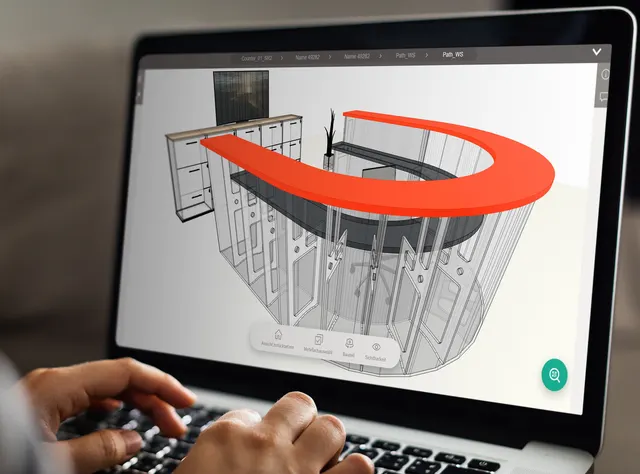
That is why De Groot Bewerkingsmachines and PaletteCAD Nederland work closely together. After all, a new machine must communicate optimally with the software used to create designs and control production processes. According to Teurlinx, the strength of that collaboration lies in good preparation. "I simply want to make sure that when we set up a link with PaletteCAD, 80 to 90 per cent is already right." This leaves more room during installation to focus on the customer's specific requirements.
Smeets stresses the importance of customisation. Beforehand, the tools, connectors and production sequence used, among other things, are mapped out. On that basis, a postprocessor is developed that controls the machine correctly. During installation, the two technical teams can then make adjustments together.
Trust and short lines of communication. According to both interviewees, successful collaboration requires more than technical knowledge alone. "The basis of good collaboration is simply being honest and having the best intentions", says Smeets. In his view, problems should be solved jointly, without passing responsibility back and forth.
Teurlinx agrees. Thanks to direct contact between the technical teams, questions and problems can be dealt with quickly. These short lines mean customers do not have to wait unnecessarily long for a solution.
AI is changing the way of working. According to both experts, artificial intelligence will also play an ever greater role. From automatically generated interior designs to the analysis of production data, the possibilities are growing rapidly. Even so, human expertise remains essential. "It is very important that people continue to steer what the intention is. They keep giving the direction. They keep checking", Smeets stresses.
Teurlinx notes that customers are already experimenting with AI today, for example to gain better insight into their production data. The most important message to interior fitters and furniture makers is therefore to keep taking a critical look at their processes. "Above all, take ownership. This is your company, this is your process", Teurlinx concludes. Those who keep learning, dare to ask questions and work with the right partners can make the best use of what automation has to offer.
Curious about the full story? Scan the QR code and listen to the podcast on Binnenwerk.
'The most important message to interior fitters and furniture makers is to keep taking a critical look at their processes'
Jeroen Smeets "The basis of good collaboration is simply being honest and having the best intentions". (Image: DSC02670)
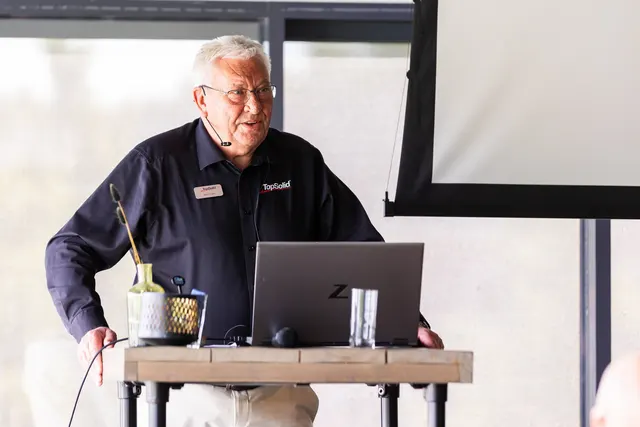
Luuk Teurlinx "One of the biggest challenges is finding and retaining skilled staff". (Image: DSC02672)
PaletteCAD Nederland and De Groot Bewerkingsmachines work closely together to make software and machine communicate optimally. (Image: DSC02673)
Samen Vooruit days at De Groot Bewerkingsmachines in Rosmalen. (Image: DSC02702)
For many interior fit-out contractors and furniture makers, automation is no longer a thing of the future but everyday reality. (Image: DSC02709)
Companies in this story

Keep following this
Get an email when a new story is published. No account needed.
- ThemeRunning an interior fit-out business
- SubjectSoftware & digitalisation
- CompanyDe Groot Bewerkingsmachines
- CompanyPaletteCAD Nederland