











Solid Surface: what’s in a name?
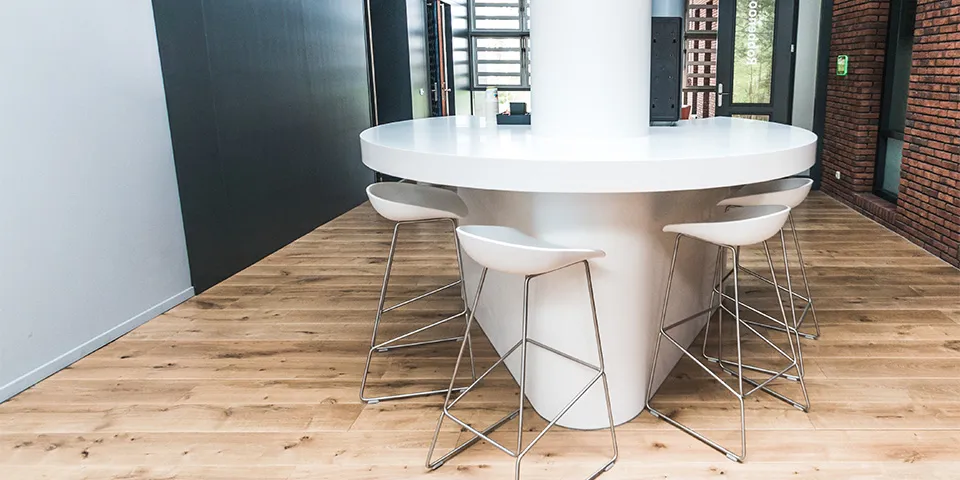
Solid Surface could hardly have a more apt name. It describes exactly what makes the material unique: an impervious surface. This alone is helping Solid Surface gain ground in interior construction. As it is non-porous, Solid Surface is ideal for use in places that need to be cleaned quickly and easily and where the highest standards of hygiene are required. This could be in the home, for example in bathrooms or kitchens.
Solid Surface is also an excellent choice in places where large numbers of people use facilities that need to be hygienic. Think of restaurants, hotels, hospitals, care facilities and office buildings. The only drawback of Solid Surface is its limited heat resistance. On the other hand, lightly damaged surfaces are easy to repair, with the repairs barely visible.
A washbasin made from Solid Surface.
Specialist work
Making the most of Solid Surface requires skilled craftsmanship. Working with the material calls for a specific approach. Thermoforming it into unique shapes, bonding sections almost seamlessly and repairing damage correctly are all specialist tasks. In this issue, you will meet specialists in the Netherlands who have turned every aspect of working with this product into an art.
There are few limitations on the use of Solid Surface, thanks in part to the unique shapes that can be created and its consistent properties. Solid Surface first made its mark in the world of bathrooms and kitchens, but is now being used extensively in the furniture industry. And rightly so, because seating made from Solid Surface is durable, easy to clean and hygienic. This makes it ideal for restaurants and care facilities, for example in waiting rooms or treatment rooms. And what about a kitchenette in an office? We all know the grubby, peeling chipboard kitchen unit from that old workplace. Solid Surface, however, stays looking good and can be cleaned with ease.
Permanent coffee stains are a thing of the past in this kitchenette.
From white to marble and everything in between
If the figures are to be believed, 80% of Solid Surface supplied is white. That makes sense, as white is a traditional colour for bathrooms and kitchens. Still, it is surprising how attractive Solid Surface looks in other colours. The advantage is that the colour stays fresh and beautiful. Manufacturers are happy to meet the needs of interior designers and interior architects with extensive colour palettes and textures. A granite-look washbasin? No problem. Prefer a marble look? That works just as well in Solid Surface.
Well formed
A thermal process allows Solid Surface to be used in shapes beyond the conventional straight-line approach. Curves, flowing transitions and more can all be created, provided you have the right expertise and equipment. Walls and ceilings in Solid Surface that flow seamlessly into one another are a feast for the eyes, for example. The material is also exceptionally durable, making Solid Surface a sustainable choice, an important consideration today.
Question about this story? Ask your question
Keep following this
Get an email when a new story is published. No account needed.
- ThemeFrom sheet materials to construction
- SubjectGeneral







