Does pursuing sustainability still cost too much?
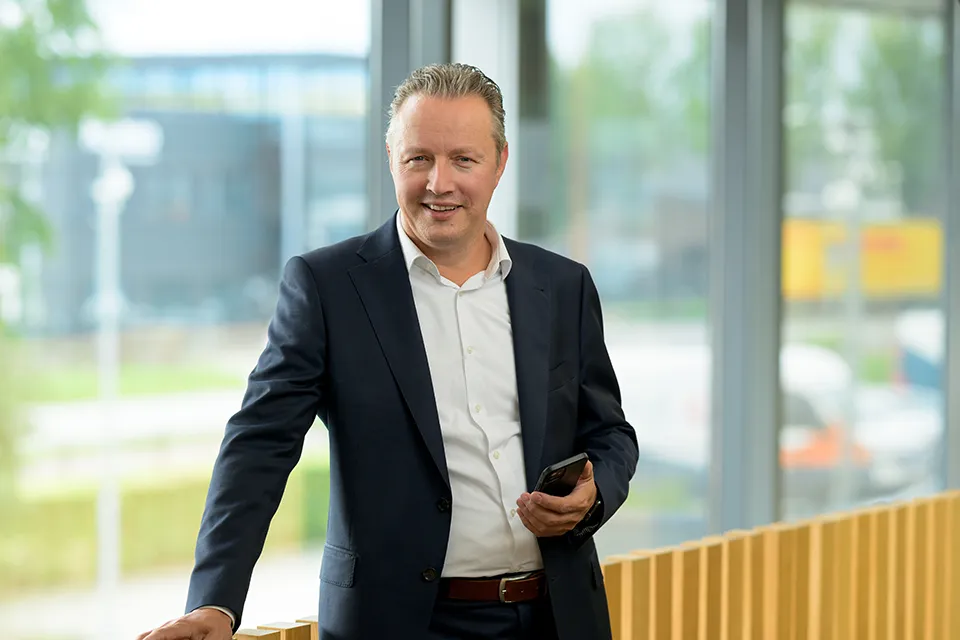
Chris van Kessel: commercial director at Leeuwerik, a sheet material wholesaler in Eindhoven
Another column about ‘sustainability’? You bet, dear readers! Yes, another column about sustainability. We don’t need to tell you it’s a hot topic, do we? At the same time, despite the widespread media attention, I still see some hesitation. Or simply a lack of awareness about the issue, because too little is being done to make more sustainable choices. That’s a shame. There’s nothing wrong with taking better care of our planet, and ourselves in the process.
Fortunately, there are already many alternative products on the market that have not only embraced ‘sustainability’ but also make a tangible contribution. One example is the growing use of bio-based adhesive as a natural binder in sheet materials. I think that’s a good thing!
Yet I see players in the sheet material supply chain that still don’t use bio-based adhesive, which is what we’re talking about here. I think there are several reasons for this. Companies, and ultimately the people within them, are still driven by money. Everyone would like to use it, but not if it costs more. It’s like green electricity: consumers are happy with it, but they don’t want their energy bills to go up.
Secondly, and this is another important reason, there isn’t yet enough production capacity to supply the market with larger volumes of bio-based adhesive. This means the cost price is still too high. And that brings us straight back to the legitimacy of the first reason: everyone would like to use it, but not if it costs more.
So perhaps we need stricter legislation to encourage the market to become more sustainable. That’s a shame in itself. In my view, it should be about intrinsic motivation. Fortunately, I’m seeing a shift. It’s particularly the younger generation that has put ‘sustainability’ and the pursuit of sustainability high on the agenda and made them a priority. In that respect, it’s only a matter of time before ‘sustainability’ really becomes the norm.
But sitting back now is not an option. We must keep encouraging intrinsic motivation. Read up on it, talk about it, ask questions along the supply chain, run the numbers and explore what recycling, for example, could already mean for your business. No one is asking you to take big steps straight away. It can all happen in small steps too. That’s the only way to change behaviour. There are also opportunities to obtain various ISO certifications in areas such as sustainability. The benefit? The audits challenge you to keep improving.
‘I-do-sustainability’ should not become an empty catch-all or a marketing gimmick. What matters is that you actually do something about it. There’s nothing wrong with taking better care of our planet, and ourselves in the process.
Question about this story? Ask your question
Keep following this
Get an email when a new story is published. No account needed.
- ThemeFrom sheet materials to construction
- SubjectThe pen