Decorative and functional panels. Proven acoustic performance
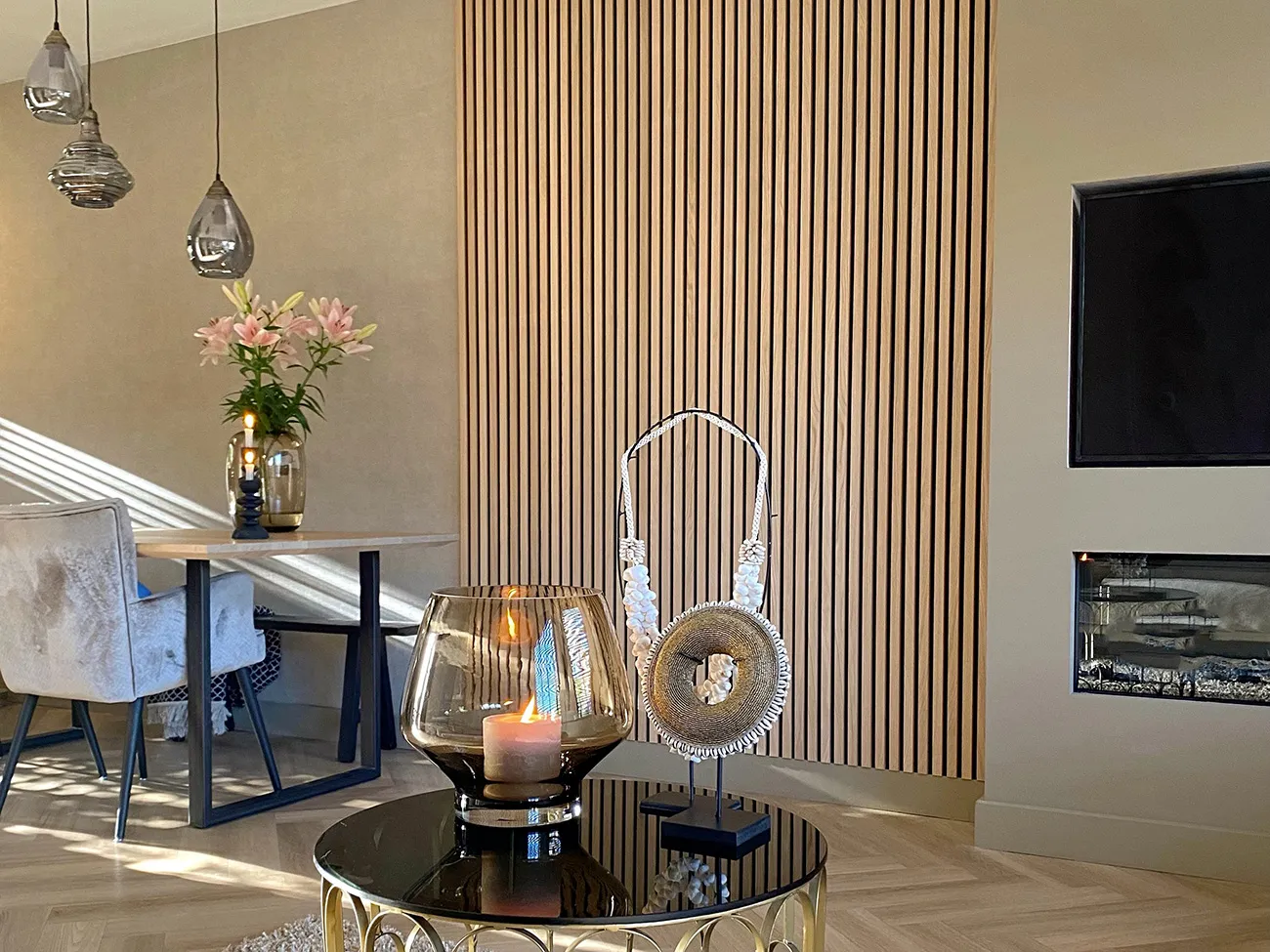
Modern homes use a lot of hard materials during construction and fit-out, resulting in poor acoustics. Interior fit-out specialists have long made bespoke solutions to address this, but they were costly and time-consuming. Fortunately, products such as WoodUpp’s Akupanel can now improve acoustics with ease.
WoodUpp’s story begins in Denmark, with a company that originally specialised in veneering furniture. Jesper Elenbaas, director of WoodUpp Netherlands, says: “The factory is family-owned. They produced panels, but the current owner had the idea of doing something with a piece of felt he saw lying around. That was how the first acoustic panels came about. Initially, they were made by hand.”
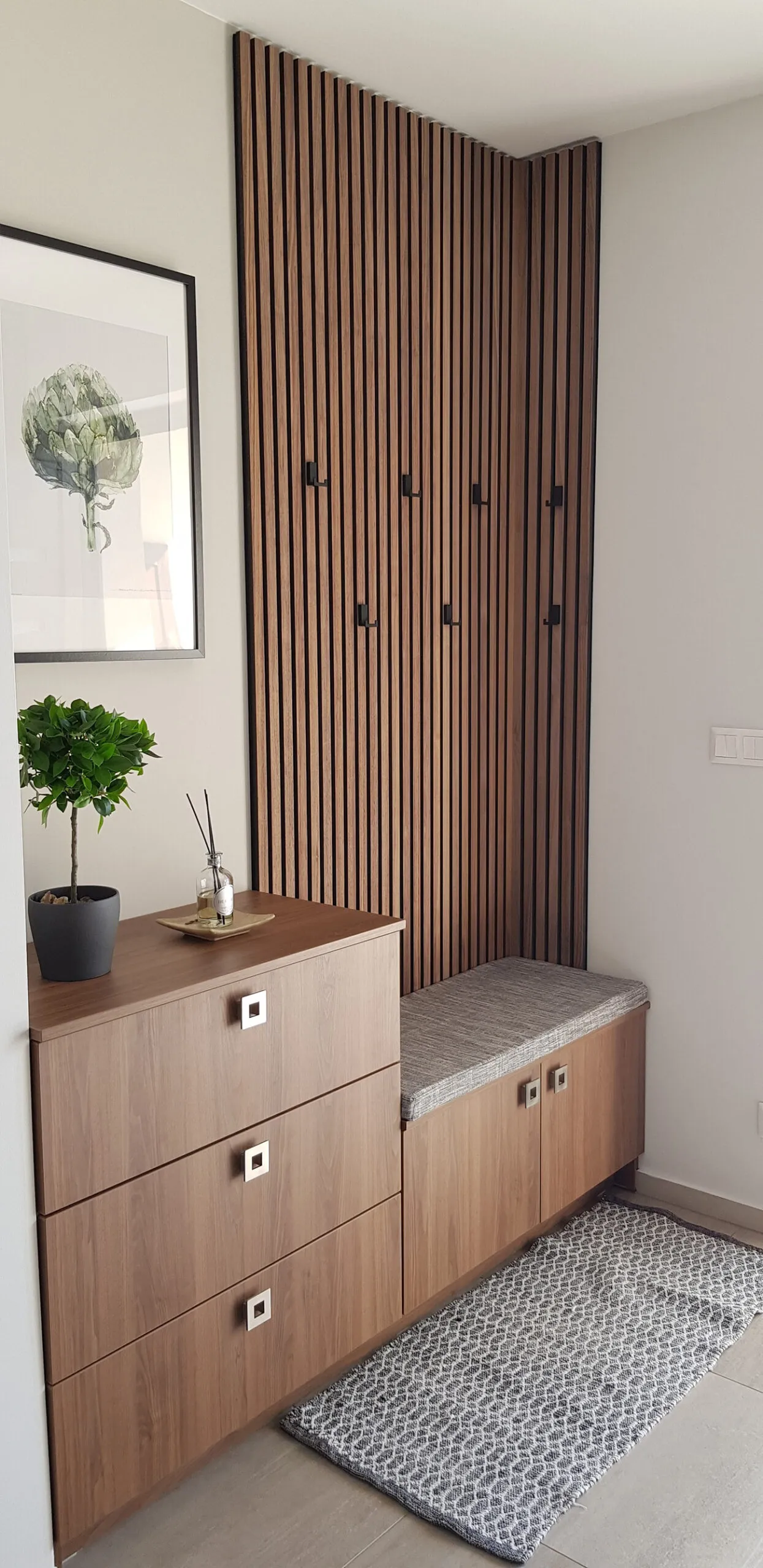
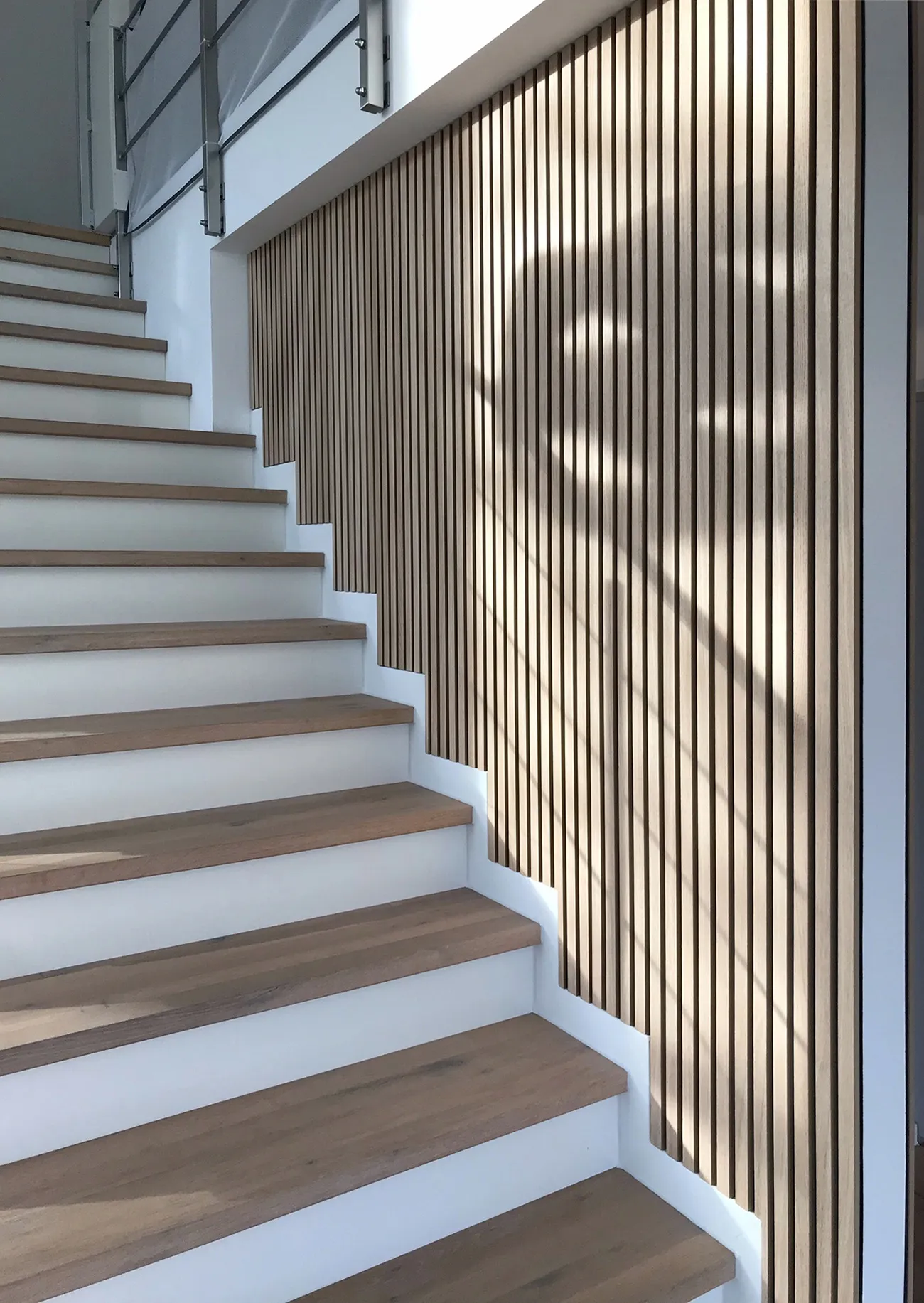
The idea soon grew into a fully fledged business division. “The development of this product made quite an impact, and the panels are now sold in many European countries. We are responsible for distribution in the Netherlands, where Scandinavian design is still very popular.”
WoodUpp has been active in the Dutch market since 2020. “Acoustics are a major problem, so we’re busy,” says Elenbaas. “Akupanel, which is available in a range of colours, was designed to improve acoustics, while also giving a room an attractive Scandinavian look. So the product is both decorative and functional.”
Acoustic performance depends on the application
WoodUpp can, of course, back up its claim that Akupanels genuinely improve acoustics with figures. “The Danish company behind the product began testing quite early on, in order to demonstrate its acoustic performance. The panels were tested in several ways in an acoustics laboratory. The panel is acoustic in its own right, achieving around class D. A higher rating is possible depending on how the panels are installed. Fixing them to battens creates an air gap between the wall and the Akupanels, which improves sound absorption. To achieve class A, we can also install acoustic insulation wool in this cavity. The overall build-up then becomes quite thick, at 7 centimetres.”
According to Elenbaas, it is important to use enough panels. “As a general rule, you should allow for 25% to 30% of the floor area and cover that number of square metres with panels to achieve the desired result. Most customers choose to install them on the wall or ceiling.”
Taking work off interior fit-out specialists’ hands
“Our main focus is the webshop,” explains Elenbaas. “We sell directly to consumers, but we’re also active in B2B. Interior fit-out specialists and architects looking for acoustic solutions often come to us. In the past, fit-out specialists often made acoustic panels themselves because there wasn’t a ready-made option available. Now they can come to us instead. That easily saves them three days’ work, and they get a product that is both attractive and functional. A win-win.”
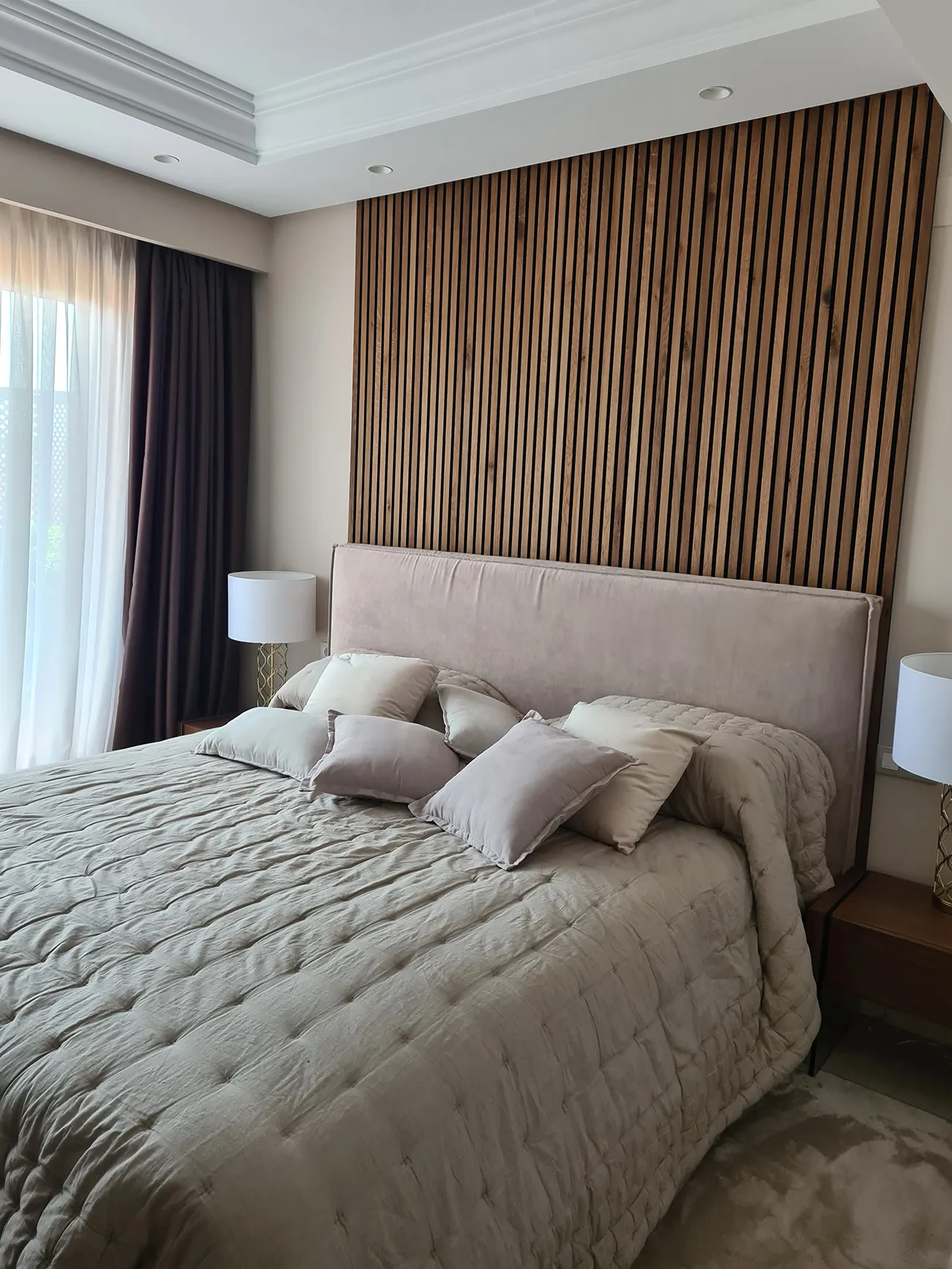
According to the director, interior fit-out specialists use the panels not only on walls, but also to make items such as kitchen cabinets. Pieter Holtmanns of PKP Bouw calls the panels a great solution.
“They’re super efficient to work with and highly workable. Anything is possible with WoodUpp Akupanel,” says Holtmanns, who has completed dozens of projects using Akupanel.
Question about this story? Ask your question
Keep following this
Get an email when a new story is published. No account needed.
- ThemeFlooring and atmospheric spaces
- SubjectTimber & sheet materials