Panel material plays a quiet but crucial role in interior construction
Text Tamara BrouwersImage Leeuwerik B.V.
The base determines the end result
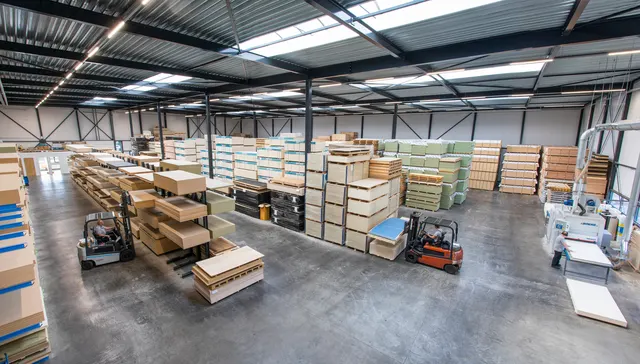
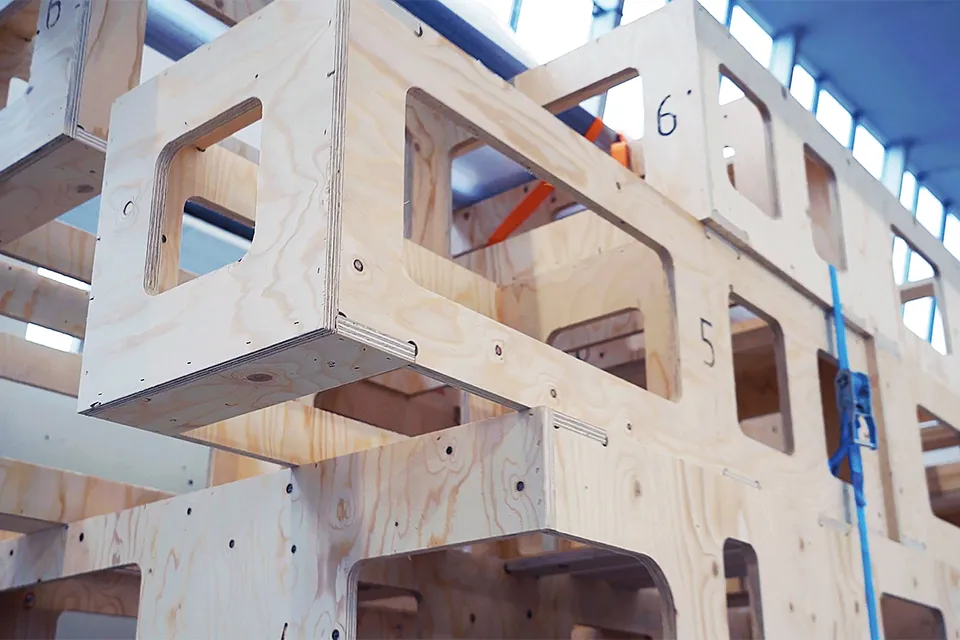
In the workshop of exhibition builder Bruns in Bergeijk, large structures and bespoke components are built for exhibitions and presentations. Much of this work starts with a relatively simple base: UPM Finnish spruce plywood. Panels are sawn, routed and assembled into complete installations that are later put together in museums, at trade fairs or in showrooms.
Although most of the panel material is later concealed behind finishes, it plays an important role in the workshop. The stability and workability of the base panel have a significant influence on how smoothly components can be sawn, routed and assembled.
Base panels in the workshop
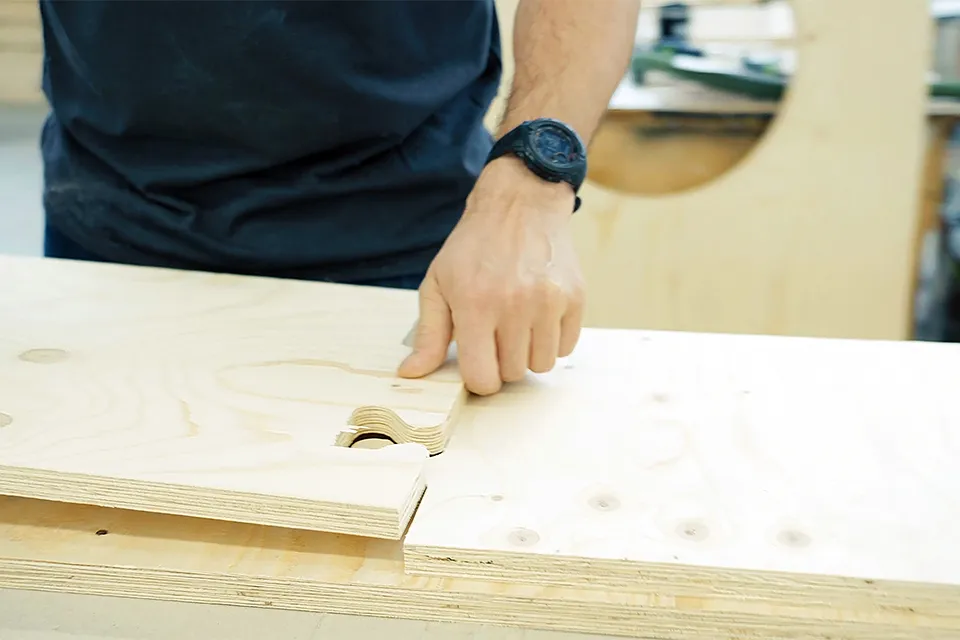
UPM Finnish spruce plywood is used as a base panel in many workshops and is supplied in the Netherlands, among others, by Leeuwerik, which has been supplying the material to interior contractors and processors for years. The plywood is known for its dimensional stability and homogeneous construction, properties that are particularly important for machining processes such as sawing and CNC routing.
“In the workshop, a panel needs to be predictable and stable to work with,” says Chris van Kessel, commercial director at Leeuwerik, which supplies UPM Finnish spruce plywood in the Netherlands. “When plywood is easy to process and remains consistent, you can produce efficiently.”
The material’s relatively low weight also plays a role. This makes large panels easier to move and process without compromising their structural properties.

Stability on the machine
In a production environment with a high volume of machining, the material’s predictability is particularly important. When panels behave consistently on machines, production can continue without interruption. Van Kessel says: “That is very important on a CNC machine, because if a panel unexpectedly moves or warps, you have to make adjustments, and that takes time.”
The origin of materials also matters, alongside their technical properties. UPM Finnish spruce plywood is available with certifications such as FSC and PEFC, which provide information about the origin of the wood and forest management. The material is also available with WISA® BioBond technology, which replaces part of the fossil-based adhesive component with bio-based lignin.
From panel to structure
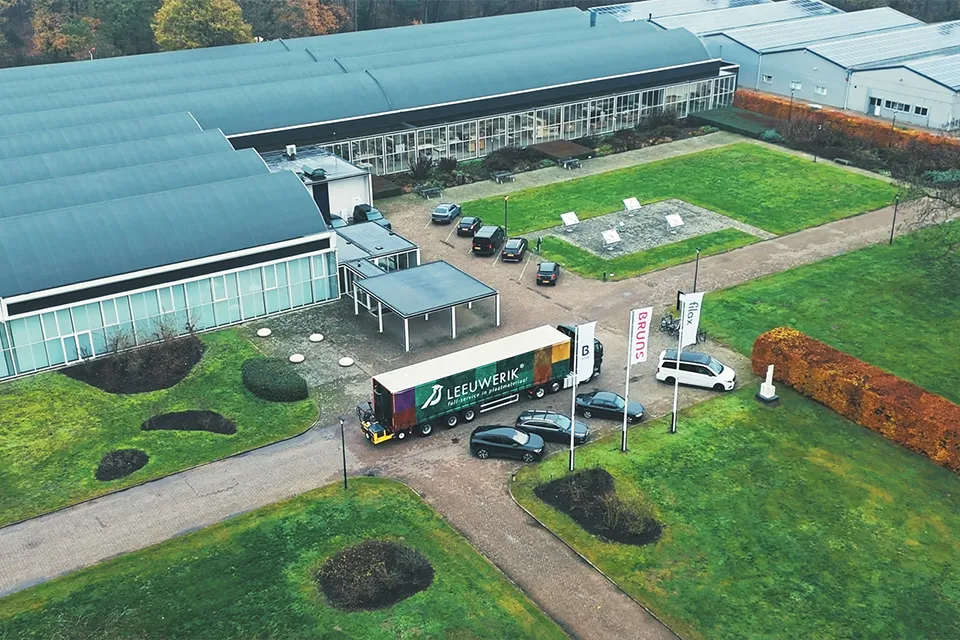
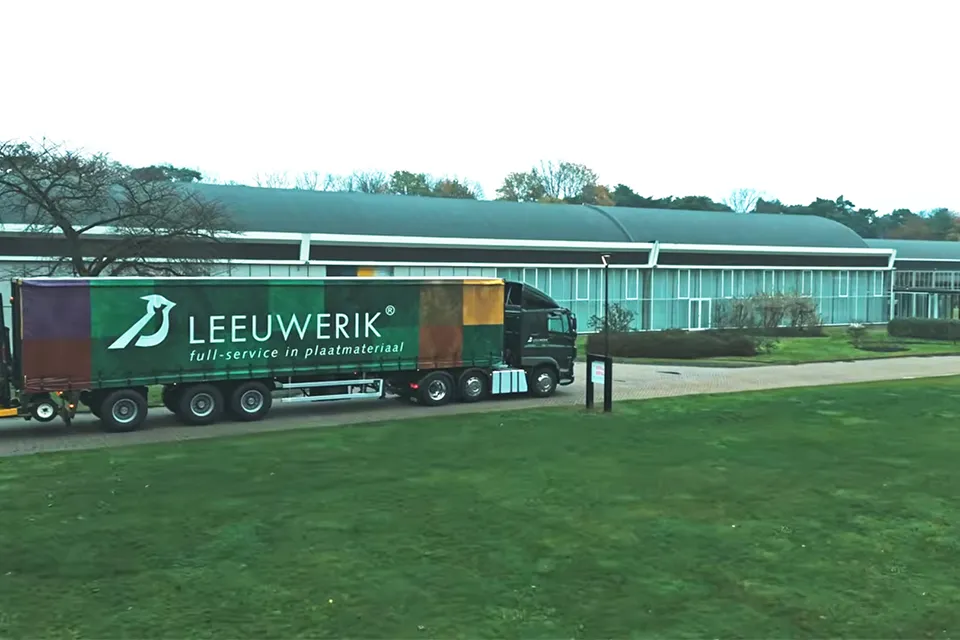
At Bruns’s workshop, the panel material takes its final form. Panels are sawn, routed and assembled into components for exhibitions and presentations. Step by step, a simple panel is transformed into a structure that is later assembled on site.
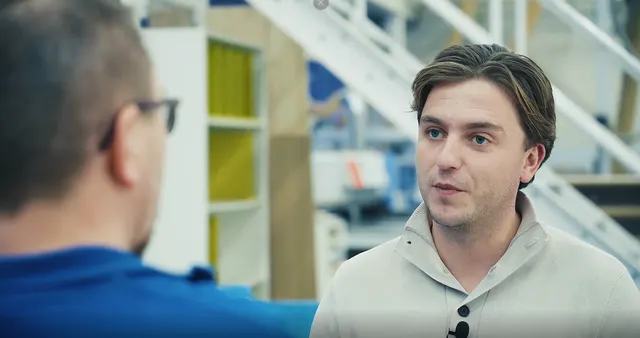
A video on Leeuwerik’s YouTube channel shows how the process works. In footage from the workshop, Joris Schoondermark, account manager at Leeuwerik, demonstrates how the material is processed into panels and structural components that together form the basis of larger interior and exhibition
installations.
A business enquiry for Leeuwerik Plaat? Get in touch
Companies in this story
Keep following this
Get an email when a new story is published. No account needed.
- ThemeFrom sheet materials to construction
- SubjectTimber & sheet materials
- CompanyLeeuwerik Plaat